Ever read a book and felt a chill run down your spine because something in it seemed too familiar? Like maybe the author wasn’t just making things up. Perhaps they had a window into what was coming.
Throughout history, certain writers have demonstrated an uncanny ability to see beyond their own time. They described technologies that wouldn’t exist for decades, social changes that seemed impossible, and inventions that their contemporaries could barely imagine. Some got eerily specific, down to the location of rocket launches or the exact nature of surveillance tech we use today. Whether they were extraordinarily observant or just really good at connecting dots, these authors left us wondering how they did it.
Jules Verne: The Man Who Saw Moon Landings Before Airplanes Existed
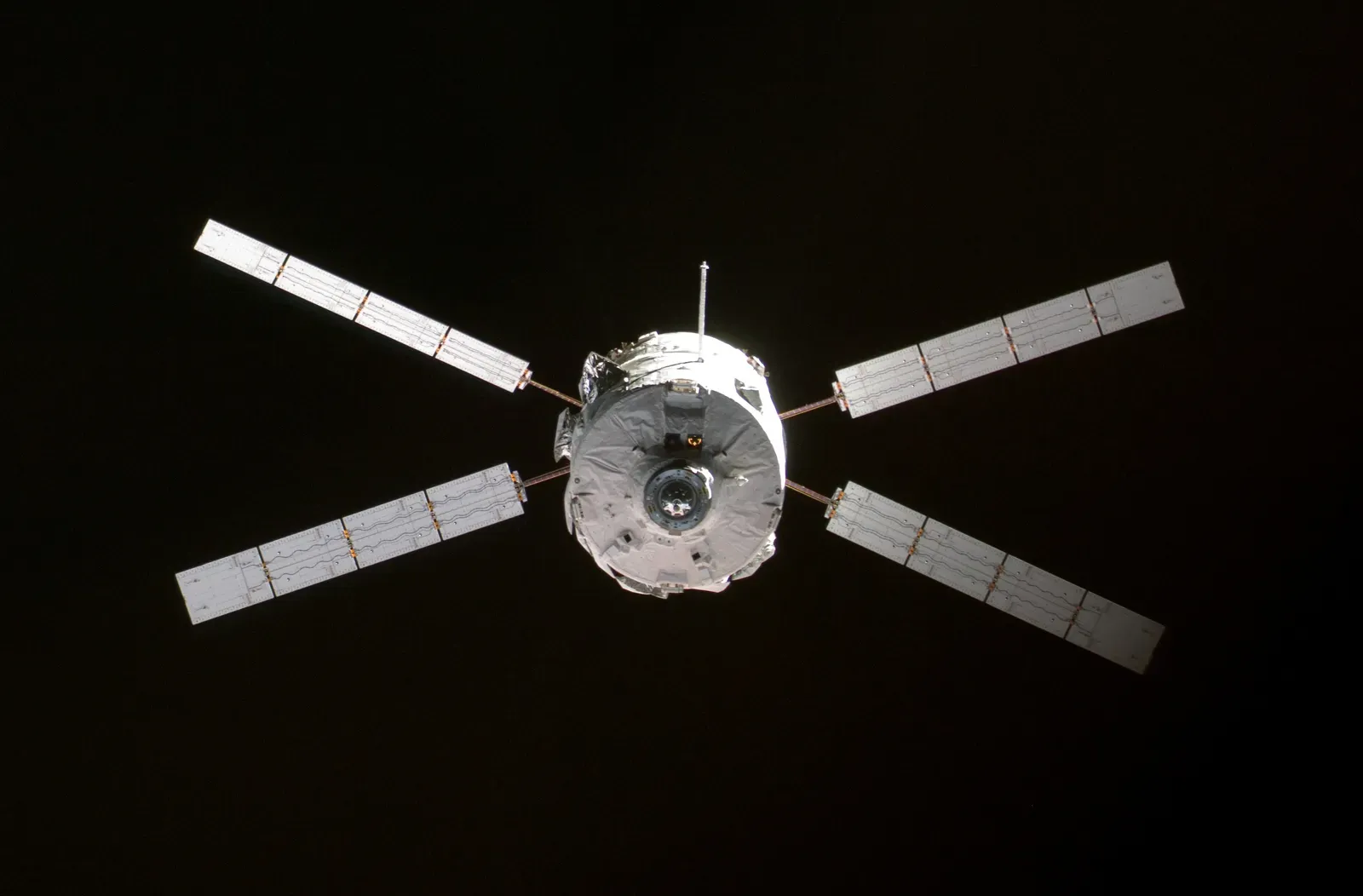
In 1865, almost 40 years before the first plane would even fly, French poet and author Jules Verne published From the Earth to the Moon. His journey to the moon took place on the spacecraft the Columbiad, after its launch from Florida, carried three astronauts who would reach and land on the moon, and then return via splashing down into the ocean. The similarities to the actual Apollo 11 mission are downright spooky.
He even predicted the exact location of today’s Kennedy Space Center in Florida nearly a century ago. Verne’s spacecraft in From the Earth to the Moon was called Columbia, just like the Apollo XI command module, and he even got the physics right, including the speed needed to escape Earth’s gravity and the ideal launch location, which he placed just 100 kilometers from where Cape Canaveral would later be built. Honestly, that level of accuracy feels less like guessing and more like time travel. According to Rosalind Williams, a historian of Technology at the Massachusetts Institute of Technology, he was just paying attention to things, reading a lot and talking with people who knew what was going on in the world around him.
George Orwell: Big Brother Is Actually Watching You Now
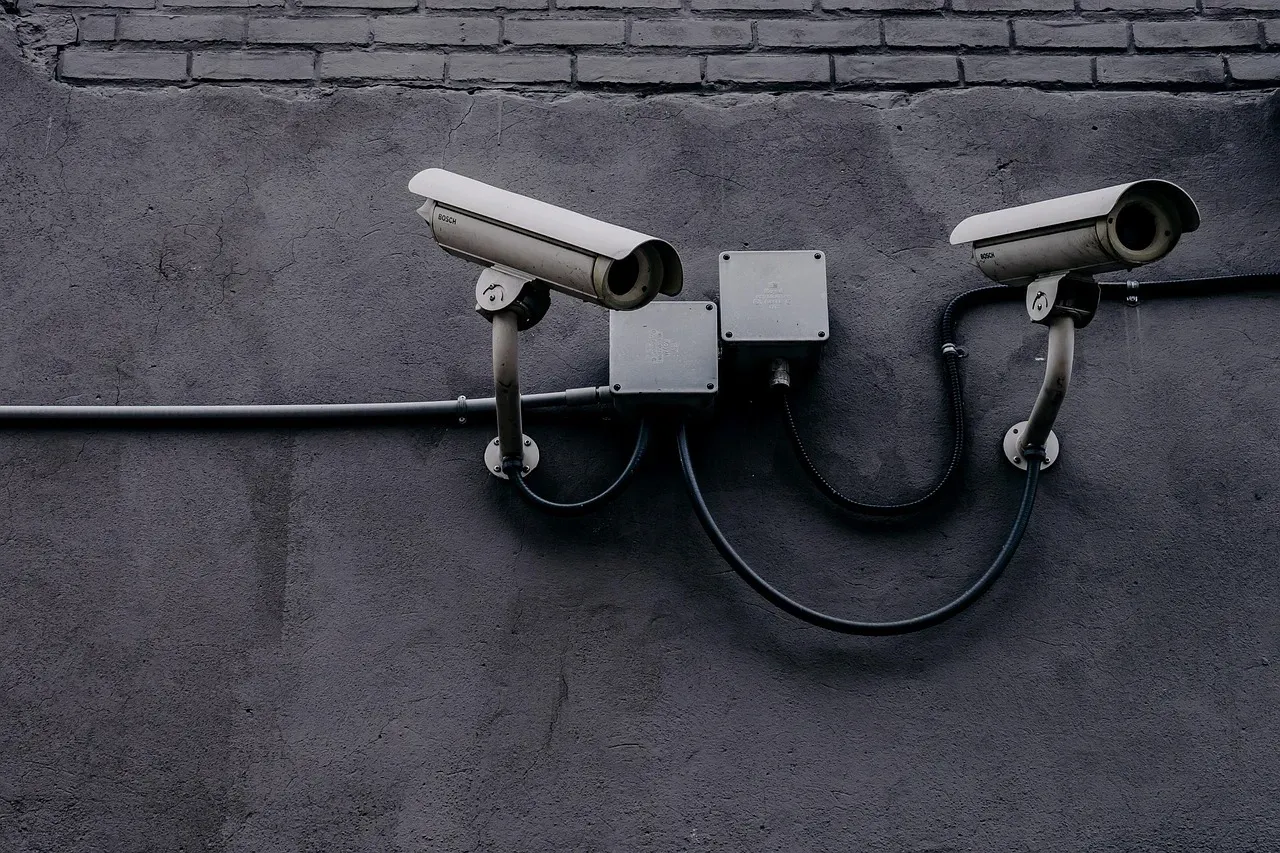
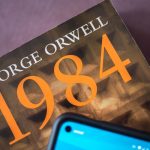
Taylor attributes Orwell’s popularity to his uncanny ability to predict so many of the things that trouble us here in the 2020s, and in the United States, scientific circles are increasingly curious about Orwell’s foreshadowing of modern technology and surveillance methods. Published in 1949, his dystopian novel 1984 has become less fiction and more instruction manual for the modern surveillance state.
In 2020, surveillance camera sales went up by 17.2 percent, with experts predicting a 10.2 percent growth rate from 2021 to 2028. The rise of mass surveillance is perhaps Orwell’s most striking prediction, and China’s social credit system shows just how close we’ve come to his dystopian vision. Smart home devices and personal assistants like Amazon’s Alexa, Google Home, and even Siri have become the modern version of a telescreen. The thing is, we invited these devices into our homes. Nobody forced us. That makes it somehow worse than what Orwell imagined.
Ray Bradbury: He Described AirPods in 1953

As author Sam Weller notes, Bradbury predicted everything from flat-panel televisions to earbud headphones and twenty-four-hour banking machines. In Fahrenheit 451, protagonist Guy Montag describes his wife Mildred wearing Seashells, thimble radios tamped tight in her ears, with an electronic ocean of sound coming in. Written decades before wireless technology became portable, this is a nearly perfect description of modern wireless earbuds.
Tech giant Apple helped push wireless earbuds on the public by removing the headphone jack from its iPhones and launching its AirPod wireless earbuds in 2016, and in 2021, 548 million headphones were sold worldwide, of which 55 percent were wireless. Bradbury also presented readers with his concept of TV parlors that displayed moving images on walls, including their interactive function, decades before flat-screen televisions overthrew bulky TV sets equipped with cathode ray tubes in the late 2000s. It’s hard to ignore how much his warnings about technology isolating people from reality feel uncomfortably accurate today.
H.G. Wells: Atomic Bombs, Lasers, and World War

For a man born 150 years ago, many of Wells’s predictions about the modern world have proven amazingly prescient, and Wells, born in 1866, was trained as a scientist, perhaps the most important figure in the genre that would become science fiction. His predictions weren’t limited to gadgets. Almost 30 years before the Manhattan Project produced the world’s first nuclear weapon, Wells envisioned one of the most defining inventions of the 20th century in his novel The World Set Free, describing a grenade that explodes indefinitely with a vision so accurate that it even included a gigantic mushroom cloud and long-term radiation.
Wells envisioned lasers more than 60 years before Theodore Maiman invented them in 1960, describing them in the famed 1898 novel The War of the Worlds as Heat Rays capable of projecting heat and invisible light instead of visible light. Wells correctly predicted that a global conflict would break out within a decade, erupting in Eastern Europe before sucking in all the world powers, with descriptions of carpet bombing raids and fear of gas attacks proving prescient. Let’s be real, that’s not just lucky guessing.
Arthur C. Clarke: Tablets, Satellites, and the Internet
In a BBC documentary in 1964, the acclaimed writer painted a picture of a medium that would connect everyone around the world without need for physical contact, and he also accurately predicted the advent of remote work, with people rendering their services and skills over such a medium. This was said when computers still filled entire rooms and the internet didn’t exist yet.
The best predictions of his novel were HAL 9000, an artificially intelligent computer that’s quite similar to today’s SIRI, and an electrical newspaper that resembles the same features of today’s iPads and tablets. In a 1964 BBC documentary, Arthur C. Clarke details how he believes people will be able to contact people without knowing their location and conduct business easily anywhere in the world, and he also predicts the invention of what he calls a replication device, which could be argued that 3D printers fit the bill. Clarke earned the nickname Prophet of the Space Age for good reason. His mind was constantly decades ahead.
Isaac Asimov: Big Data and Predictive Analytics

First published in the early 1950s, Isaac Asimov’s Foundation series of sci-fi books predicted a science called psychohistory in which the future could be predicted by accurately measuring current developments and trends in human behavior, and although statistics as a way of gauging the public existed back then, they were very rudimentary in comparison to today’s surveys and statistics, which are used every day to measure and predict everything from consumer behavior and voting preferences to the impact of COVID-19.
Today, data on past events is used in all manner of calculations, risk assessments and AI and machine learning. Think about how algorithms predict what you’ll buy, watch, or even vote for. Although statistics existed back then, they were very basic compared to today’s surveys, which can measure everything from consumer behavior to voting preferences, just like in Asimov’s novels. Asimov understood that human behavior, given enough data, becomes predictable. We’re living in his psychohistory now, whether we realize it or not.
E.M. Forster: Remote Work and Video Calls in 1909

Imagine an information-oriented world where people work from home, communicate via instant messages and videos, and form and maintain friendships electronically, and believe it or not, it’s actually the premise of E.M. Forster’s The Machine Stops, a sci-fi short story published in 1909. This was written when the telephone was still a luxury and radio was virtually unknown.
In The Machine Stops, Forster imagined a future in which people live and work exclusively in their own rooms, communicating with each other entirely through electronic devices, and while the telephone did exist at this point, radio was virtually unknown and television was not yet invented, and in a time filled with video chats and home office, Forster hit the nail on the head. The pandemic of 2020 made his vision a lived reality for millions. I know it sounds crazy, but Forster saw our Zoom meetings coming more than a century early.
Octavia E. Butler: Climate Crisis and Populist Demagogues

Science fiction writer Octavia E. Butler created a dystopian world in Parable of the Sower (1993) and Parable of the Talents (1998) that featured the rise of a populist demagogue, and while the books were well-received when published, they have struck a chord with readers more recently, given some stark similarities between the society Butler created and our reality today, including global warming and social inequality.
Butler didn’t just predict technology. She predicted the social and political turmoil that would come with environmental collapse. Her books feel uncomfortably current, as if she wrote them yesterday rather than in the 1990s. The way her fictional leaders exploited fear and division to gain power mirrors patterns we’ve seen play out repeatedly in recent years. Butler’s foresight was about humanity’s worst tendencies, not just its technological achievements.
John Brunner: Social Media, Electric Cars, and Terrorism in 2010

Probably the most accurate depiction of the future ever described in a book, Stand on Zanzibar is set in the year 2010 in the US, and Brunner didn’t only predict terrorist threats and school violence, but also an accepted hookup culture and LGBTQ lifestyle, and in his novel, people also have satellite TV and electric cars. Written in 1968, this novel imagined a world that looks shockingly like ours.
He accurately predicted the major innovation of this time include Electric cars, direct TV and Laser printers. Brunner saw where society was heading with remarkable clarity. His vision extended beyond gadgets to cultural shifts that would take decades to fully materialize. It’s hard to say for sure, but his ability to extrapolate from the social tensions of his own era into a frighteningly accurate future remains unmatched.
Morgan Robertson: The Titanic Disaster, Fourteen Years Early
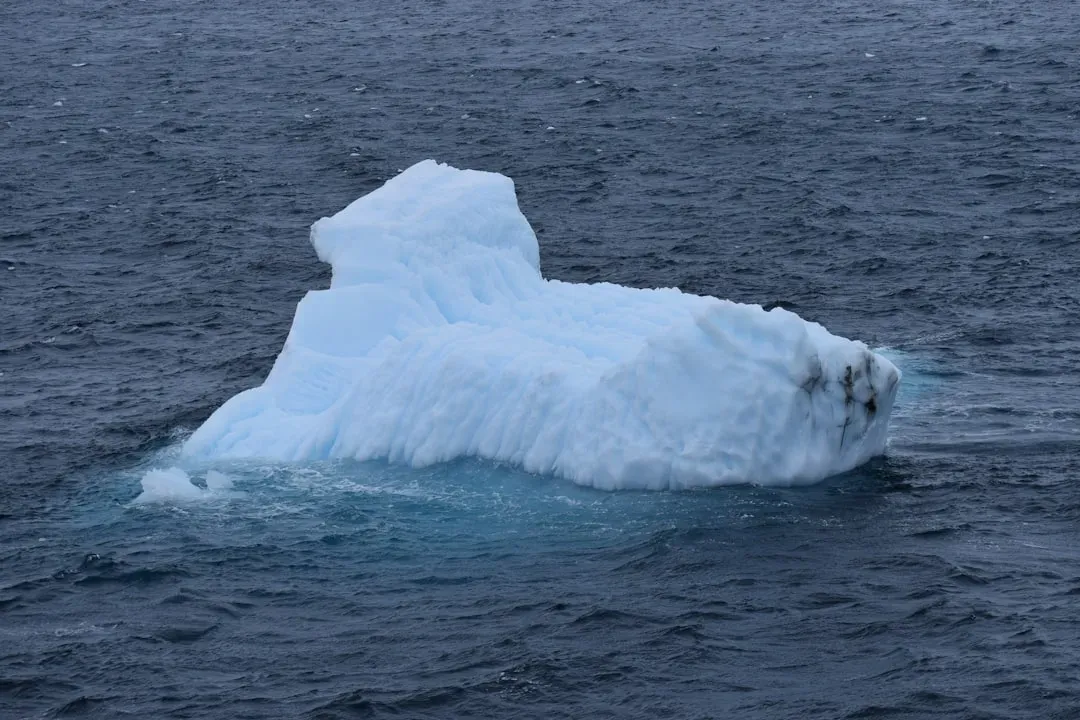
Futility, or the Wreck of the Titan is an 1898 novella written by American author Morgan Robertson that details the sinking of an enormous fictional ship called the SS Titan which was deemed unsinkable. Originally published under the title Futility, Robertson’s novel tells the tale of a passenger ship named Titan, which hit an iceberg and sank in the frigid waters of the Atlantic Ocean, and like the Titanic, the Titan was also described in Robertson’s book as the largest ship of its time, and like in the real tragedy, thousands of people died as well.
While Robertson was an experienced sailor, explaining some of his accurate details, to so clearly and pointedly depict an event 14 years prior to its occurrence, purposeful or not, is staggering. The similarities go beyond just the name. Both ships were considered unsinkable, both hit icebergs in the North Atlantic, and both resulted in massive loss of life due to insufficient lifeboats. Robertson’s novella reads less like fiction and more like a terrible premonition.
These authors remind us that imagination grounded in observation can pierce the veil of time. They weren’t psychic, but they were paying attention to the trajectory of human behavior, technological progress, and social patterns in ways most people weren’t. Their work continues to inspire and unsettle us because it shows that the future, while uncertain, isn’t completely unknowable. Maybe the real question isn’t how they predicted the future, but why we keep ignoring the warnings they left us. What future predictions from today’s writers do you think will come true?