There is something deeply ironic about a book being set on fire. The people who light the match believe they are erasing ideas. History, again and again, proves them spectacularly wrong. The books that faced the most ferocious attempts at destruction often became the most studied, the most beloved, and the most influential works in all of literature.
Some of the most controversial books in history are now regarded as classics, and the Bible along with works by Shakespeare are among those that have been banned over the past two thousand years. That should tell you everything. If you’re looking for proof that censorship is a self-defeating act, look no further than this list. Let’s dive in.
1. Ulysses – James Joyce (1922)
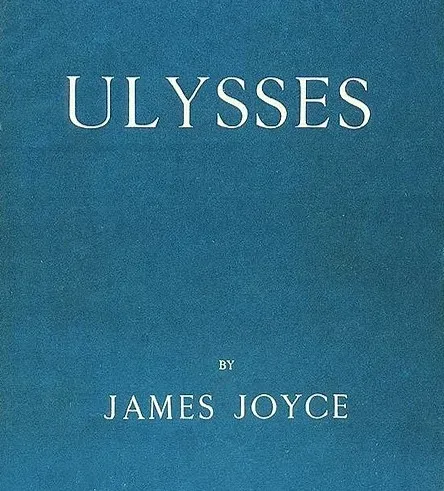
James Joyce’s radical, stream-of-consciousness story of Leopold Bloom’s daylong journey across Dublin stoked a fiery reaction literally on both sides of the Atlantic Ocean after its 1922 publication. Government authorities in the United States and England not only banned what is now considered a modernist masterpiece, they also confiscated and burned more than 1,000 copies. That’s not a typo. Over a thousand copies. Gone.
After the release of a controversial episode, the United States Post Office determined the material was obscene and confiscated three issues of The Little Review, burning 500 copies of them. Ulysses was first published in 1922 in Paris and instantly became an object of smuggling pride and a valuable collector’s item when successfully transported past British and American customs agents. By 1928, the U.S. Customs Court officially listed Ulysses among obscene books to be kept from the hands and eyes of American readers.
At issue was whether James Joyce’s 1922 novel was obscene. In deciding it was not, District Court Judge John Munro Woolsey opened the door to importation and publication of serious works of literature that used coarse language or involved sexual subjects. James Joyce’s Ulysses is now central to the literary canon and features on university literature courses around the world. The flames, it turned out, only made it more famous.
2. The Grapes of Wrath – John Steinbeck (1939)

Residents of Kern County, California, were less than thrilled with the unflattering depiction of their local area in John Steinbeck’s 1939 Pulitzer Prize-winning novel and banned it for being libelous. Less predictable was the reaction of the library board in East St. Louis, Illinois, who ordered the city’s three copies burned because the “objectionable” language was “not fit for anyone’s daughter to read.” Honestly, the sheer drama of it all is staggering.
The American Library Association reports that Ireland banned The Grapes of Wrath in 1953, and in 1973 Turkish booksellers stood trial for hawking copies of the book along with other “propaganda unfavorable to the state.” The book’s offense, apparently, was telling the truth about poverty. On February 21, 1973, eleven Turkish book publishers went on trial before an Istanbul martial law tribunal on charges of publishing, possessing and selling books, facing possible sentences of between one and six months’ imprisonment for spreading propaganda unfavorable to the state.
3. Animal Farm – George Orwell (1945)
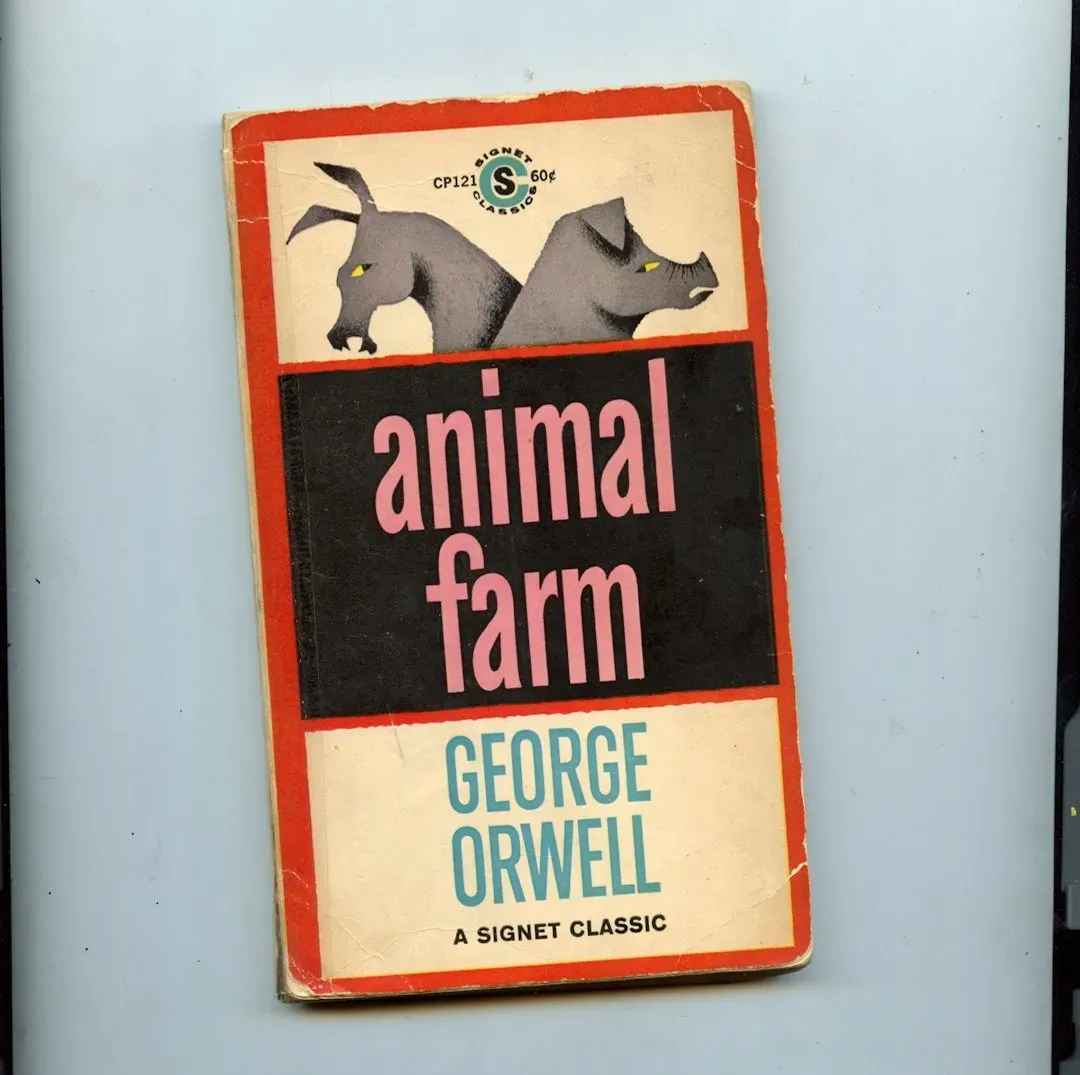
Here’s the thing: this book was nearly suppressed before it even reached readers. George Orwell wrote Animal Farm during World War II. Initially, British publishers worried that publishing the book during the war would offend the Soviet Union, who were allies with them. Even after the war, publishers worried that the book would create too much controversy. So they simply refused to print it. Not because it was bad, but because it was too honest.
Animal Farm has often fallen victim to overzealous school boards and the high bar of strict religious or politically oppressive governments. The book has been banned around the world for a variety of reasons, ranging from its anti-communist attitudes in the USSR to its depiction of pigs in the UAE. To this day the book is still banned in Cuba and North Korea for its satiric depiction of communism. Frederic Warburg published the book and sold out with 4,500 copies in just a few days, despite his wife threatening to leave him if he did publish it. Nine million copies were sold by 1973. His wife stayed. The book became legendary.
4. 1984 – George Orwell (1949)
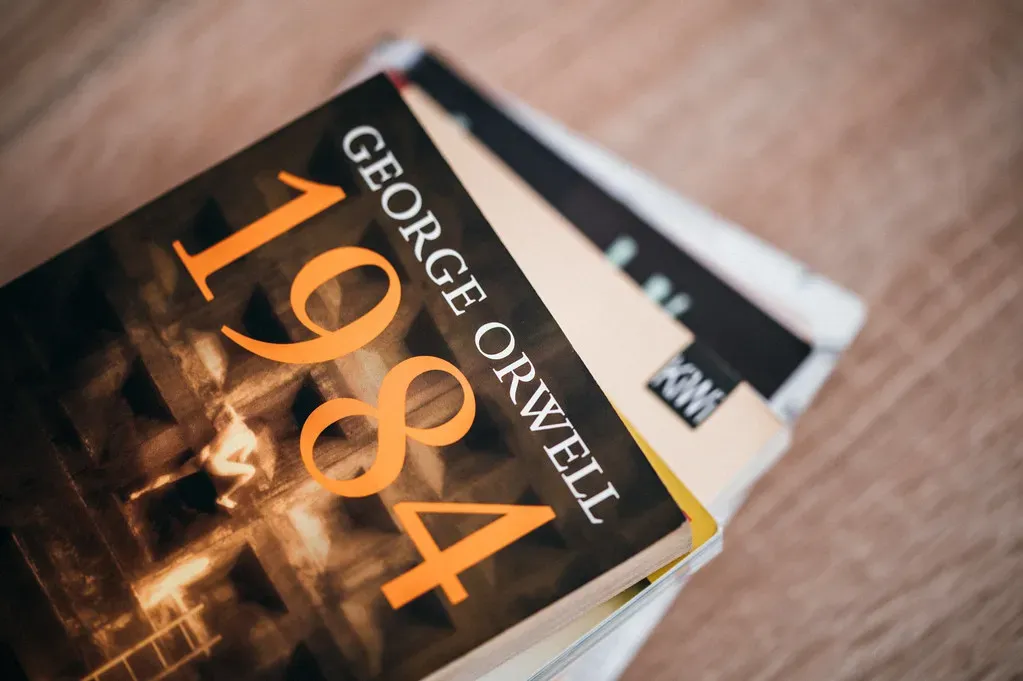
The year 1984 has come and gone, but George Orwell’s prophetic, nightmarish vision in 1949 of the world we were becoming is timelier than ever. 1984 is still the great modern classic of “negative utopia,” a startlingly original and haunting novel that creates an imaginary world that is completely convincing, from the first sentence to the last four words. No one can deny the novel’s hold on the imaginations of whole generations, or the power of its admonitions – a power that seems to grow, not lessen, with the passage of time.
1984, known for its depiction of Big Brother and allusions to dictatorships, has been repeatedly banned for two major reasons: obscenity and supposedly pro-communist passages. For anyone who knows anything about the author or has even read the novel, these two reasons are striking and absurd. Orwell was a self-proclaimed democratic socialist. I think the absurdity of banning a book specifically about the dangers of banning things is almost poetic. Both Animal Farm and 1984 have been on lists of banned books from their date of publication, and Orwell is the only author with two books consistently on these lists.
5. To Kill a Mockingbird – Harper Lee (1960)

Harper Lee’s 1960 Pulitzer Prize-winning novel has been repeatedly challenged and banned in schools amid complaints of profanity, racial epithets and a description of a rape. While a beloved novel for many, it is one of the most commonly banned books. The story’s moral courage was precisely what made it a target.
It was challenged at the Santa Cruz, California schools in 1995 because of its racial themes, and removed from the Southwood High School Library in Caddo Parish, Louisiana in 1995 because the book’s language and content were objectionable. This Pulitzer Prize-winning novel, considered an American classic, was challenged and banned because of violence and its use of the N-word. The terrible irony is that the book is fundamentally about the ugliness of racism – yet it was repeatedly challenged using racial concerns as the very excuse.
6. A Farewell to Arms – Ernest Hemingway (1929)
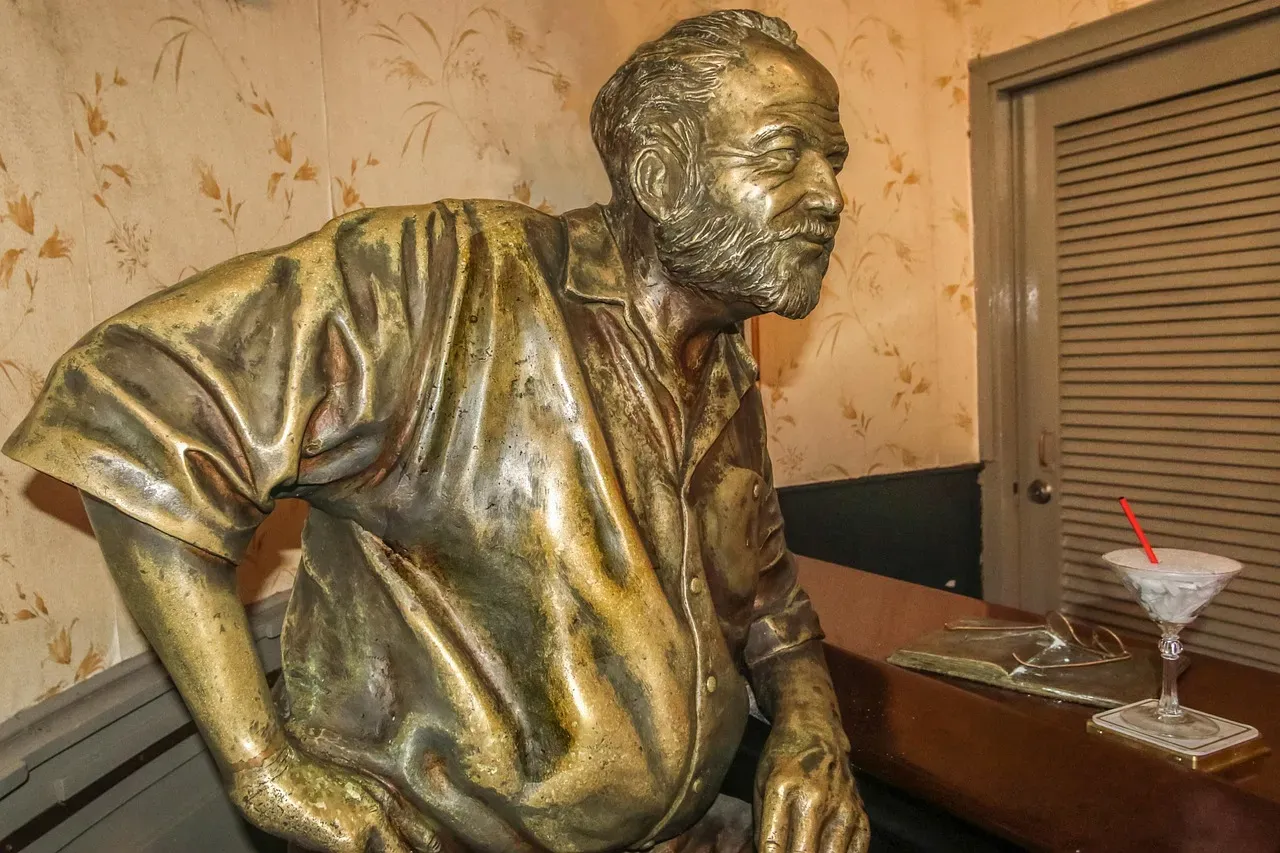
Ernest Hemingway’s 1929 novel based on his experiences as an ambulance driver on the Italian front during World War I was banned by Italy’s fascist regime for nearly 20 years because of its depiction of the country’s terrible defeat at the Battle of Caporetto as well as its anti-militarism theme that led to its burning by the Nazis in 1933 as a “corrupting foreign influence.” A war novel burned for telling the truth about war. The logic of censorship at its most telling.
Even before it was officially published, Boston police barred the sale of issues of Scribner’s magazine that serialized the “salacious” novel. The book was considered morally dangerous by governments across Europe and America almost simultaneously, which says more about those governments than about Hemingway. Today it is taught in high schools as a masterwork of American literature.
7. The Call of the Wild – Jack London (1903)

Jack London’s classic adventure story about a dog named Buck might not be the first book you’d expect to find on a list of burned books. Yet here we are. It was the leftist political views of the author – who was twice the Socialist Party candidate for mayor of Oakland, California – rather than the book’s content that ran The Call of the Wild afoul of fascist authorities in Italy during the 1920s and early 1930s and resulted in the Nazi Party burning several of London’s socialist-leaning writings in 1933.
The reasons cited were the author’s pro-Socialist views, and the books were burned in Nazi bonfires. The dog was dragged away to be a sledge dog in the harsh and freezing cold Yukon, Buck must fight for his survival, and the Nazis still saw a political threat in it. The fact that a story about canine survival was deemed too politically dangerous for readers is genuinely bewildering. Yet it reflects the paranoia of authoritarian regimes when faced with any hint of progressive thought.
8. The Sun Also Rises – Ernest Hemingway (1926)
The quintessential novel of the Lost Generation, The Sun Also Rises is one of Ernest Hemingway’s masterpieces, and a classic example of his spare but powerful writing style. A poignant look at the disillusionment and angst of the post-World War I generation, it introduces two of Hemingway’s most unforgettable characters: Jake Barnes and Lady Brett Ashley. First published in 1926, The Sun Also Rises helped to establish Hemingway as one of the greatest writers of the twentieth century.
The book was burned in Nazi bonfires for being “a monument of modern decadence.” The Nazis, it seems, had a particular problem with moral ambiguity and literary sophistication. Nazi Germany’s incineration of 25,000 “un-German” works on May 10, 1933, is perhaps the most infamous book burning event because photos and videos of the event can still be seen today. The largest and most significant book burning ceremony took place in the center of Berlin on May 10, where some 40,000 persons gathered at the Opernplatz and participants burned about 20,000 volumes. Hemingway’s work was among them.
9. I Know Why the Caged Bird Sings – Maya Angelou (1969)

I Know Why the Caged Bird Sings by Maya Angelou was removed from the required reading list for Wake County, North Carolina, high school students because of a scene in which the author, at the age of seven and a half, is raped. Let that sink in. A book describing the trauma of childhood sexual abuse was punished – not the act, but the testimony. That says something chilling about who censorship really protects.
The book has been one of the most frequently challenged works in American schools for decades. Censors objected to its frank treatment of racism, trauma, and sexuality. Yet Angelou’s memoir remains one of the most powerful accounts of a Black woman’s experience in 20th-century America. Challengers contended the book “contains adult themes such as sexual intercourse, rape, and incest” and claimed it promotes “racial hatred, racial division, racial separation.” The attempts to silence it only reinforced why every single one of its words needed to be said.
10. Beloved – Toni Morrison (1987)

The novel, published in 1987, explores the destructive legacy of slavery in 19th-century America. The ALA reported that Morrison’s novel was the 26th most frequently challenged book from 2000 to 2009 and the 45th most frequently challenged book from 1990 to 1999 in U.S. public libraries. Decades of relentless challenges, and still the book endures.
Beloved by Toni Morrison faced challenges over violence, language, and what critics called “inappropriate topics” of racism and sex. Even in 2021, Virginia school board members suggested certain books should be not only banned but thrown “in a fire,” with Toni Morrison’s novel Beloved among those that some conservatives wanted removed from curriculums. Morrison won the Nobel Prize in Literature in 1993. The book is now considered one of the great American novels of the 20th century. No bonfire has ever changed that, and no bonfire ever will.
Conclusion: Flames Can’t Kill an Idea
Of the Modern Library’s 100 Best Novels published since 1900 in the English language, 9 of the top 10 have been banned at some point. That is a staggering number. It suggests, if anything, that controversy and censorship may actually be a strange badge of literary honor – a signal that a book touched something real and true that someone in power desperately wanted to suppress.
Every single title on this list survived its burning. Every single one is now read, studied, and celebrated. For as long as there have been writers, there have been texts that have been challenged, censored, burned, and banned. The stories of banned literature do not just belong in the history books; even today, some of the most influential texts in our bookstores and libraries are currently being challenged or have been challenged at some point before. The match never wins against the manuscript. It never has.
Which of these banned classics surprises you the most? Tell us in the comments.