Some songs get requested at weddings for decades before anyone actually reads the lyrics closely. Others climb the charts riding an upbeat melody while the words underneath tell a much darker story. Radio play, nostalgia, and a catchy chorus can carry a track a long way, sometimes so far that the original intent gets buried entirely under public assumption. What follows are ten well known songs where the popular interpretation and the songwriter’s actual intent don’t quite line up. In each case, verified interviews, band statements, or documented history reveal a meaning that surprised even longtime listeners once it came to light.
Every Breath You Take by The Police

For years this 1983 chart topper has soundtracked first dances at weddings, which is a strange fate for a song about obsession and control. The lyrics explore the consuming, stalker-like mentality of a man who refuses to let go of the object of his obsession, with phrases like “I’ll be watching you” repeated throughout. Sting has said the song came out of a genuinely difficult period in his life.
He was married to Frances Tomelty at the time but had also started a relationship with her friend and neighbor, Trudie Styler. Sting later admitted the song sounds like a comforting love song, but he didn’t realize at the time how sinister it was, saying he was thinking of Big Brother, surveillance, and control during the Reagan and Star Wars years. Even his own bandmate Stewart Copeland has said he missed the darker meaning at first, only recognizing after release that it wasn’t until after the song was released that he realized it wasn’t a love song.
Born in the U.S.A. by Bruce Springsteen

The title track from Springsteen’s 1984 album is still one of the most misread songs in American rock history. Bruce Springsteen was criticizing the war in Vietnam and subsequent treatment of veterans while affirming his American birthright, not celebrating patriotism in a simple, flag-waving sense. The chorus got stripped of its context so often that it became a rally staple for exactly the kind of politics Springsteen was pushing back against.
The truth is, it’s an explicitly anti-war song that highlights how America failed Vietnam veterans, with verses describing a man who loses his brother at Khe Sanh and returns home to find no work and no support. President Ronald Reagan referenced the song during his 1984 reelection campaign, and Springsteen later described the song as “a demand for a ‘critical’ patriotic voice along with pride of birth.” Springsteen has called it one of his own most misunderstood pieces of work, a description that has held up for four decades.
Semi-Charmed Life by Third Eye Blind

This 1997 summer radio staple sounds breezy enough to soundtrack a road trip, but the lyrics tell a much bleaker story. Riddled with references to crystal meth, the 1997 hit spoke to the life altering state of addiction, tracing a relationship that slowly falls apart as one partner spirals deeper into drug use. Frontman Stephan Jenkins wrote every verse himself, drawing on a period of his life he later described in blunt terms.
Jenkins said the deeper meaning of the song is about always wanting something, about never being satisfied, and reaching backwards to things you’ve lost and toward things you can never get. The bright, doo-wop tinged production was a deliberate choice, meant to mask just how dark the subject matter really was. Many casual fans still sing along without ever clocking the specific drug references baked into nearly every verse.
Pumped Up Kicks by Foster the People


Few songs illustrate the gap between sound and subject as starkly as this 2010 breakout hit. Behind its jubilant, upbeat tone, the song is about a boy named Robert who fantasizes about shooting up his school, narrated entirely from inside the shooter’s head rather than from a victim’s perspective. Frontman Mark Foster wrote it after reading about rising youth mental health struggles, wanting to explore the warning signs rather than the act itself.
Foster has explained that the song came from wanting people to do something about gun violence and wanting legislation that could limit access to guns. The song’s continued association with real school shootings has weighed on the band. Foster later told Billboard he was considering retiring the track from live shows entirely because of its ties to gun violence, even though it hit number three on the Billboard Hot 100 back in 2011.
Losing My Religion by R.E.M.


Plenty of listeners assumed this 1991 hit was a meditation on faith, largely because of the title and the churchy imagery scattered throughout its video. In reality, the title is a variation on a Southern expression meaning something has challenged you so deeply you might lose your composure over it, and it has nothing to do with religion in the literal sense. Singer Michael Stipe wrote it about something far more personal.
Stipe has said the lyrics are about obsession and unrequited love, a powerful and dangerous combination. He even acknowledged a direct influence, noting the lyrics about obsessional love were heavily influenced by The Police’s “Every Breath You Take,” which he called “the most beautiful, kind of creepy song.” The mandolin riff that defines the track came together almost by accident, born from guitarist Peter Buck recording himself practicing at home.
Fortunate Son by Creedence Clearwater Revival


This 1969 track has been used at countless Fourth of July celebrations and patriotic sports montages over the decades, which is more than a little ironic. John Fogerty wrote it as a pointed critique of class privilege during the Vietnam War, aimed squarely at wealthy and politically connected families whose sons rarely ended up on the front lines. The song’s driving guitar riff and shouted chorus made it easy to mistake for a straightforward flag-waving anthem rather than the protest song it actually is.
Fogerty has spoken publicly over the years about writing the song in response to the marriage of Richard Nixon’s daughter and the sense that some families always seemed to dodge sacrifice while working class kids were drafted. The lyrics never mention Vietnam by name, which likely contributed to decades of misreading. Even now, the song occasionally gets pulled into political events its writer never intended it for, a mismatch that has frustrated Fogerty on more than one occasion.
Hey Jude by The Beatles

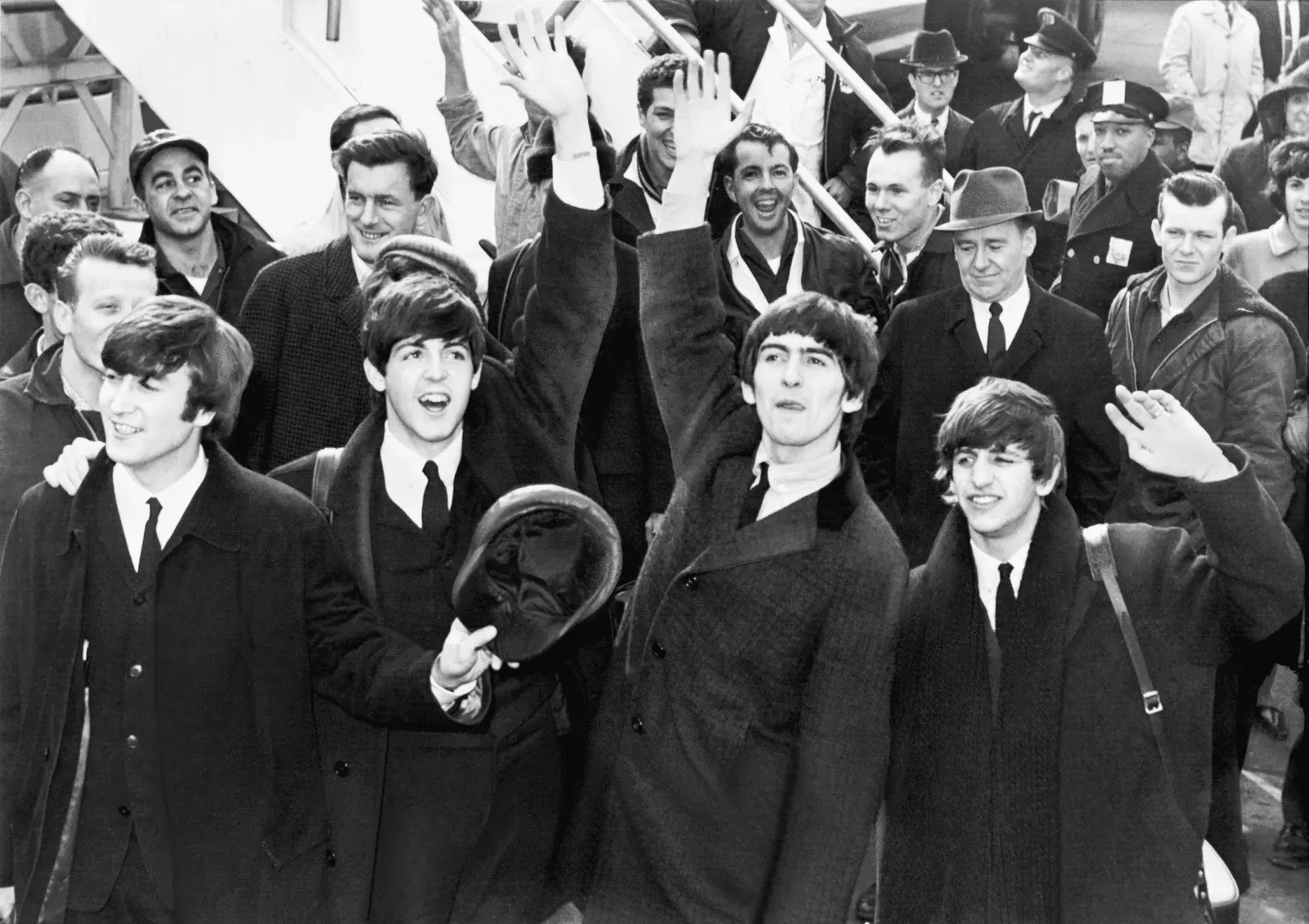
Millions of people have sung along to this 1968 ballad without knowing it was written for a specific, real child going through a difficult moment. Paul McCartney wrote the song for Julian Lennon, John Lennon’s young son, during the period when John was leaving Julian’s mother Cynthia for Yoko Ono. The original working title was reportedly “Hey Jules,” later softened to “Jude” because McCartney thought it sounded better. McCartney has described driving out to visit Cynthia and Julian during the separation and writing the song afterward as a way of offering comfort to a child caught in the middle of his parents’ divorce. Julian Lennon himself has confirmed in interviews that he learned the song was written about him only years later, and that the revelation moved him considerably. What sounds like a universal message of encouragement started out as something much more specific and much more personal.
Closing Time by Semisonic

This 1998 alt rock staple gets played at literal bars as the lights come up, which makes sense on the surface since the chorus repeats the phrase “you don’t have to go home, but you can’t stay here.” Frontman Dan Wilson has explained that he wrote the song with a double meaning in mind, layering a bar closing scene over something entirely different happening in his own life. At the time, Wilson and his wife were expecting their first child.
The lyrics work as a metaphor for birth, with lines about being pushed out into a hostile and dangerous world echoing the experience of a newborn leaving the womb. Wilson has said in interviews that he wanted the song to function on two levels simultaneously, one literal and one about new life beginning. Most bar patrons singing along at closing time have no idea they are essentially singing a birth song.
One by U2

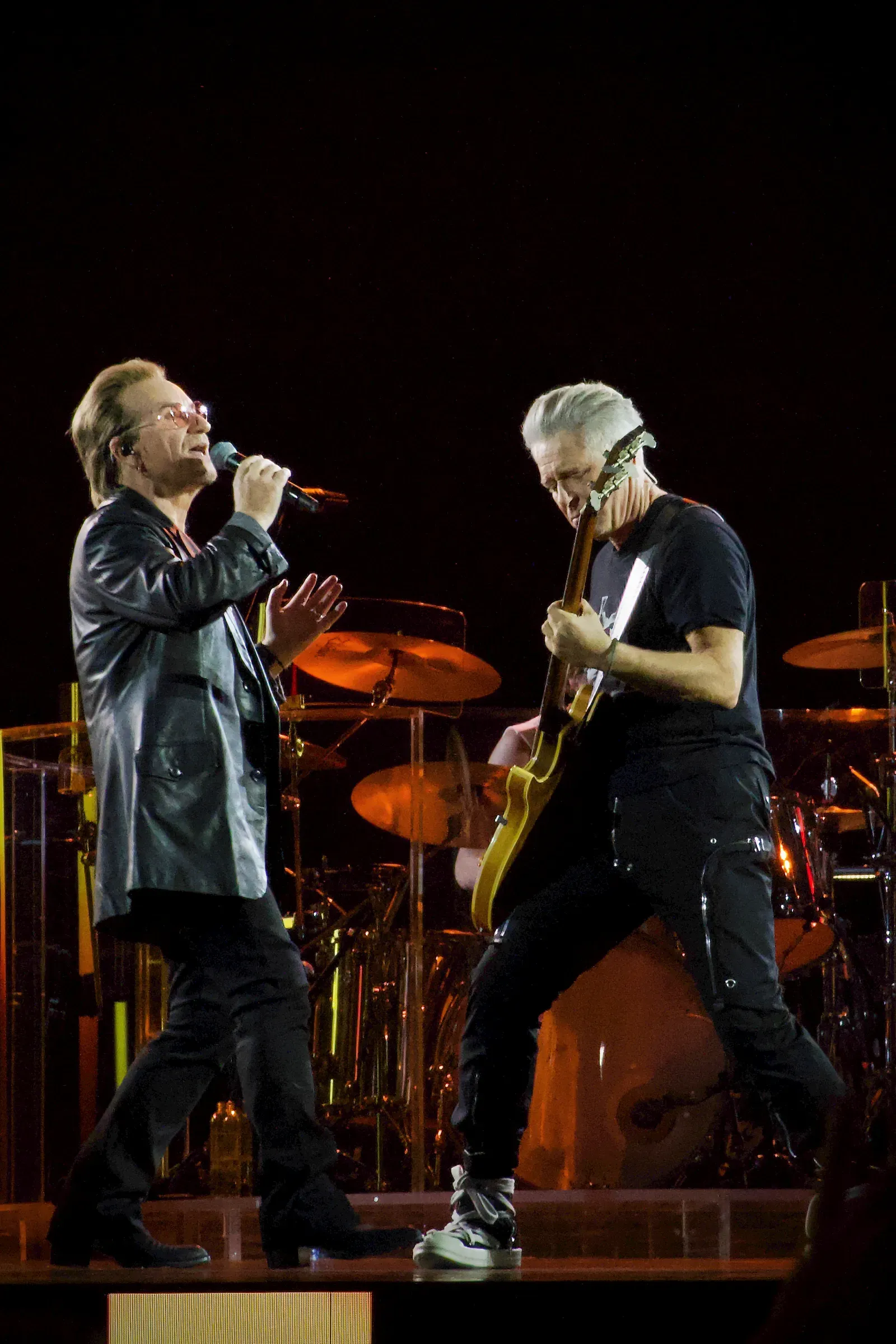
Despite its frequent use at weddings and unity themed events, “One” is not actually a song about togetherness in the warm sense most people assume. Bono has said the track grew out of tension within the band during the recording of Achtung Baby in 1990, a period when U2 nearly split apart creatively. The lyrics read more like a difficult, unresolved conversation between two people pulling in opposite directions than a celebration of harmony. The Edge has described the song’s origins as coming directly out of studio sessions where the band was arguing and struggling to find a shared direction. Lines like “we’re one, but we’re not the same” capture something closer to grudging coexistence than blissful unity. The song has also been widely, and separately, interpreted by some listeners as being about a father confronting a gay son, an idea Bono has never fully confirmed or denied, adding another layer to its ambiguity.
American Pie by Don McLean

Few songs have inspired more speculation than this 1971 epic, largely because Don McLean spent decades refusing to explain most of its lyrics in detail. The song opens with McLean processing the 1959 plane crash that killed Buddy Holly, Ritchie Valens, and The Big Bopper, a tragedy McLean has confirmed inspired the phrase “the day the music died.” Beyond that opening frame, though, the song moves through a series of cryptic references to the changing landscape of American music and culture through the 1960s. For years, fans debated whether specific verses referenced Bob Dylan, the Rolling Stones, Altamont, or the Kennedy assassination, with McLean offering little clarity. In 2015, he auctioned off his original manuscript and finally confirmed some of the references, revealing lines aimed at figures like Dylan and events from the era he witnessed firsthand. Even with that manuscript in public hands, plenty of the song’s imagery remains open to interpretation, which is part of why it has stayed a subject of fascination for more than fifty years.
Taken together, these songs are a reminder that a great melody can carry lyrics a long way past their original intent. Sometimes that gap is harmless, a happy accident of rhythm and radio play. Other times, as with a stalker anthem turned wedding song, it says something interesting about how selectively people listen to the music they love most.