History loves to tell us about great minds, but some people weren’t just smart – they were living in a different century altogether. These individuals thought so far beyond their era that their contemporaries often dismissed them as crazy, impractical, or downright dangerous. Their ideas seemed impossible at the time, yet decades or even centuries later, the world finally caught up to their vision.
What’s fascinating is how many of these forward-thinkers faced ridicule, persecution, or complete obscurity during their lifetimes. Only after they were gone did society realize the brilliance they’d been sitting on. From inventors whose creations were too radical to accept, to philosophers whose thoughts threatened the established order, these visionaries reshaped our world in ways most people never recognize. Let’s dive into the stories of ten remarkable individuals who were decades, sometimes centuries, ahead of their time.
Nikola Tesla

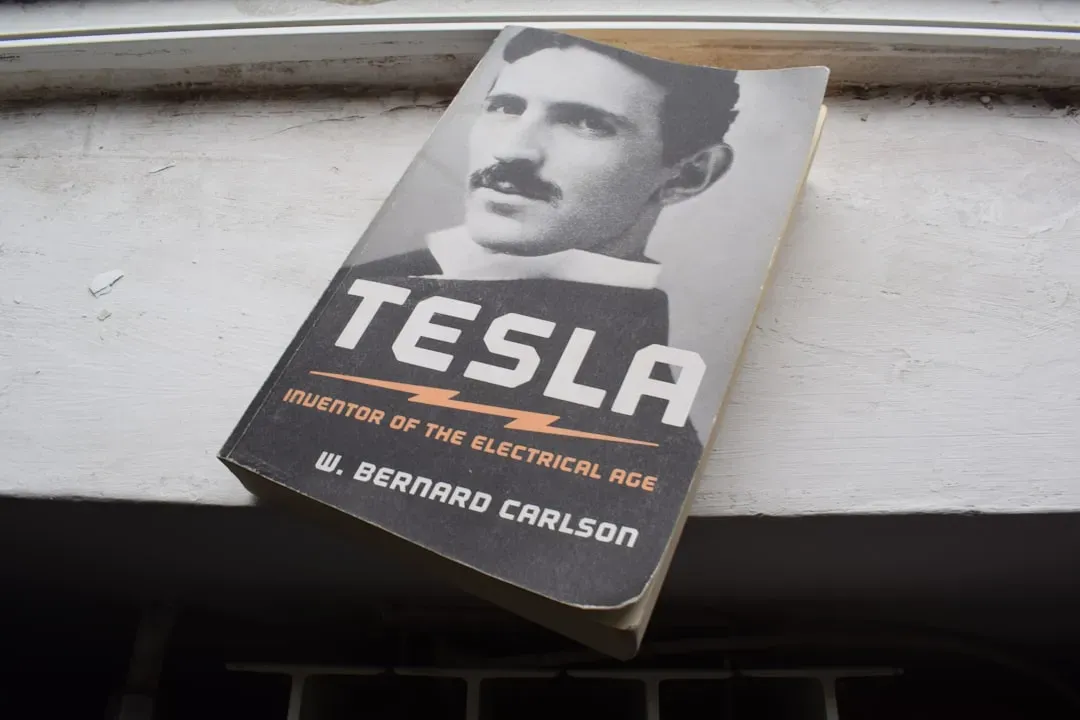
Tesla wasn’t just an inventor. He was a man who envisioned wireless communication, renewable energy, and even robotics when most people were still figuring out how to use electricity properly. While Thomas Edison got the fame and fortune, Tesla was busy dreaming up technologies that wouldn’t become reality until long after his death in 1943.
His wireless power transmission experiments in Colorado Springs seemed like pure fantasy to investors and scientists alike. People thought he’d lost his mind when he talked about sending electricity through the air without wires. Today, we charge our phones wirelessly and stream data across continents without thinking twice about it. Tesla died broke and alone in a New York hotel room, but his patents and ideas now power much of our modern world.
The tragedy is how close he came to changing everything even sooner. His Wardenclyffe Tower project could have revolutionized global communication decades before radio became mainstream, but funding dried up and his backers walked away. History might look very different if Tesla had found the right financial support at the right moment.
Ada Lovelace

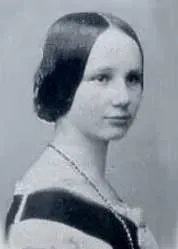
In the 1840s, when women weren’t even allowed to attend most universities, Ada Lovelace was writing what many consider the first computer algorithm. She worked with Charles Babbage on his Analytical Engine, a mechanical computer that was never fully built in their lifetime. While Babbage saw his machine as a sophisticated calculator, Lovelace recognized something far more profound.
She understood that this machine could process symbols and create music, art, and perform tasks beyond simple mathematics. Her notes on the Analytical Engine included a method for calculating Bernoulli numbers that’s now recognized as the first computer program. This was roughly a century before actual computers existed.
Lovelace died at just 36 years old, and her contributions were largely forgotten until the mid-20th century when computer scientists rediscovered her work. She saw the potential for machines to think creatively when everyone else viewed them as glorified adding machines. The programming language Ada was named in her honor, a small recognition for a woman who imagined our digital age before electricity was even commonplace.
Leonardo da Vinci

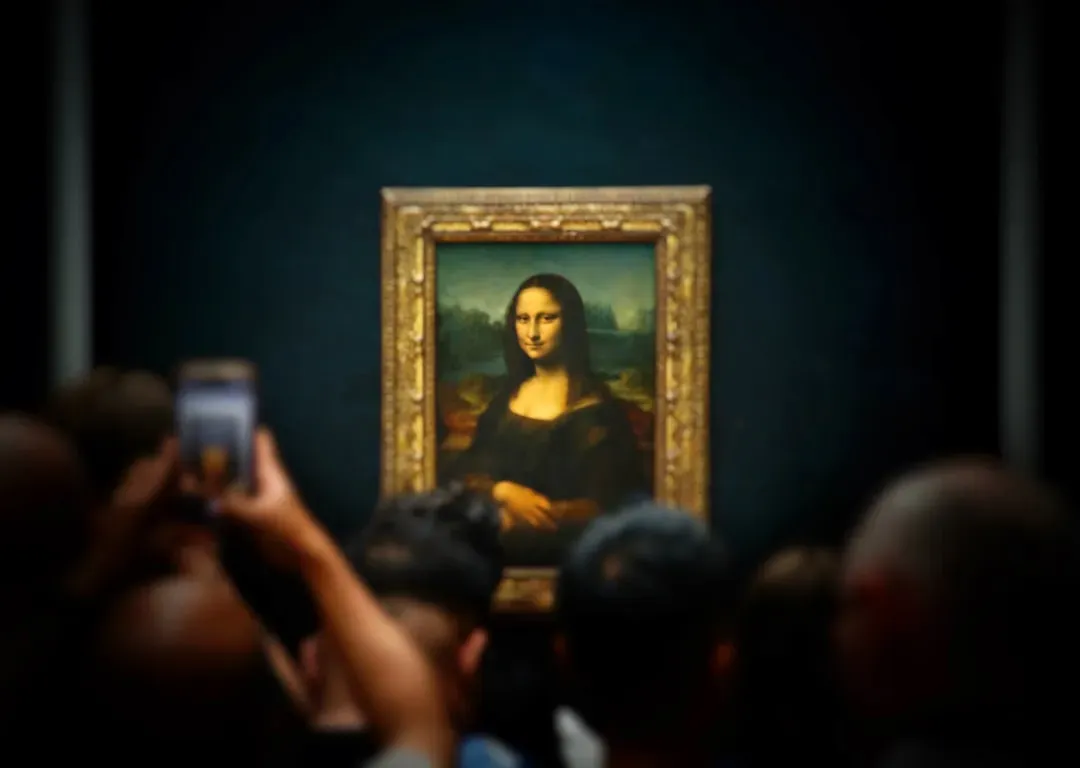
Sure, everyone knows Leonardo painted the Mona Lisa and The Last Supper. What fewer people realize is that his notebooks contained designs for helicopters, tanks, scuba gear, and parachutes – all sketched out in the late 1400s and early 1500s. He was designing flying machines when most people thought humans would never leave the ground.
His anatomical drawings were so detailed and accurate that medical students still study them today. He performed dissections in secret because the church considered it heresy, yet his understanding of human physiology was centuries ahead of contemporary medicine. Leonardo sketched out designs for a robotic knight that could sit, stand, and move its arms independently.
The real kicker is that many of his inventions would have actually worked if the materials and manufacturing techniques of his era had been advanced enough to build them. His parachute design was successfully tested by a skydiver in 2000, proving that Leonardo’s 500-year-old blueprint was perfectly functional. He lived in the wrong century for most of his ideas to come to life.
Rosalind Franklin


Franklin’s X-ray crystallography work was crucial to discovering the double helix structure of DNA, yet she received almost no credit during her lifetime. Her famous Photo 51, taken in 1952, provided the key evidence that Watson and Crick needed to build their model – but they published without properly acknowledging her contribution.
She wasn’t just ahead of her time scientifically. She was a woman in a male-dominated field who refused to play by the genteel rules expected of her. Franklin challenged her colleagues directly when she disagreed with them, which didn’t win her many allies in 1950s academic circles. Her meticulousness and insistence on proof over speculation clashed with the more theoretical approach of her peers.
Franklin died of ovarian cancer in 1958 at age 37, likely caused by her extensive exposure to X-ray radiation. Watson, Crick, and Wilkins received the Nobel Prize in 1962, four years after her death. The Nobel isn’t awarded posthumously, so Franklin’s fundamental contribution to one of the most important scientific discoveries of the century went officially unrecognized. Only decades later did the scientific community fully acknowledge what she’d accomplished.
Hedy Lamarr

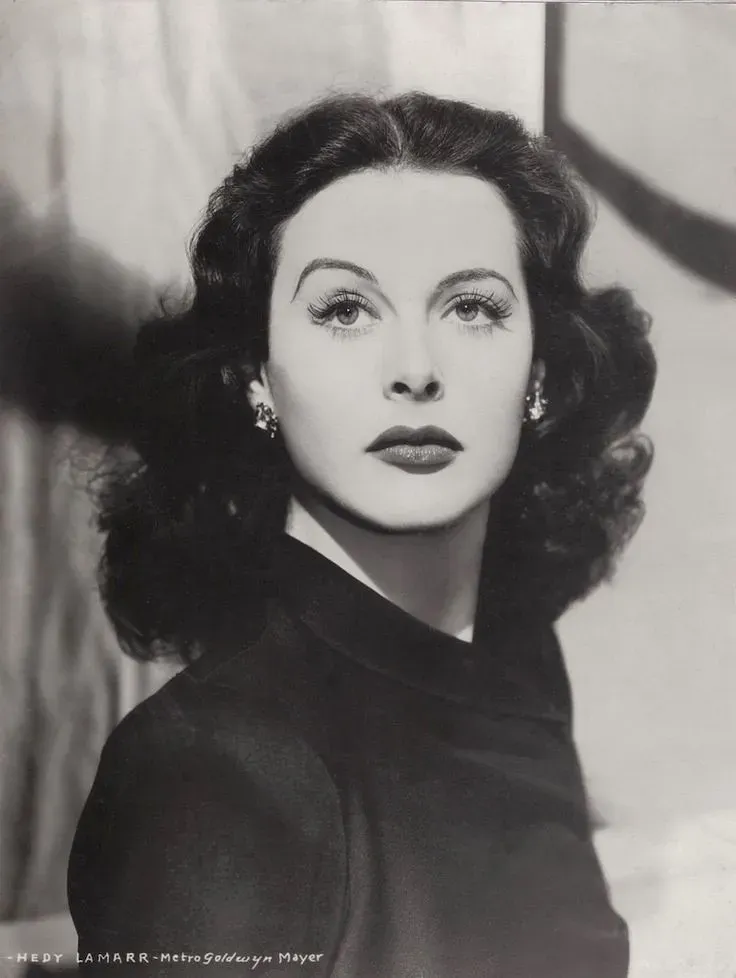
Most people remember Hedy Lamarr as a glamorous Hollywood actress from the 1940s. What they don’t know is that she co-invented a frequency-hopping technology during World War II that’s now the foundation for Wi-Fi, Bluetooth, and GPS. She wasn’t just a pretty face on screen – she was a legitimate inventor with a mind for complex engineering.
Lamarr and composer George Antheil developed their frequency-hopping system to prevent radio-controlled torpedoes from being jammed by enemy forces. They received a patent in 1942, but the U.S. Navy dismissed it as impractical. The military didn’t actually use the technology until the 1960s, and by then her patent had expired. She never received a cent from her invention.
The irony is almost painful. While Hollywood was paying her to look beautiful on camera, her real genius was being completely ignored. Lamarr’s technology is now worth billions and powers much of our wireless communication, yet she spent most of her life known only as an actress. She didn’t receive recognition from the tech world until the 1990s, just a few years before her death in 2000.
Ignaz Semmelweis

In 1847, a Hungarian doctor named Ignaz Semmelweis noticed something disturbing. Women giving birth in hospitals were dying at alarming rates from childbed fever, while those who delivered at home or with midwives survived far more often. His radical solution was almost laughably simple – doctors should wash their hands before examining patients.
When Semmelweis implemented mandatory hand-washing with chlorinated lime solutions in his hospital ward, maternal mortality rates dropped dramatically. You’d think this would have made him a hero. Instead, his colleagues mocked him. The medical establishment found his suggestion insulting – the idea that gentlemen doctors could be spreading disease was unthinkable in Victorian society.
Semmelweis was eventually fired from his position and ridiculed by the medical community. He suffered a mental breakdown and died in an asylum in 1865, possibly from an infection caused by a beating from guards. Only after Louis Pasteur’s germ theory gained acceptance did the medical world realize Semmelweis had been right all along. Thousands of women died unnecessarily because doctors were too proud to wash their hands.
Rachel Carson


When Rachel Carson published Silent Spring in 1962, she basically launched the modern environmental movement single-handedly. The book detailed how pesticides, particularly DDT, were poisoning the environment and causing catastrophic damage to wildlife and human health. Chemical companies and government officials attacked her viciously, calling her hysterical and unscientific.
Carson’s warnings about bioaccumulation and ecosystem disruption were decades ahead of mainstream scientific understanding. She connected dots that most researchers weren’t even looking at yet, showing how chemicals could travel up food chains and cause harm far from where they were originally applied. Her work led directly to the creation of the Environmental Protection Agency and the eventual ban on DDT in the United States.
She wrote Silent Spring while battling breast cancer, knowing she might not live to see the impact of her work. Carson died in 1964, just two years after publication, but her book transformed how we think about human impact on the natural world. Today, her ideas about ecological interconnection and chemical pollution are accepted science, but in her time, she was treated like a radical troublemaker threatening American prosperity.
Alan Turing

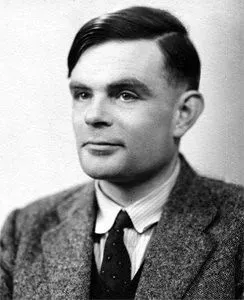
Turing basically invented computer science before computers really existed. His theoretical work in the 1930s laid the foundation for modern computing, and during World War II, he cracked the Nazi Enigma code, saving countless lives. His contributions to artificial intelligence and mathematical theory were so advanced that we’re still building on his ideas nearly 80 years after his death.
Despite helping win the war, Turing was prosecuted in 1952 for homosexuality, which was illegal in Britain at the time. He was chemically castrated as an alternative to prison, a barbaric punishment that destroyed his health and career. Two years later, he died from cyanide poisoning in what was ruled a suicide, though some believe it may have been accidental.
The brilliant mind that helped defeat fascism was crushed by the same society he’d fought to protect. Turing wasn’t officially pardoned until 2013, nearly 60 years after his death. His story is a harsh reminder that being ahead of your time intellectually doesn’t protect you from the prejudices of your era. We owe much of our digital world to a man who was treated like a criminal for who he loved.
Henrietta Lacks

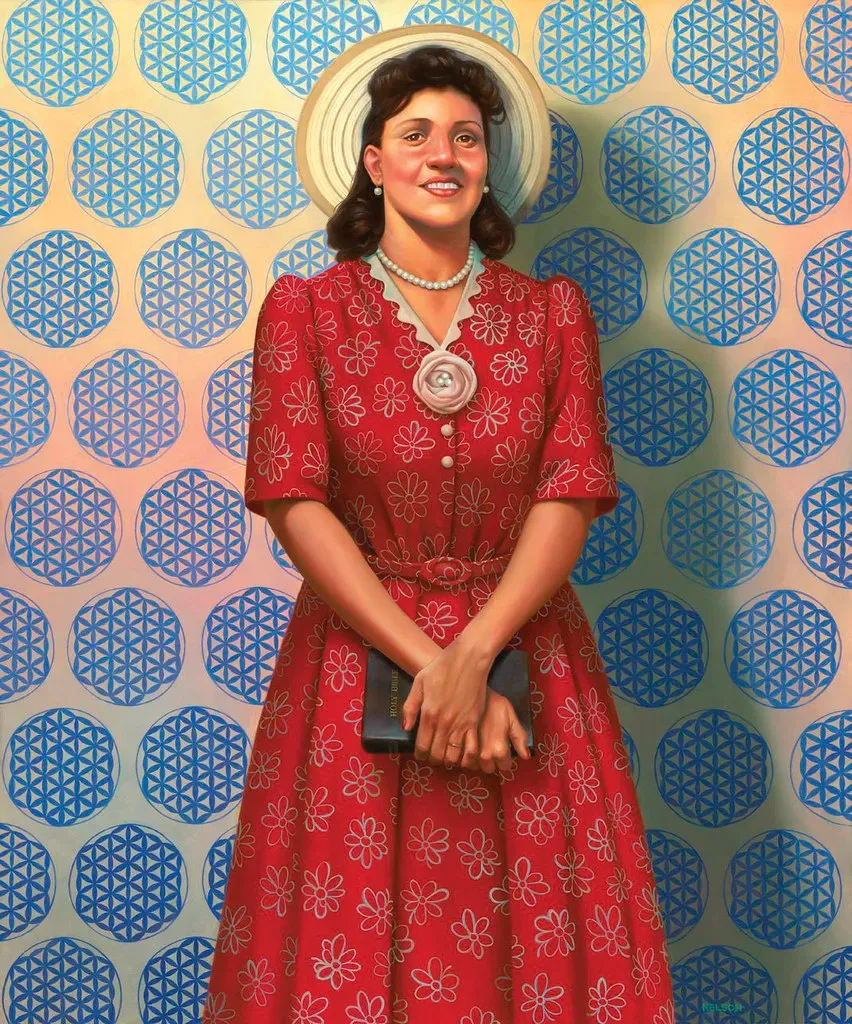
Henrietta Lacks never knew she would become one of the most important figures in medical history. In 1951, doctors treating her for cervical cancer at Johns Hopkins Hospital took a sample of her tumor cells without her knowledge or consent. Those cells, dubbed HeLa cells, became the first immortal human cell line – they could reproduce indefinitely in laboratory conditions.
HeLa cells have been used in virtually every major medical breakthrough since the 1950s. They helped develop the polio vaccine, contributed to cancer research, AIDS research, gene mapping, and countless other scientific advances. Billions of HeLa cells have been grown and used in labs worldwide, yet Lacks and her family received nothing – not recognition, not compensation, not even acknowledgment for decades.
Lacks died at 31, never knowing her cells would outlive her by centuries and revolutionize medicine. Her family didn’t learn about HeLa cells until the 1970s, more than 20 years after her death. The ethical questions her story raises about consent, medical exploitation, and racial inequality in healthcare are still being debated today. Her contribution to science is immeasurable, yet she remains largely unknown outside scientific circles.
Galileo Galilei

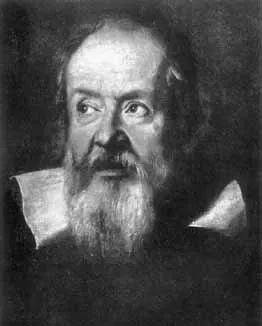
Galileo looked through his telescope in the early 1600s and realized the Earth wasn’t the center of the universe. This might not sound revolutionary now, but at the time, suggesting that Earth orbited the Sun rather than the other way around was considered heresy. The Catholic Church held enormous power, and contradicting biblical interpretations could get you killed.
He observed Jupiter’s moons orbiting the planet, proving that not everything in the heavens revolved around Earth. He saw the phases of Venus, mountains on the Moon, and countless stars invisible to the naked eye. His observations supported the Copernican model of the solar system, which placed the Sun at the center. For sharing these discoveries, he was tried by the Inquisition in 1633 and forced to recant his findings.
Galileo spent his final years under house arrest, forbidden from publishing or teaching his ideas. He went blind, possibly from looking at the Sun through his telescope, and died in 1642 still officially condemned by the Church. The Catholic Church didn’t formally acknowledge he was right until 1992 – 350 years later. Galileo understood the cosmos in a way that wouldn’t be widely accepted for generations, and he paid dearly for that knowledge.
Conclusion
These ten individuals prove that being right isn’t enough if you’re living in the wrong era. Their stories share a common thread – brilliant minds working in isolation, often ridiculed or persecuted, only to be vindicated after death when the world finally caught up. It makes you wonder how many visionaries are working today on ideas that seem crazy but will be obvious truths tomorrow.
The tragedy is how many of them died broke, scorned, or imprisoned despite their contributions to human progress. Society doesn’t reward being ahead of your time – it usually punishes you for it. What do you think about these forgotten pioneers? Tell us in the comments.