There’s something almost absurd about picking up a book that weighs more than your laptop, takes six months to finish, and still leaves you wishing there was more. These are the kinds of books that live rent-free in your head long after the final page. They aren’t just long – they’re complete worlds, packed with enough detail, philosophy, and raw human feeling to change how you see things.
Not every reader is ready for a commitment this enormous. That’s fair. But if you’ve ever felt that a book ended too soon, or that the best stories always seem to run out of time, the following list might just feel like it was made for you. Let’s dive in.
1. In Search of Lost Time – Marcel Proust
Published in French as “À la recherche du temps perdu” from 1913 to 1927, this novel in seven parts is the story of Proust’s own life, told as an allegorical search for truth. It stands as the major work of French fiction of the early 20th century, and at more than 1,300,000 words long, it is listed in the Guinness Book of World Records as the longest novel. Honestly, that statistic alone should stop you in your tracks.
It holds the Guinness World Record with 9,609,000 characters (including spaces), over 1.5 million words, more than 400 characters, and over 3,600 pages, published in either six or seven volumes depending on your edition. Essentially, the book tells the story of Proust’s life and self-discovery, following the narrator’s recollections of childhood and experiences growing up and falling in love in late 19th and early 20th century high-society France, while reflecting on the loss of time and the pursuit of truth and meaning. It is, in the most literal sense, a life’s work – both to write and to read.
2. Artamène, or The Grand Cyrus – Madeleine de Scudéry
This is the longest novel in French literature, with Madeleine de Scudéry’s Artamène ou le Grand Cyrus spanning 13,095 pages in its original edition. At 1,954,300 words, it is considered one of the longest novels ever published. That’s a number that barely computes. Think of it this way – reading this would be like reading War and Peace roughly three and a half times back to back.
Written at roughly 2.1 million words, the story was crafted in installments over four years. Most of the plot is broken into “histories” to keep track of the 400 characters and 100 different settings. At the heart of the story are two characters, the male hero Cyrus and Mandana, who is always being taken from her home. Between 1649 and 1653, French readers couldn’t wait to get their hands on the next segment. The appetite for long-form storytelling is, apparently, not a new thing.
3. War and Peace – Leo Tolstoy
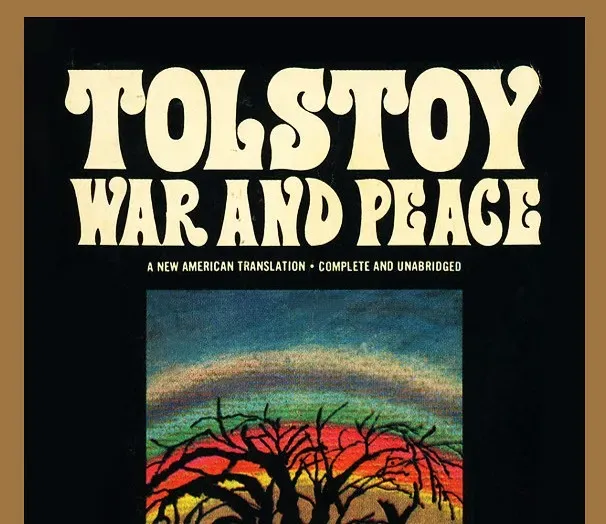
War and Peace is a literary work by Russian author Leo Tolstoy. Set during the Napoleonic Wars, the work comprises both a fictional narrative and chapters in which Tolstoy discusses history and philosophy. An early version was published serially beginning in 1865, after which the entire book was rewritten and published in 1869. It is regarded, along with Anna Karenina, as Tolstoy’s finest literary achievement and remains an internationally praised classic of world literature.
War and Peace encompasses around 587,287 words, reflecting Tolstoy’s intricate storytelling about life during the Napoleonic Wars through rich character development. It uses five interlocking narratives following different Russian aristocratic families to illustrate Napoleon’s impact on Tsarist society. Only the first half of War and Peace deals with fictional characters; the rest consists mostly of essays on war, power, and history. Tolstoy didn’t agree with the way military history is recorded and tried to get closer to the real events by portraying them through the eyes of real and fictional characters. It’s equal parts novel and manifesto.
4. Clarissa, or The History of a Young Lady – Samuel Richardson

Technically, the longest novel ever written originally in English and in one volume is Samuel Richardson’s Clarissa, or, the History of a Young Lady, published in 1748. The book runs to 1,534 pages and approximately 984,870 English words. For context, that’s roughly one and a half times the length of War and Peace – all in one single volume.
The story follows a young girl, the youngest daughter of a wealthy bourgeois family, who received a large inheritance from her grandfather. Possessing high moral values, she transferred her inheritance rights to other family members and fell under the oppression of relatives who wanted to marry her off to a rich man. Denying a marriage of convenience, the girl actively resisted and became a victim of an insidious seducer, with whom she had a long moral struggle for honor and dignity. A fascinating plot and complex psychology made this work a world literary heritage. It was scandalous for its time and remains deeply gripping today.
5. Poor Fellow My Country – Xavier Herbert

At a staggering 1.2 million words, Poor Fellow My Country by Australian author Xavier Herbert holds the distinction of being the longest Australian novel and possibly the longest single-volume novel ever written. Published in 1975, this epic work spans over 1,463 pages and offers a sweeping portrayal of Australian society and culture in the early 20th century. Through vivid characters and intricate storytelling, Herbert explores themes of identity, race, and nationhood against the backdrop of the Australian landscape.
Poor Fellow My Country is the longest Australian novel ever written. The book is set between 1930 and 1940 in Northern Australia. Herbert details the events of that era that shaped the country into what it became. The large cast of characters featured in the book paints the picture of the racial, familial, and political disparity the country faced during that period. I think this one deserves far more global attention than it gets. It is a serious literary achievement hiding in plain sight.
6. Sironia, Texas – Madison Cooper
Waco novelist Madison Cooper made news in 1952 when Time magazine declared his 1.1 million word Sironia, Texas to be “the longest novel by an American.” The novel was a New York Times bestseller for 11 weeks. At the time the novel was scandalous and banned in some places. It is the kind of book that can single-handedly rewrite what you think you know about a place.
Sironia, Texas won the Houghton Mifflin Literary Award. Most believe the book disguises the author’s hometown of Waco, Texas. Throughout the book, Cooper satirizes upper-class southerners with jest. Tam Lipscomb is just a child at the novel’s beginning, and yet he goes on to become the novel’s main character by its end. Small-town America, fully dissected across nearly two thousand pages. It is an experience unlike anything else in American literary history.
7. Infinite Jest – David Foster Wallace
Infinite Jest by David Foster Wallace clocks in at approximately 543,709 words. While that might seem modest compared to some entries on this list, the book’s density, its footnotes, and its layered narrative structure make it feel every bit as massive as a 1,000-page doorstop. Let’s be real: reading it is less like a sprint and more like training for a marathon.
The novel is set in a near-future North America obsessed with entertainment, addiction, and the slow erosion of human willpower. Wallace crafted a book that is both outrageously funny and profoundly dark, sometimes within the same paragraph. There are bestselling books like Infinite Jest that are incredibly long. David Foster Wallace was already a name before Infinite Jest, but this novel cemented him as one of the defining voices of American fiction. It is demanding, exhausting, and ultimately unforgettable.
8. A Dance to the Music of Time – Anthony Powell
Anthony Powell received critical acclaim upon the release of A Dance to the Music of Time, releasing it in 12 separate volumes between 1951 and 1975. At its core, the book examines the movements and manners of English political life. Nicholas Jenkins serves as the story’s narrator over its entirety. Time magazine included the novel in a list of the 100 best English-language novels from 1923 to 2005, and the BBC’s rankings placed it as the 36th greatest British novel ever.
A Dance to the Music of Time comes in at roughly one million words. Think about what that means – a full century of English upper-class social life, observed with fine-grained precision across twelve volumes. It is the literary equivalent of a slow-burn documentary series. Here’s the thing: not many readers have heard of this one, and that is a genuine shame, because it is one of the most elegantly constructed long-form works in the entire English language.
9. Les Misérables – Victor Hugo
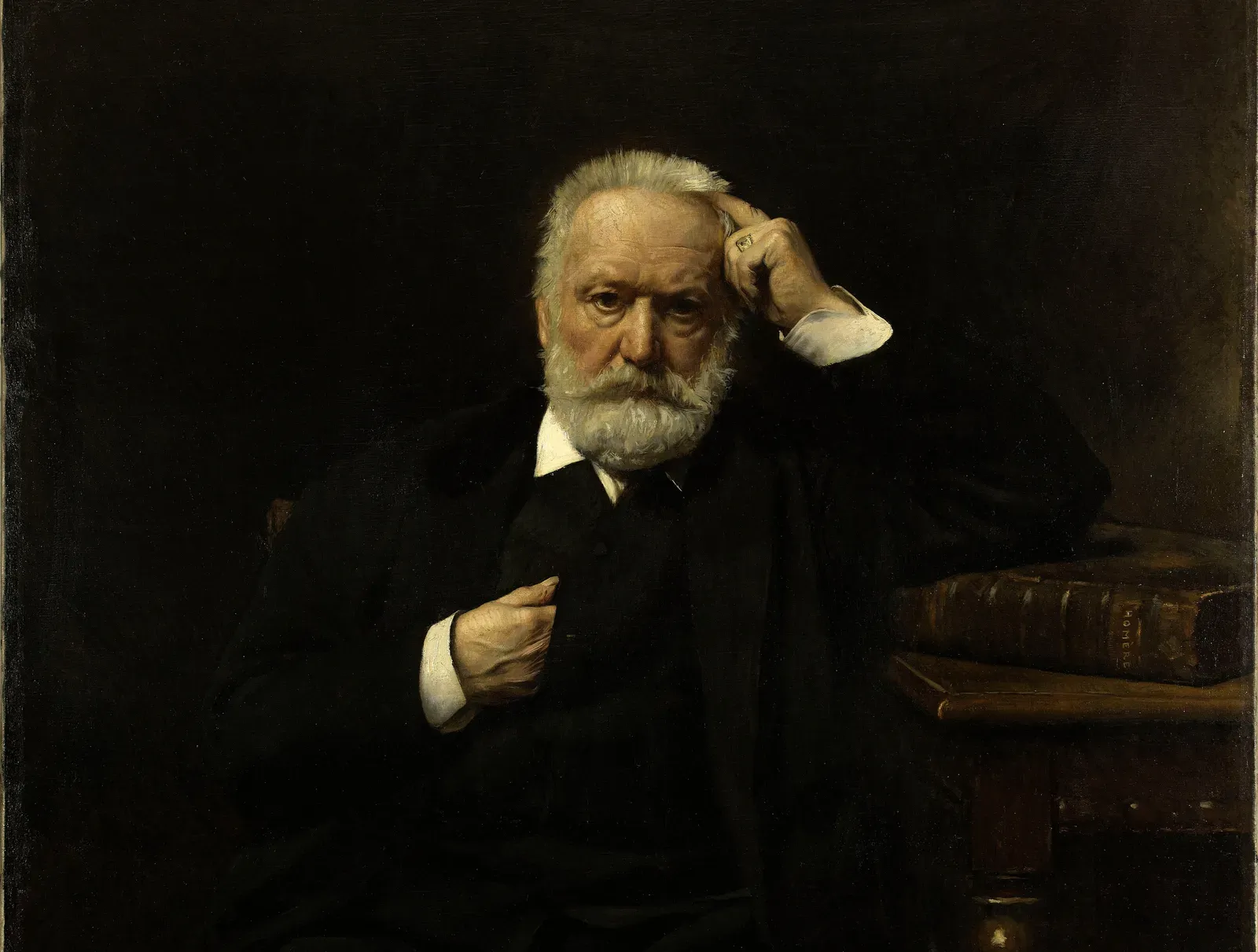
Wikipedia lists Les Misérables at 655,000 words. In page terms, it runs to approximately 1,800 pages in many editions. Victor Hugo’s epic about justice, redemption, and the soul of post-revolutionary France is one of those books that people think they know because of the musical. Trust me: they don’t. The actual novel is a different creature entirely – broader, stranger, and so much richer.
Hugo doesn’t just tell the story of Jean Valjean and Inspector Javert. He also embeds long digressive essays about the Battle of Waterloo, the Paris sewer system, and the nature of progress itself. These sections can feel like detours, but they are part of what makes the book breathe as a whole. It is a world, not just a story. Reading all of it, every dense and magnificent page, is one of the most rewarding literary experiences available in the Western tradition.
10. Zettel’s Traum (Bottom’s Dream) – Arno Schmidt

Zettel’s Traum is also known as Bottom’s Dream, and it entered circulation in 1970. It was initially a German book, but an English translation hit the market in 2016. Arno Schmidt took his inspiration from James Joyce’s Finnegans Wake. Despite being over 1,300 pages long, the story occurs over a 25-hour timespan. Its unique style employs a Freudian understanding of language and distinct typographic features.
Zettel’s Traum follows a couple who is translating Edgar Allan Poe’s works, and despite being over 1,300 pages long, the entire story occurs over a 25-hour timespan. Its expressionistic style unleashes a creative storm and disregards traditional rules. The first volume alone weighs in at over 390,000 words. If you are looking for a post-modern epic, this one might be it. It is not an easy read – honestly, it may be the most difficult book on this entire list. Still, it rewards those brave enough to stay the course with a literary experience that has no real equivalent anywhere else.
A Final Word on Big Books
There is something quietly radical about committing to a massive book in an age of shrinking attention spans. These ten works aren’t just long for the sake of it. Each one earns its page count. Each one contains entire lifetimes, philosophies, and civilizations between its covers.
Books with more than 1,000 pages are rare due to impracticality. The ones that survive that threshold, that find readers generation after generation, tend to do so because they offer something that shorter books simply cannot: true immersion. The world doesn’t just visit you on the page. You go live in it.
Which of these massive reads have you already tackled, and which one will you pick up next? Tell us in the comments.