We love the spectacle of blockbuster cinema. Explosions that defy physics, impossible rescues from falling disasters, and space battles that light up the screen with sound and fury. These moments make our hearts race, but here’s the thing: most of what we see isn’t just enhanced for entertainment. It’s completely, scientifically wrong. You might think you’ve caught the obvious mistakes, the glaring plot holes and physics gaffes. Yet there’s a whole world of scientific errors hidden in plain sight that even the sharpest moviegoers overlook.
Let’s dive into what science actually says about some of Hollywood’s biggest hits. You’ll never watch these movies the same way again.
Armageddon’s Invisible Asteroid
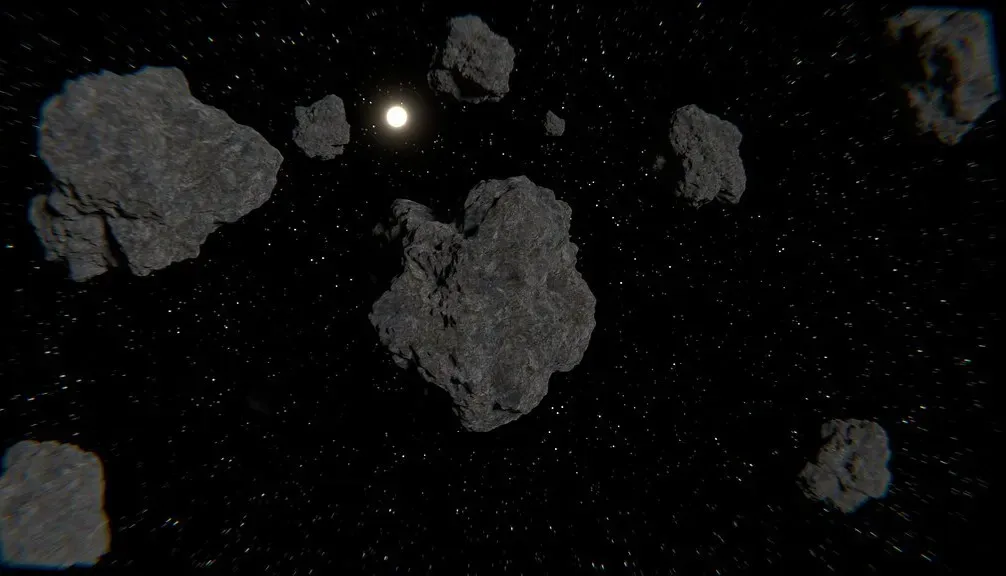
In the 1998 disaster film Armageddon, a NASA scientist informs the president that an asteroid “the size of Texas” will hit Earth in 18 days, but any astronomer would point out that an asteroid this massive would have been visible probably years before. Think about that for a second. We’re talking about something roughly the size of an entire state hurtling through space.
There are teams of astrophysicists keeping an eye on all the objects of a certain size that come close to Earth’s orbit. Modern detection systems can spot asteroids up to several kilometers across months or even years in advance. An object the size of Texas? We’d see it coming long before Bruce Willis would need to suit up. The entire premise collapses under the weight of its own absurdity, though the film did consult with NASA on spacecraft design.
The Core’s Spinning Catastrophe

When The Core was first released in 2003, it badly bombed at the box office, with one physicist speculating that the public stayed away because it could smell garbage, and Emory University Physics Professor Sidney Perkowitz was so bothered by the movie’s misinformation that he crafted a set of guidelines to help Hollywood studios avoid future embarrassments, with hundreds of fellow scientists expressing support for his position. Honestly, this film deserves its reputation.
The movie claims Earth’s core stopped spinning, causing global catastrophes. Scientists need to drill to the center to restart it with explosives. According to scientist David Kirby, the film got totally reamed by scientists. The premise is so fundamentally flawed that it became a cautionary tale for how not to depict science. The rotating core doesn’t just “stop” like a broken clock.
2012’s Mutant Neutrinos
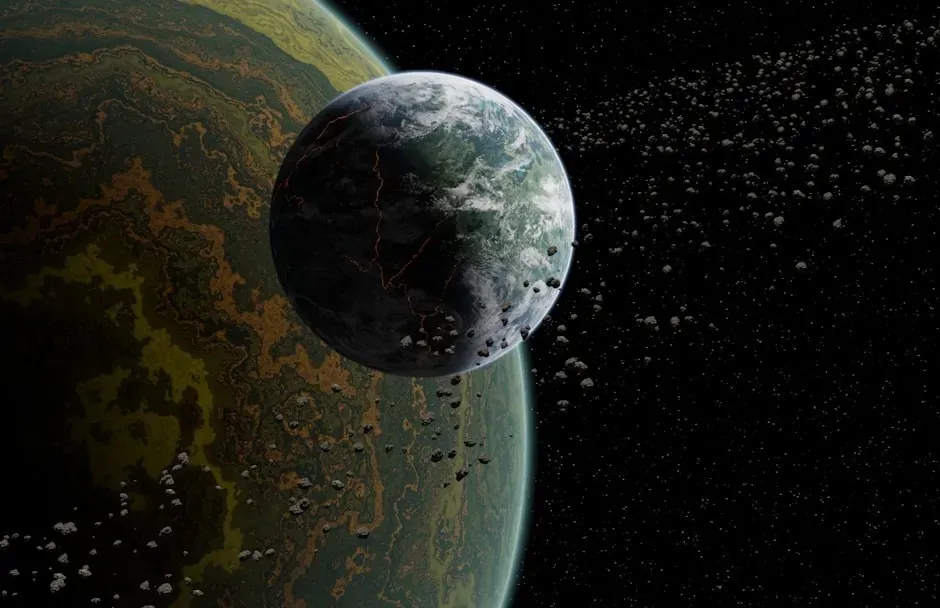
In the sci-fi flick 2012, which NASA experts voted as the most absurd science-fiction film of all time in 2011, the movie tries to explain disasters by blaming neutrinos for a spike in the temperature of the Earth’s core, but in reality, neutrinos are small, fast and incapable of melting the center of the Earth, even in large amounts. Let me break this down: neutrinos are subatomic particles that barely interact with matter at all.
A character in the film states that neutrinos from the sun have mutated into a new kind of nuclear particle that heats up Earth’s core and acts like microwaves, but this doesn’t make any sense at all because neutrinos largely pass through the earth harmlessly, and the filmmakers could have easily invented entirely new particles. The scientific community wasn’t just annoyed by this. They were baffled that such a nonsensical explanation made it into the script.
Gravity’s Tethered Tragedy
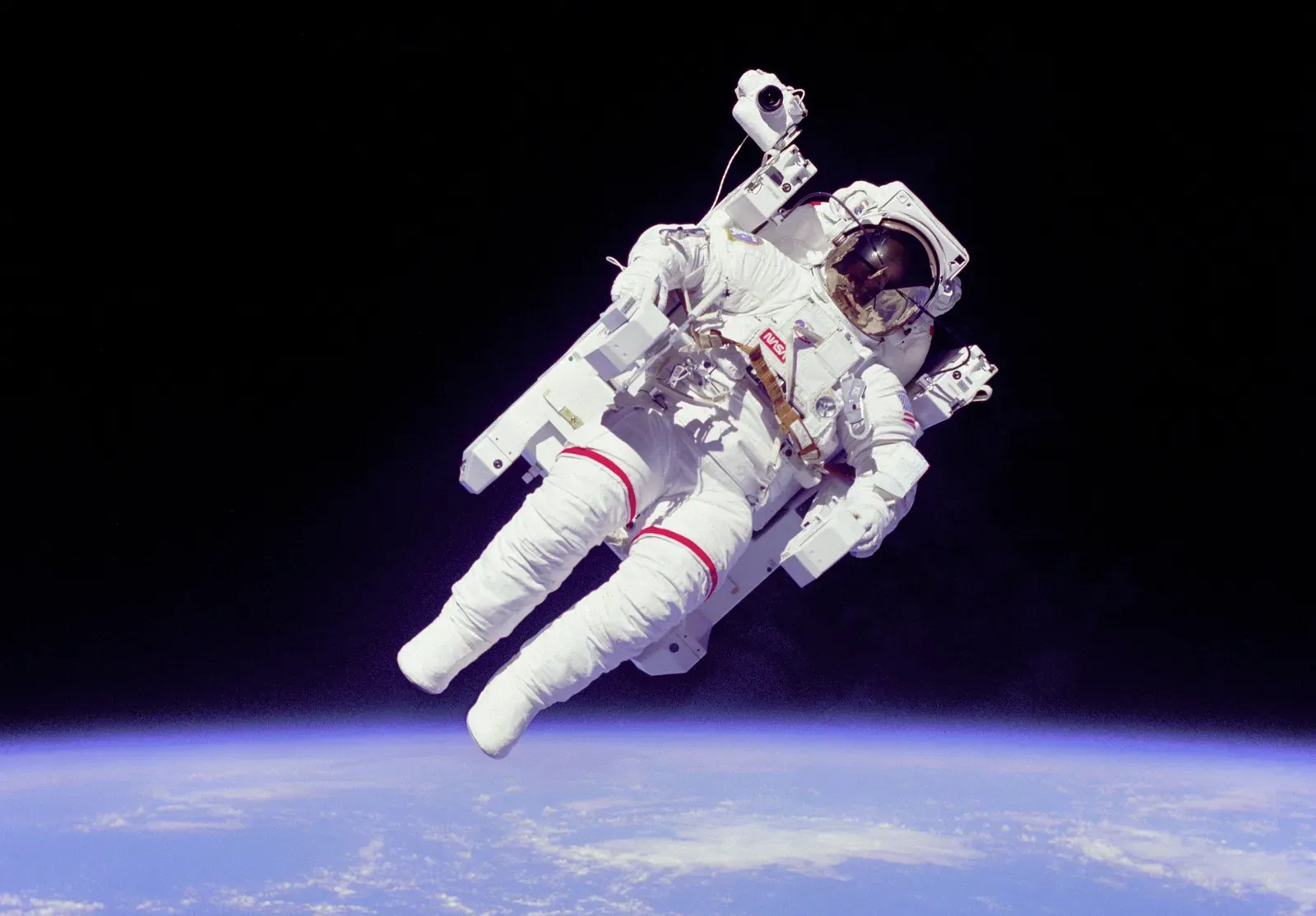
When George Clooney’s character sacrifices himself in Gravity, the scene is emotionally powerful. Yet it makes absolutely no sense from a physics perspective. When Sandra Bullock is hanging on the end of the rope and Clooney says “you can’t hold on to both of us”, there is no reason why she can’t pull both of them toward the station because he weighs almost nothing in space, and there is no reason why the rope went tight instead of bouncing them in the other direction.
According to the Washington Post, there are a number of things the movie has wrong about space: bodies don’t freeze instantly when exposed to space, tears don’t float off your face and you can’t simply point at an object and go toward it. The emotional weight of the scene lands perfectly, even if the physics don’t. Still, it’s hard not to think about what could have been if they’d gotten it right.
Interstellar’s Black Hole Problem
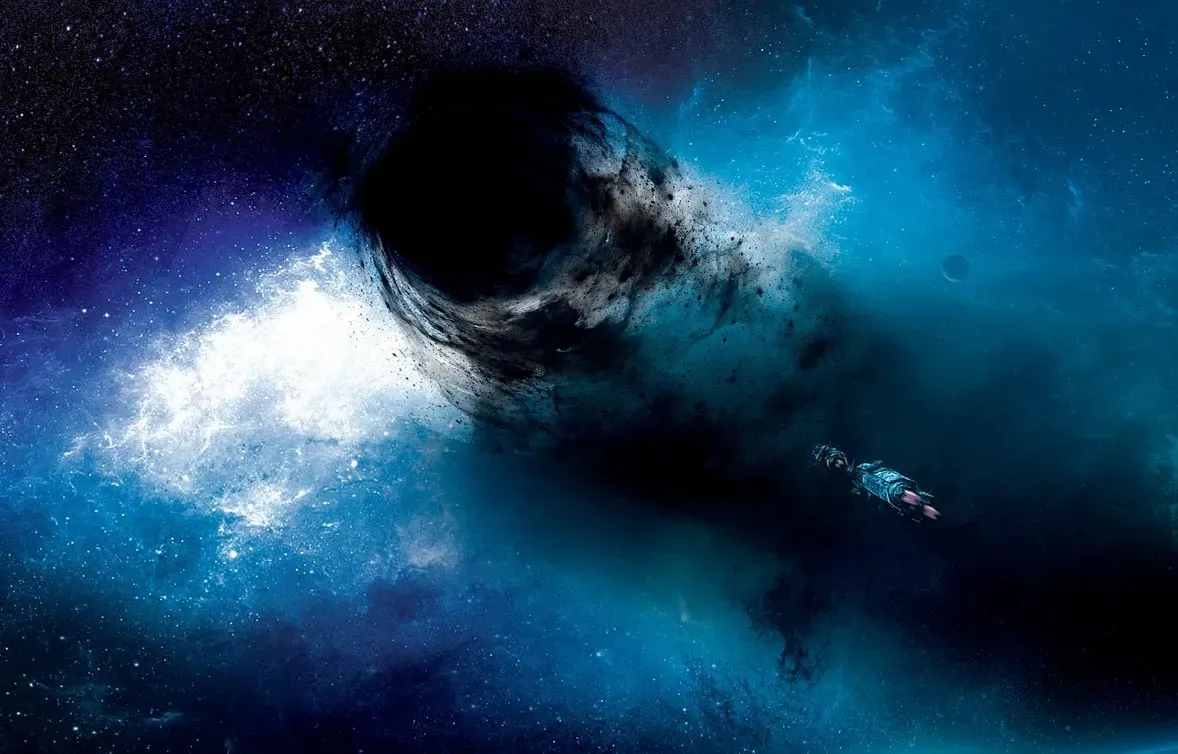
Christopher Nolan’s Interstellar earned praise for its scientific ambition and stunning visuals. The film was largely hailed as one of the film industry’s most sincere attempts to stay faithful to the science of science fiction, with astrophysicist Neil deGrasse Tyson giving it a thumbs up. Yet even with physicist Kip Thorne consulting, problems slipped through.
One of the three planets orbits very close to the black hole, so close there will be severe relativistic effects where one hour on the planet equals seven years elapsing back on Earth, but this is a big problem because to get that kind of time dilation you need to be just over the surface of the black hole, and the minimum stable orbit around a black hole must be at least three times the size of the black hole itself. The planet simply couldn’t exist where the film places it.
Jurassic Park’s Lysine Loophole
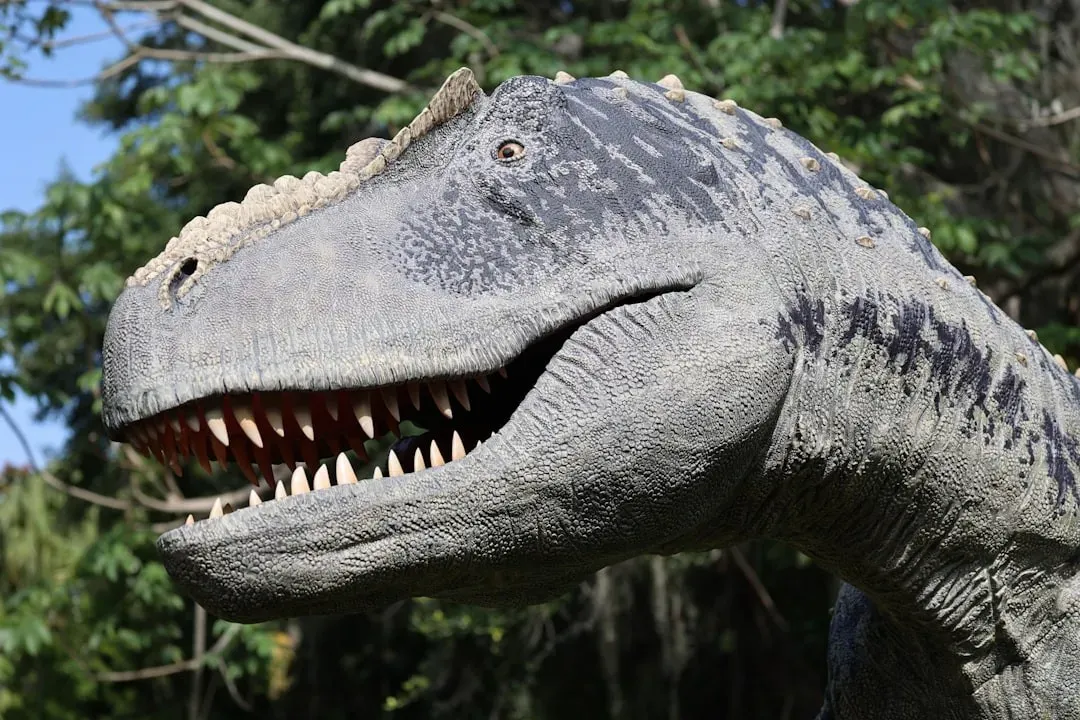
Jurassic Park remains a beloved classic, and rightly so. The dinosaurs look incredible, the tension is masterfully built, and the premise is fascinating. One of the favorite bloopers was Jurassic Park using “Lysine Contingency” for biocontainment, which was an introduced genetic alteration that made the dinosaurs dependent on lysine supplements from the staff so they couldn’t survive outside the park, but lysine is present in all foods in the world, according to geneticist George Church.
For scientists in real life to recreate dinosaurs from preserved DNA, you would need a whole genome to replicate, and scientists don’t have even a small amount of dinosaur DNA, according to the BBC. The whole foundation crumbles under scrutiny, though it doesn’t make the movie any less entertaining.
The Day After Tomorrow’s Instant Ice Age

According to the film The Day After Tomorrow, global warming is going to hit us smack upside the head and at lightning speed, but geological records show that even the fastest-descending ice ages still take about a decade to consume the world, not a matter of days. The film depicts New York freezing solid in what appears to be hours, with a massive storm system plunging the northern hemisphere into an instant ice age.
The National Center for Atmospheric Research told NBC that temperatures could drop in parts of the world, but it would take decades for such a big switch, and the movie embellishes how dramatically and quickly the change occurs. Climate science is terrifying enough without the Hollywood exaggeration. The real threat doesn’t need to be sped up for dramatic effect.
Fast Five’s Impossible Vault Heist

The Fast and Furious franchise has never been accused of realism. Cars fly, physics bend, and gravity seems optional. In Fast Five, Dom and Brian steal a vault full of a hundred million dollars in cash by using two Dodge Chargers to tow it through the streets at breakneck speeds, but if the vault was full of millions in cash, it would weigh around fifteen tons, and Harvard physicist Dr. Randall Kelley calculated that it would take about 467 Dodge Chargers to move that heavy vault at the speeds seen in the movie.
Realistically, the two cars would have maxed out at roughly two miles per hour. The scene is exhilarating to watch, with the vault smashing through buildings and causing chaos. It’s pure spectacle, but the math just doesn’t work. Sometimes you have to admire the sheer audacity of ignoring physics so thoroughly.
Transformers’ Mid-Air Rescue Fantasy

Catching someone from a fall isn’t really going to help because both scenarios will result in the human being bursting open like a watermelon when they touch a solid surface, whether it’s Optimus Prime’s metallic mitt, Spider-Man’s protective embrace or Superman’s swooping last-minute grab. This applies to nearly every superhero movie ever made, but Transformers is particularly guilty.
Michael Bay isn’t one for scientific rigor in his movies, as demonstrated by his favoring of ridiculous set pieces and action sequences that bend the laws of physics, and when a human is falling at near terminal velocity, a huge robot catching you will have exactly the same result as smacking into the pavement: complete evisceration of your bodily form, even if you are Shia LaBeouf. The sudden deceleration would be just as lethal as hitting the ground. It’s a harsh reality that ruins countless heroic moments across cinema.
Star Wars’ Explosive Sound Effects
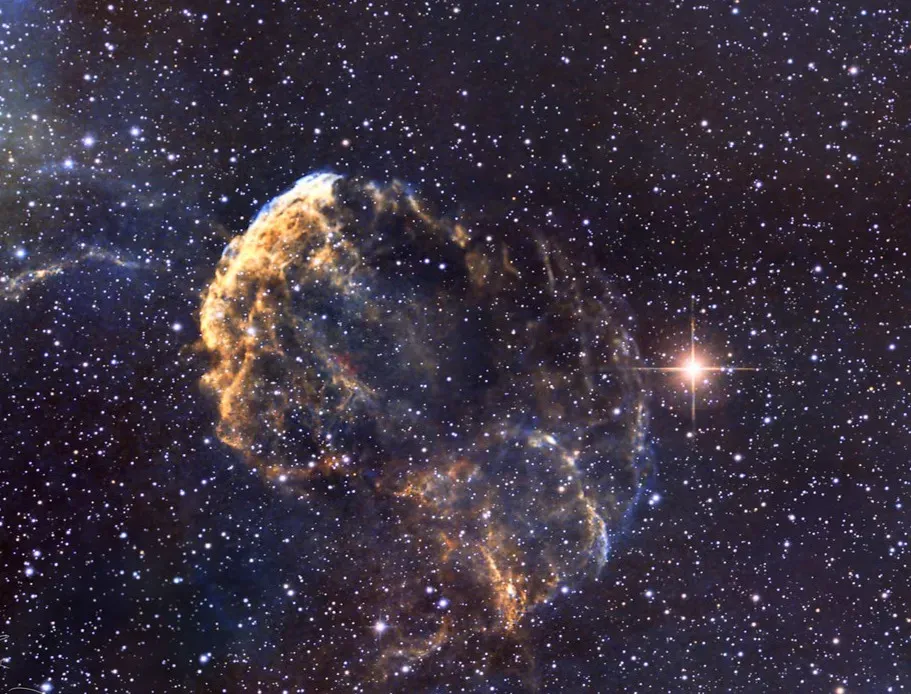
Perhaps the most widespread scientific error in blockbuster films is the presence of sound in space. Many science fiction movies feature battles between ultra-fast starfighters and enormous starships, with Star Wars being the first franchise to prominently feature deep-space explosions, but this kind of fiery explosion is impossible outside of an oxygen-rich atmosphere. Sound requires a medium like air to travel through, and space is a vacuum.
Per Cornell Astronomy, air is absent in the vacuum of space, which is a problem if you want to hear things because hearing sound is only possible when there’s a proper medium for molecules to vibrate through, and while light can travel through space with no problem because it doesn’t need air, it isn’t accompanied by sound, though there are gas clouds in space where sound can travel. Every whoosh, explosion, and laser blast we hear in Star Wars is scientifically impossible. I know it sounds crazy, but those iconic sound effects are pure fiction.
Conclusion
Hollywood has always walked a tightrope between scientific accuracy and pure entertainment. These errors don’t necessarily ruin the films, they just reveal how much creative license filmmakers take to give us thrilling experiences. The real question is whether we care. For most audiences, the answer is no, and that’s perfectly fine. Movies are meant to entertain, not educate. Yet for those who love science, these moments can pull you right out of the story.
Some filmmakers are trying harder than ever to get it right, consulting with scientists and pushing for accuracy where it matters. Others embrace the absurdity and lean into spectacle. Either approach can work, as long as we remember that what we’re watching is fiction, not a documentary. So the next time you watch a blockbuster, ask yourself: does it matter if the science is wrong? What do you think about it?