
Some scenes need spectacle to make an impact. Others need almost nothing at all: a closed door, a whispered line, a single unbroken shot of someone crying. The scenes that tend to stay with us longest are often the quietest ones, built from restraint rather than noise. What follows is a look at ten moments from cinema history that prove simplicity, when handled with precision, can hit harder than any explosion or chase sequence ever could. Each one relies on a small gesture, a repeated phrase, or a held silence to say something that dialogue alone could never fully capture.
1. Up (2009): The wordless story of Carl and Ellie


Pixar’s decision to open a children’s film with a nearly dialogue-free montage covering an entire marriage still feels like a bold gamble more than fifteen years later. Making Up’s opening reminiscent of a silent film wasn’t the initial plan, but after encouragement from storyboard artist Ronnie del Carmen, director Pete Docter decided to cut the already-scripted dialogue. The result is a sequence that shows two people meeting as kids, falling in love, and growing old together in the space of a few minutes.
Two seemingly mismatched people meet as children, fall in love, marry, and share a lifetime together until loss wrenches the partnership into solitude, with regret propelling Carl’s every action afterward. Composer Michael Giacchino built the accompanying theme, “Married Life,” around the idea of a grandmother’s music box rather than a conventional film score, which is part of why it feels so intimate rather than cinematic. It remains one of the clearest examples of a studio trusting silence and music to do work that pages of dialogue never could.
2. The Godfather (1972): A door closing on Kay

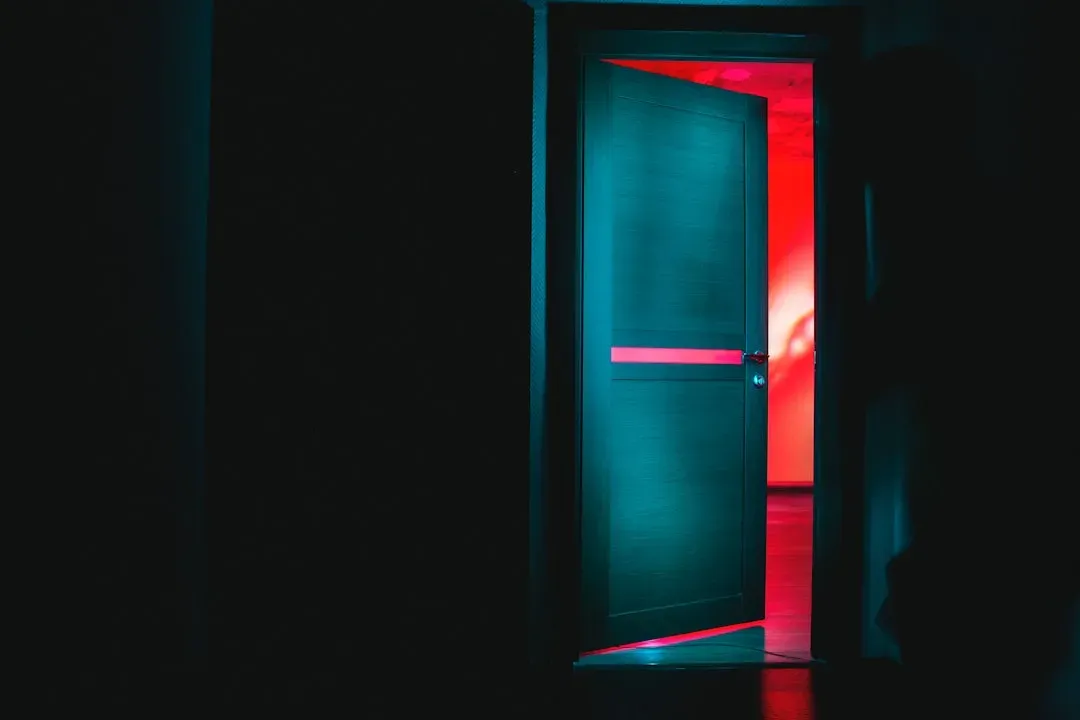
Francis Ford Coppola ends his three-hour crime epic not with gunfire but with a door swinging shut. With a simple closing of a door, the director says everything that needs to be said about the film’s protagonist, and the beauty of the scene is that it’s quiet, deceptively simple, and yet completely shattering. Kay has just asked Michael one direct question, and he has lied to her face with total calm.
What makes the shot linger is the ambiguity underneath it. The real significance isn’t that Kay is barred from her husband’s business, but that Michael has barred himself from the world outside; he is the one on the wrong side of the door, shut in rather than shut out. No score swells, no character explains the symbolism out loud. The door simply closes, and the film ends there, letting the image carry the entire weight of Michael’s transformation.
3. Good Will Hunting (1997): “It’s not your fault”


Robin Williams’ therapist character spends most of the film sparring verbally with Matt Damon’s Will, but the movie’s most remembered scene strips that wit away entirely. Williams, playing therapist Sean Maguire, compassionately repeats the line “It’s not your fault” to Will, a response to the revelation of abuse Will endured as a child. Will initially brushes it off, treating the phrase like a joke he’s heard before.
The repetition is the entire scene. As his therapist steadily repeats the line, Will becomes increasingly agitated before finally erupting into emotion, tearfully allowing the meaning of the words to sink in. There’s no twist, no new information revealed. Four plain words, said enough times to break through years of defense, do all the heavy lifting.
4. Lost in Translation (2003): The whisper nobody hears

Sofia Coppola’s film builds toward a farewell between two lonely strangers in Tokyo, and instead of a big romantic speech, she gives audiences a line they can’t even hear. Lost in Translation ends with Bob spotting Charlotte in a Shibuya crowd, holding her on the pavement, and whispering an inaudible sentence into her ear before driving away. Coppola has said the choice was partly practical and partly instinctive.
She’s since explained that the moment wasn’t scripted with a specific line in mind at all. “That thing Bill whispers to Scarlett was never intended to be anything. I was going to figure out later what to say and add it in and then we never did. It was between them,” Coppola told an interviewer years after the film’s release. The refusal to explain the moment is exactly why audiences are still talking about it.
5. Call Me by Your Name (2017): Elio by the fire


Luca Guadagnino ends his coming-of-age drama with nearly four unbroken minutes of a young man’s face, lit only by firelight. The final minutes of the film are simply Elio crying; after he hangs up the phone, he walks over to the fireplace, curls up, and starts crying. There’s no dialogue, no cutaway, nothing to soften it.
What makes it work is the commitment to that single, static shot. It’s one continuous take rather than a series of edited cuts, and the camera was placed right in the fireplace with nobody positioned behind it. Timothée Chalamet carries the entire closing stretch of the film on his face alone, letting grief, gratitude, and something close to acceptance pass across his expression in real time.
Partner offer

6. Moonlight (2016): The diner reunion

Barry Jenkins’ Best Picture winner spends its final act on a reunion between two men who once loved each other as teenagers and haven’t spoken in years. Jenkins cuts to Chiron exiting his car with loud rap music blaring, illustrating the world he currently lives in, but upon entering the diner, the atmosphere immediately shifts to a calm and intimate setting. The shift in tone signals that something honest is finally about to happen between them.
The tension isn’t in what’s said but in what almost isn’t. There’s a silence between them that isn’t the easy kind that falls between close friends; it grows weightier and more insistent with every step they take together. Nothing dramatic occurs in the traditional sense, just two men finally allowing themselves to be seen, and it’s precisely that restraint that makes the scene so quietly devastating.
7. Casablanca (1942): “Here’s looking at you, kid”

Rick Blaine’s farewell to Ilsa on a foggy airport tarmac has become shorthand for cinematic romance, largely because of how little the scene actually asks of its audience. Humphrey Bogart delivers the line with a half-smile that suggests both heartbreak and resolve, sending the woman he loves away for her own good and his own survival. There’s no swelling orchestra drowning out the moment, just two people and a decision that can’t be undone.
Part of the scene’s staying power comes from its plainness. It isn’t staged as tragedy, even though it clearly is one. Rick’s calm delivery turns personal sacrifice into something almost casual, which is exactly why audiences have kept returning to those few lines for more than eight decades.
8. Manchester by the Sea (2016): The parking lot conversation


Kenneth Lonergan’s drama is full of grief that refuses to resolve neatly, and its most quietly brutal scene takes place between Lee and his ex-wife Randi in a parking lot. She tries to apologize for things said years earlier, and Lee, unable to accept comfort or offer forgiveness, simply walks away mid-sentence. There’s no shouting, no confrontation, just a man who has lost the ability to stay present in his own pain.
What lingers afterward is how unresolved it is. Lee doesn’t storm off in anger; he just can’t finish the conversation, and the film lets that incompleteness stand without correcting it. It’s a rare scene that trusts an audience to sit with discomfort instead of handing them catharsis.
9. Inside Out (2015): Bing Bong fades away
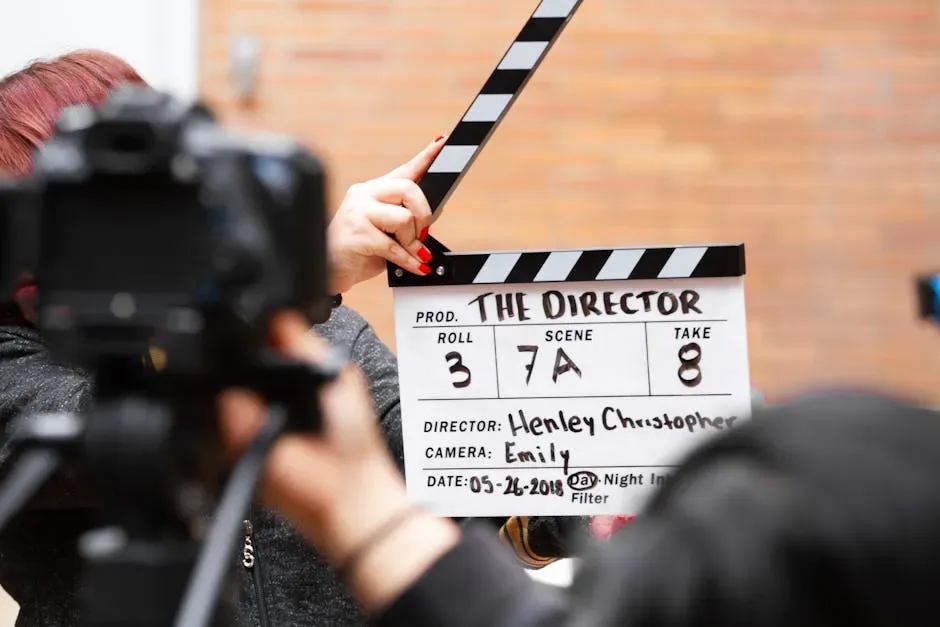
Pixar’s exploration of childhood emotions saves its hardest gut punch for Bing Bong, an imaginary friend who sacrifices himself so Joy can escape the Memory Dump. He doesn’t die in any conventional sense; he simply grows fainter and fainter until he’s gone, still smiling, still encouraging Joy to keep going. There’s barely any spectacle to the moment, just a character quietly disappearing from existence.
The scene works because it mirrors something recognizable about growing up: the way childhood things fade not through violence but through simple neglect and forgetting. Bing Bong’s final words are encouraging rather than desperate, which somehow makes the loss land even harder. It’s a small, almost throwaway character whose exit became one of the film’s most cited moments.
10. Marriage Story (2019): Charlie sings “Being Alive”

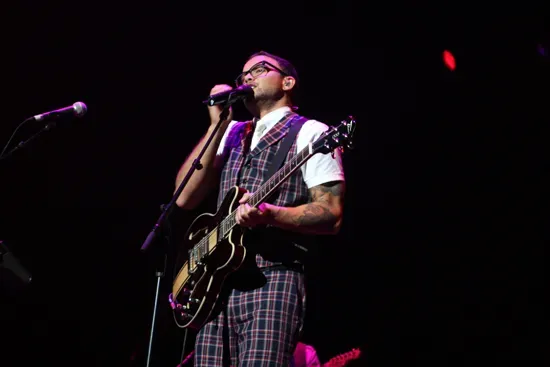
Noah Baumbach’s divorce drama spends most of its runtime on arguments, legal maneuvering, and slow-building resentment, so it’s notable that its emotional peak arrives through a Sondheim song. Adam Driver’s Charlie, performing at a karaoke-style gathering, sings “Being Alive” and slowly loses himself in the lyrics about needing someone to know you’re alive. The camera holds on his face as the performance stops feeling like a party trick and starts feeling like a confession.
There’s no dialogue explaining what he’s feeling, and none is needed. The song itself, written decades before the film, does the explaining. It’s a reminder that sometimes the most effective way to show a character’s inner collapse is to let someone else’s words carry it for them.
Scenes like these share a common thread: they trust small gestures over big statements. A closed door, a repeated phrase, a face lit by firelight, none of it requires elaborate staging, yet each moment has outlasted countless bigger, louder sequences from the same era. That kind of restraint is harder to pull off than it looks, which may be exactly why so few filmmakers manage it as well as these ten did.Partner offer
Planning a trip to Vegas?
Compare hotel rates and show tickets on VEGAS.com.