Some of the most exciting puzzles on Earth are not locked inside classified vaults or hidden in government archives. They are sitting right in front of us, in museums, deserts, and underwater wrecks, silently daring humanity to figure them out. We have sent spacecraft to Mars, cracked the human genome, and taught machines to think. Yet a handful of ancient relics keep winning the staring contest against our best scientists.
Here is the thing about ancient mysteries: the older they get, the more stubbornly they resist. Each new tool we throw at them reveals another layer, another contradiction, another tantalizing clue that leads precisely nowhere. Let’s dive in.
1. The Antikythera Mechanism – A Computer Two Thousand Years Too Early
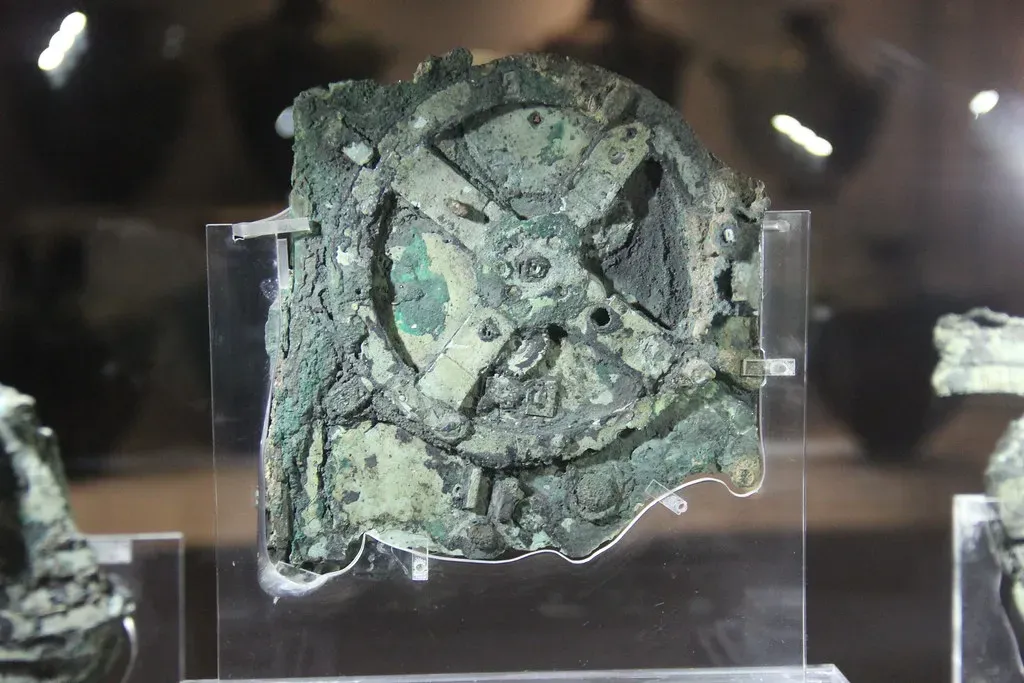
The Antikythera mechanism, discovered in 1901 by sponge divers exploring a sunken shipwreck off the Greek island of Antikythera, dates back approximately 2,200 years. Think about that for a moment. While the Roman Empire was still young, someone built this thing. This shoebox-sized device, constructed of intricate bronze gears, was used to model the motions of the sun, moon, and planets. Over decades, researchers have determined that the mechanism functioned as a hand-operated mechanical computer, allowing users to predict eclipses and calculate astronomical positions with remarkable accuracy for its time.
A University of Glasgow team, led by astrophysics professor Graham Woan and his colleague Dr. Joseph Bayley, used advanced statistical methods to analyze the positioning of the known holes and the fit of the mechanism’s fragments. Their techniques, including Bayesian analysis and methods used by the Laser Interferometer Gravitational-Wave Observatory to detect gravitational waves, provided strong evidence that the calendar ring contained either 354 or 355 holes – matching a lunar calendar, not a solar one as previously believed. Even more astonishing, computer simulation which reproduced the device’s current design suggested that the gear’s teeth may have routinely disengaged, causing the machine to jam. It is estimated that it could only be cranked about four months into the future before the gears slipped and required the object to be reset. Whether it truly worked as intended remains, honestly, an open question.
2. The Voynich Manuscript – Six Centuries of Frustrated Geniuses
![2. The Voynich Manuscript - Six Centuries of Frustrated Geniuses (Beinecke Rare Book & Manuscript Library, Yale University ([1])., Public domain)](https://nvmwebsites-budwg5g9avh3epea.z03.azurefd.net/lasvegasnews/ae3bd05688994375e8ae07d0a565f827.webp)
The Voynich manuscript is an illustrated codex, hand-written in an unknown script referred to as Voynichese. The vellum on which it is written has been carbon-dated to the early 15th century (1404–1438). Stylistic analysis has indicated the manuscript may have been composed in Italy during the Italian Renaissance. It is filled with bizarre illustrations of unidentifiable plants, naked women in pools, and astrological diagrams that match no known constellation. Over the centuries, countless cryptologists have searched for the secret key to unlocking the Voynich Manuscript, including World War II codebreaker Alan Turing and the FBI, but none have succeeded.
A researcher studying multispectral images of the famous Voynich Manuscript identified previously hidden columns of letters on its first page. The three columns, two bearing letters of the alphabet and one of unreadable “Voynichese,” appear to have been added by one of the manuscript’s early owners. Meanwhile, a recent peer-reviewed study published in Cryptologia does not claim to solve the mystery, but it shows that the manuscript could plausibly have been produced using a cipher that was within medieval technological capabilities. Despite all of this effort, the Voynich Manuscript remains undeciphered, and its language and meaning continue to be an open question.
3. Göbekli Tepe – The Temple That Rewrote Human History
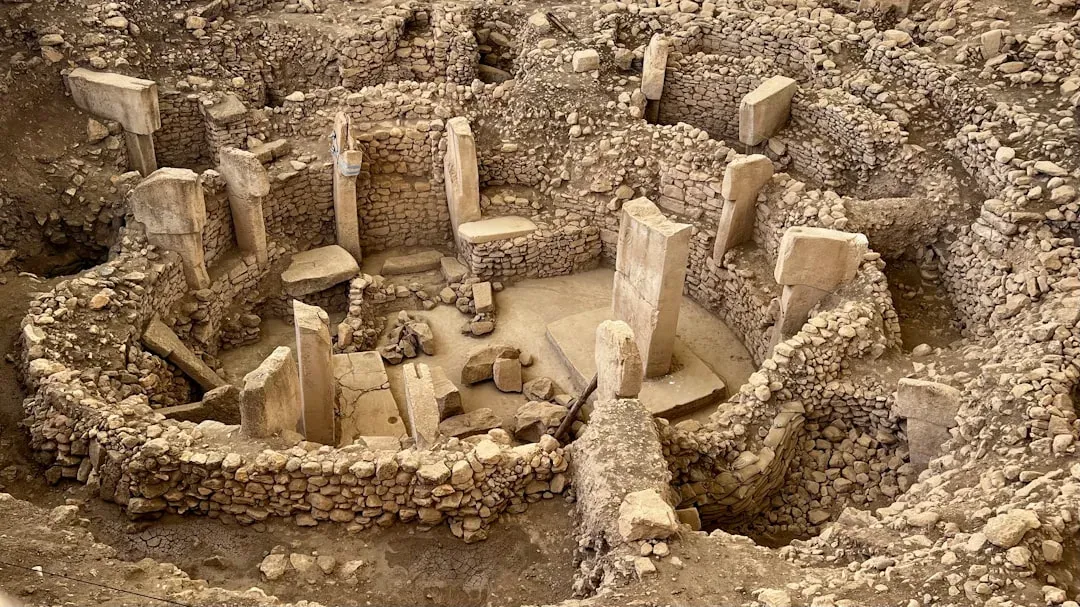
Göbekli Tepe is a Neolithic archaeological site in Upper Mesopotamia in modern-day Turkey. The settlement was inhabited from around 9500 BCE to at least 8000 BCE, during the Pre-Pottery Neolithic. It is known for its large circular structures that contain large stone pillars, among the world’s oldest known megaliths. Here is what makes this truly mind-bending: it predates the invention of writing, the wheel, and even pottery. Located on a hilltop in southeast Turkey, the structures built or dragged here weigh as much as 60 tons. Carbon dating on the site indicates it is 6,000 years older than Stonehenge, even before the invention of pottery and tools. The immense scale of the site has left everyone who has studied it puzzled and unsure of its origin.
Many of these pillars are decorated with anthropomorphic details, clothing, and sculptural reliefs of wild animals, providing archaeologists insights into prehistoric religion and the iconography of the period. Who organized the labor to build it? What religion inspired it? Since 2020, the project’s official approach is conservation-first with targeted excavation under protective roofs. Leadership has publicly denied “excavation suspended” stories and 2025 reports describe active restoration and ongoing digs. Large sections remain deliberately buried, preserved for future technologies we haven’t invented yet.
4. The Shroud of Turin – Science vs. Faith, Still No Winner
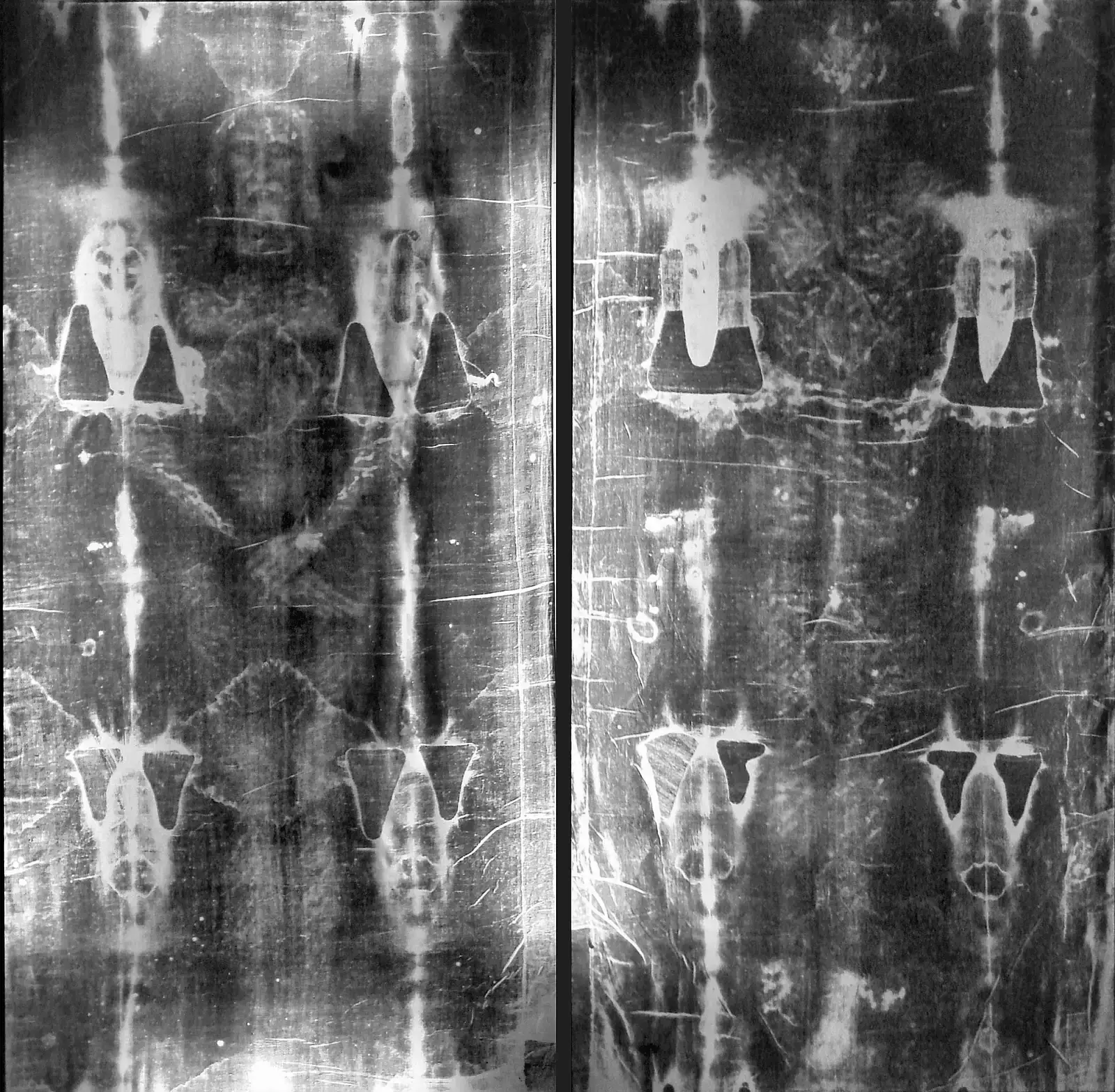
The Shroud of Turin is a centuries-old linen cloth bearing the faint image of a man, believed by some to be Jesus Christ. Housed in the Cathedral of Saint John the Baptist in Turin, Italy, the shroud has been the subject of intense scientific and religious scrutiny. Despite numerous tests and analyses, the origins and authenticity of the Shroud of Turin remain contentious. I think it says something profound about this relic that it has survived both believers and skeptics for centuries without either side landing a knockout blow.
Radiocarbon dating suggests a medieval origin, contradicting claims of its biblical significance. The shroud continues to inspire debate and intrigue, with new research attempting to unlock its secrets. As recently as 2025, the Shroud of Turin, a linen relic containing an image of a crucified man, has been studied extensively. To date the physical cause of the image has not been determined by science. Many researchers hypothesize that radiation was involved in causing the image. The how remains completely unexplained, regardless of what the who turns out to be.
5. The Minoan Linear A Script – An Entire Civilization, Still Silent
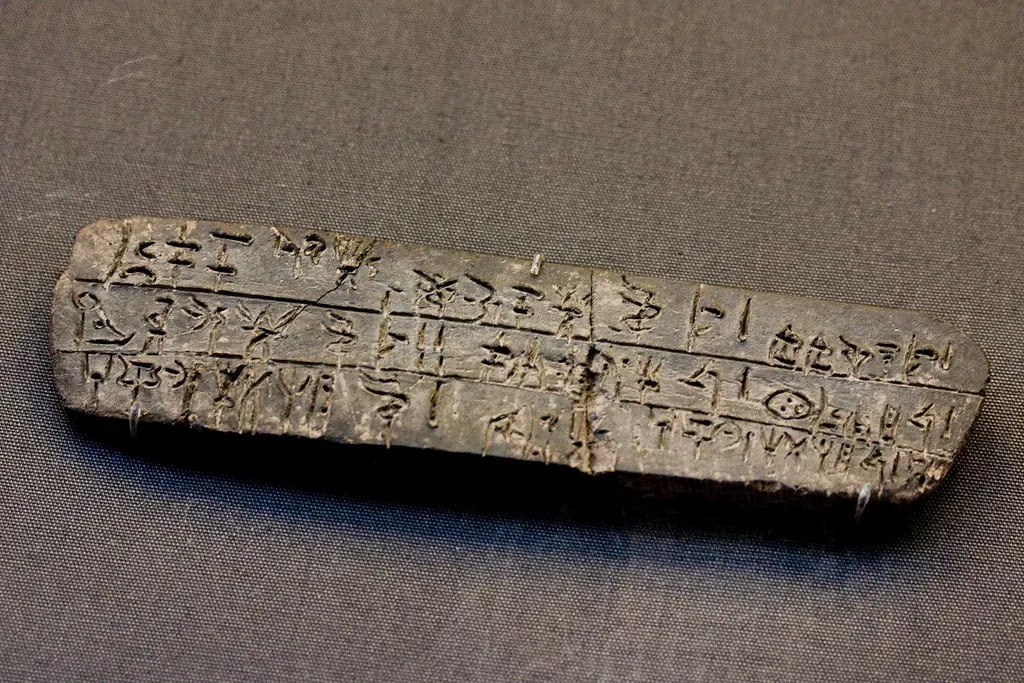
Two distinct but similar writing styles, Linear A and B, have been found on ancient Minoan relics, but researchers are still scratching their heads over the former. Greek-based Linear B was cracked in 1952 and represents syllables rather than letters. Still, that knowledge hasn’t opened the door to deciphering Linear A, which was used between 1800 and 1450 BC and remains an unsolved ancient mystery. Imagine knowing a language’s alphabet but having absolutely no idea what the words mean. That is exactly where we are.
More than 125 years after Evans lifted those first tablets from the Cretan soil, Linear A remains completely undeciphered. The signs can be read aloud with approximate phonetic values borrowed from Linear B, but the words produced are meaningless because the underlying Minoan language is unknown. Artificial intelligence has brought formidable new tools to the problem since around 2019, and researchers at Cambridge, Melbourne, and other institutions are actively applying them. Yet according to researchers, the breakthrough, if it comes, will not come primarily from better algorithms. It will come from the ground. Specifically, it will come from a bilingual inscription, a text that records the same content in Linear A and in a known language.
6. The Nazca Lines – Geoglyphs Nobody Was Supposed to See From the Ground
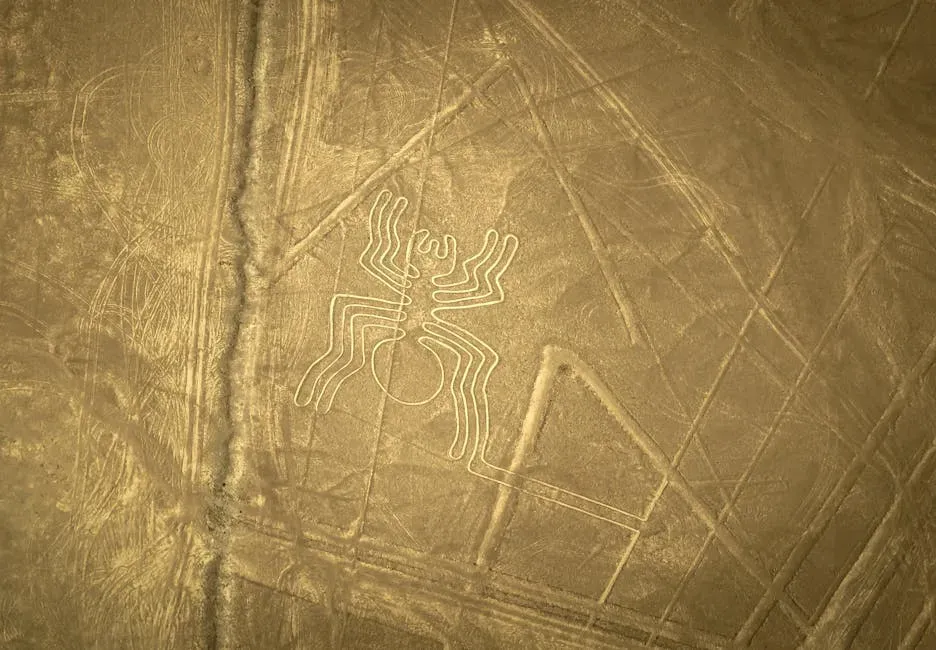
Carved into the red desert floor of southern Peru, the Nazca Lines are hundreds of giant drawings of animals, plants, and geometric shapes. They can only be fully appreciated from the air. The Nazca people made them between roughly 500 BCE and 500 CE, long before any aircraft existed. That single fact alone has fueled over a century of wild theories. Theories about the lines’ function range from astronomical calendars to religious offerings. Despite extensive study, the full significance of the Nazca Lines remains a mystery, continuing to captivate researchers and tourists alike.
In recent years, AI has actually made a stunning contribution to this mystery. Traditional archaeological methods found 430 Nazca Lines over a century, about 1.5 per year from 1940 to 2000. High-resolution satellite imagery bumped it up to 18.7 per year after 2000. Then AI arrived. In six months of 2022 to 2023, machine learning found 303 new geoglyphs. So we keep finding more of them. We still have no definitive explanation for why any of them were made in the first place.
7. The Baghdad Battery – Did the Ancient World Discover Electricity?
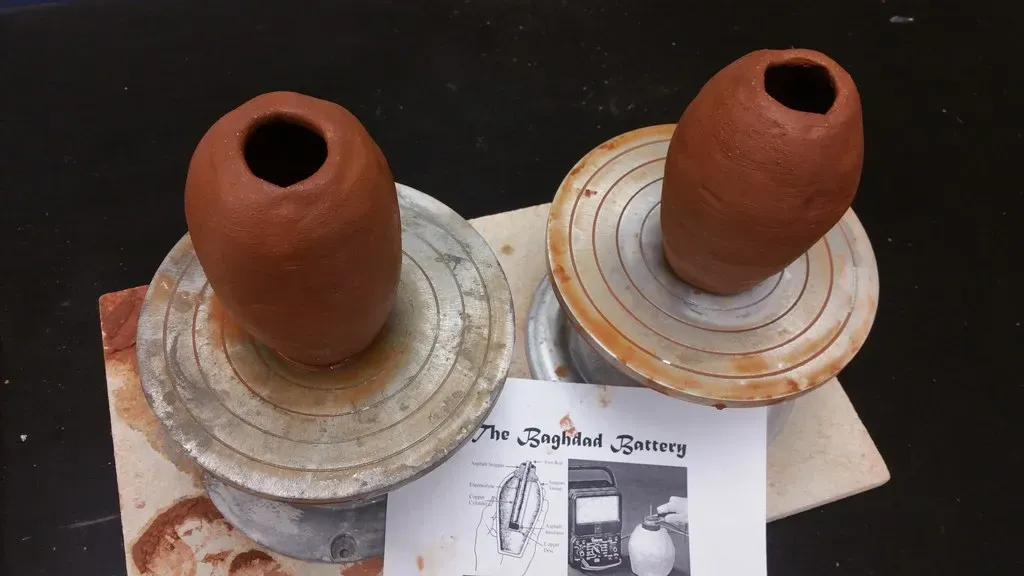
Wilhelm Konig is credited with the remarkable archaeological discovery of the Baghdad Battery in 1936. Located near Baghdad, Iraq, the discovery includes a clay jar, a copper cylinder, and an iron rod that suspiciously feels like a battery cell. Historians date the objects to between 250 BC and 650 AD, which is far earlier than the invention of the first modern battery in 1800. Let’s be real: if you found a clay pot containing a copper tube and an iron rod, “ancient battery” would not be your first guess. Yet that is exactly what this looks like.
Since the ancient artifact known as the “Baghdad Battery” was discovered in the 1930s, the purpose for which it was used has been a mystery. Wilhelm Koenig, a German curator of the Baghdad Museum, discovered it near Ctesiphon around 1936 but the context is uncertain. While some have proposed its use as a galvanic battery or device for electroplating, debate has been fierce. As of early 2026, a new study suggests it had an “outer” cell that reacted with air to supply a higher voltage. But was it a battery at all? Nobody knows. And that is the honest answer.
8. The Costa Rica Stone Spheres – Perfect, Purposeless, and Unexplained
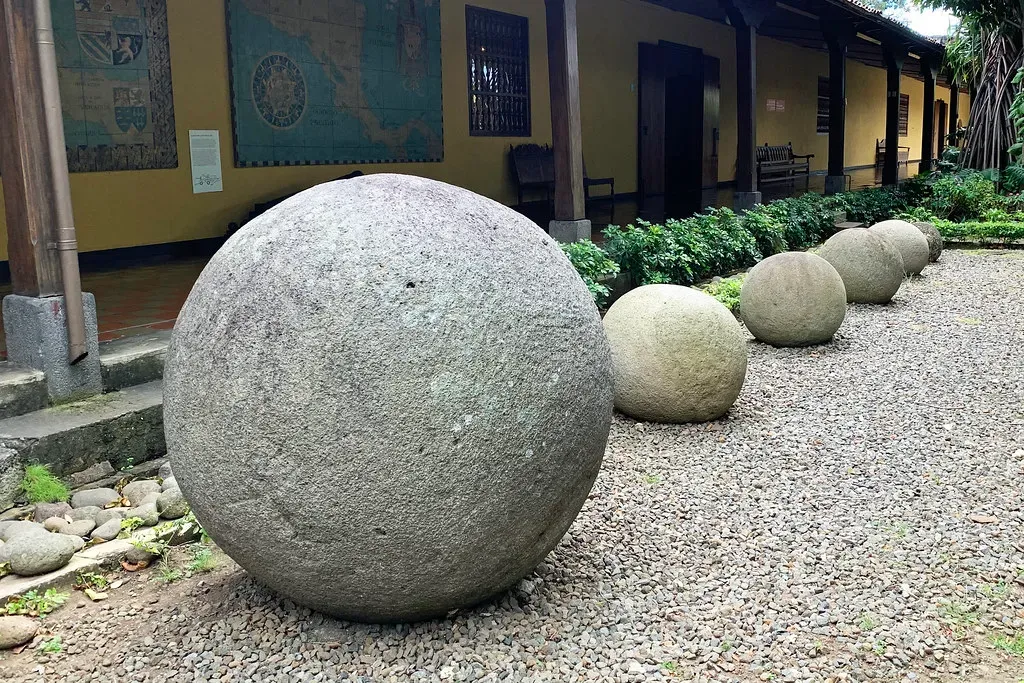
While clearing the jungle for banana plantations in 1940 in Costa Rica’s Diquis Delta region, employees of the United Fruit Company uncovered numerous large stone spheres partly buried in the forest floor. Around 300 spheres are known to exist, with the largest weighing 16 tonnes and measuring eight feet in diameter, and the smallest being no bigger than a basketball. Almost all of them are made of granodiorite, a hard, igneous stone. Achieving this level of spherical precision with pre-industrial tools borders on the unbelievable.
Since their discovery the true purpose of the spheres, which still eludes experts, has been the subject of speculation ranging from theories about the balls being navigational aids, to relics related to Stonehenge, the product of an unknown ancient civilization or visits from extraterrestrials. Honestly, the navigational aid theory seems almost too mundane for something this spectacular. What is clear is that whoever made them had extraordinary skill and a remarkable reason. We just have no idea what that reason was.
9. Sacsayhuamán – Stones That Shouldn’t Fit Together, But Do
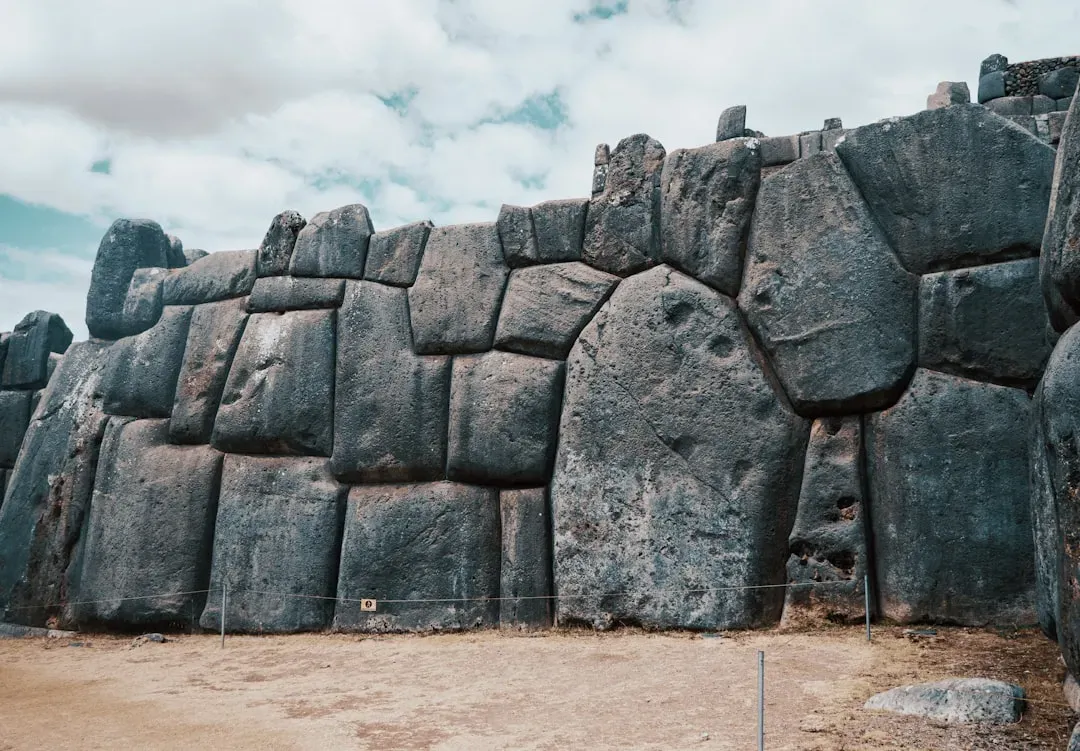
Perched above Cusco, Peru at roughly 12,000 feet, the walls of Sacsayhuamán are made from enormous limestone blocks fitted together so precisely that the construction still baffles engineers today. This walled complex sits just outside of Cusco, Peru and is part of what used to be the capital of the Inca Empire. The most baffling part about Sacsayhuamán lies in the details of its construction. The slabs of rocks fit together so tightly that it’s impossible to slide even a strand of hair between them. Sacsayhuaman serves as a lasting testament to the precision of ancient Incan architecture.
Many questions surround the Incans’ stone structure in Cusco, Peru. It was initially thought to be a fortress, but later evidence suggested it was used for ceremonies. Some of the largest stones weigh over 100 tonnes and were transported across significant distances. The official explanation involves ramps, ropes, and enormous human labor. Yet no one has successfully replicated the precision of these joints using only the tools available to the Inca at the time. The mystery of the method quietly endures.
10. The Phaistos Disc – 241 Symbols, Zero Translations
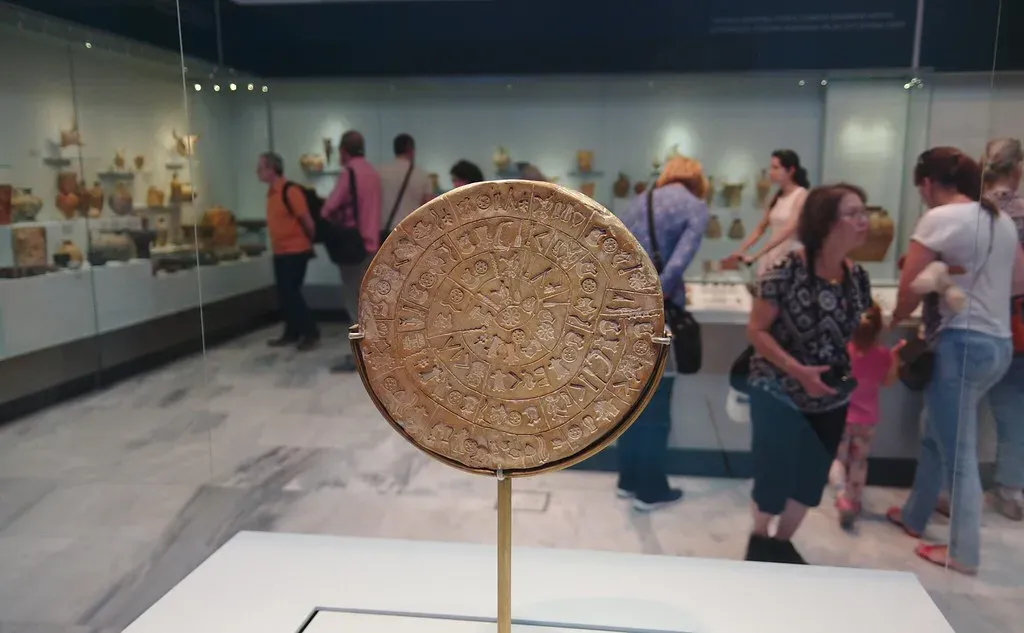
Unearthed in 1908 at the Minoan palace of Phaistos on the island of Crete, the Phaistos Disc is a circular clay tablet inscribed with mysterious symbols. The disc’s purpose and the meaning of its inscription remain unknown, despite extensive study. Some scholars suggest it could be an ancient form of writing, while others believe it might be a game board or calendar. The lack of similar discoveries makes it difficult to contextualize the disc within Minoan culture, further adding to its mystique.
It is small enough to hold in your hands, yet it has defeated linguists, cryptographers, and historians for over a century. The symbols were stamped, not inscribed, meaning someone used a set of pre-made stamps in sequence, suggesting a degree of premeditation. That detail alone implies this was not accidental. Someone had something deliberate to say. We just cannot hear them. The disc currently sits in the Heraklion Archaeological Museum in Crete, waiting patiently for someone smart enough to listen.
11. The 2024 Antikythera Shipwreck Excavation – More Questions Than Answers
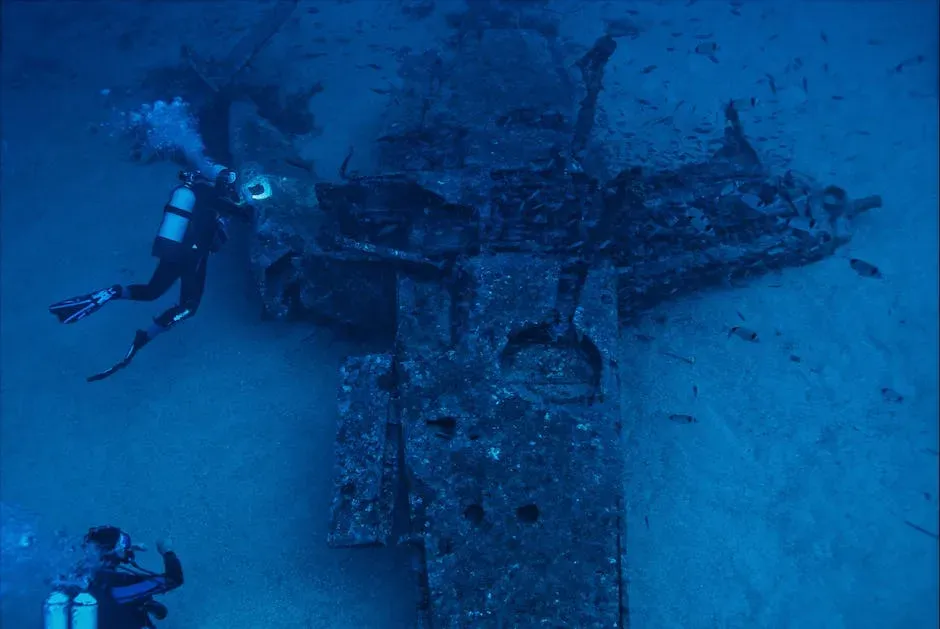
The 2024 expedition to the Antikythera shipwreck marked a significant milestone in underwater archaeology. Between May and June, ideal weather conditions allowed for extensive excavation, yielding about 300 objects including 21 marble fragments, numerous structural elements of the ship’s hull, and over 200 pottery fragments. Most significantly, the team discovered evidence of a second shipwreck at the site, with Area ‘B’ yielding remains of another wooden ship beneath its cargo. A shipwreck on top of a shipwreck. Even the discovery site refuses to give up its secrets cleanly.
The findings, documented with advanced remotely operated vehicles and 3D scanning, continue to illuminate the ancient maritime tragedy that occurred over 2,000 years ago. The original wreck gave us the Antikythera Mechanism, one of the greatest relics ever found. Now there is a second vessel buried beneath the first, potentially carrying cargo we haven’t imagined yet. The Antikythera mechanism, despite its severe corrosion and many missing elements, continues to reveal its secrets through the application of increasingly sophisticated technologies. This recent study not only validates the conclusions of earlier research but also opens new avenues for understanding the technological capabilities of ancient civilizations.
Conclusion: The Silence of the Ancients
Here is what ties all eleven of these relics together: they were created by people who were, in many ways, just like us. Curious, organized, capable of extraordinary feats of engineering and thought. Yet something about the way they communicated their world, their faith, their technology, has slipped just out of reach across the centuries.
Every year, new tools, from AI pattern recognition to gravitational wave analysis, close the distance a little. Yet for every question answered, another opens. The Baghdad Battery may have generated electricity. The Voynich Manuscript may encode a medieval cipher. Göbekli Tepe may hold a dozen more enclosures beneath its soil. The more we learn, the larger the mystery seems to grow.
Perhaps the most honest thing science can say about these relics in 2026 is this: we are getting closer, but we are not there yet. What do you think – will any of these mysteries finally be solved in our lifetime?