


Music history is littered with carefully planned careers, years of grinding, and calculated industry moves. Then there are the other stories. The ones where a phone call comes in at the last possible second, a bag is packed in a hurry, and a band walks onstage not entirely sure how they got there. These are the accidents that changed everything.
It turns out that some of the biggest names in rock, alternative, and indie music didn’t earn their breakthrough through perfect timing or slick management. They earned it because someone else dropped out. Fate, a broken collarbone, a torn ligament, a canceled tour. What follows are twelve of those stories. Some of them will absolutely surprise you.
1. Pulp – Glastonbury Festival, 1995

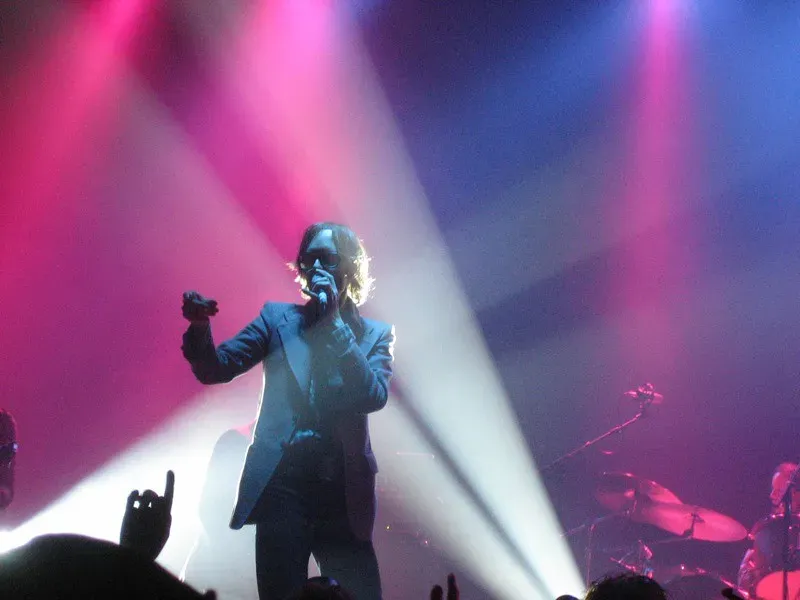
Honestly, this might be the greatest last-minute substitution in festival history. In the early stages of the 1995 Stone Roses tour, guitarist John Squire suffered a mountain biking accident in Marin County, California, leaving him with a broken shoulder blade and collarbone. Doctors advised Squire to rest for at least four to six weeks, and when it was finally announced that The Stone Roses would be pulling out of the Glastonbury headline set in mid-June, the organizers scrambled.
The loss of The Stone Roses, considered a significant influence on the Britpop movement, was a considerable blow to organizers. Their performance was intended to be a reunion after a long hiatus and a major draw for ticket holders. With such a prominent slot to fill on short notice, Glastonbury organizers faced a crucial decision. They needed a band with the stature and repertoire to command the Pyramid Stage on a Saturday night.
While critical acclaim was familiar to Pulp, the widespread success and catchiness of “Common People” and its iconic music video elevated them to household name status, rather than just a pub favourite. Riding this wave of popularity, the group took to the Pyramid Stage at 10:30 PM BST on June 24, 1995, delivering what is now considered a landmark performance for both the band and the festival.
Throughout the set, Jarvis Cocker directly addressed the circumstances of their headlining slot, filling in for The Stone Roses, with a blend of humility and humour. The crowd, however, was far from disappointed with the 11th-hour substitution. 2025 marks the 30th anniversary of their hit album “Different Class” and also the 30th anniversary of their last-minute headline performance at Glastonbury in 1995.
2. Foo Fighters – Reading Festival, 1995

Few band origin stories carry quite this kind of weight. Dave Grohl created the Foo Fighters to release solo material after Nirvana disbanded in 1994, recording their eponymous debut album mostly alone in just six days. The band made their first public performance in February 1995, five months before the album’s release. Then came Reading.
The band chose Reading for their first ever festival performance, headlining in the second stage tent back in 1995. Putting the Foo Fighters in a tent in 1995 was asking for trouble – the crowd was enormous. Dave Grohl credits his conviction that the Foo Fighters had what it took to be a success to the huge reception they got at the 1995 Reading Festival.
The band’s energy was contagious, and the crowd responded with wild enthusiasm. Critics called their set a revelation, and it helped establish Foo Fighters as a force to be reckoned with in the new post-grunge era. This pivotal performance helped build a devoted fan base and set the stage for their enduring success, with the band later winning multiple Grammys and selling out arenas worldwide.
Acts such as Biffy Clyro, blink-182, and Queens of the Stone Age also graduated from performances in the tiniest tent to each headlining the main stage – but it was Grohl’s band that first proved what was possible with a borrowed tent slot. The Foo Fighters went on to win more than ten Grammy Awards and become one of the defining rock bands of the generation.
3. Arctic Monkeys – Reading Festival, 2005

This one is a slightly different kind of story, but it belongs here. In 2005, five months before the release of their seminal debut album, “Whatever People Say I Am, That’s What I’m Not,” Arctic Monkeys stepped onto the festival’s Carling Tent stage in the middle of Saturday afternoon for an electrifying performance. The crowd was so large it could have easily filled the tent twice over, and proved that the hype was very real.
The Arctic Monkeys had begun to gain popularity by handing out CDs containing their demo tracks at various gigs. The group also gained quite the following on MySpace, and are now described as one of the first bands to come to the public’s attention through the Internet. When performing on the Carling Stage, reserved for unsigned and less-known bands, at both Reading and Leeds Festivals, the gang attracted an unusually large crowd.
They scored two UK number one singles and their first BRIT Awards, and “Whatever People Say I Am, That’s What I’m Not” immediately raced to the top of the albums chart. Released on January 23, 2006, “Whatever…” went straight to number one in the UK after selling over 363,000 copies in its first week. That tent slot at Reading lit the fuse.
Since taking home the BRIT Award for British Breakthrough Act in 2006, the band have gone on to win six more BRITs, these being British Group three times and British Album of the Year three times. Glastonbury headline slots, more big award wins, and a further six albums have all followed in the 20 years since, cementing Arctic Monkeys as one of UK guitar music’s biggest success stories.
4. The Killers – Glastonbury, 2004

In 2004, The Killers were far from being household names when they found themselves filling a small tent slot at Glastonbury after a cancellation. Let’s be real – at that point, nobody outside of Las Vegas indie circles was rushing to see them. That all changed very quickly once they started playing.
The Killers had released their debut album “Hot Fuss” that same year, carrying anthems like “Mr. Brightside” and “Somebody Told Me.” The Glastonbury slot gave the record an enormous UK platform at exactly the right moment. The British crowd responded with the kind of immediate, emotional intensity that American audiences hadn’t quite matched yet.
The UK press, always hungry for the next big thing, latched on instantly. What had been a bubbling Las Vegas cult suddenly became a mainstream transatlantic phenomenon. The Glastonbury tent performance is widely credited as the moment the band crossed from promising newcomers into genuine stars on the British circuit.
From that point, The Killers went on to headline Glastonbury’s main Pyramid Stage in later years, a full-circle moment that would have seemed absolutely unthinkable to anyone who saw them scrambling into that tent in 2004. It’s the kind of trajectory that makes you believe in music again.
5. Muse – V Festival, 1999

For Muse, one of the most innovative bands of their generation, fortune smiled in 1999 when another act canceled at the V Festival. Suddenly bumped up to a main slot, Muse delivered a performance bursting with passion and technical skill. They had already been building something extraordinary in rehearsal rooms and small venues. The V Festival slot threw them in front of an audience that wasn’t expecting to care about them.
Their unique sound, mixing rock, electronic, and classical influences, captured the imagination of both fans and critics. That night, festival-goers left buzzing about the band’s dramatic stage presence and soaring anthems. There’s something wild about that. Imagine turning up for someone else and leaving as a Muse convert. That’s exactly what happened.
This leap in exposure helped Muse break into the mainstream, paving the way for a career filled with chart-topping albums and sold-out global tours. The experience underscores how a single chance can propel an ambitious band to new heights. Muse would go on to headline Glastonbury’s Pyramid Stage and fill stadiums across the world. One canceled act. One vacant slot. Everything changed.
6. Korn – Lollapalooza, 1997
Korn’s journey to nu-metal legends began with a lucky break at Lollapalooza in 1997. When another band dropped out, Korn was called in at the last minute. Their chaotic, high-energy set was unlike anything the crowd had seen. Nu-metal was still finding its shape, and Korn had already developed a reputation for being genuinely unsettling on stage. That Lollapalooza crowd had no idea what was coming.
Since its inception in 1991, Lollapalooza had been a cultural touchstone for music lovers. Being added to that lineup, even as a substitute, carried enormous cultural weight. Korn didn’t just fill the slot. They weaponized it. Their intensity and the sheer visual spectacle of their performance made them the most talked-about act of that particular weekend.
The band had released their debut self-titled album in 1994, but it was their Lollapalooza appearance that truly introduced them to a mass mainstream audience. “Life Is Peachy” had already dropped, and “Follow the Leader” was on its way. The timing was almost cosmically perfect for an accidental booking.
Korn went on to sell tens of millions of albums worldwide and are consistently credited as the architects of nu-metal, influencing countless bands that followed. It’s hard not to wonder what the landscape of nineties heavy music would have looked like if that original act hadn’t pulled out.
7. The White Stripes – Reading and Leeds Festival
When another band canceled at Reading and Leeds, Jack and Meg White were invited to fill the slot. Their raw, minimalistic garage rock sound and electric chemistry on stage stunned the audience. Almost overnight, the UK press began raving about this American duo, and demand for their music skyrocketed.
Here’s the thing about The White Stripes. They were never supposed to make sense on a festival stage. Two people. A guitar and a drum kit. No bass player. The simplicity was almost audacious. Yet somehow, that stripped-back approach hit harder than a six-piece band with a light show and a fog machine ever could.
Their breakthrough album “White Blood Cells” soon followed, marking the beginning of their global success. This story proves that sometimes the most stripped-down performances make the biggest impact. The White Stripes performed in front of crowds of over 90,000 people during this period, which is extraordinary for a band built on such deliberately bare-bones sonic architecture.
The UK especially fell hard and fast for Jack and Meg. Reading and Leeds audiences are notoriously difficult crowds, quick to dismiss anyone who feels like a fraud. The White Stripes didn’t just survive that crowd. They absolutely conquered it, walking away as one of the most beloved acts in festival history.
8. The Strokes – Isle of Wight Festival, 2002
The Strokes’ path to stardom was paved with one unforgettable live show after another, but their big break came at the Isle of Wight Festival in 2002. After a last-minute cancellation, The Strokes filled the slot and immediately set the crowd on fire with their tight, energetic set.
Their debut album “Is This It” had dropped in 2001 and was already generating serious buzz among music critics. But there is a massive difference between critical buzz and actually connecting with a large live audience. The Isle of Wight slot provided that bridge. Tens of thousands of people who’d heard the name but hadn’t felt the music finally got it that weekend.
The Strokes had this effortlessly cool New York detachment that read brilliantly on a big stage. They weren’t trying to win the crowd over. They just played. And somehow that non-performance performance was the most electrifying thing people had seen in years. British audiences especially responded to their energy with absolute mania.
Fast forward to 2026, and The Strokes are still headlining major festivals like Coachella and Bonnaroo, proving the legacy of that breakthrough moment has an extraordinarily long half-life. Not bad for a bunch of New York kids who got a call they probably weren’t expecting.
9. Biffy Clyro – Reading Festival, Early 2000s

Careers have been made on the Reading fields. Acts such as Biffy Clyro have graduated from performances in the tiniest tent to headlining the main stage. The Scottish trio were regulars on the lower end of festival lineups for years, often stepping in when other bands pulled out. Each appearance gave them a slightly larger platform. Each platform built their fanbase by another few thousand people.
It’s hard to say for sure exactly which single slot was the defining one, but the pattern is undeniable. Biffy Clyro filled gaps other bands left behind, and they played every one of those substitute slots as if it was the last gig of their lives. That intensity was impossible to ignore for anyone standing in the tent.
When Biffy Clyro headlined Reading ahead of Nine Inch Nails, there were initial rumblings of discontent from some fans. But Biffy got their revenge in the most public fashion by pulling a crowd five times the size that NIN managed at Reading, and then delivering one of the great headline sets in the festival’s history.
The journey from tiny tent substitute to main stage headliner took years of exactly that kind of relentless work. Biffy Clyro are now one of the most consistently celebrated festival acts in the UK. It started, in large part, with saying yes every time another band said no.
10. Queens of the Stone Age – Various Festival Slots, Late 1990s and Early 2000s

Queens of the Stone Age have graduated from performances in the tiniest tent to headlining the main stage at Reading and beyond, but their early festival appearances were frequently unplanned. Josh Homme and his rotating cast of collaborators were notoriously available and prepared. When a band dropped out, QOTSA were often on the shortlist of acts who could deliver something memorable at short notice.
Their sound was heavy, hypnotic, and genuinely unlike anything else on festival stages at the time. Grunge had faded. Nu-metal was getting tired. Queens of the Stone Age existed in a space that felt entirely their own, and short-notice festival sets gave them the chance to introduce that sound to audiences who might never have sought them out deliberately.
“Rated R” in 2000 and “Songs for the Deaf” in 2002 gave those who discovered them at festivals the records to take home. The loop was perfect. See them live unexpectedly, get obsessed, buy the album, become a devoted fan. Festival substitutions accelerated that cycle faster than any traditional promotional campaign could have managed.
Lollapalooza, which began in 1991, features eight stages and over 170 bands spanning rock, hip-hop, EDM, pop, and indie – and acts like QOTSA helped define what rock authenticity meant on those sprawling lineups. Their willingness to step in short-notice gave them an edge that was always palpable on stage. You could feel that they were never taking the opportunity for granted.
11. blink-182 – Reading Festival, Progressive Slots

blink-182 graduated from performances in the tiniest tent to headlining the main stage at Reading through a series of appearances that began in supporting and substitute capacities. Their escalation through the festival’s tiers is one of the more remarkable trajectories in the history of that event. California pop-punk on British soil could have gone badly. It did not.
blink-182 brought a performance energy that was almost deliberately chaotic. Their shows were loud, fast, funny, and completely unpredictable. Audiences who had never heard of them found themselves singing along by the third song, which is basically the definition of a breakout festival performance. British crowds, who often resist American acts until they prove themselves on home soil, were won over completely.
Their albums “Enema of the State” and “Take Off Your Pants and Jacket” gave festivalgoers hits they immediately recognized. But the energy in those earlier, smaller, sometimes substituted slots was where the real conversion happened. It’s one thing to hear a song on the radio. It’s another thing entirely to be in a packed tent while a band plays it like they’re saving their own lives.
The leap from small tent substitute to Reading headliner is the kind of progression that other bands try to reverse-engineer endlessly. blink-182 largely achieved it by showing up, working hard, and saying yes to every stage that would have them. The math eventually worked out in a very big way.
12. Manic Street Preachers – Reading Festival, 1992

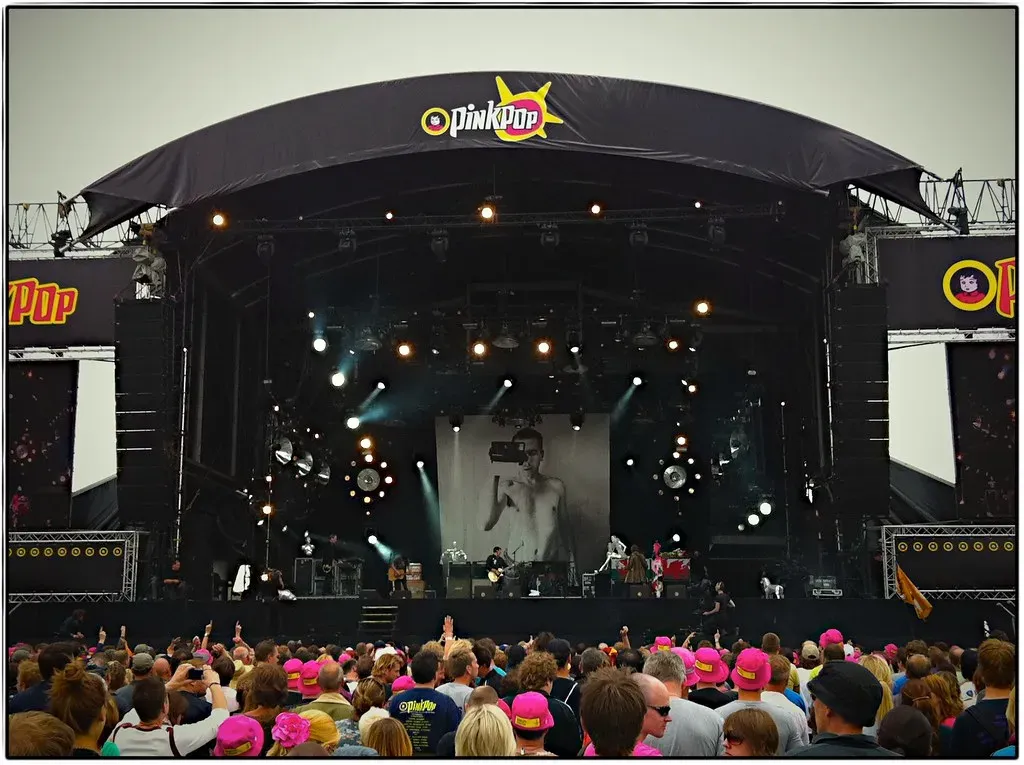
The Manic Street Preachers have one of the more dramatic early-career festival stories in British rock. Their early Reading appearances were marked by controversy, ambition, and an intensity that made audiences deeply uncomfortable, which was entirely the point. When slots opened up and they were called in, they filled those stages with something that felt genuinely dangerous.
Their political fury and theatrical aesthetic set them completely apart from the grunge-heavy atmosphere of early nineties festival lineups. They weren’t trying to fit in with anything. That otherness, combined with a substituted slot that gave them more time and a larger platform than originally planned, introduced them to audiences who became fiercely loyal for decades.
The Manics went on to score multiple UK number one albums and are considered one of the defining Welsh bands in rock history. Playing at a music festival is one of the surest ways to grow your fan base and gain the attention of industry tastemakers – and the Manics understood that intuitively, treating every borrowed slot as a career-defining moment rather than a lucky accident.
Their trajectory from controversial festival substitute to beloved, long-running British institution is a reminder that sometimes the bands who make the biggest eventual impact are the ones the industry wasn’t quite ready for when they first arrived. They just needed someone else to cancel first. What would you have guessed?


