Music history is full of surprises. Some of the most iconic genres that shaped entire generations weren’t the result of calculated planning or deliberate artistic vision. They happened through mistakes, technical errors, lucky accidents, and spontaneous experimentation.
What makes these stories so fascinating is how they remind us that creativity doesn’t always follow a straight path. Sometimes the greatest innovations come from embracing the unexpected. The genres we’ll explore prove that accidents can be transformative forces in art.
Dub Was Born from a Forgotten Vocal Track


In 1968, sound system operator Rudolph “Ruddy” Redwood went to Duke Reid’s Treasure Isle studio in Kingston, Jamaica, and engineer Byron Smith accidentally left the vocal track out when cutting a dubplate of the Paragons’ hit “On The Beach.” Instead of throwing away what seemed like a mistake, Redwood decided to play it at his next dance.
The response was electric, and the crowd loved the stripped-down, rhythm-driven sound. This instrumental version quickly became a massive hit. Ruddy claims that when the engineer ran the tape, he accidentally left the vocal track off, and Ruddy made him cut it like that, realizing this was something new.
This happy accident quickly caught on, and soon dub became an essential part of Jamaican music, with dub’s experimental spirit leading to the very idea of the remix. The genre opened up space for something called toasting, where DJs would talk or chant over the instrumental. Dub has influenced many genres of music, including rock, pop, hip hop, house, techno, and trip hop, and has become a basis for jungle, drum and bass, and dubstep.
Techno Emerged as a Beautiful Mistake


Derrick May once described Detroit techno music as being a “complete mistake … like George Clinton and Kraftwerk caught in an elevator, with only a sequencer to keep them company.” That’s honestly one of the most perfect descriptions ever given to a genre. The three individuals most closely associated with the birth of Detroit techno are Juan Atkins, Kevin Saunderson and Derrick May, also known as the “Belleville Three,” who were high school friends from Belleville, Michigan, and created electronic music tracks in their basement.
Detroit in the 1980s was a perfect incubator for techno’s postindustrian sound, as the violence in the 1960s had passed, but the recession, white flight, and the continued collapse of the auto industry left a city half abandoned. The musicians weren’t trying to invent a new genre. They were just experimenting with synthesizers and drum machines while blending their love of European electronic music with American funk.
What resulted was something nobody anticipated. The genre is called “techno” because of the inspiration one of the pioneers, Juan Atkins, took from “The Third Wave,” a futuristic book written by Alvin Toffler in 1979, where Toffler talks about “techno rebels.” Juan Atkins fittingly dubbed this genre of machine music “Techno.”
Punk Rock Just Wanted to Play Fast and Simple

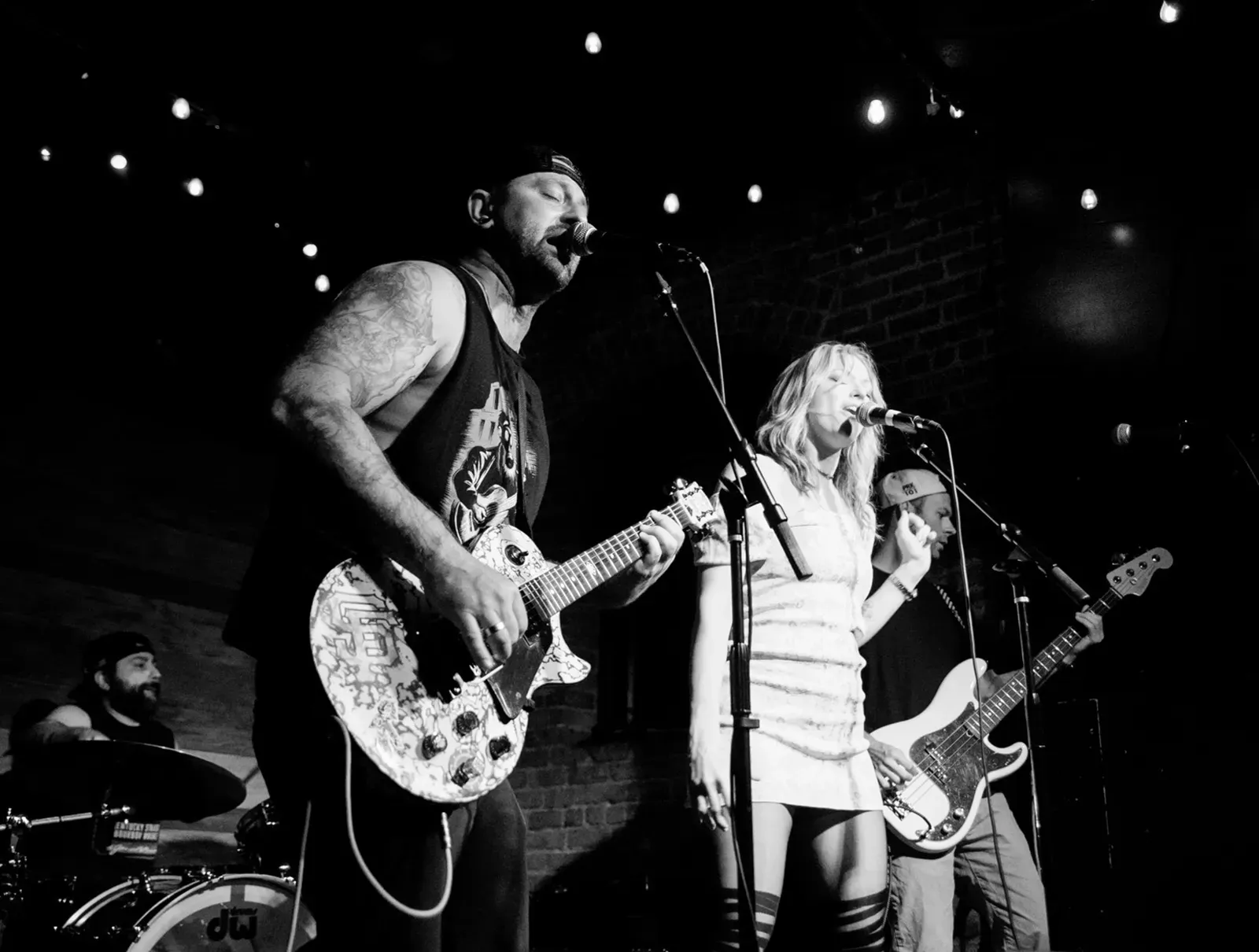
In the mid-1970s, bands like The Ramones were tired of the bloated, overproduced rock dominating the airwaves, and they just wanted to play fast, raw, simple songs with no thought of inventing a new style. Let’s be real, nobody sat down and planned a cultural revolution. These musicians were frustrated with mainstream music and wanted something more immediate, more honest.
Punk rock began taking shape in the early 1970s, rooted in the underground music scenes of New York City and London, as a reaction against the polished, elaborate productions that dominated the mainstream music industry. Punk rock emerged in the mid-1970s as disco, progressive rock, and string-heavy pop dominated the music charts, and punk rockers built a reputation for rejecting the trappings of mainstream pop music, embracing raw energy, fast tempos, short song forms, shouted lyrics, and a DIY work ethic.
What started as a few bands playing stripped-down rock in dingy clubs accidentally sparked an entire movement. The genre’s simplicity became its power, proving you didn’t need virtuoso skills to make meaningful music.
Shoegaze Got Its Name from Stage Fright and Pedals

Here’s a genre named after an accident of performance style rather than sound. The term shoegaze was coined by Andy Ross, who attended Lush’s concert on March 15, 1991, and jokingly referred to Moose as “shoegazers” after noticing vocalist Russell Yates continuously looking down at his shoes during the set; guitarist Kevin McKillop later explained that Yates was actually reading lyric sheets placed on the floor as he couldn’t remember them.
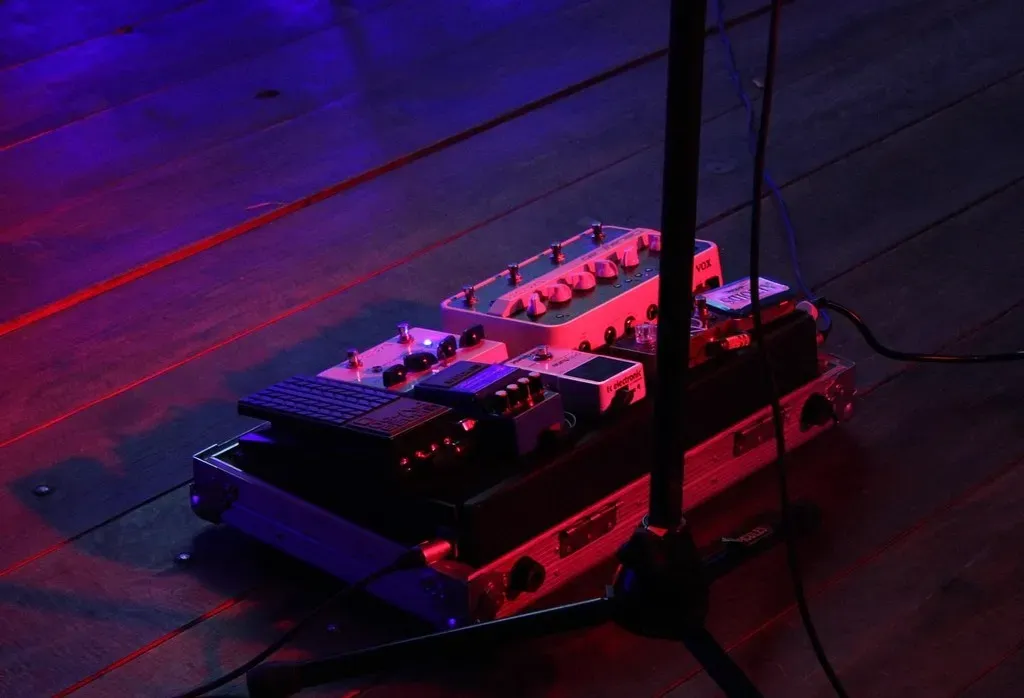
The musicians would often stare down at their pedal boards during performances, leading the press to dub the style “shoegaze,” which wasn’t intentional – the bands were simply experimenting with sound and trying to find new textures. The introspective stage presence came partly from the technical demands of manipulating multiple effects pedals and partly from nervousness or shyness.
The result was a genre where vocals were buried deep in the mix and melodies seemed to float in a haze of distortion, with shoegaze’s lush, immersive soundscapes inspiring countless artists since, and what began as a technical workaround and a way to handle stage fright became a beloved subculture. Nobody planned for looking at your shoes to become an aesthetic movement.
Chicago House Music Started from a Record Shortage

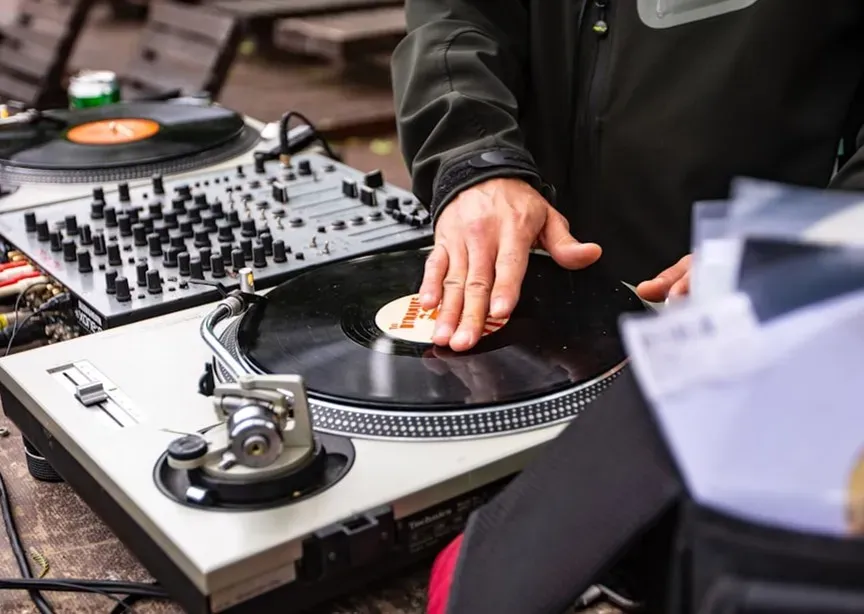
Chicago house music didn’t start with a plan – it started with DJs running out of records, as in the early 1980s, club DJs in Chicago faced a shortage of disco and soul records, so they began improvising by adding drum machines and synthesizers to the music, editing and looping soul tracks into something entirely new. This wasn’t artistic vision at first. It was practical problem-solving.
DJs needed to keep the dance floors packed, but they literally didn’t have enough music to play. So they got creative with what they had. The energy and freedom of these dance floors led to the creation of house music, which was defined by its repetitive beats and infectious grooves.
What emerged from necessity became one of the most influential electronic music genres in the world. House music went on to spawn countless subgenres and shaped club culture globally. The shortage that could have ended careers instead launched an entire musical revolution.
Hip-Hop Was Born from a DJ’s Loop Experiment

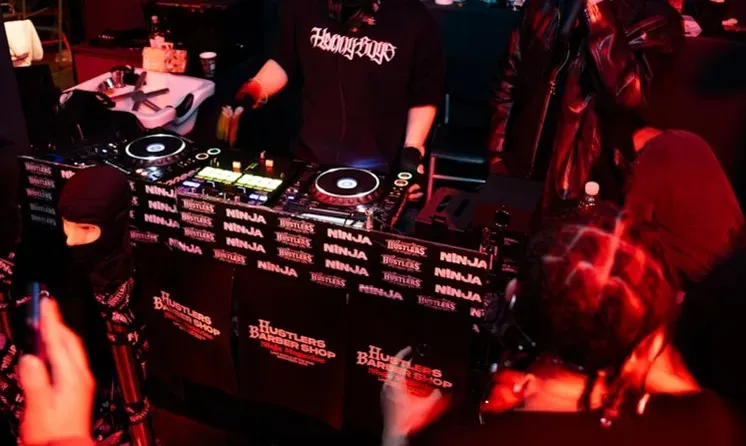
In 1973, a simple Bronx block party became the birthplace of hip-hop, all because of an unexpected mistake involving DJ Kool Herc, who tried to stretch drum breaks. The accidental looping of a drum break didn’t just spark a new sound; it started a revolution.
Kool Herc was trying to extend the most danceable parts of funk and soul records – the instrumental breaks where people went wild. He discovered he could use two turntables to loop these breaks back and forth, creating an extended instrumental section. This wasn’t a planned innovation. He was just experimenting to keep the party going.
That accidental technique became the foundation for an entire culture. From that simple loop came rapping, breakdancing, graffiti art, and a global movement that transformed music, fashion, and youth culture forever. Sometimes the biggest revolutions start with someone just trying to make a party better.
Disco’s Sound Came from Mixing Accidents

Disco’s signature sound – particularly its emphasis on the bass drum on every beat – partly emerged from mixing techniques that engineers stumbled upon while trying to make records sound better in clubs. The four-on-the-floor beat that defines disco wasn’t initially planned as a genre-defining characteristic.
Engineers and producers in the early seventies were experimenting with ways to make dance music hit harder on club sound systems. They discovered that emphasizing certain frequencies and creating longer instrumental breaks made people dance more. What started as technical experimentation to solve acoustic problems in nightclubs accidentally created disco’s sonic blueprint.
The extended mixes, breakdowns, and emphasis on rhythm over melody weren’t artistic statements initially. They were practical solutions to keep people dancing. Yet these accidents shaped the sound of an entire decade and influenced nearly every form of dance music that followed.
Grunge Was Just Seattle Bands Being Themselves

Bands like Nirvana, Soundgarden, and Pearl Jam weren’t trying to create a new genre in late eighties Seattle. They were just playing loud, raw rock music influenced by punk and metal, using whatever cheap equipment they could afford. The raw, distorted sound that became grunge’s trademark was partly the result of limited resources and partly a rejection of the overproduced hair metal dominating rock radio.
Kurt Cobain famously disliked the term grunge and felt the genre label was something imposed by music journalists and record labels trying to market a regional scene. These musicians were influenced by punk’s DIY ethos mixed with the heaviness of Black Sabbath, but they weren’t consciously creating a movement. They were just being authentic to their environment and influences.
The sludgy guitar tones, angst-filled lyrics, and flannel aesthetic became defining characteristics of a generation, but none of it was calculated. It was authentic expression that accidentally resonated with millions of disaffected youth worldwide. The commercial explosion of grunge in the early nineties caught even the musicians themselves by surprise.
Trip-Hop Emerged from Bristol Studio Experiments

Trip-hop developed in Bristol, England, during the early nineties when producers and musicians started experimenting with combining hip-hop beats, dub bass lines, and atmospheric electronic sounds. Groups like Massive Attack, Portishead, and Tricky weren’t trying to invent a new genre. They were just mixing the sounds they loved in ways that felt natural to their multicultural city.
The slower tempo, moody atmospheres, and genre-blending approach happened organically as these artists experimented in studios. Bristol’s musical culture had always been diverse, with sound system culture, punk, and electronic music all coexisting. Trip-hop was simply what happened when creative people stopped worrying about genre boundaries.
The term trip-hop itself was initially used by music journalists trying to categorize this strange new sound coming from Bristol. The artists themselves often rejected the label, feeling it was too limiting. What started as studio experimentation accidentally created one of the nineties’ most influential and atmospheric musical styles, influencing everything from film soundtracks to downtempo electronic music.
Electro Funk Came from Afrika Bambaataa’s Wild Mixing


Afrika Bambaataa’s groundbreaking track “Planet Rock” essentially created electro funk in 1982 by doing something nobody expected – combining Kraftwerk’s robotic electronic sounds with hip-hop breakbeats. This wasn’t a calculated genre invention. Bambaataa was a DJ who loved all kinds of music and didn’t see boundaries between German electronic music and Bronx hip-hop.
He essentially asked the question, what would happen if we put these completely different sounds together? The answer shocked the music world. The combination of synthesizers, drum machines, and hip-hop vocals created something that sounded futuristic and street-level simultaneously.
Electro funk influenced countless genres that followed, from Miami bass to Detroit techno to modern electronic dance music. Bambaataa wasn’t trying to launch a movement. He was just playing the music he thought sounded cool, trusting his instincts rather than following rules. That fearless experimentation accidentally opened doors for generations of electronic music producers.
New Wave Was Post-Punk’s Identity Crisis


New wave emerged in the late seventies as punk bands started experimenting with synthesizers, pop melodies, and more polished production. The genre wasn’t planned – it was what happened when punk musicians got bored with three-chord simplicity and wanted to explore new sonic territories without abandoning punk’s rebellious spirit.
Bands like Talking Heads, Devo, and Blondie were all connected to the punk scene but started incorporating elements that would have been considered too mainstream or experimental for pure punk. They added keyboards, embraced art school concepts, and weren’t afraid of catchy hooks. This evolution happened naturally as musicians grew and experimented.
Record labels and music journalists needed a term to describe this new sound that was punk-adjacent but different, so new wave was born. The term itself was vague and meant different things to different people. What united new wave artists was less a specific sound and more an attitude of creative freedom. The genre accidentally became a commercial phenomenon, bringing punk’s energy to mainstream audiences in more palatable forms.
Ambient Music Was Created from Boredom in a Hospital


Brian Eno, the godfather of ambient music, has told the story many times about how the genre was essentially invented by accident. In 1975, Eno was recovering from a car accident in a hospital bed when a friend brought him a record of harp music. After the friend left, Eno put the record on but couldn’t reach the volume control, and it was playing barely audibly while rain pounded against the window.
Instead of struggling to turn it up, Eno just listened to the barely-there music mixing with the rain sounds. This accidental listening experience sparked an epiphany. Music didn’t always need to demand attention. It could exist as atmosphere, as environmental sound that enhanced a space rather than dominating it.
This hospital room accident led Eno to create his groundbreaking “Music for Airports” and essentially invent ambient music as a genre. He wasn’t trying to revolutionize music theory. He was just stuck in bed with music playing too quietly, and his mind was open enough to recognize the beauty in that accident. Sometimes the best innovations come from simply paying attention to mistakes.
The Accidental Nature of Musical Innovation

These twelve genres prove something fascinating about creativity. The most influential musical movements often weren’t planned in boardrooms or conceived by marketing teams. They emerged from mistakes, necessity, experimentation, and people just being authentically themselves without worrying about inventing something new.
What unites all these stories is openness to possibility. In each case, someone recognized that what seemed like an error or limitation might actually be something interesting. They had the courage to pursue these accidents rather than dismiss them. That willingness to embrace the unexpected is perhaps the most important creative skill of all.
Music will continue to evolve in unpredictable ways. The next revolutionary genre might be forming right now in someone’s bedroom studio, born from a technical glitch, a shortage of resources, or pure experimental curiosity. The history of accidental genres reminds us that some of the best discoveries happen when we stop trying so hard to control outcomes and instead remain open to happy accidents. What do you think will be the next genre born from a beautiful mistake?