There’s a specific kind of discomfort that comes from rewatching a film you loved at 25, only to find yourself squinting at the screen and muttering, “Wait, that’s not how any of this works.” It’s not nostalgia souring. It’s perspective arriving. Decades of real life have a way of recalibrating your tolerance for nonsense, even the charming cinematic kind.
The tropes that once felt thrilling, romantic, or just harmlessly silly start registering differently once you’ve actually navigated a complicated relationship, held a stressful job, sat through a real argument, or dealt with a genuine health scare. Some clichés that Hollywood keeps recycling simply land with a thud the older you get. Here are twelve of them.
1. The Grand Romantic Gesture That Ignores Consent

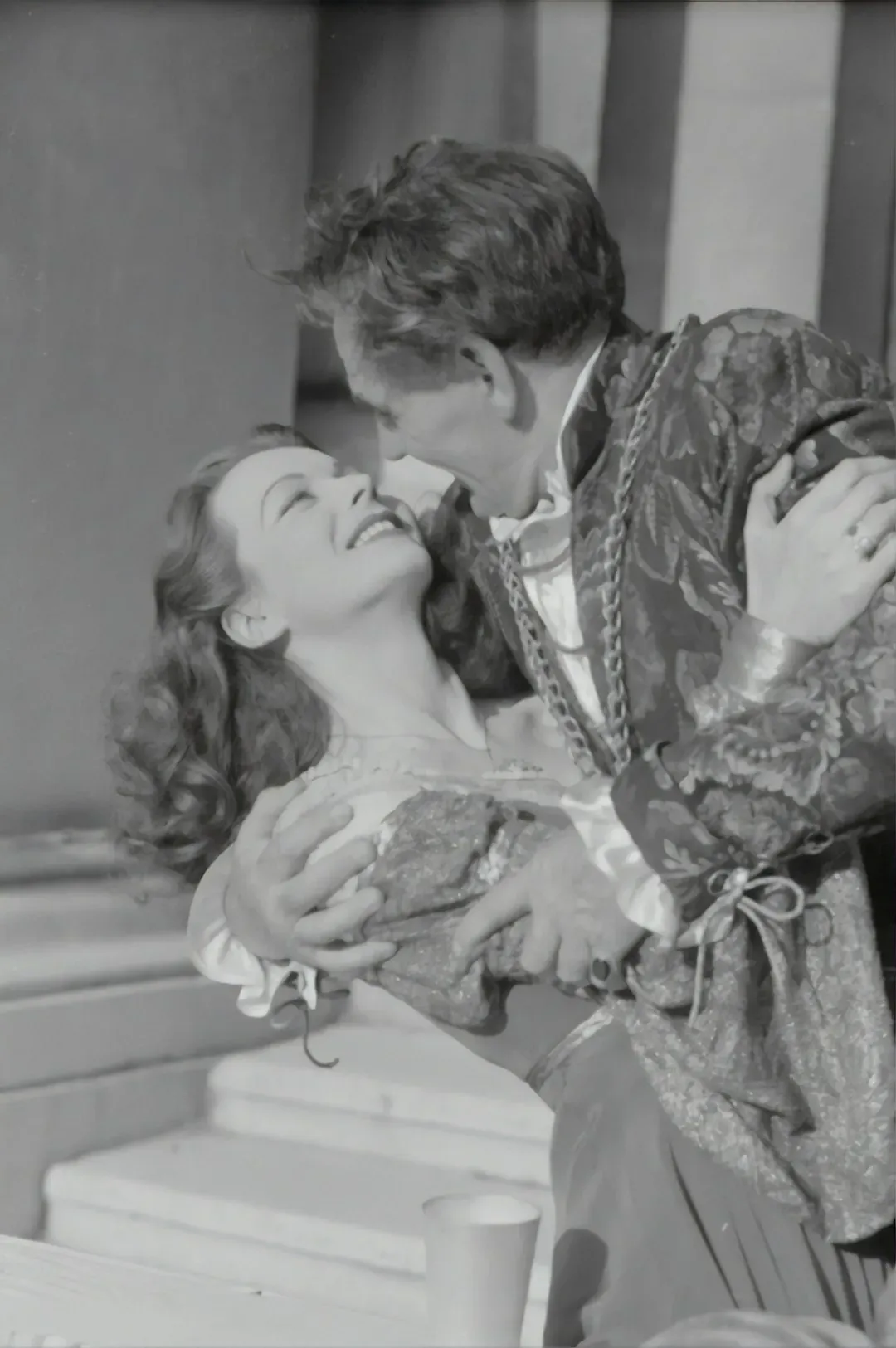
Romantic comedies and dramas have long framed persistent boundary-crossing as a grand romantic gesture, with male suitors who refuse to take no for an answer ultimately rewarded with the woman’s affection by the film’s end. At 22, that reads as passionate. At 52, it reads as a restraining order waiting to happen.
Films like “The Notebook” and “Twilight” romanticize behavior that would be considered alarming and even illegal in real-world context, effectively normalizing harassment and undermining the importance of consent in relationships. Once you’ve lived long enough to have actual boundaries, and to watch people violate them, the fantasy completely collapses.
2. Characters Surviving Explosions Without a Scratch


In real life, being in close proximity to a massive explosion is lethal. Even at some distance, you wouldn’t be hearing anything for a long time, if ever again, because explosions are extraordinarily loud. Young audiences let this slide easily. Older viewers who’ve accumulated just enough biology and common sense tend to wince instead of cheer.
Film fans generally know this, which is why a significant portion of survey respondents reported being tired of seeing characters get blown across the room by a massive fireball, only to get up with a little ash on their faces. The invincible hero is fun in theory. After 50, your own body has reminded you often enough that recovery takes time, and a little perspective ruins the illusion.
3. The “Days Away from Retirement” Death Sentence

This one’s such a cliché that even parodying it feels overdone: the notorious instance of a character being just a few days from retirement, expressing that to another character, and then dying, usually minutes later. Younger viewers might process it as tragic irony. After 50, when retirement has become a real, tangible thing you’re actually planning, it stops being dramatic and starts feeling mean-spirited.
A character being about to step away from a dangerous life before that dangerous life kills them was initially seen as more dramatically potent, but the device has grown stale and transparent with overuse. There’s something quietly offensive about the idea that stepping back from the grind is, cinematically speaking, a death wish.
4. The Makeover That Solves Everything

Setting aside the obviously problematic message embedded in the makeover trope about so-called “conventional” standards of beauty, it represents lazy writing and plotting – and it has been in use since before movies even existed as mainstream entertainment, with roots going back to the George Bernard Shaw play “Pygmalion,” first staged in 1913. That’s well over a century of the same idea.
When you’re younger, a montage transformation feels aspirational. When you’re older, you’ve watched enough real people struggle with body image and self-worth to understand how reductive it all is. The notion that swapping glasses for contacts and loosening your hair somehow unlocks your personality is, frankly, exhausting.
5. Stalking Framed as Devotion


Presenting casual stalking and the denial of boundaries as romantic is a trope that refuses to die, with “The Notebook” frequently cited as a prime example. It’s a pattern that makes many older viewers genuinely uneasy, even when they acknowledge the broader appeal of the film. The older you are, the more clearly you recognize the behavior for what it actually is.
To think there was a time in recent memory when pick-up artist tactics were considered fairly normal dating advice and not thinly veiled, dehumanizing manipulation. Films that dress up pursuit and refusal to accept rejection as romance were always rooted in a troubling idea. It just takes life experience to see it clearly.
6. The Manic Pixie Dream Girl


Eccentric female characters have long appeared in films to teach brooding male leads how to embrace life and mystery, defined almost entirely by their quirks while lacking personal goals independent of the male protagonist’s emotional arc. “Garden State” and “Elizabethtown” are prime examples where the female love interest functions essentially as a lifestyle accessory, implying that women exist primarily to fix broken men through whimsy.
At 19, that character feels magnetic and liberating. After decades of knowing actual women – their complexity, their ambitions, their frustrations – the Manic Pixie Dream Girl feels not just hollow but faintly insulting. She has no interiority. She’s a plot device wearing a vintage dress.
7. Characters Who Never Actually Talk to Each Other

Whenever the miscommunication trope occurs, it is often followed by a character being infuriatingly slow to explain what had actually happened, leaving audiences in suspense while waiting for characters to finally communicate. In youth, the tension feels delicious. After 50, when you’ve learned the hard way that most relationship disasters come from exactly this kind of avoidance, it just feels maddening.
After years of this rom-com staple being overused, the suspense has significantly worn off. Everyone already knows the characters will eventually figure it out, and waiting for them to finally talk like adults has become genuinely frustrating. Real conversations are hard, yes. Refusing to have them for an entire second act is a different thing altogether.
8. The Impossibly Affordable City Apartment


The trope of a character with a low-paying job being able to afford an impressive apartment without roommates or any visible financial struggle is one that audiences consistently flag as too unrealistic or distracting. In your twenties, you barely notice it. After 50, having actually paid rent in a city for decades, you involuntarily calculate square footage and scoff.
A struggling journalist in Manhattan, a barista in San Francisco, a first-year teacher in London – all of them living in spacious, sun-drenched apartments with exposed brick. It was always implausible. But the more real estate you’ve navigated in your own life, the more deeply the absurdity registers every single time.
9. Heroes Who Get Shot and Walk It Off

Being mildly impacted by lethal injuries is a persistent screen fiction, as is surviving subfreezing temperatures while soaking wet without any hint of hypothermia. It’s not always enough to make a viewer switch off entirely, but it consistently strains the illusion of reality. Younger viewers grant the film more latitude. Older ones, particularly those who’ve dealt with injury, illness, or surgery, find the gap between screen and reality increasingly hard to ignore.
There’s a specific kind of impatience that sets in after midlife when a protagonist takes a bullet to the shoulder in act two and is sprinting and throwing punches again by act three. Real physical recovery is slow, unglamorous, and humbling. Movies almost never want to know about it.
10. The Villain Who Monologues Instead of Acting


This trope is so well-known that filmmakers can’t help but play with it, as in “The Incredibles,” where villainous “monologuing” is explicitly called out, or “The Avengers,” where Loki’s superiority speech is cut short by the Hulk. At this point, audiences could be forgiven for expecting the lampshade treatment, because once a villain begins a victory speech, you already know it’s over for them.
Younger audiences experience the monologue as a moment of dramatic suspense. After 50, you’ve seen enough of how power actually operates to understand that no one who truly means business stops to explain themselves at length. The evil monologue is, at its core, a device to let the hero escape. And everyone can see the machinery now.
11. The “Change Yourself to Get the Guy” Arc


The ending of “Grease,” in which Sandy transforms herself into a “bad girl” to finally catch Danny’s eye, carries a message that reads quite differently with age: change yourself to impress the person you’ve been swooning over. The message isn’t subtle. At the time it felt triumphant. Decades later it can feel deflating.
It’s a strange experience, realizing that something which once felt harmless or even heartfelt now reads very differently through a more experienced lens. The “transformation to earn love” arc appears across decades of film, and it always carries the same implication: who you naturally are isn’t quite enough. After 50, with a fuller sense of your own identity, that message is considerably less palatable.
12. The “Adults Are Clueless” Default


In films and shows revolving around teenagers or younger children, adults frequently can’t do anything right, if they appear on screen at all. Teachers tend to be portrayed as annoying obstacles who do nothing but spoil people’s fun, while parents are depicted as clueless, disengaged, or poorly calibrated. When you’re a teenager, that framing feels vindicating and true. When you are the adult in the room, it registers differently.
This trope often gives the impression that only young people are capable of solving the world’s problems, implying there is no point in telling adults about your situation because they’d either disbelieve you or be too useless to help. After 50, having spent years as the competent, problem-solving, quietly exhausted grown-up in the room, the trope shifts from relatable wish fulfillment to something that feels, at minimum, a little unfair.
None of this means these films aren’t worth watching, or that the clichés didn’t serve a purpose once. Tropes exist because they work, at least the first hundred times. What changes isn’t the movie. It’s the person sitting in the seat, bringing fifty-plus years of context to every frame. That context is hard-won, and it tends to have opinions.