The 1980s are usually remembered through the lens of the obvious: stadium anthems, neon spandex, big hair. But dig beneath all that shine and you find something far more interesting. Throughout the 1980s, alternative rock was mainly an underground phenomenon. While on occasion a song would become a commercial hit, alternative rock was primarily relegated to independent record labels, fanzines, and college radio stations. These were the bands working in the dark, essentially building the architecture of what modern rock would eventually become.
Honestly, most casual listeners have never heard of half the names on this list. Some of these bands barely lasted a few years. Others released one album that was ignored at the time and now sounds oddly prescient. The story of how the underground rewires the mainstream is never clean or obvious, which is exactly what makes it so fascinating. So let’s dive in.
1. Talk Talk – The Accidental Inventors of Post-Rock


Talk Talk started as a fairly glossy synth-pop group in the early 80s, but their transformation was radical. Their transformation from glossy synth-pop to avant-garde rock is one of the most surprising evolutions in 80s music. Their later album “Spirit of Eden” (1988) is now recognized as a groundbreaking work that redefined what rock music could be.
The results of that record were a radical departure from Talk Talk’s earlier synth-pop recordings, and would later be credited with pioneering the post-rock genre. That is an enormous claim, and yet virtually no one disputes it today. Think about that for a second.
Andy Whitman of Paste magazine argued that Spirit of Eden represents the beginning of post-rock: “The telltale marks of the genre – textured guitars, glacial tempos, an emphasis on dynamics, electronica, ambience and minimalism – were all in place, and paved the way for bands like Sigur Rós, Mogwai, Godspeed You! Black Emperor, Low and latter-period Radiohead.” That is a lineage worth pausing on.
Numerous bands and artists, including Graham Coxon, Doves, Elbow and Bedhead, have praised Spirit of Eden or cited it as an influence. The record was deleted within months of release. The label hated it. History, on the other hand, has been remarkably kind.
2. Mission of Burma – Boston’s Most Important Secret


Formed in Boston in 1979, Mission of Burma helped to define an era of post-punk rock music. Considered by many music critics to be the best punk band to come out of Boston in the late 1970s to early 1980s, the group lasted only four years and through two singles, an EP, and one studio album before calling it quits in 1983.
Despite their initial success in the growing independent music circuit, Mission of Burma disbanded in 1983 due to Miller’s development of tinnitus caused by the loud volume of the band’s live performances. It is a genuinely tragic footnote that their own sonic intensity ended them.
Over the next 20 years, bands ranging from Foo Fighters to Pixies, Husker Du to Fugazi cited Mission of Burma as an influence, while the likes of Moby, R.E.M. and Graham Coxon all covered their songs. That is a staggering amount of reach for a band that released one studio album in their original run.
Their album Vs. sounded like guitars as expressionist art, a clear influence on Hüsker Dü, Sonic Youth and Fugazi for starters. The ripple effect from just one record is almost unreasonable.
3. The Replacements – Too Messy for the Mainstream, Too Good to Ignore

Formed in Minneapolis in 1979, The Replacements’ sound evolved from a punkier sound into alternative rock, a breath of fresh air against the glam and hair metal that dominated the 1980s. They were chaotic, deliberately uncommercial, and deeply felt.
Their 80s run, particularly Let It Be (1984) and 1985’s Tim, is the quintessential blueprint for alternative rock, balancing raw aggression with heartbreakingly honest songwriting. Paul Westerberg essentially invented the vocabulary of confessional indie rock before that phrase even existed.
Absolute pioneers of the alternative rock movement, Paul Westerberg, Tommy Stinson, Bob Stinson, Slim Dunlap and Chris Mars never got the credit they deserve for cleansing our musical palates and opening the 80s windows for a fresh new sound.
Though the band’s records from the early ’80s were influenced by hardcore punk, Westerberg always had a latent sensitive side that fully emerged on the 1984 masterpiece Let It Be. That tension between toughness and tenderness is something bands are still chasing today.
4. Hüsker Dü – The Bridge Between Fury and Melody

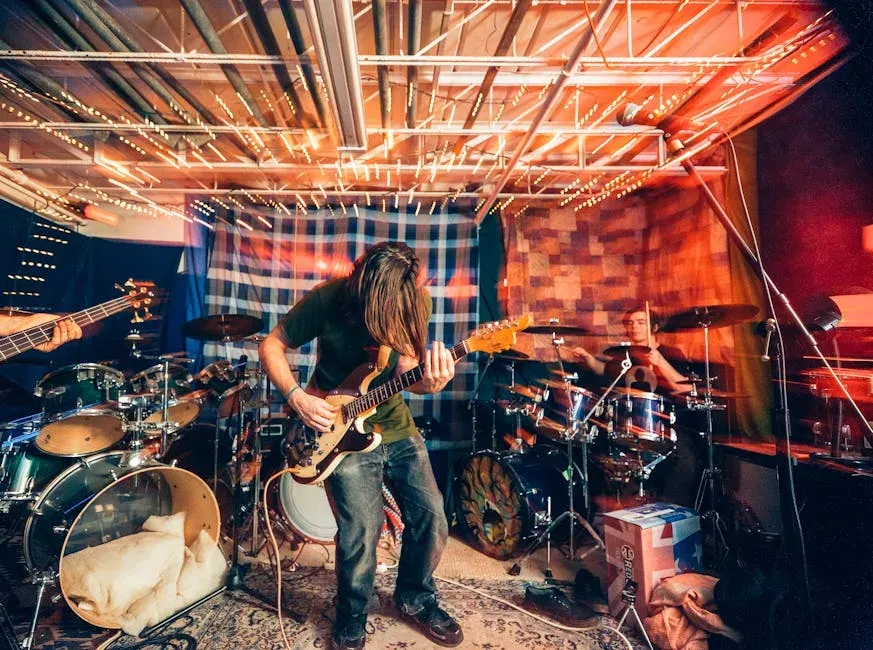
Here is the thing about Hüsker Dü: they were too fast for folk and too melodic for hardcore, which somehow made them perfect for everyone who came after. Another Minneapolis titan, Hüsker Dü provided the bridge between the fury of hardcore punk and the melodic sensibilities of power-pop. The creative tension between singer/guitarist Bob Mould and drummer/co-lead singer Grant Hart resulted in a ferocious, “buzzsaw” guitar sound layered over surprisingly hook-filled melodies.
They were one of the first hardcore bands to sign to a major label, paving the way for the alternative revolution of the 90s. When you trace the path from hardcore to grunge, they are absolutely the missing link. No Hüsker Dü, probably no Nirvana.
Groups like Husker Du, the Replacements, and the Pixies turned to the music of Mission of Burma for inspiration for their own compositions. So Mission of Burma influenced Hüsker Dü, and Hüsker Dü influenced everything that followed. Musical genealogy at its most fascinating.
5. Killing Joke – Industrial Rock Before It Had a Name


If you love Nine Inch Nails, Ministry, or even the heavier corners of alt-metal, you owe a conversation with Killing Joke. Killing Joke emerged from the post-punk era with a sound that was terrifyingly heavy and tribal. Jaz Coleman’s apocalyptic visions and Geordie Walker’s massive, ringing guitar riffs created an “industrial rock” template that would later be adopted by everyone from Nine Inch Nails to Metallica.
They were the dark, occult cousins of the new wave movement, blending danceable rhythms with a sense of impending doom. While they had a few UK hits, their true legacy lies in their uncompromising intensity and their influence on the darker fringes of heavy music.
In November 2010, the band received the “Innovator Award” at the Classic Rock Roll of Honour; the award was presented to Killing Joke by Jimmy Page of Led Zeppelin, who stated, “I go back a long way with Jaz Coleman and the band. I used to go and see the band, and it was a band that really impressed me because Geordie’s guitar sound was just really, really strong.” When Jimmy Page singles you out, you have done something right.
6. The Chameleons – Manchester’s Greatest Oversight

While their Manchester contemporaries like The Smiths and Joy Division achieved legendary status, The Chameleons remain one of the most criminal oversights in rock history. It is a genuinely difficult thing to explain, why two bands from the same city can take such different paths to recognition.
Formed in 1981 in Middleton, England, their debut album “Script of the Bridge” quickly became a cult classic. The lush, layered guitars and haunting melodies they crafted can be heard echoed in bands like Interpol and The Killers.
Many more famous artists, especially coming out of the Manchester scene, have cited The Chameleons as huge influences and inspirations – Tim Burgess of the Charlatans, Billy Corgan of The Smashing Pumpkins, Oasis, The Verve, and Interpol. That is a who’s who of 90s and 2000s alt-rock.
As far as what they’re up to today, there’s been various reunions and spinoffs over the years, with their first official studio release in 21 years being released in May 2024. The band are currently active and touring. Still going, still relevant.
7. The Feelies – The Template Nobody Talked About

The Feelies’ distinctive sound – marked by clean, chiming guitars and restless rhythms – helped define the college rock scene of the 80s. Their 1980 debut “Crazy Rhythms” is widely credited with influencing the likes of R.E.M. and Sonic Youth, both of whom took cues from The Feelies’ minimalist yet energetic style.
Their music bridged the gap between punk’s urgency and pop’s melodicism, creating a template for alternative bands in the decades that followed. The Feelies’ approach to rhythm, often described as jittery or nervous, brought a new sense of energy to rock music.
Modern indie and alt-rock acts continue to borrow from their playbook, especially when it comes to layering guitars and crafting infectious hooks. The band’s understated innovation reminds us that sometimes, the most profound changes in music start with subtle shifts rather than dramatic revolutions.
8. The Sound – The Band That Interpol and The National Built On


Let’s be real. If you casually dropped “The Sound” into a conversation about great 80s rock bands, most people would stare blankly at you. Yet their fingerprints are all over modern indie rock. The Sound might not be a household name, but their emotional depth and post-punk energy have quietly shaped the DNA of modern rock. Their 1981 album “From the Lion’s Mouth” is considered a hidden gem, praised by critics and musicians alike for its powerful blend of hope and despair.
Bands such as Interpol and The National have openly cited The Sound as an influence, drawing on their ability to craft melancholic yet anthemic songs. Adrian Borland’s haunting vocals and the band’s atmospheric guitars foreshadowed the introspective and moody sound that would later become a hallmark of the early 2000s post-punk revival.
Fans often describe their music as a lifeline during dark times, with lyrics that resonate on a deeply personal level. Despite their lack of mainstream recognition, The Sound’s blueprint can be heard in today’s alt-rock anthems.
9. The Dream Syndicate – Psychedelia Meets the Indie Future

The Dream Syndicate were a Los Angeles band who never really fit anywhere, which turned out to be exactly their strength. Their 1982 album “The Days of Wine and Roses” is essential listening for anyone tracing the roots of alt-country and modern psych-rock. The band’s willingness to improvise and stretch songs into sprawling jams influenced artists from Wilco to The War on Drugs.
Their music, both nostalgic and forward-thinking, encouraged a generation of musicians to embrace eclecticism and collaboration. The Dream Syndicate’s impact is especially evident in today’s indie scene, where genre boundaries are increasingly blurred.
Think of them as a bridge between the Velvet Underground and the sprawling guitar explorations you now hear from artists like Kurt Vile or Kevin Morby. By mixing the past with the present, they set a precedent for creative fusion that endures. Their work remains a touchstone for artists seeking inspiration outside the mainstream.
10. Television Personalities – DIY Before DIY Was Cool

Television Personalities brought a quirky, lo-fi charm to punk rock, blending it with a uniquely British sense of humor and melancholy. Their 1981 album “And Don’t the Kids Just Love It” stands as a milestone for indie musicians who favor authenticity over polish.
Bands like Belle & Sebastian have openly acknowledged their debt to Television Personalities, especially in terms of storytelling and whimsical melodies. The group’s DIY ethic and raw, unfiltered sound paved the way for generations of indie musicians.
Their songs, often centered on everyday life and delivered with a tongue-in-cheek wit, have inspired artists to embrace vulnerability. Even now, their influence can be heard in the way modern indie bands prioritize emotional honesty. Television Personalities’ legacy lives on in the understated charm and relatability of today’s indie music.
11. Minutemen – The Intellectual Acrobats Who Changed Punk’s Shape

I think it is hard to overstate how strange and bold the Minutemen were. They rejected the “verse-chorus-verse” structure in favour of short, jagged “spiels” that blended funk, jazz, and folk into a singular, high-energy hybrid. D. Boon’s trebly guitar and Mike Watt’s virtuosic bass playing created a conversation that was politically charged and musically unpredictable. Their ethos – “we jam econo,” a philosophy of thrifty self-reliance and authentic creation – defined the independent spirit of the 80s.
It’s hard to say for sure exactly how many modern bands have directly cited them, but the Minutemen’s fingerprints appear everywhere from noise-rock to indie folk. Their approach to brevity and density in songwriting is almost like a manifesto for independent music. Songs that felt like arguments, delivered at speed.
Throughout the 1980s, alternative rock was mainly an underground phenomenon. Alternative bands built underground followings by touring constantly and regularly releasing low-budget albums. The Minutemen did this better than almost anyone.
12. Big Black – The Noise Blueprint That Rewired Industrial Rock


Big Black, fronted by Steve Albini, were almost aggressively difficult. They used drum machines at a time when that seemed like a provocation, and their production was rawer than raw. Big Black’s pioneering use of non-traditional instruments and raw production techniques has influenced acts like Nine Inch Nails and Shellac, the latter being Albini’s own band post-Big Black.
There were bands like Hüsker Dü and Steve Albini’s Big Black that were keeping Mission of Burma’s spirit alive – any artist playing off the tension between complex experiments and anthemic rock had them to thank in part. That connective tissue between underground scenes is what makes this era so rich.
Albini himself went on to become one of the most influential record producers in rock history, recording albums for Pixies, PJ Harvey, and Nirvana. The sonic DNA of Big Black runs directly into the most abrasive, uncompromising corners of modern rock. It is clear that the decade was more than just a period in music history – it was a catalyst for change and innovation. From the use of synthesizers to the evolution of guitar playing, the 80s set the stage for the diverse rock landscape we have today.
The Quiet Legacy of the 80s Underground

What connects all twelve of these bands is not fame. It is something more durable: the willingness to operate outside the rules at a time when the rules were being written by people in suits who preferred safe bets. While the decade’s titans dominated the airwaves, these bands carved out influential legacies that prioritized atmosphere, technical prowess, or subversive songwriting over chart position. From the sprawling cathedrals of post-punk to the high-velocity roots of heavy metal, these innovators were often too “weird” for the mainstream or simply ahead of their time.
The real story of 80s rock is not the one that MTV told. It is the one that filtered down through fanzines, college radio stations, and tape trading between teenagers who sensed something important was happening just out of view. Alternative bands built underground followings by touring constantly and regularly releasing low-budget albums. In the case of the United States, new bands would form in the wake of previous bands, which created an extensive underground circuit in America, filled with different scenes in various parts of the country.
Every one of these bands deserves a full listen, not just a YouTube rabbit hole. Put on “Spirit of Eden,” or “Crazy Rhythms,” or the first Chameleons record, and suddenly modern indie rock starts to make a completely different kind of sense. Which one of these bands did you already know? And which one genuinely surprised you?