
Walk into any bookstore, and you’ll see the same names plastered everywhere: Hemingway, Austen, Dickens. Don’t get me wrong, they’re brilliant. But here’s the thing – the literary canon is stuffed with incredible works that somehow slipped through the cracks of mainstream consciousness. These books deserve just as much love, yet they sit quietly on forgotten shelves, waiting for curious readers to discover them.
Maybe you’ve exhausted the usual reading lists, or perhaps you’re just tired of everyone recommending the same ten novels. Either way, you’re in for a treat. These fifteen classics will surprise you, challenge you, and maybe even change how you think about literature altogether. So let’s dive in.
1. “Stoner” by John Williams (1965)


This quiet masterpiece about a Midwestern professor’s unremarkable life sounds boring on paper. It’s not. William Stoner leads an ordinary existence filled with disappointment, an unhappy marriage, and modest academic achievements. Yet Williams writes with such precision and emotional depth that you’ll find yourself completely absorbed in this seemingly mundane story.
The novel explores failure, passion, and the small victories that make life worth living. Critics ignored it upon release, and it disappeared for decades until European publishers rediscovered it in the 2000s. Now it’s considered one of the greatest American novels ever written. The prose is clean, almost sparse, but every sentence carries weight.
What makes “Stoner” special is how it dignifies an ordinary life without romanticizing it. There’s no dramatic plot twist or redemptive ending. Just a man who loved literature, tried his best, and faced disappointment with quiet dignity. Honestly, it’s devastating in the most beautiful way.
2. “The Tartar Steppe” by Dino Buzzati (1940)

Giovanni Drogo arrives at a remote frontier fortress, expecting a brief assignment before moving on to greater things. Instead, he spends his entire life waiting for an enemy that may never come. This Italian novel is basically “Waiting for Godot” meets military fiction, and it’s absolutely haunting.
Buzzati captures the slow erosion of hope and ambition with surgical precision. Each chapter shows Drogo rationalizing staying just a bit longer, convinced his moment of glory is right around the corner. Decades pass. The fortress becomes his prison, but also his identity.
The metaphor hits hard because we’ve all fallen into similar traps. How many of us postpone living our real lives, waiting for the perfect moment? The prose has this dreamlike quality that makes time feel both concrete and impossibly fluid. You’ll finish it feeling unsettled in the best possible way.
3. “The Hearing Trumpet” by Leonora Carrington (1974)


Let’s be real, this book is gloriously weird. A 92-year-old woman named Marian Leatherby gets shipped off to a sinister retirement home that turns out to be part of an occult conspiracy. What follows is part surrealist adventure, part feminist manifesto, part mystical journey through time and space.
Carrington was a surrealist painter and writer who fled Europe during World War II, and her visual imagination bleeds into every page. The narrative leaps from medieval abbesses to the end of civilization to discussions about the Holy Grail. Characters transform into animals. Reality bends and breaks.
Yet somehow it all makes perfect emotional sense. Beneath the bizarre surface lies a profound meditation on aging, female friendship, and society’s treatment of elderly women. It’s funny, revolutionary, and unlike anything else you’ve read. Fair warning though: don’t expect conventional storytelling.
4. “The Man Who Loved Children” by Christina Stead (1940)

This Australian novel about a deeply dysfunctional American family is brutal. Sam Pollit is a narcissistic father who sees himself as a progressive visionary while emotionally terrorizing his wife and children. Stead based it partly on her own traumatic childhood, and the psychological insight is razor-sharp.
The prose captures the claustrophobic horror of family life with abusive parents. Young Louisa gradually realizes her father isn’t the genius he pretends to be, just a self-absorbed tyrant. Her mother, trapped and bitter, offers no refuge. The tension builds slowly until something has to break.
Jonathan Franzen championed this novel, and it’s easy to see why. Stead understood toxic family dynamics decades before they became a common literary subject. The dialogue crackles with authenticity, capturing how families develop their own private languages and rituals. It’s hard to read but impossible to forget.
5. “Independent People” by Halldór Laxness (1934-1935)


This Icelandic epic follows Bjartur, a sheep farmer determined to maintain his independence no matter the cost. Spoiler: the cost is astronomically high. His stubborn pride leads to one tragedy after another, yet Laxness somehow makes you understand his mindset even as you want to shake him.
The novel captures the harsh beauty of rural Iceland and the brutal struggle for survival in unforgiving conditions. Bjartur faces poverty, disease, family conflicts, and disasters that would break most people. He endures through sheer willpower and complete refusal to accept help from anyone.
Laxness won the Nobel Prize largely based on this work, and deservedly so. The scope is massive, spanning decades and examining how individualism can become self-destruction. The prose shifts between stark realism and lyrical passages about the Icelandic landscape. It’s bleak but strangely uplifting in its honest depiction of human resilience.
6. “The Makioka Sisters” by Jun’ichirō Tanizaki (1943-1948)

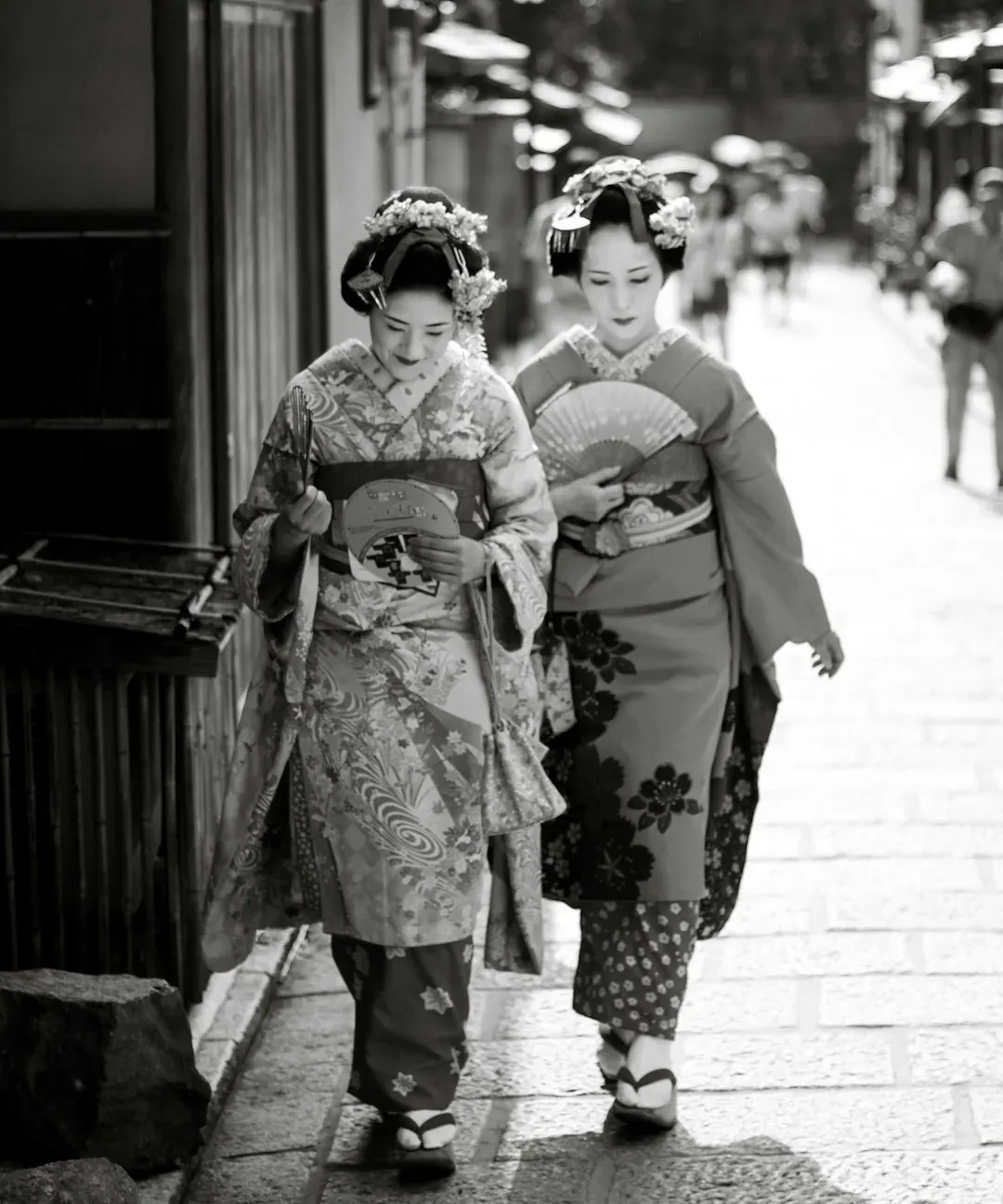
Four sisters from a declining merchant family in pre-war Japan navigate tradition, modernity, and the marriage market. That simple premise unfolds into a nuanced portrait of Japanese society in flux. Tanizaki spent years writing this during World War II, and the government actually censored parts of it for being insufficiently patriotic.
The novel moves slowly, focusing on small domestic dramas and the elaborate process of arranging marriages for the two younger sisters. Yet these mundane concerns reveal deep tensions between old and new ways of life. The sisters represent different responses to modernization, from stubborn traditionalism to cautious adaptation.
What struck me most was how Tanizaki captures the weight of family obligation and social expectation. Every decision carries consequences for the entire clan’s reputation. The prose has an elegant, measured quality that mirrors the carefully controlled surface of Japanese society. Beneath that surface, emotions run deep and complex.
7. “The Book of Disquiet” by Fernando Pessoa (1982, posthumously)
Pessoa left this sprawling collection of fragments and observations unpublished at his death. His assistant discovered thousands of pages stuffed in a trunk. The resulting book defies easy categorization – part diary, part philosophy, part prose poetry, entirely mesmerizing.
The narrator, Bernardo Soares, works as an assistant bookkeeper in Lisbon while experiencing life as a series of impressions and meditations. He transforms mundane office existence into profound existential inquiry. Pessoa captures the melancholy and beauty of ordinary moments with stunning precision.
Each entry stands alone, so you can read it in any order or dip in randomly. Some passages are just a few lines, others stretch for pages. The cumulative effect is this rich, layered portrait of consciousness itself. It’s the kind of book you return to repeatedly, finding new meanings each time. Perfect for readers who love reflective, introspective writing.
8. “The Dud Avocado” by Elaine Dundy (1958)


Sally Jay Gorce arrives in 1950s Paris determined to live freely and have adventures. What follows is a hilarious, sharp-witted romp through bohemian expat life. Dundy captures the dizzy excitement and occasional terror of being young, broke, and abroad with infectious energy.
Unlike many “American in Paris” novels, this one doesn’t romanticize the experience too heavily. Sally makes mistakes, falls for the wrong people, and occasionally embarrasses herself spectacularly. She’s self-aware enough to recognize her own contradictions but too caught up in living to worry much about them.
The voice is what makes this novel sing. Sally’s narration crackles with wit, vulnerability, and genuine warmth. Groucho Marx called it the best novel he’d ever read. That might be overselling it slightly, but it’s definitely a blast to read. Think of it as the fun, slightly chaotic older sister to more serious expatriate literature.
9. “The Transit of Venus” by Shirley Hazzard (1980)

Two Australian sisters, Caro and Grace, navigate love, ambition, and the complexities of post-war life across decades and continents. Hazzard structures this novel almost like poetry, with precise language and a non-linear timeline that reveals information gradually.
The plot spans roughly forty years, following how Caro’s choices ripple through her life and the lives around her. Hazzard writes about love with clear-eyed intelligence, avoiding both cynicism and sentimentality. Her characters make decisions that seem reasonable at the time but carry unexpected consequences years later.
What amazed me was the sheer density of insight packed into relatively few pages. Every sentence rewards close attention. Hazzard doesn’t waste words, yet the prose never feels sparse. It’s hard to say for sure, but this might be one of the most perfectly crafted novels of the late twentieth century. Just don’t expect an easy read – it demands your full attention.
10. “The Mandarins” by Simone de Beauvoir (1954)

This roman à clef about Parisian intellectuals after World War II fictionalizes de Beauvoir’s circle, including barely disguised versions of Sartre, Camus, and herself. The intellectuals grapple with political responsibility, existential freedom, and the messy complications of their personal lives.
Anne and Henri struggle with how to engage politically in the post-war world. Should intellectuals support the Communist Party despite Stalin’s atrocities? Can literature and philosophy change society? De Beauvoir explores these questions through the lens of love affairs, friendships, and philosophical debates.
The novel won the Prix Goncourt and scandalously included frank discussions of female sexuality and desire. Anne’s American love affair forms the emotional heart of the book, offering a surprisingly tender counterpoint to the political turmoil. It’s a sprawling, ambitious work that captures a specific moment in intellectual history while exploring timeless questions about commitment, freedom, and authenticity.
11. “The Prime of Miss Jean Brodie” by Muriel Spark (1961)

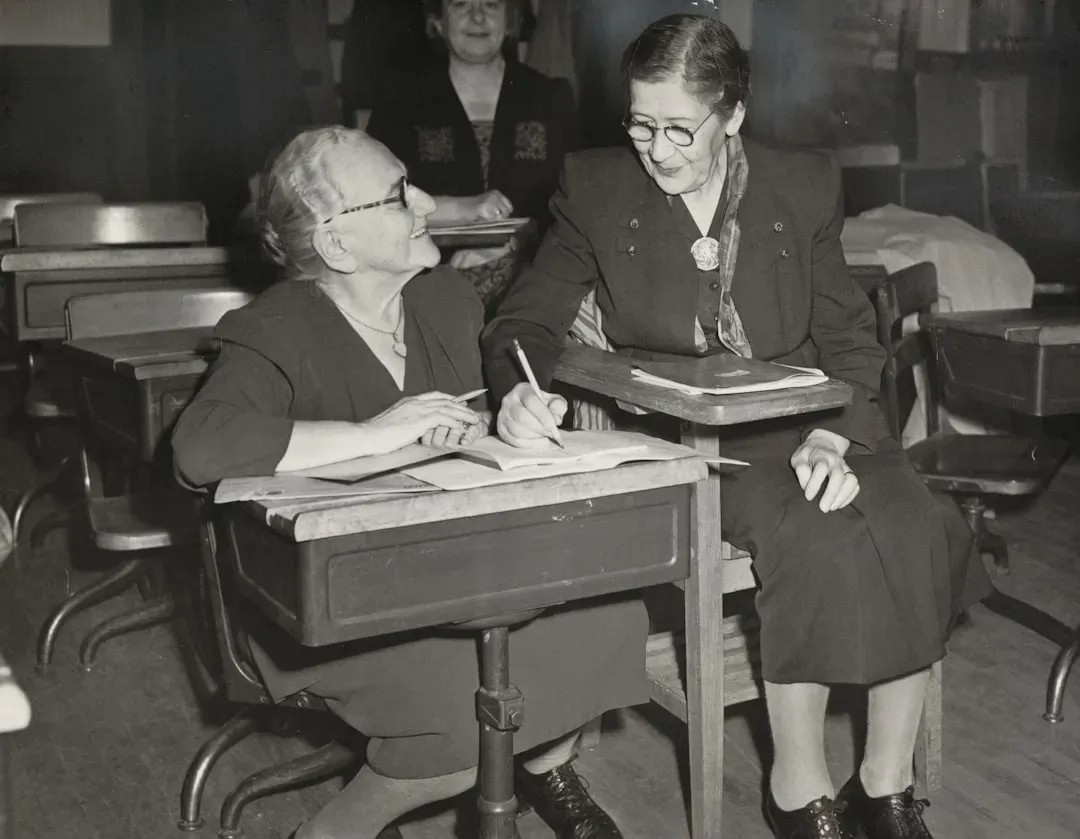
Jean Brodie teaches at a conservative Edinburgh girls’ school in the 1930s, molding her select group of students according to her personal philosophy. She’s charismatic, unconventional, and increasingly dangerous. Spark tells this story with elegant economy, revealing the full scope of Brodie’s influence through a clever non-linear structure.
The novel jumps forward in time, showing us the eventual fates of Brodie’s “set” before returning to their school days. This technique creates dramatic irony – we know which girl will betray Brodie, we just don’t know why. The tension builds as we piece together how this magnetic teacher becomes a destructive force.
Spark raises uncomfortable questions about education, influence, and fascism. Brodie admires Mussolini and Franco, and her desire to shape young minds carries sinister undertones. Yet she’s also vibrant, passionate, and genuinely inspiring at times. The novel refuses easy judgments, presenting her as complex and contradictory. It’s a masterclass in economical storytelling.
12. “Auto-da-Fé” by Elias Canetti (1935)

Peter Kien, a reclusive scholar obsessed with his massive private library, makes a catastrophic decision to marry his housekeeper. Everything spirals into madness from there. Canetti charts Kien’s psychological disintegration with dark humor and nightmarish intensity.
The novel functions as both character study and broader allegory about the rise of fascism in Europe. Kien’s inability to connect with reality, his retreat into intellectual abstraction, and his ultimate destruction mirror larger social forces. Canetti witnessed book burnings in Vienna, and the novel’s climax takes on devastating symbolic weight.
This book is genuinely disturbing. Kien descends into paranoia and violence, while the supporting characters are grotesques straight out of German Expressionism. Yet Canetti’s prose has this manic energy that propels you forward. He later won the Nobel Prize, and while his entire body of work earned that honor, this early novel remains his most powerful achievement.
13. “The Return of the Soldier” by Rebecca West (1918)

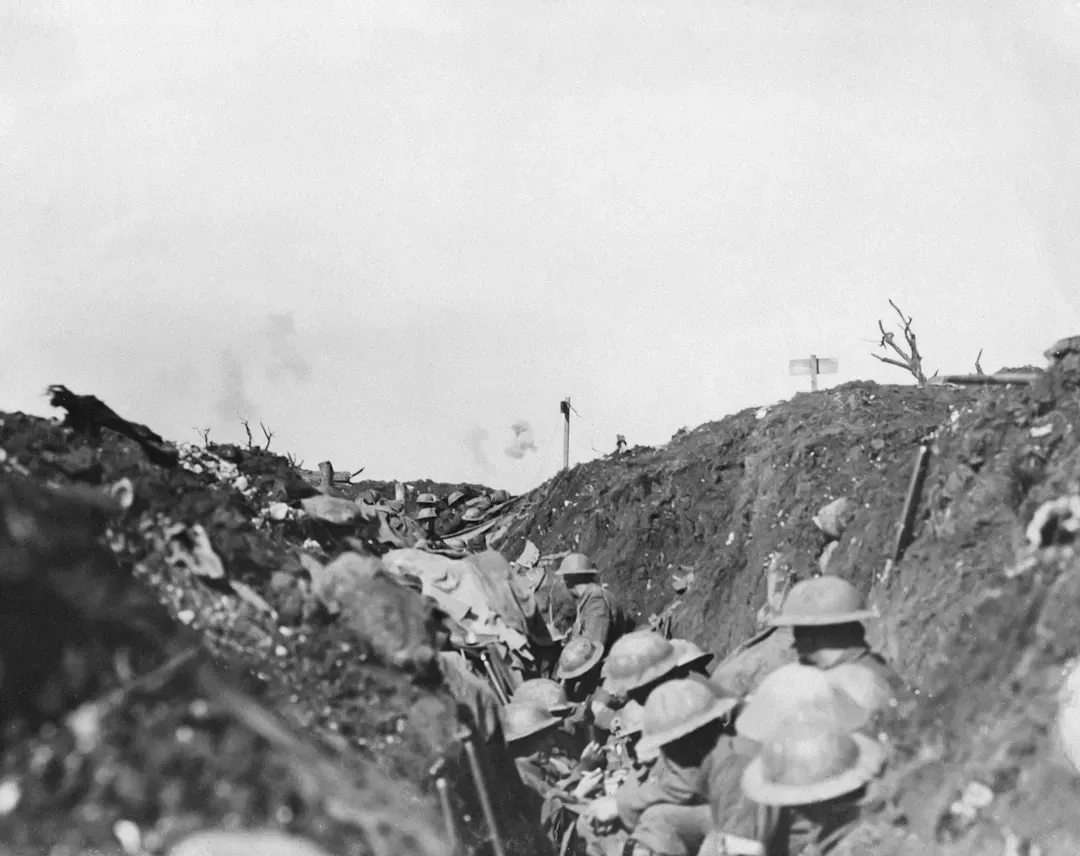
A shell-shocked soldier returns from World War I with amnesia, forgetting the last fifteen years of his life including his marriage. He remembers only his first love, a working-class woman he was forced to give up. West published this when she was just twenty-five, and the psychological insight is stunning.
The novel explores memory, class, and the nature of love through three women’s perspectives. Chris’s wife, cousin, and former lover all want him for themselves, yet they must decide whether to cure his amnesia and restore his unhappy present or allow him to remain in his happier past.
West examines trauma with remarkable sophistication for 1918. She understands how the mind protects itself and what recovery might cost. The prose is elegant but not showy, serving the emotional complexity of the situation. At barely over one hundred pages, it packs more insight than novels twice its length. It’s a slim masterpiece that deserves far wider recognition.
14. “Remembrance Rock” by Carl Sandburg (1948)

Wait, the poet wrote a novel? Indeed he did, and it’s a strange, ambitious beast. Sandburg attempts nothing less than an epic history of American democracy, spanning from Plymouth Rock through World War II. A Supreme Court Justice on his deathbed reflects on the American experiment through stories of his ancestors.
The novel sprawls across centuries and generations, examining the ideals and failures of American democracy. Sandburg’s poetic sensibility shapes the prose, which alternates between folksy dialogue and lyrical passages about the land itself. Critics initially dismissed it as overambitious and uneven.
Honestly, they’re not entirely wrong. The book has serious flaws – it’s too long, sometimes preachy, and the framing device feels clunky. Yet there’s something genuinely moving about Sandburg’s earnest faith in democratic ideals combined with clear-eyed recognition of American injustices. It’s a fascinating mess rather than a polished masterpiece, but fascinating messes can be more rewarding than safe, conventional novels.
15. “The Victim” by Saul Bellow (1947)


Asa Leventhal, a Jewish man in New York, is confronted by Kirby Allbee, who blames Asa for ruining his life. What unfolds is a complex psychological drama about guilt, identity, and the uncomfortable interdependence of victim and victimizer. Bellow wrote this before his more famous novels, and it shows him already in full command of his powers.
The relationship between Asa and Kirby becomes increasingly strange and codependent. Allbee shows up drunk at Asa’s apartment, makes anti-Semitic remarks, yet also demands emotional support. Asa feels both justified in his anger and inexplicably guilty. The psychological dynamics shift constantly, keeping readers off-balance.
Bellow explores questions of responsibility and moral ambiguity without offering easy answers. The claustrophobic atmosphere of hot New York summer intensifies the tension. While later novels like “Herzog” and “Humboldt’s Gift” got more attention, “The Victim” remains Bellow’s tightest, most focused work. It’s a psychological thriller disguised as literary fiction.
Finding Your Next Favorite Book


These fifteen novels prove the literary canon extends far beyond the usual suspects. Each offers something unique – whether it’s psychological depth, formal innovation, or just a damn good story told with skill and passion. Sure, you could read “Pride and Prejudice” for the fifth time, but why not take a chance on something less familiar?
The beautiful thing about hidden gems is the discovery itself. There’s a special pleasure in stumbling onto a brilliant book that nobody around you has read. You get to be the one recommending it for once instead of hearing “Oh yes, everyone loves that one.” These novels deserve more readers, and perhaps you’ll be the one passing them along to friends.
So which one will you try first? Pick based on mood, themes that intrigue you, or just choose randomly and see where it leads. The worst that can happen is you discover it’s not for you. The best? You might find your new favorite book. What do you think – are you ready to venture beyond the usual reading lists?