Translation has always been described as a balancing act – a negotiation between loyalty to the original and the demands of a new language. But for some books, that negotiation has gone dramatically sideways. Words get swapped, entire passages vanish, philosophical layers dissolve, and subversive characters suddenly become obedient. There are translators who took the task of reworking a great text in hand and stirred up major controversy in the process – writers who were not satisfied with the source material and made it their responsibility to render it more palatable to the audience sharing their language, or to alter it to suit their own tastes. What follows are four documented cases where the translation didn’t just carry a book into a new language – it rewrote it entirely.
1. The Little Prince – From Existential Poetry to Simplified Fable
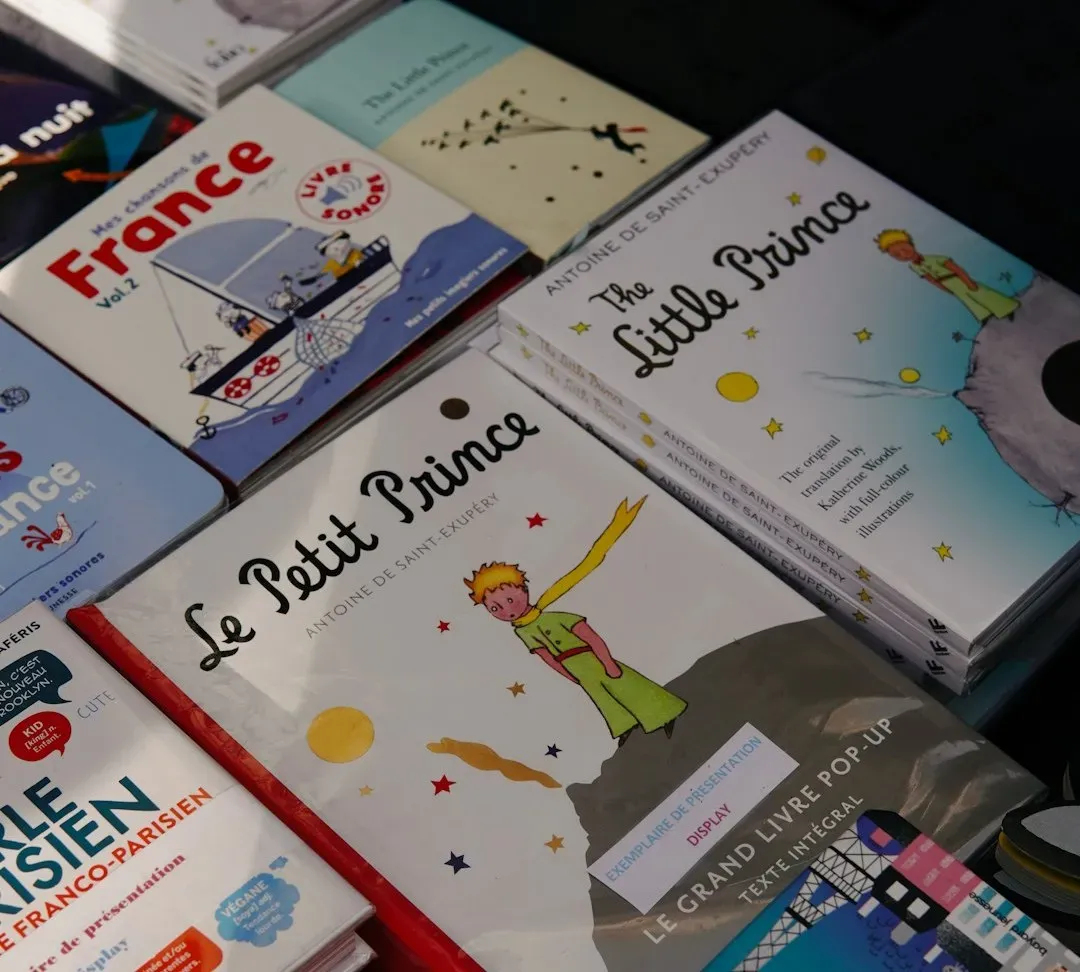
Antoine de Saint-Exupéry’s “The Little Prince” is beloved for its gentle wisdom and philosophical musings, but few readers realize that early English translations dramatically reshaped the book’s soul. Large sections were simply omitted, and the nuanced reflections on love, loss, and the essence of childhood were softened, making the story less thought-provoking than the original French. The original text is deeply rooted in existentialist thinking, and the gap between what French readers absorbed and what English readers received is considerable. Scholars have pointed out that the French text brims with poetic metaphors and existential questions – elements that fade in translation – and that the famous line “What is essential is invisible to the eye” is rendered less powerfully in some English versions.
Published in 1943, the book can be found in more than 380 languages and has sold over 140 million copies. With such a massive global reach, every translation choice carries significant weight. These changes sparked debates about preserving an author’s intent and the impact on readers’ emotional responses, with the missing philosophical layers causing generations of English-speaking readers to miss out on the book’s deepest meanings. The irony is that a book about seeing what is truly important has itself been stripped of what made it important in the first place.
2. The Stranger – When Indifference Becomes Merely Peculiar
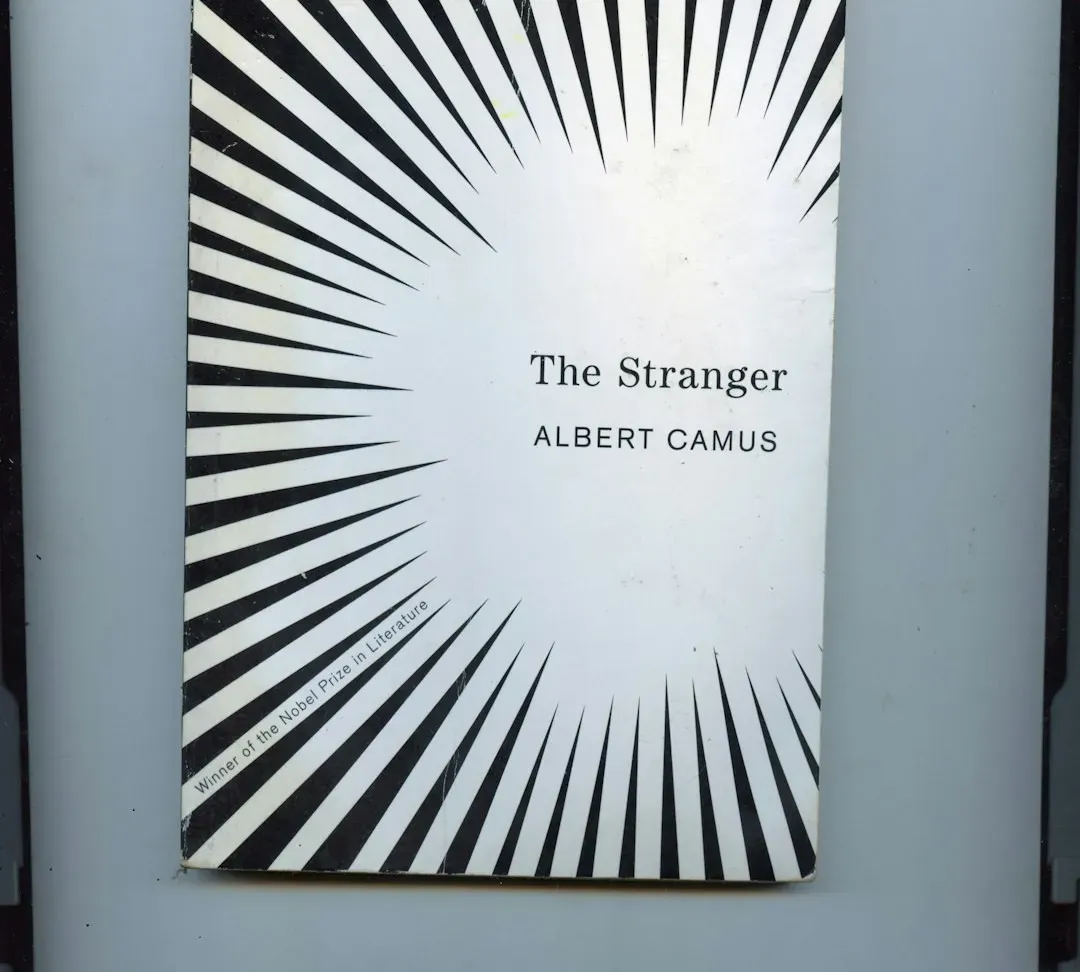
Albert Camus’s “The Stranger” is remembered for its cool, detached protagonist, Meursault, but translation choices have subtly altered his character. In the original French, Meursault’s “indifference” is a striking philosophical stance, rooted in existential ideas about the absurdity of existence. However, early English versions softened this to “peculiar,” making Meursault seem merely odd rather than profoundly disconnected. It sounds like a minor word swap, but it fundamentally changes who Meursault is in the reader’s mind. This small change has a huge effect, shifting readers’ understanding of Camus’s intent and the novel’s existential weight, with scholars arguing that this mistranslation undercuts the book’s central message about the human condition.
The difference in language also affects how readers judge Meursault’s actions, especially his response to his mother’s death, and the translation controversy has led to new versions attempting to restore the original meaning, but the “peculiar” perception still lingers in popular culture. In a novel where every sentence is an act of philosophical precision, these choices are not cosmetic – they are structural. The novel’s reputation as a philosophical touchstone depends heavily on which translation readers encounter first. Different translators have continued to wrestle with this problem across decades, each claiming their version is closer to the spirit of Camus.
3. The Vegetarian – A Prize-Winning Translation Full of Errors

Written in Korean in 2007, Han Kang’s “The Vegetarian” was the first of Han’s novels to be translated into English, and it won the 2016 Man Booker International Prize. In October 2024, Han Kang was announced as the winner of the Nobel Prize in Literature. The English translation was produced by Deborah Smith, who admitted freely that she had learned Korean only three years earlier, largely through translation work. The recognition was enormous, but so was the controversy that followed it. According to a research paper presented at a conference at Ewha Women’s University in October 2016, 10.9 percent of the first section of the book was found to be mistranslated, while another 5.7 percent of the original text was found to have other issues.
Kim Wook-dong, professor emeritus of Sogang University, published a critical review in the Translation Review journal in 2018, claiming the English translation had plenty of mistranslations, including vocabulary errors. He said translator Deborah Smith made such mistakes perhaps because of her “negligence or inability to translate,” and pointed to the confusion of the Korean word “pal” (arm) and “bal” (foot) as one of the outstanding mistakes. The opening sentence was also changed. Originally, Yeong-hye’s husband stated that he never thought of his wife as “anything special,” whereas in English, Yeong-hye was described as “completely unremarkable in every way” – two statements with very different tones, as the Korean is simply more dismissive while the English implies that the husband actively looks down upon his wife. Smith herself eventually acknowledged the errors, and critics noticed striking deviations from Han’s original Korean text compared to Smith’s English translation, which suddenly had a British-Victorian tinge.
4. Pippi Longstocking – A Rebel Tamed for Foreign Readers

Astrid Lindgren’s “Pippi Longstocking” is celebrated for its quirky, rebellious heroine, but her spirit was tamed for English-speaking audiences. English editions censored many of Pippi’s more subversive actions and changed cultural references to fit Western sensibilities. In the original Swedish, Pippi openly questions authority, flouts social norms, and lives joyfully outside convention – qualities that were toned down or removed altogether. The book was first published in Sweden in 1945 and has since reached an enormous global audience. Stories about Pippi have been translated into 79 languages, and the books have sold over 70 million copies as of 2024.
The story of Pippi has been censored in some translations to make her a bit more of a “respectable young lady,” while her anti-authoritarian outlook was accepted more readily in other countries. Some of the more modern editions have modified some of the insensitive cultural stereotypes used in the original text. The French translation is a particularly well-documented case. Sara Van den Bossche has hypothesized that the lack of controversy as a result of the censorship might be why Pippi Longstocking went mainly unremarked upon in France, whereas in Germany and Sweden the book quickly became accepted within the countries’ respective children’s literature canons. In 1995, an uncensored version of Pippi Longstocking was released in France, which “shook” French readers, although the book did not reach the cultural status it had in Germany and Sweden. Different readerships effectively grew up with different Pippis – some wild and free, others quietly domesticated.
5. Don Quixote – One Book, Entirely Different Genres
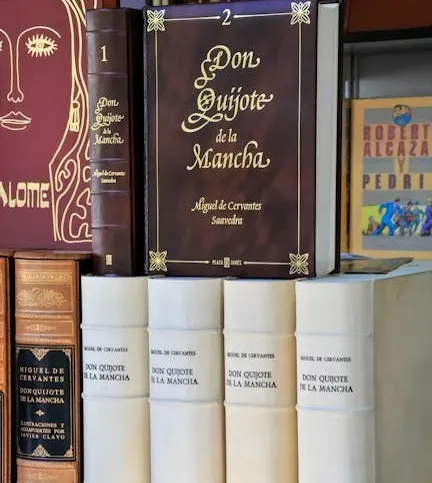
“Don Quixote” is a classic that has been translated countless times, and each version brings its own interpretation, sometimes changing the very genre of the book. The original Spanish is a biting parody of chivalric romance, filled with irony and social satire, yet some translations emphasize the tragicomic elements, making the story more of a poignant drama than a playful farce. Cervantes wrote with a razor-sharp wit that is notoriously difficult to carry across languages. This shift affects how readers view Don Quixote himself – either as a ridiculous dreamer or a tragic hero – and translators’ choices about tone, humor, and even wordplay can dramatically influence the novel’s meaning.
Literary experts have called attention to how these differences shape readers’ understanding of Spanish literature and culture, and it is not uncommon for two English readers to have completely different impressions of the book based on which translation they read. The novel has attracted some of the most eminent translators of every era, and each has made choices that amount to a substantially different reading experience. The plot revolves around the adventures of an hidalgo from La Mancha named Alonso Quixano, who loses his mind due to the reading of many chivalric romances and becomes a knight-errant to revive chivalry and serve his nation, under the name Don Quixote de la Mancha. The comedy or tragedy a reader encounters depends less on Cervantes than on the translator sitting between them.
6. In Search of Lost Time – When a Translator Borrows a Title from Shakespeare

The notorious French-to-English translation of Marcel Proust’s “À la recherche du temps perdu,” though highly regarded in some circles, remains to this day one of the translations most likely to spark arguments. This is due to the many liberties C.K. Moncrieff took in reconstructing and remolding Marcel Proust’s seven-volume magnum opus. Even the title is a bold change. The title Moncrieff gave the work in English was “Remembrance of Things Past.” This is a line borrowed directly from Shakespeare’s “Sonnet 30,” which Moncrieff believed was more loyal to the spirit of the novel than “In Search of Lost Time.” Not every reader or scholar agreed. The shift from a forward-searching phrase to a backward-gazing one changes the emotional posture of the entire work before a single page is turned.
In his book “Translation Changes Everything,” leading theorist Lawrence Venuti gathers essays that sketch the trajectory of his thinking about translation while engaging with the main trends in research and commentary. The issues covered include basic concepts like equivalence, retranslation, and reader reception, as well as philosophical problems such as the translator’s unconscious and translation ethics. Moncrieff’s version of Proust is perhaps the clearest embodiment of those problems. Venuti’s broader aim is to conceive of translation as an interpretive act with far-reaching social effects, at once enabled and constrained by specific cultural situations – and the Proust case shows exactly how that plays out when the interpreter is also a literary figure in their own right, unwilling to stay invisible behind the original author’s voice.