There is a very specific kind of shame that comes from having a thick, celebrated novel sitting on your shelf for years, its spine uncracked past page 80. You mention it at dinner parties. You nod along when someone references it. You have, at some point, genuinely intended to finish it. A full 46% of Americans did not finish a single book in one recent year, and another 5% read just one, meaning if you read two books, you are already in the top half of American readers. The gap between cultural aspiration and actual reading behavior is vast, and nowhere is it more visible than with classic literature. These four books sit at the very center of that gap.
1. Ulysses by James Joyce

Modern Library ranks Ulysses as the 20th century’s best novel, and TIME categorizes it as the most influential novel of the century. That level of institutional praise has made it one of the most purchased books in history, and yet the purchasing is often where the reading ends. James Latham, editor of the University of Tulsa-based James Joyce Quarterly, recently described Ulysses as probably “the most purchased and least read book in the world.” This is not a fringe opinion. It is more or less the consensus.
A graduate-level professor once introduced the novel by saying that most people who start reading Ulysses never finish it, and most of them won’t make it past the first paragraph of Episode 3. The book has been deemed by many as impenetrable and unreadable, 933 pages of genre-defying, shape-shifting stream of consciousness and idiosyncratic wordplay, and many count it as a badge of honor simply to say they began reading it, but did not complete it. The social currency of attempting Joyce is real, even when the book itself stays closed.
Why Readers Stop: The Structure Problem
Combining heavy use of cryptic and dated allusions, obfuscating narration, an enviable vocabulary, and pages of dense prose, Joyce intentionally set out to create a literary odyssey of words, once saying: “I’ve put in so many enigmas and puzzles that it will keep the professors busy for centuries arguing over what I meant.” This was a deliberate act of resistance, not an accident of style. Most readers have trouble with Ulysses not so much because of the stream of consciousness technique, but because of the plethora of styles Joyce either mimics or parodies throughout the novel, with entire chapters that are narratively innovative, such as “Sirens” and “Ithaca,” which throw off a reader looking for a casual read.
Like Moby-Dick, Ulysses is “only” around 720 pages long, taking place on a single day within the city of Dublin. Divided into sections and written in a dizzying array of styles, from stage play to stream of consciousness, it is considered by many to be the “demonstration and summation of the entire movement” of modernist literature. Such formal boldness may make the book a dazzling example of the movement, but it doesn’t exactly make it an easy or simple book to read.
2. War and Peace by Leo Tolstoy
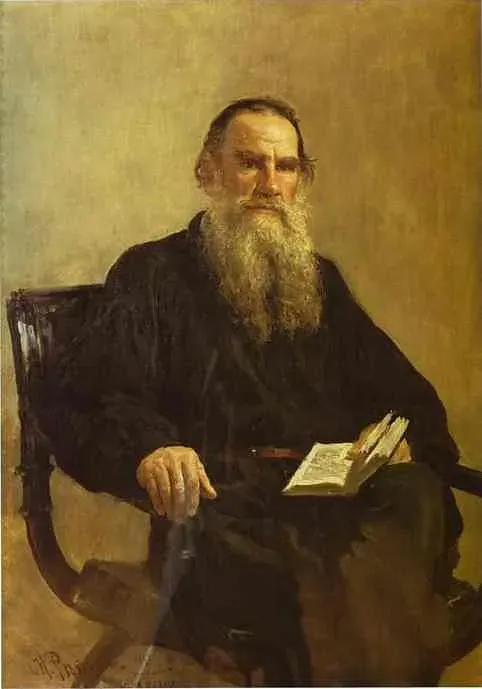
What is there to say about Tolstoy’s classic War and Peace? It is one of the longest and most ambitious books ever written, clocking in at well over 1,000 pages. That is a lot of reading, especially when it makes frequent digressions into Russian history and philosophy. Set during the Napoleonic Wars, it follows the lives of numerous characters, showing how war affects not only those fighting in it but also those on the home front. People cite it. People gift it. People display it prominently. Finishing it, though, is another matter entirely.
Though it has been considered his greatest work, Tolstoy himself didn’t regard War and Peace as a novel in the true sense, saying that it is “not a novel, even less is it a poem, and still less a historical chronicle.” Difficult to read, certainly, as later chapters abandon narrative altogether to dive deep into matters of philosophical contemplation. War and Peace runs to 587,287 words, which is roughly the equivalent of reading six average-length novels back to back.
The Name Problem and the Page Count

Cracking open the first pages of War and Peace means facing 1,300 pages of textbook-small type. Over the course of 361 short chapters, the reader gets a bird’s-eye view of about fifteen years in the lives of Andrei, Natasha, Pierre, Nikolai, and others as they navigate Russian life during the Napoleonic Wars of the early 1800s. The scope is genuinely staggering, and the cast of characters notoriously includes hundreds of named individuals, many sharing similar Russian names across generations. It takes some readers nearly five attempts before reading it all the way through, as this type of writing requires the reader to reach a certain level of maturity and life experience in order to connect with the message.
On Goodreads, a community-voted list of the most begun but unfinished books has grown to over 2,600 titles based on more than 13,000 votes, with Catch-22, The Lord of the Rings, Ulysses, and Moby-Dick among the top entries. The list is not about books being bad – it is more about how hard they actually are to finish. War and Peace belongs firmly in that category, widely revered and widely abandoned.
3. Moby-Dick by Herman Melville
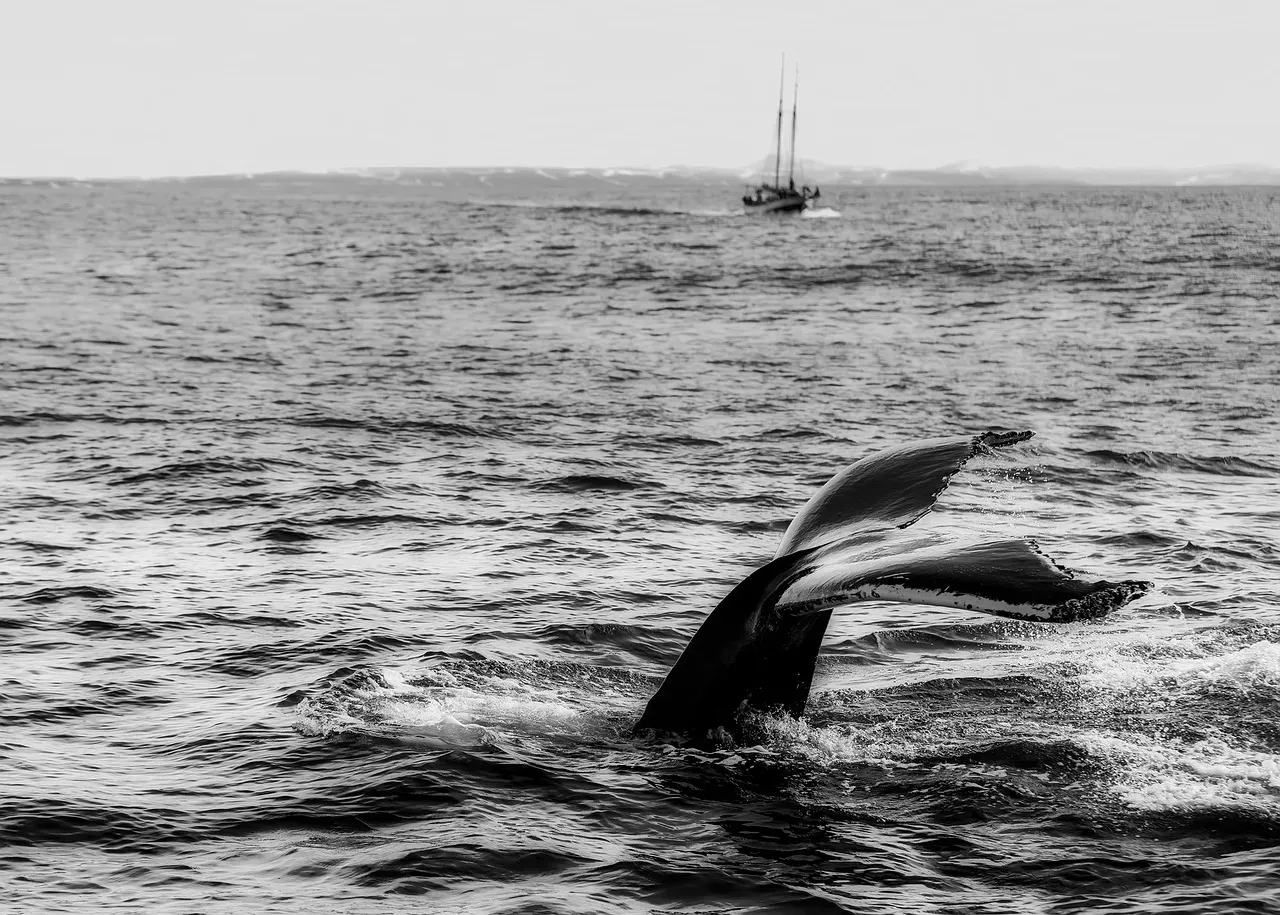
Widely considered one of the “Great American Novels,” Moby-Dick is jammed front-to-back with dense themes, poetic language, and plenty of nautical terminology. Despite that, it’s one of the most famous books in the world and features one of literature’s best-known first lines: “Call me Ishmael.” D. H. Lawrence called it “the greatest book of the sea ever written,” while William Faulkner said it was a book he wished he had written himself. Those are remarkable endorsements, and yet the experience of actually reading it tells a different story for most people.
Not every person who has tried to crack its often seemingly impenetrable tale of monomania and one man’s quest for a white whale has found the job an easy one, and even in Melville’s time the book was seen as a commercial failure, only attaining its great reputation after the author’s death. Melville took 206,052 words to compose Moby-Dick, and many of those words are dedicated to extended technical chapters on whaling practice, anatomy, and ship mechanics that have very little to do with the story itself.
The Whaling Chapters Nobody Talks About
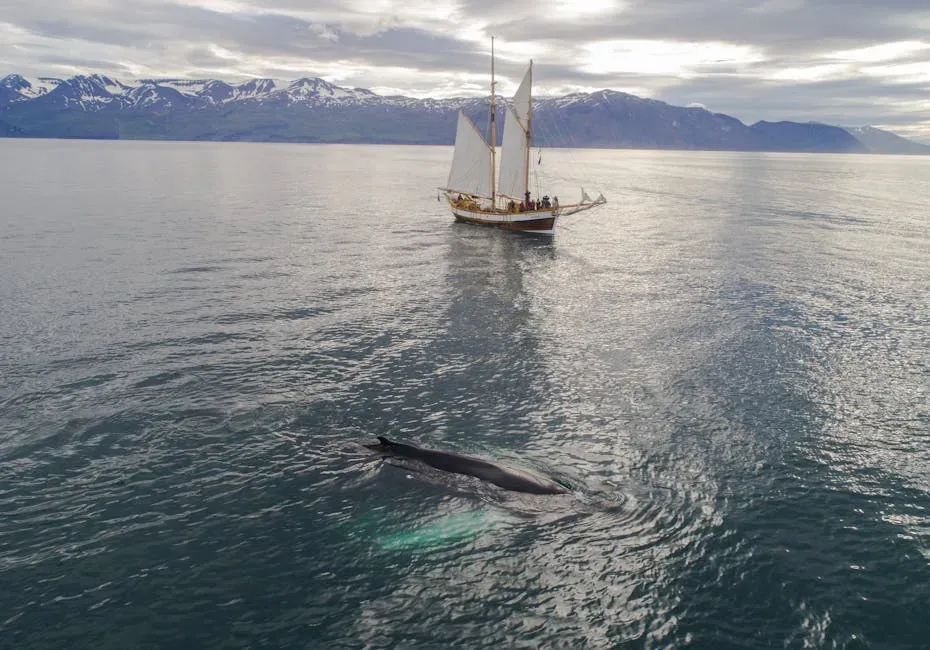
There is a well-known pattern among readers of Moby-Dick. The opening chapters pull you in immediately: Ishmael, Queequeg, the Pequod, the obsessive Captain Ahab. Then comes the middle section, where Melville pivots hard into exhaustive detail about the whaling industry, and the momentum stalls. Many readers have tried the book multiple times but haven’t gotten past page 100, only barely reaching the detailed chapters on the ins and outs of the whaling trade. Those chapters are not tangential to Melville; they are the point. For many readers, however, they are the exit.
It is actually more common to start but not finish a book than it is to never read a book at all. Only about 23% of adults surveyed never read a book, while the majority at least begin one. Moby-Dick is almost a textbook illustration of that statistic, a book that almost everyone has opened and relatively few have seen through to the end. Moby-Dick ranks ninth on WorldCat’s most widely held library books and is available in 54 translated languages, yet its actual completion rate among readers suggests a wide gulf between cultural prestige and lived reading experience.
4. Catch-22 by Joseph Heller

With over 13,000 votes on Goodreads’ “Most Begun but Unfinished” list, Catch-22 by Joseph Heller tops the ranking. The list emphasizes that this is not about a book being bad – it is more about being hard to actually finish, a genuine challenge to read. Published in 1961, the novel has become one of the most quoted, most referenced, and most beloved anti-war satires in all of American literature. Everyone who has read it insists you must read it. Fewer people actually have.
Some people consider Catch-22 to be the funniest book they have ever read, while others have never been able to get through more than 40 or 50 pages, having to read each page twice before finally giving up. The novel is deliberately non-linear, jumping between characters and time frames without warning or resolution. Its circular logic and fractured structure are entirely intentional as a satire of military bureaucracy, but for readers expecting a traditional war narrative, the experience can feel like being trapped inside the very kind of absurd reasoning the book is critiquing.
The Abandonment Habit and What It Tells Us
Younger readers are much more willing to quit a book that they don’t like or that isn’t working for them than older readers. While many might say that’s proof of a lack of attention, it’s not: it’s a value on time and energy. The honesty around abandoning books has grown considerably in recent years, shaped in part by reading culture online. In some surveys, nearly half of respondents say that a lack of interest is the main reason they don’t finish reading books.
Research from WordsRated, an international data group focused on the publishing world, found that only 48% of adults finished a whole book in the last year they were surveyed. The four books on this list are not victims of indifference. They are loved, cited, and carried around in tote bags. BookTok and reading culture online don’t just turn books into viral sensations; they inspire purchases and create must-read lists that many people may never finish. The social life of a book and the private act of reading it have always been two very different things, and these four classics have spent decades thriving in the gap between them.