You know that feeling when you finish a great book and the ending just sticks with you? Maybe it shocked you, maybe it made you cry, or maybe it tied everything together perfectly. Well, here’s something wild to think about: some of the most iconic endings in literature were actually last-minute changes. The authors themselves wrestled with how to wrap things up, and in some cases, they were practically forced to rewrite their conclusions.
These aren’t just small tweaks either. We’re talking about complete reversals that would have fundamentally changed how we remember these stories today. The original endings would have left readers with entirely different emotions, messages, and interpretations. Let’s dive into four famous books that almost ended in ways you’d never expect.
Great Expectations Nearly Ended Without Romance
Charles Dickens originally wrote an ending for “Great Expectations” that was decidedly less hopeful than what we read today. In his first version, Pip briefly encounters Estella on a London street, they exchange polite words, and then part ways forever. That’s it. No romantic reconciliation, no hint of future happiness together, just a quick, somewhat cold acknowledgment between two people whose lives had moved in different directions.
Dickens’ friend and fellow novelist Edward Bulwer-Lytton convinced him to change it, arguing that readers deserved something more uplifting after following Pip’s journey. So Dickens rewrote the final pages to show Pip and Estella meeting in the ruins of Satis House, with a much stronger suggestion that they might finally end up together. The new ending leaves things ambiguous but hopeful, which honestly fits the novel’s themes of redemption and second chances much better.
Literary critics still debate which ending is superior, and some editions actually include both versions. But let’s be real, the revised ending became the standard for a reason. It gave readers that emotional payoff they’d been hoping for throughout hundreds of pages of Pip’s struggles and growth. Without that change, the book would feel strangely incomplete, like watching a movie that cuts off right before the climax.
Imagine if Dickens had stuck with his original plan. “Great Expectations” might be remembered as one of the bleakest Victorian novels instead of a story about hope and transformation. That one conversation with Bulwer-Lytton literally shaped how generations of readers would interpret the entire book.
Little Women’s Jo Almost Stayed Single
Louisa May Alcott did not want Jo March to get married. In fact, she was pretty vocal about it. Alcott envisioned Jo as an independent woman who would remain happily single, focusing on her writing career and living life on her own terms. That would have been genuinely revolutionary for a novel published in 1868, when marriage was considered the only proper ending for a female protagonist.
But Alcott’s publisher and numerous readers demanded a romantic ending. They couldn’t accept the idea of Jo ending the story unmarried, no matter how successful or fulfilled she might be otherwise. The pressure was intense, and Alcott eventually compromised by creating Professor Bhaer, a character she deliberately made older and less conventionally attractive than Laurie, the charming boy-next-door everyone expected Jo to marry.
Alcott’s frustration shows in her letters, where she described feeling forced to “marry Jo off” against her artistic judgment. She gave readers the marriage they insisted on, but she made sure it was on Jo’s terms, with a partner who respected her ambitions and intellect. Still, you can almost feel Alcott’s resistance in how she wrote those final chapters, rushing through the courtship and keeping the romance relatively understated.
If Alcott had gotten her way, “Little Women” would stand as an even bolder feminist statement. Jo would have represented something almost unheard of in 19th-century literature: a woman choosing professional fulfillment over romantic love. Publishers back then clearly weren’t ready for that level of independence in their heroines.
A Clockwork Orange Had Two Different Endings From The Start
Here’s a strange case where geography determined the ending. Anthony Burgess wrote “A Clockwork Orange” with 21 chapters, and that final chapter shows Alex maturing naturally, growing tired of violence, and thinking about settling down and having a family. It’s hopeful and suggests that people can change through genuine growth rather than forced conditioning.
When the book was published in America, however, the publisher removed that final chapter entirely. They thought American readers wanted something darker and more cynical. So the U.S. edition ended with Alex returning to his violent ways, having learned nothing from his experiences. Stanley Kubrick’s famous film adaptation was based on this shorter American version, which is why the movie has that bleak, unsettling conclusion.
Burgess himself called the American ending “badly flawed” and resented that his work was altered without his full consent. The missing chapter completely changed the book’s meaning, transforming it from a story about natural maturation into a pessimistic statement about humanity’s unchangeable nature. For decades, American readers and moviegoers experienced a fundamentally different story than what Burgess originally intended.
The complete 21-chapter version is now widely available in the U.S., but many people still don’t realize they’re reading a restoration rather than the original American text. It’s hard to say which ending is better, though Burgess clearly preferred his own. The shorter version definitely packs a darker punch, while the full version offers something more complex about free will and human development.
The Original Ending Of 1984 Included Hope
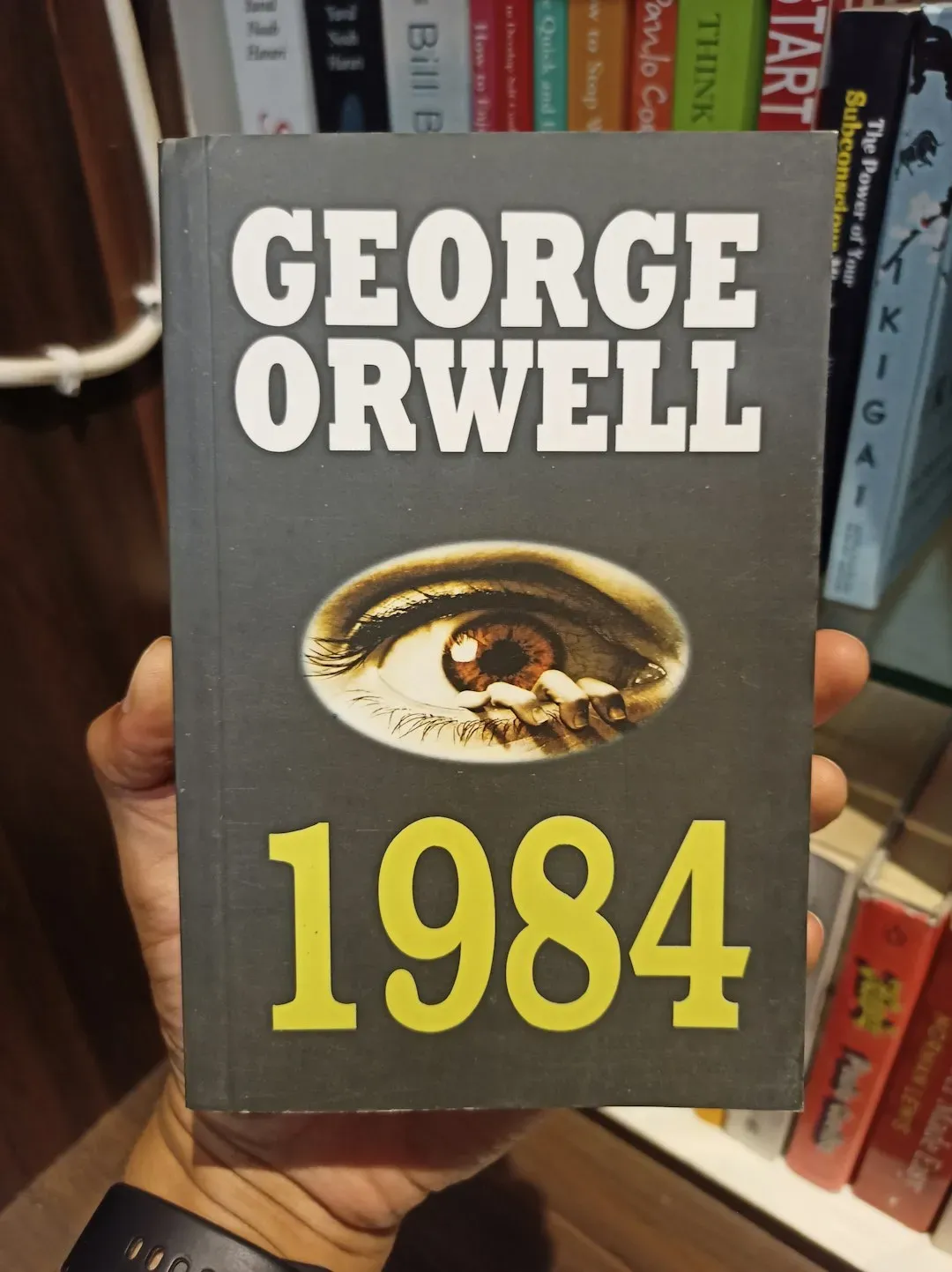
This one might surprise you. George Orwell struggled intensely with how to end “1984,” and early drafts included elements that were far less despairing than the published version. While the details remain somewhat debated among Orwell scholars, correspondence and notes suggest he considered allowing Winston and Julia to maintain some form of secret resistance or at least preserve their humanity despite the Party’s torture.
The final published ending, where Winston genuinely loves Big Brother, represents Orwell’s bleakest vision of totalitarianism’s complete victory. But he wrestled with whether to give readers even a tiny spark of hope, some suggestion that the human spirit couldn’t be entirely crushed. Ultimately, he decided that anything less than total defeat would weaken his warning about totalitarian control.
Imagine if Orwell had softened that ending even slightly. If Winston had been pretending to love Big Brother, or if there was any hint that he retained some core of his true self, the book would lose its devastating impact. The current ending works precisely because it’s so utterly hopeless, forcing readers to confront the terrifying possibility that systems of control could actually succeed in rewriting human consciousness.
Orwell made the right call, even though it must have been emotionally brutal to write. The published ending is what gives “1984” its lasting power as a warning. Any compromise would have transformed it from a nightmare into just another dystopian adventure where the hero’s spirit survives. Sometimes the darkest ending is the most honest one.
The Endings We Almost Got
These four books remind us that the endings we consider definitive were often fought over, compromised on, or completely rewritten at the last minute. The stories we think we know could have been radically different, and in some cases, multiple versions still exist. Next time you finish a book with a particularly memorable ending, it’s worth wondering whether the author originally envisioned something entirely different.
What do you think about these alternative endings? Would you have preferred any of the original versions, or did the authors make the right calls with their changes? Tell us in the comments.