Love has shaped empires, sparked revolutions, and inspired art that still moves us centuries later. Some romances transcended their time and left marks on history that we can still feel today. These weren’t just fleeting infatuations or fairy tales. They were real relationships between real people who changed the course of human events simply by loving each other.
We often think of love as a private matter, something that exists only between two people. Yet the greatest love stories prove otherwise. When passion meets power, when devotion collides with destiny, the ripples can transform entire civilizations. These four couples didn’t just love each other. They altered the world around them in ways no one could have predicted.
Cleopatra and Mark Antony – When Empire Met Passion
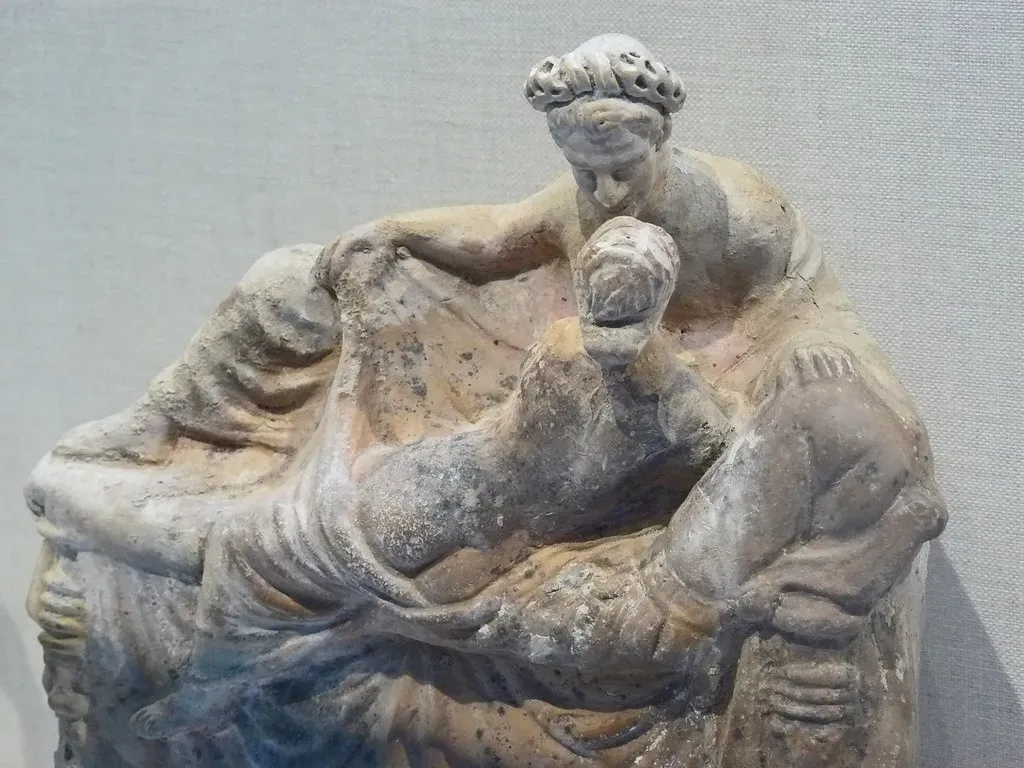
The pharaoh of Egypt and the Roman general created one of antiquity’s most explosive partnerships. Cleopatra wasn’t just beautiful, she was brilliant, speaking nine languages and ruling one of the wealthiest kingdoms on Earth. Mark Antony was Rome’s most celebrated military commander, a man who could have claimed the entire empire for himself.
Their alliance began as political strategy but became something far more dangerous. They married in 37 BCE according to Egyptian custom, though Rome refused to recognize the union. Together they dreamed of creating a new empire that would blend Eastern and Western power. Antony abandoned his Roman wife and his duties to the republic, choosing instead to rule alongside Cleopatra in Alexandria.
Rome saw this as betrayal. Octavian, Antony’s rival, declared war not on his former ally but on Cleopatra herself. The Battle of Actium in 31 BCE sealed their fate. When defeat became certain, both chose death over capture. Antony fell on his sword, dying in Cleopatra’s arms. She followed days later, likely from a poisonous snake bite, though historians still debate the exact method.
Their love story ended an era. Egypt became a Roman province, and the age of pharaohs died with Cleopatra. Octavian became Augustus, Rome’s first emperor. A romance that started with grand ambitions reshaped the Mediterranean world forever, though not in the way the lovers had imagined.
Shah Jahan and Mumtaz Mahal – A Monument to Eternal Devotion
Some loves are so profound they demand architecture. The Mughal emperor Shah Jahan met Mumtaz Mahal when they were teenagers at a royal bazaar. Five years later, in 1612, they married. She became his constant companion, traveling with him on military campaigns and bearing fourteen children over nineteen years of marriage.
Then she died during childbirth in 1631. Shah Jahan was inconsolable. Court records describe him emerging from his chambers after eight days of mourning with hair turned white, back bent with grief. He commissioned a tomb unlike anything the world had ever seen.
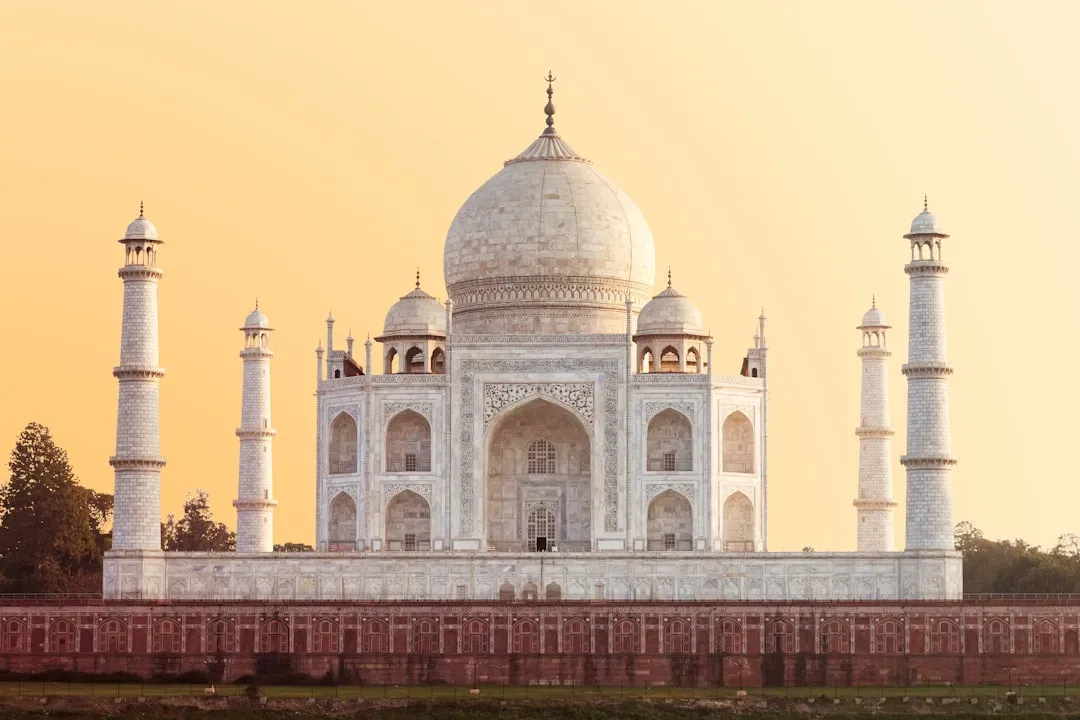
The Taj Mahal took twenty-two years to complete. Twenty thousand workers labored on the white marble masterpiece. Shah Jahan personally supervised every detail, from the inlaid precious stones to the mathematical precision of its symmetry. The structure cost roughly a billion dollars in today’s currency, bankrupting the empire’s treasury.
His obsession had consequences. His son Aurangzeb eventually overthrew him, imprisoning the aging emperor in Agra Fort. Shah Jahan spent his final years gazing across the river at the monument to his lost love. When he died in 1666, they buried him beside Mumtaz Mahal. The Taj Mahal stands today as a UNESCO World Heritage site, visited by millions who come to witness what love carved in stone looks like.
Pierre and Marie Curie – Partnership That Illuminated Science
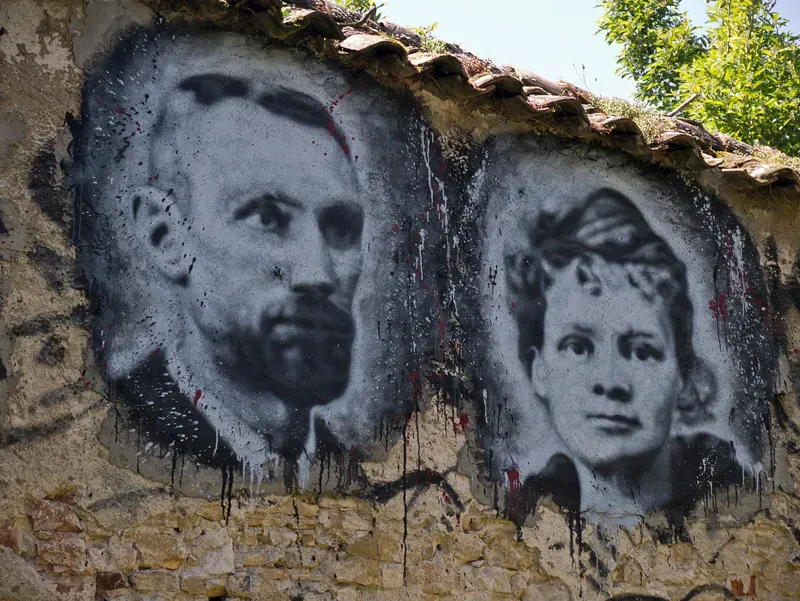
Not all great romances involve crowns and conquests. Marie Skłodowska arrived in Paris from Poland in 1891 with almost no money and a fierce determination to study physics. She met Pierre Curie in 1894, a respected scientist who ran a laboratory. Their first conversations were about magnetism and crystal structures.
They married in 1895 in a simple ceremony. Marie wore a dark blue dress she could later use in the laboratory. Their honeymoon was a bicycle tour through the French countryside. Back in Paris, they converted a leaky shed into their research space and began investigating mysterious rays emitted by uranium.
Working side by side, often in terrible conditions, they discovered two new elements: polonium and radium. The work was grueling and dangerous, though they didn’t know it yet. In 1903, they shared the Nobel Prize in Physics, making Marie the first woman to win the award. Pierre died tragically in 1906, struck by a horse-drawn carriage on a rainy Paris street.
Marie continued their work alone, winning a second Nobel Prize in 1911, this time in Chemistry. She remains the only person to win Nobel Prizes in two different sciences. Their daughter Irène would also win a Nobel Prize, continuing the family legacy. The Curies proved that intellectual partnership could be as passionate as any romance, and that love could advance human knowledge in ways that still save lives today through radiation therapy and nuclear medicine.
Frida Kahlo and Diego Rivera – Turbulent Art Born from Stormy Love

Mexico’s most famous artistic couple had a relationship that was equal parts passion and pain. Frida Kahlo was eighteen when she began pursuing Diego Rivera, already a renowned muralist twenty years her senior. They married in 1929, a union her mother called “an elephant and a dove.”
Both were communist activists and revolutionary spirits. Both had affairs throughout their marriage, Diego with Frida’s own sister, Frida with Leon Trotsky and several other men and women. They divorced in 1939, only to remarry a year later. Friends described their relationship as impossibly toxic yet somehow essential to both of them.
Frida’s art became increasingly raw and honest, depicting her physical suffering from childhood polio and a devastating bus accident. Many of her most famous paintings were direct responses to Diego’s betrayals or declarations of her love for him despite everything. “The Two Fridas” from 1939 shows her dual nature, torn between independence and devotion.
Diego considered Frida the greatest painter of their generation, though the world wouldn’t recognize her genius until after her death in 1954. She died in the Casa Azul, their shared home in Mexico City, with Diego at her side. Today, Frida’s work sells for millions and inspires feminist movements worldwide. Their stormy romance produced art that captured the complexity of love itself, with all its contradictions, its pain, and its undeniable power to create beauty from chaos.
Love as a Historical Force
These four couples remind us that romance isn’t separate from history. It’s woven through it, changing borders, building monuments, advancing science, and creating art that outlasts empires. Their loves weren’t perfect. They were messy, complicated, sometimes destructive. Yet each couple left something behind that continues to shape our world.
What strikes me most is how different each story is. Political alliance, grieving devotion, intellectual partnership, artistic turbulence. There’s no single template for love that changes the world. Maybe that’s the point. When two people connect deeply enough, the ripples extend far beyond their own lives, touching people they’ll never meet, in times they’ll never see. What do you think defines a truly great love story?