There’s something quietly radical about a novel that refuses to sprawl across years or decades. Instead, it zeroes in on a single day and insists that everything worth saying can be said before midnight. The result is rarely small. Some of the most ambitious and emotionally dense books ever written unfold in just a few hours, treating ordinary time as both a container and a source of pressure.
These five novels span vastly different eras, styles, and emotional registers. What they share is a commitment to the idea that a single day, examined closely enough, can hold a lifetime of meaning.
Mrs. Dalloway by Virginia Woolf (1925)
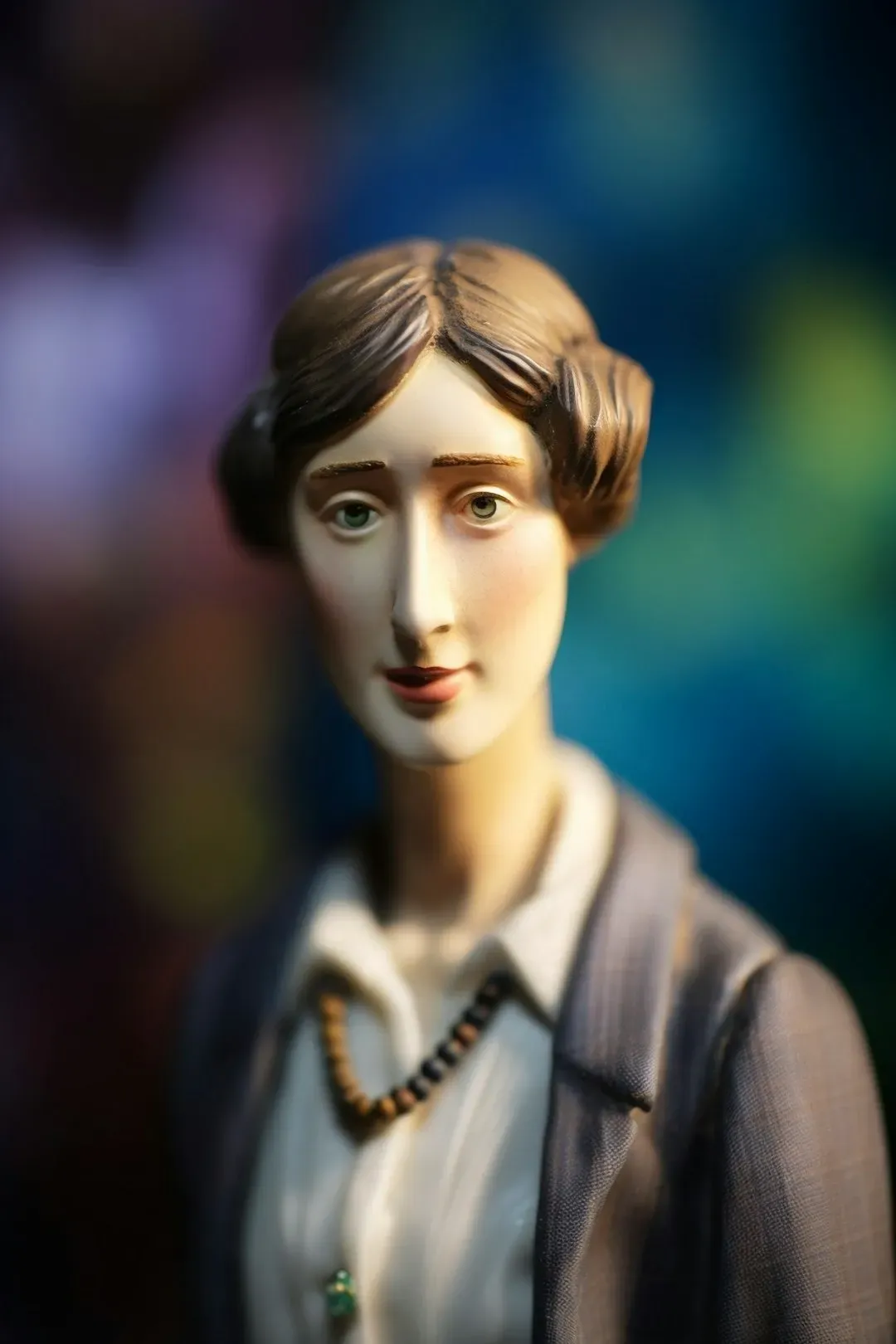
Virginia Woolf’s Mrs. Dalloway, published on 14 May 1925, details a day in the life of Clarissa Dalloway, a fictional upper-class woman in post-First World War England. The novel is essentially plotless in a conventional sense; what action there is takes place mainly in the characters’ consciousness, and it addresses the nature of time in personal experience through multiple interwoven stories, particularly that of Clarissa as she prepares for and hosts a party and that of the mentally damaged war veteran Septimus Warren Smith. The story takes place over a twelve-hour period in post-First World War London, from late morning to evening, and the famous Westminster clock, Big Ben, regularly interrupts the action, reminding both characters and the reader that the day is passing.
Mrs. Dalloway may be best known for Woolf’s use of stream-of-consciousness narrative, and many critics believe that, in writing this novel, Woolf found her voice, which she further refined in her following novels. The novel has two main narrative lines involving two separate characters: Clarissa Dalloway and Septimus Smith. For Clarissa, her charmed youth at Bourton keeps intruding into her thoughts on this day in London, while for Septimus, his time as a soldier during the war keeps intruding, especially in the form of Evans, his fallen comrade. In 2025, to mark the 100th anniversary of the novel’s publication, it was broadcast on BBC Radio Four in ten fifteen-minute instalments. A century on, it still feels urgent.
Ulysses by James Joyce (1922)

Ulysses is a modernist novel by the Irish writer James Joyce, published in Paris on 2 February 1922. It is considered one of the most important works of modernist literature, and it chronicles the experiences of three Dubliners over the course of a single day, 16 June 1904, which its fans now celebrate annually as Bloomsday. The story follows three main characters: Stephen Dedalus, a young aspiring writer; Leopold Bloom, a middle-aged Jewish advertising canvasser; and Molly Bloom, Leopold’s unfaithful wife. The narrative begins with Stephen teaching at a school, while across the city Leopold starts his day and runs errands around Dublin. As Leopold moves through the city, he attends a funeral, visits a newspaper office and a pub, and has various encounters and internal musings.
The date was chosen by Joyce because it was the date of his first outing with his wife-to-be, Nora Barnacle. Although the main strength of Ulysses lies in its depth of character portrayal and its breadth of humor, the book is most famous for its use of a variant of the interior monologue known as the stream-of-consciousness technique, through which Joyce sought to replicate the ways in which thought is often seemingly random. It tops The Modern Library’s list of the 100 best English-language novels of the twentieth century, which makes it both an intimidating and genuinely thrilling place to start if you’ve ever wanted to understand what modernism was actually reaching for.
Saturday by Ian McEwan (2005)
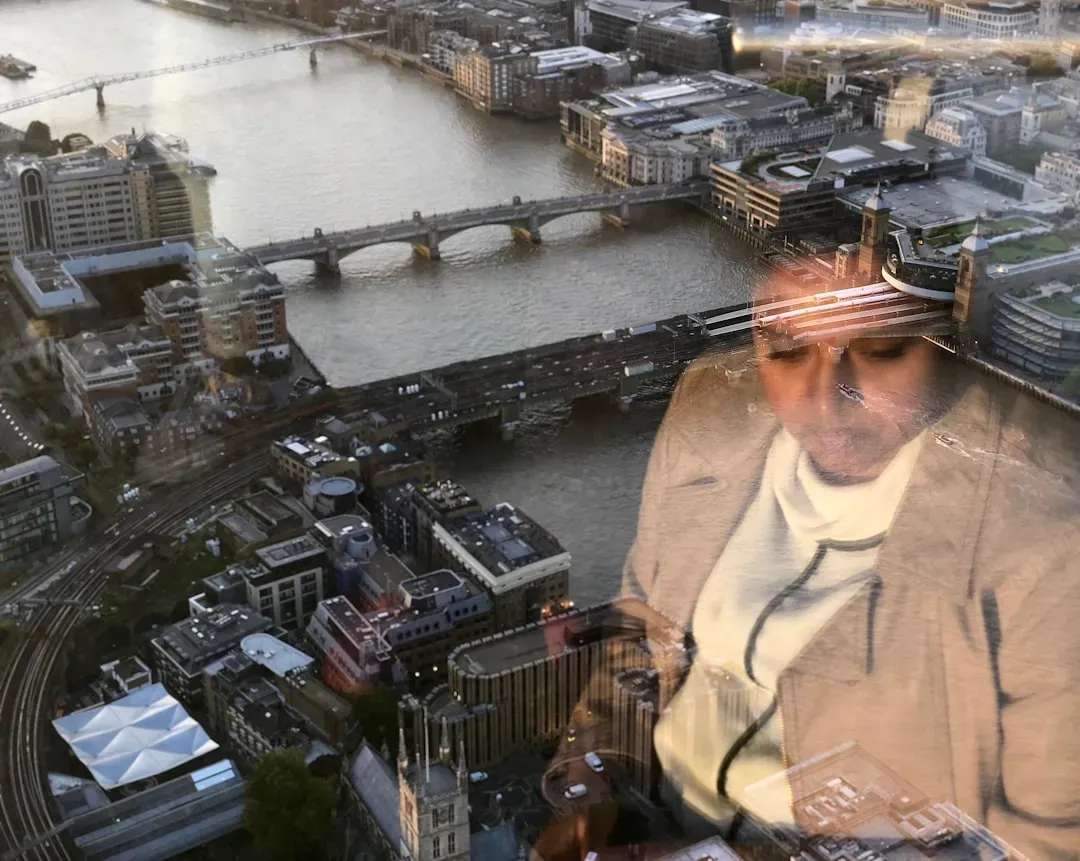
Saturday is a novel by Ian McEwan, first published in 2005. It delves into the inner life of a single individual, Henry Perowne, a successful neurosurgeon living in London, and the novel takes place over the course of a single day, February 15, 2003, against the backdrop of the anti-war demonstration in London and the impending invasion of Iraq. During his single day in the novel, Perowne is forced to confront a series of modern problems, including aging parents, violent crime, the pressures of an impending war in Iraq, and the sighting of a flaming plane streaking across the sky, not knowing if it’s caused by an accident or terrorism. What begins as a recognizably pleasant Saturday quickly darkens in ways Perowne cannot predict or control.
While researching the book, McEwan spent two years work-shadowing Neil Kitchen, a neurosurgeon at The National Hospital for Neurology and Neurosurgery in Queen Square, London. That groundwork shows. Throughout the day, Henry’s thoughts and emotions are affected by world events, personal relationships, and the complexities of his profession, and the novel provides an intimate portrait of a man who lives a successful life at the turn of the twenty-first century and how both large political forces and domestic dramas shape his days. It won the 2005 James Tait Black Memorial Prize for fiction.
Chronicle of a Death Foretold by Gabriel García Márquez (1981)

Chronicle of a Death Foretold is a novella by Gabriel García Márquez, published in 1981. Using the form of a pseudo-journalistic reconstruction, it tells the story of the murder of Santiago Nasar by the Vicario twins. The book is a nonlinear narrative told by an anonymous narrator and begins on the morning of Santiago Nasar’s death. The story takes place over the course of a single day, with flashbacks spanning twenty-seven years. The resulting structure is both precise and disorienting, like watching a clock tick backward toward an event you already know is coming.
The central question at the core of the novella is how the death of Santiago Nasar was widely foreseen, yet no one was able or willing to stop it. Themes of honor, ritual, and the consequences of tradition are woven throughout the novella, and García Márquez’s use of magical realism infuses the realistic setting with elements of the fantastical, creating a vivid and symbolic portrayal of the town’s dynamics. García Márquez was born in Colombia in 1927 and was awarded the Nobel Prize in Literature in 1982. This slim book, barely more than a hundred pages, carries the weight of an entire culture on its shoulders.
They Both Die at the End by Adam Silvera (2017)

They Both Die at the End is a young adult romance novel written by American author Adam Silvera, published on September 5, 2017, by HarperTeen. It is Silvera’s third novel and focuses on two teenage boys, Mateo and Rufus, who discover that they only have one day left to live. Shortly after midnight, Mateo receives a phone call from Death-Cast, a company that can predict the deaths of individuals, informing him that he is a Decker, someone with only twenty-four hours or less left to live. The introverted Mateo decides to try to push himself to truly live and reluctantly downloads Last Friend, an app developed to help lonely Deckers find someone to spend their End Day with.
Through an app called Last Friend, Mateo and Rufus agree to meet up and spend their final day together. As they embark on an emotional journey through New York City, they push one another to face their fears, take risks, and embrace their lives for what they are. Despite the clock ticking against them, their bond becomes stronger, transforming what would otherwise be a despairing day into one of love, joy, and discovery. In April 2020, due to the BookTok hashtag on TikTok, the book’s popularity saw a resurgence, once again placing it on The New York Times Best Seller list. The novel is in development by eOne with Bridgerton creator Chris Van Dusen attached to executive produce and write alongside author Silvera. Previously, the adaptation was set as a half-hour television miniseries at HBO with J. J. Abrams executive producing, and in January 2023, Netflix picked up the series.
These five books, ranging from Woolf’s quiet observation to Silvera’s urgent countdown, prove that constraint is not a limitation for writers. It’s an invitation. When the frame is tight, every moment inside it has to earn its place, and readers tend to feel that pressure right alongside the characters. One day, it turns out, is more than enough.