There’s a quiet game that some of history’s greatest painters played with their audiences, and most viewers never even knew they were playing. Tucked into the corners of sacred altarpieces, hidden inside reflective goblets, and painted onto the flayed skin of a martyred saint, artists embedded themselves, their fears, and their private stories into canvases commissioned for entirely different purposes. In the history of art, painters now and then made secret indications of their authorship by including the likenesses of themselves in their paintings. These weren’t accidents. They were choices, sometimes courageous, sometimes desperate, and always deeply personal. What follows is a gallery walk through five of history’s most compelling examples.
1. Jan van Eyck – The Arnolfini Portrait (1434)
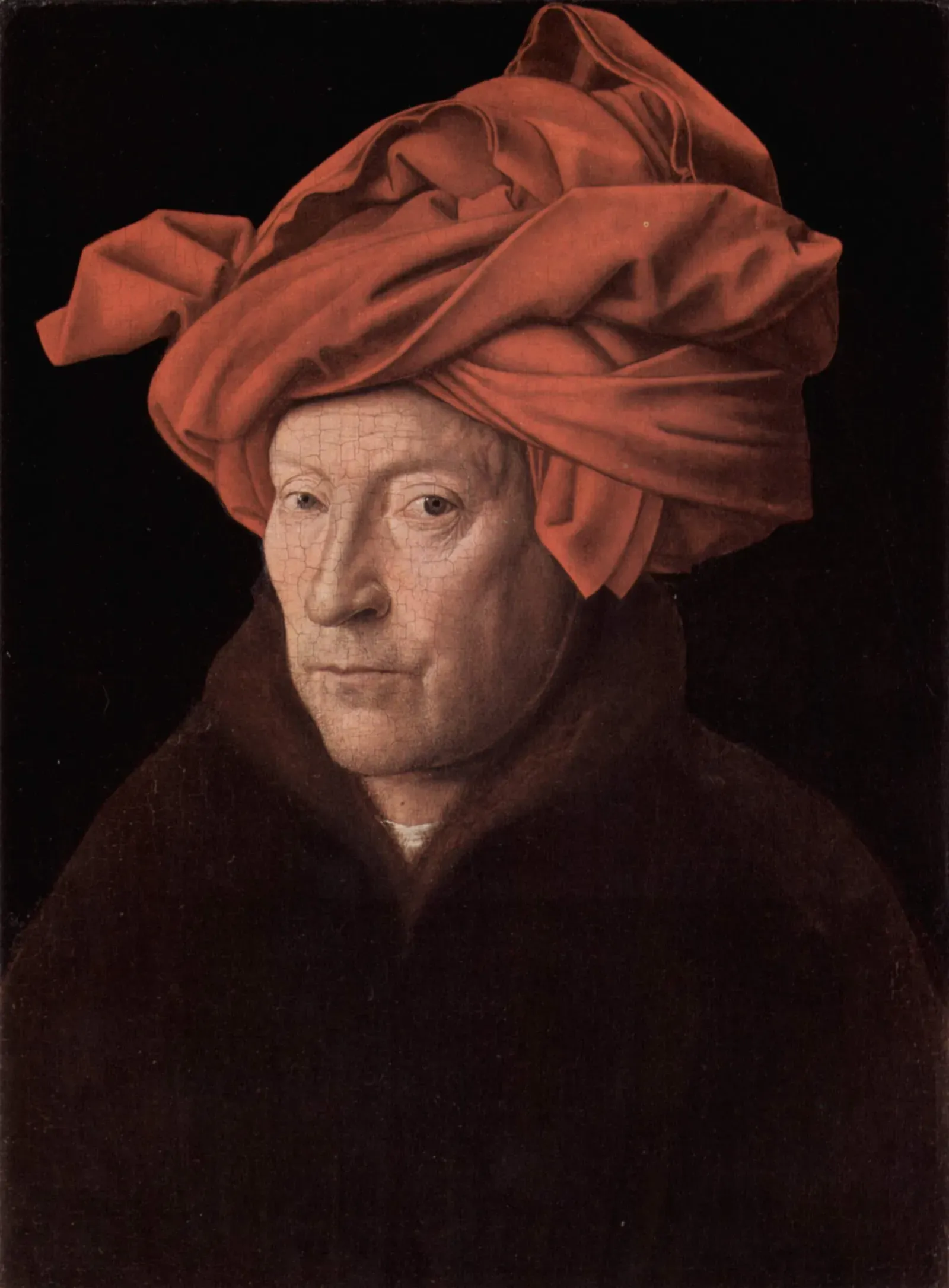
Jan van Eyck’s 1434 portrait painted in Bruges, Belgium, shows the Arnolfinis standing in their bedroom, where the husband blesses his wife, who offers him her right hand while resting her left on her belly. It appears, at first glance, to be a formal domestic portrait. Look deeper, though, and the real story begins to unfold in a small, curved mirror hanging on the back wall of the room. Two men are seen in the convex mirror at the center of the painting; one of them raises his hand in greeting and wears a red chaperon, a fashionable turban-like hat, which suggests he is the same person as the man wearing that garment in what is most likely the 1433 self-portrait that inaugurated the genre.
Some art historians believe the scene captures a secret wedding at which the artist, captured in the mirror reflection, was the only witness, though it is not known for certain whether this is true. Just in case there was any doubt, van Eyck wrote above the mirror “Jan van Eyck was here, 1434” – essentially 15th-century graffiti, subtle but undeniably bold. The Arnolfini Portrait is shrouded in mystery even in its provenance: once part of the Royal Palace collection in Madrid, it seemed lost during the Napoleonic Wars, before the National Gallery in London bought it from an English family in 1842.
2. Sandro Botticelli – Adoration of the Magi (c. 1475)
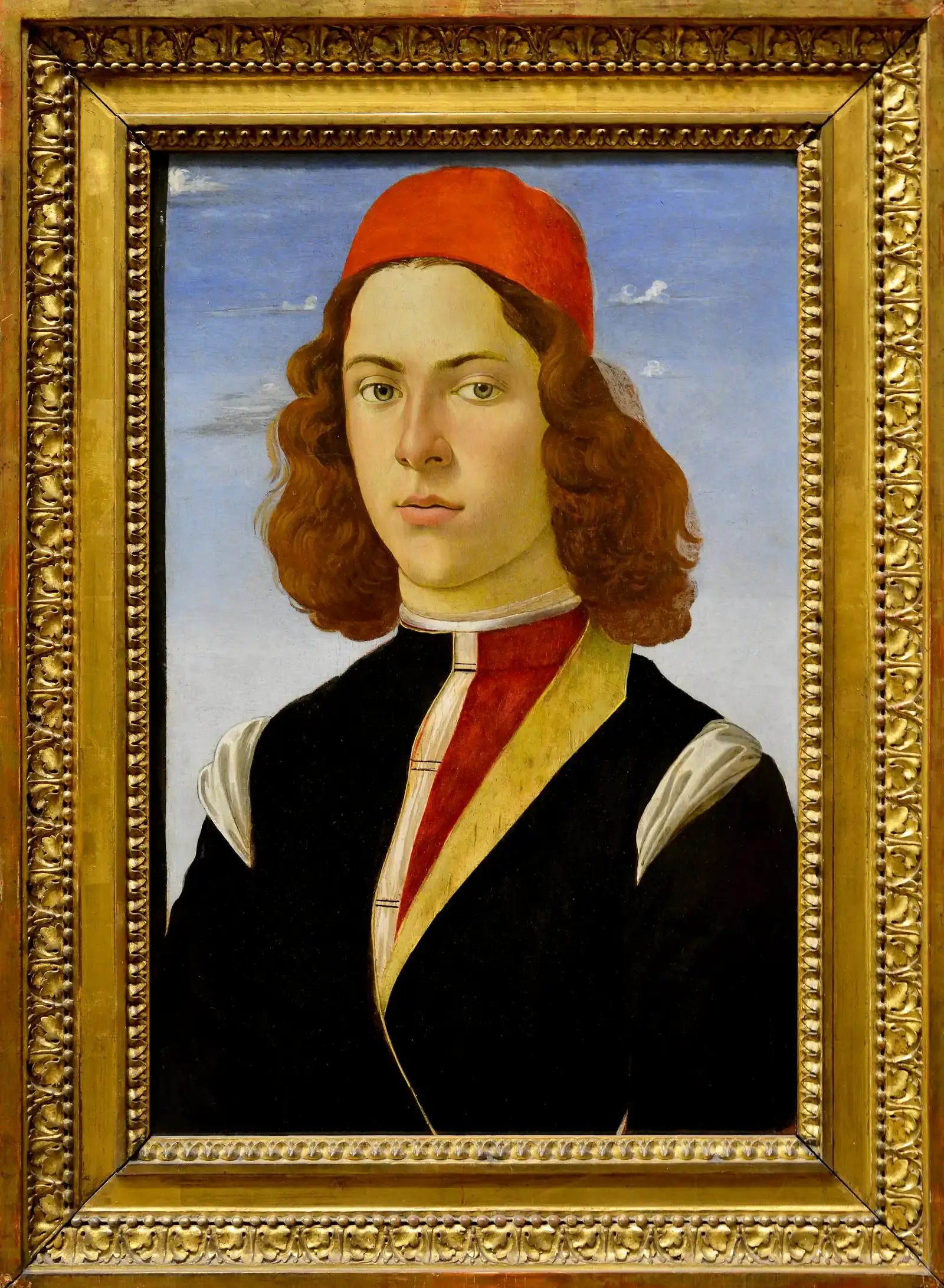
Created by the Italian Renaissance master Sandro Botticelli to decorate a chapel in Florence, this work shows the biblical scene in which three kings pay tribute to the newly born Christ. It was perfectly conventional subject matter for the time. Yet Botticelli couldn’t resist slipping himself into the crowd. It was common in Renaissance Italy to portray members of important Florentine families as the Magi, and in this instance it is members of the wealthy Medici family. But Botticelli had his own agenda alongside theirs.
Standing at the far right in a brown robe, Botticelli painted himself as one of only two figures in the painting looking directly at the viewer. He stares directly at the viewer, almost like he’s breaking the fourth wall – not boastfully, but as a quiet, confident nod to his role in bringing the whole scene to life. In Italy, artists tended to include their portraits on the right side of paintings or altarpieces, with their eyes looking knowingly out at the viewer. Botticelli followed this tradition with precision, ensuring that any viewer who knew where to look would recognize the painter hiding in plain sight among the holy and the powerful.
3. Michelangelo – The Last Judgment (1536–1541)
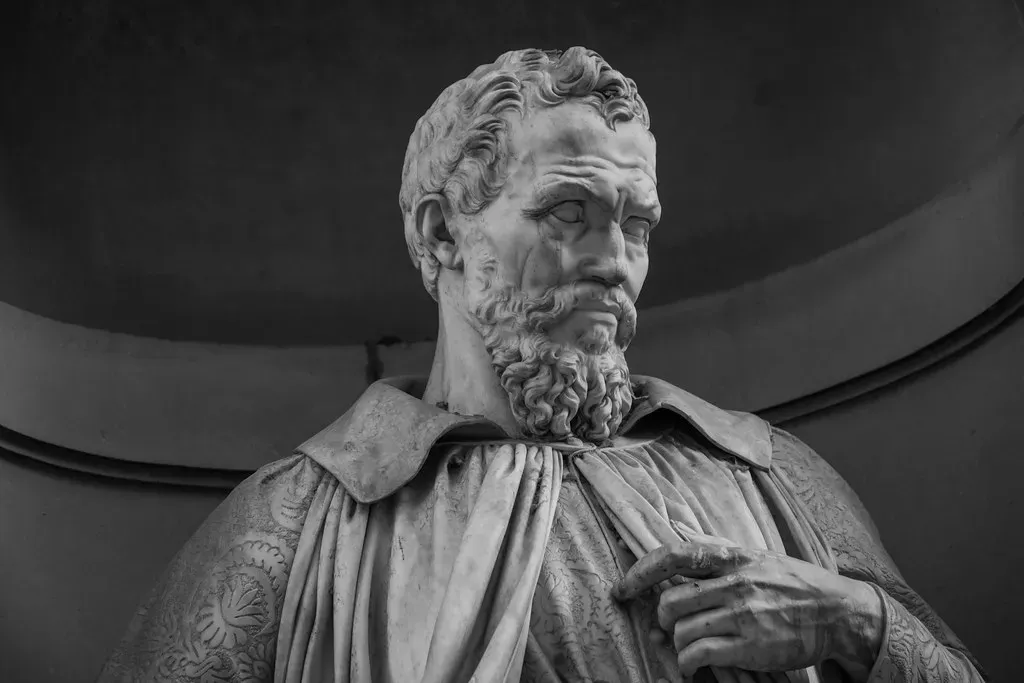
The work took over four years to complete between 1536 and 1541, and Michelangelo began working on it 25 years after finishing the Sistine Chapel ceiling, being nearly 67 at its completion. The scale alone is staggering – The Last Judgment was massive, measuring approximately 39 feet by 45 feet. Among the more than 300 figures painted across the altar wall of the Sistine Chapel, Michelangelo embedded himself in one of the most disturbing ways any artist has ever claimed a canvas. A massively muscular St. Bartholomew clutches his own lifeless skin, a reference to his being flayed to death by his persecutors, and that flaccid fleshy sack conceals an amazing secret self-portrait: the sagging lifeless features are those of none other than Michelangelo himself.
Most writers agree that Michelangelo depicted his own face in the flayed skin of St. Bartholomew, and Edgar Wind saw this as “a prayer for redemption, that through the ugliness the outward man might be thrown off, and the inward man resurrected pure,” in a Neoplatonist mood. The fresco also hid another kind of revenge. When the Pope’s own Master of Ceremonies, Biagio da Cesena, said that it was mostly disgraceful that nude figures were depicted in so sacred a place, Michelangelo worked Cesena’s likeness into the scene as Minos, judge of the underworld, in the far bottom-right corner of the painting. It is said that when Cesena complained to the Pope, the pontiff responded that his jurisdiction did not extend to hell, so the portrait would have to remain. Today, approximately 25,000 people per day view The Last Judgment in the Sistine Chapel.
4. Diego Velázquez – Las Meninas (1656)
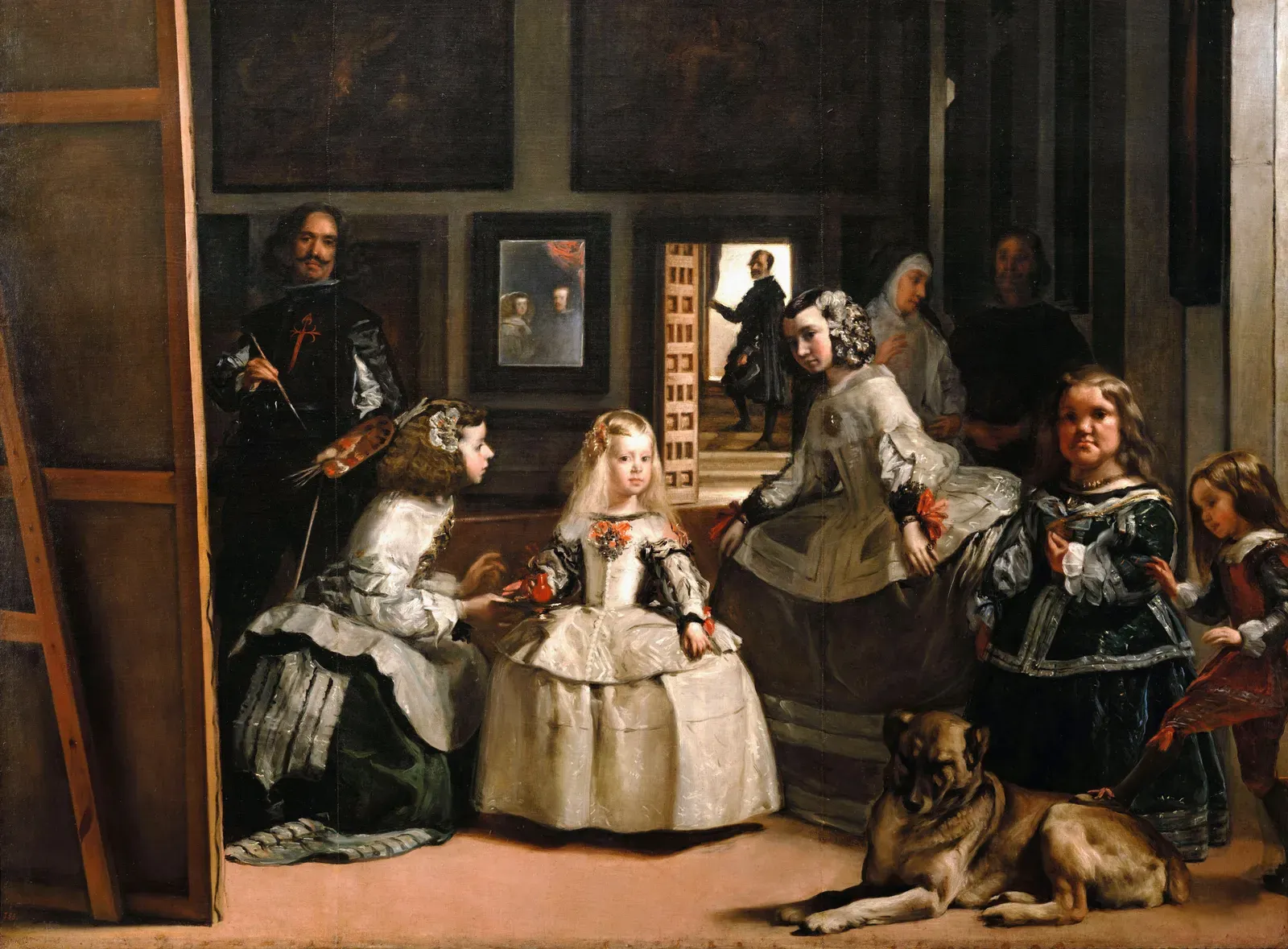
Step into the grand halls of the Spanish court and you’ll find Diego Velázquez slyly watching you from the background of his masterpiece, Las Meninas, painted in 1656, which appears at first glance to center on the young Infanta Margarita and her entourage – but look closer, and Velázquez himself appears at his easel, brush in hand. Just behind the royal party, Velázquez portrays himself working at a large canvas, looking outwards beyond the pictorial space to where a viewer of the painting would stand. It’s a composition that collapses the boundary between the artist and everyone looking at the painting, centuries later.
In the background there is a mirror that reflects the upper bodies of the king and queen, who appear to be placed outside the picture space in a position similar to that of the viewer, although some scholars have speculated that their image is a reflection from the painting Velázquez is shown working on. The red cross on Velázquez’s chest was added later, after he was admitted to the Order of Santiago in 1659, and whether Velázquez himself painted it or it was added shortly after his death is still debated. Las Meninas has long been recognized as one of the most important paintings in the history of Western art, with the Baroque painter Luca Giordano calling it the “theology of painting.”
5. Caravaggio – David with the Head of Goliath (c. 1610)
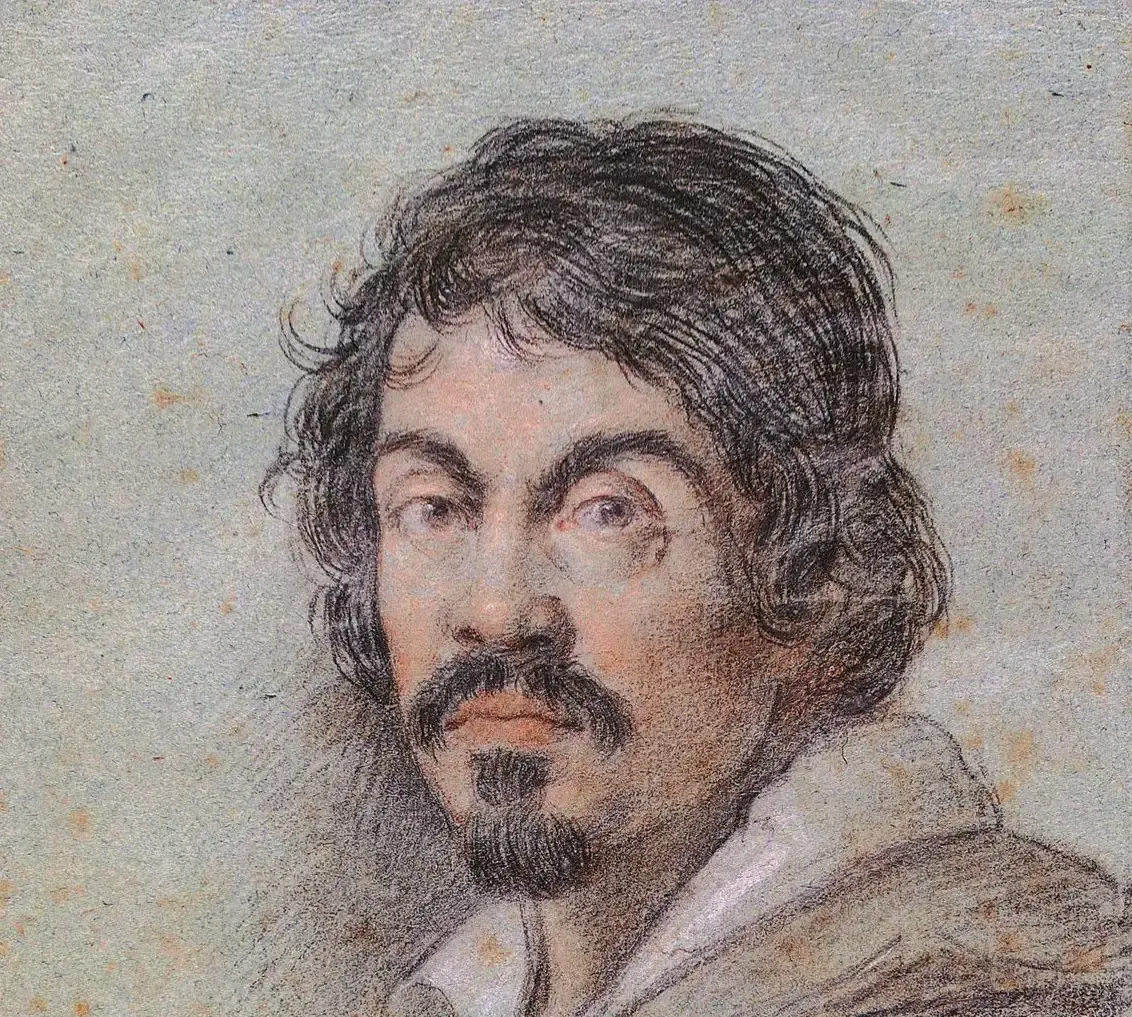
Caravaggio’s tempestuous life bleeds into his masterpiece, David with the Head of Goliath, painted around 1606–1610, which shocks viewers with its realism: David, somber and contemplative, holds the freshly severed head of Goliath – and that head is Caravaggio himself. He got into a street brawl and killed Ranuccio Tomassoni, and whether it was intentional or not hardly mattered – he fled Rome under a death sentence and went on the run. The painting that followed was among the most psychologically raw confessions in the history of Western art.
David with the Head of Goliath was painted while Caravaggio was in hiding with the Colonna family in Naples, and he gave it to Cardinal Scipione Borghese – the pope’s powerful nephew and fixer – in the hope that Borghese could persuade his uncle, Pope Paul V, to grant him a pardon. If you look closely at the sword, you can see the letters H-AS OS, thought to be an abbreviation of the Latin phrase humilitas occidit superbiam – “Humility kills pride.” Art historians believe this chilling self-portrait embodies Caravaggio’s deep regrets, perhaps referencing his own violent past or a desperate attempt at self-punishment, and the work, now displayed in Rome’s Galleria Borghese, was painted during the period when the artist was fleeing a murder charge, adding another layer of tension.
Why Artists Hid Themselves in Their Own Work
The tradition of indirect indication of authorship is as old as fine art itself – in all eras, painters and sculptors left various hints of their identity in their works, which could be not only a signature but also a favorite animal, flower, or symbol. The motivations behind hidden self-portraits shifted depending on the era and the individual, but a common thread runs through all of them: the desire to be seen, remembered, and connected to one’s own work. Painters from the past created self-portraits hidden in other paintings, producing what might be called a fine-art version of “Where’s Waldo?” – a practice especially common during the Renaissance, which valued creative independence.
Northern Renaissance artists liked to toy with dense and precise symbolism that showed off their technical skills, and the self-portraits they worked into their oil paintings are usually found distorted in reflective surfaces, like mirrors. For others, like Michelangelo and Caravaggio, the act of hiding themselves was charged with raw emotion – guilt, spiritual longing, or a silent cry for recognition. A hidden self-portrait shows the viewer what the artist looked like, what his face and gaze were – and only a curious viewer, attentive to details, could be honored with such an acquaintance in past eras, giving the meeting a unique charm and a flair of mystery.