There are places that exist nowhere on any map, no GPS coordinates, no satellite imagery, no flight paths heading there. Yet somehow, millions of people feel like they’ve been there. They grieve leaving. They search for these places in their dreams. Honestly, it says something deeply strange and wonderful about the human mind that a handful of well-placed words or a carefully constructed screen world can feel more viscerally real than the city you live in.
What makes a fictional world linger? Is it the detail, the emotional truth, or something even harder to name? Science has started asking those very questions, and the answers are stranger than you might expect. Prepare to feel at home in places that don’t exist. Let’s dive in.
Middle-earth: A World So Real, Scientists Mapped It

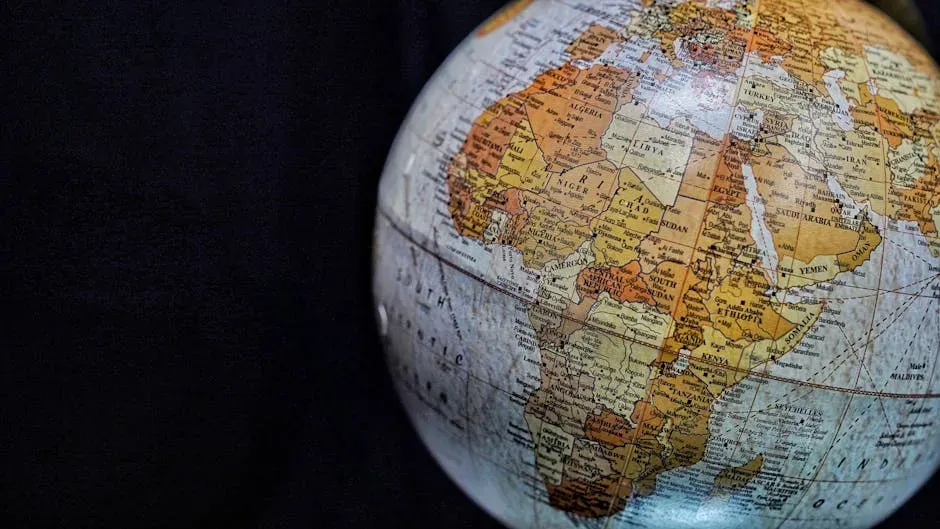
Here’s a question that sounds absurd at first: can you build an accurate geographical map of a place that doesn’t exist, using only the text of the novel? For Middle-earth, the answer is yes. A computational linguistic study demonstrated that co-occurrences of cities in Tolkien’s Lord of the Rings trilogy and The Hobbit actually predicted the authentic longitude and latitude of those cities in Middle-earth. A human study further showed that participants’ spatial estimates of city locations were remarkably similar whether they had read Tolkien’s texts or memorized an actual map of the world. That is extraordinary. A fictional planet so precisely written that its internal geography is mathematically consistent.
J.R.R. Tolkien himself referred to this deep immersion as “Secondary Belief,” distinguishing the real world from the imaginary world existing within the author’s mind. He spent almost six decades constructing his secondary world of Middle-earth. Six decades. That’s a full career, a life’s obsession, poured into a world that breathes history from every page.
The invention of Middle-earth’s many languages was supported by real-world linguistic systems. When questioned about this, Tolkien said he did it by a “mathematical” system, and that his Elvish languages arose not simply from imagination, but from his professional knowledge of the origin and growth of languages. This is why Middle-earth feels encyclopedic rather than invented. Its haunting realism is why readers and moviegoers alike report feeling a strange nostalgia and homesickness for a place they’ve never truly visited. The emotional journeys of Frodo, Aragorn, and the others make Middle-earth linger in your heart long after the last page is turned.
Arrakis: The Desert Planet That Changed How We Think About Earth

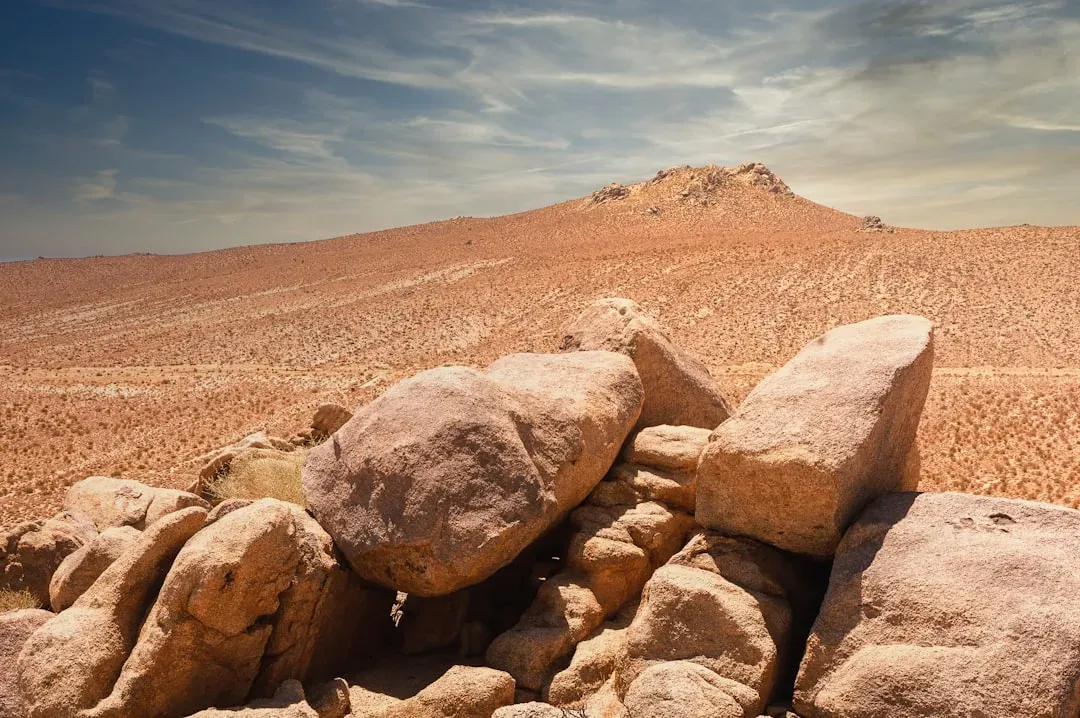
Frank Herbert wasn’t just writing a story when he created Arrakis. He was issuing a warning, wrapped in sand and sandworms. Published in 1965, Dune is widely considered one of the best sci-fi books ever written and one of the first to take environmental concerns seriously. In addition to changing the science fiction genre, Herbert’s novel became a touchstone for the burgeoning environmental movement of the late 1960s and 70s. It’s genuinely rare for a fictional world to reshape real-world activism. Arrakis managed exactly that.
Environmental science is the critical real-world underpinning of the Dune fictional universe. Some scholars have argued that Dune is one of the earliest examples of climate fiction, a story intimately concerned with exploring relationships and interactions between organisms and their environment. Everything, from the stillsuits the Fremen wear to the ecology of the sandworms, is rooted in plausible science.
Herbert was inspired to create the world of Dune during a 1957 trip to coastal Oregon, where, working as a journalist, he visited to write about sand dune stabilization programs run by the Soil Conservation Service. The real Oregon dunes became Arrakis. Critics view the novel’s spice as an analogy for oil and the oil trade. A close friend of Herbert’s pointed out that the Dune series can “be construed as a thinly veiled allegory of our world’s insatiable appetite for oil and other petroleum products.”
Denis Villeneuve’s sequel film, covering the second half of the original novel, was released in March 2024 to critical acclaim. A third film is set to release in December 2026, based on Dune Messiah. The world of Arrakis is still expanding. And given our real climate emergency, it feels more pressing now than ever before.
Gilead: The Nightmare That Keeps Getting More Plausible


Most fictional worlds feel like an escape. Gilead feels like a warning you cannot unhear. Set in a totalitarian version of New England, the novel envisions a patriarchal society where women are stripped of autonomy and reduced to their reproductive functions. It was inspired by real historical events, such as the communist reign in Romania and battles over female rights in America in the 1980s.
In the novel, Atwood famously models all of her worldbuilding after actual historical events, including public executions from the French Revolution and religious rule in ancient Egypt. The strict class structure, eugenics, and resistance are all parts of real history that Atwood melds into the Republic of Gilead. This is the core of what makes Gilead so suffocating to read. Nothing in it was invented from scratch.
Most of the rules in The Handmaid’s Tale are taken directly from the novel, which Atwood based on real rules and laws that governments and societies around the world have enforced throughout history. Everything in it is something that real women have suffered in the past, or are currently experiencing. Let’s be real, that single fact changes how you read every page.
The red cloaks and white bonnets have become symbols of real-world protest, a testament to Gilead’s cultural impact. As recent debates over women’s rights and bodily autonomy continue worldwide, Gilead’s relevance and haunting quality only grow. A fictional place becoming a protest symbol is one of the most remarkable things a story can achieve.
The Wizarding World: A Place That Sold Over 600 Million Tickets Home

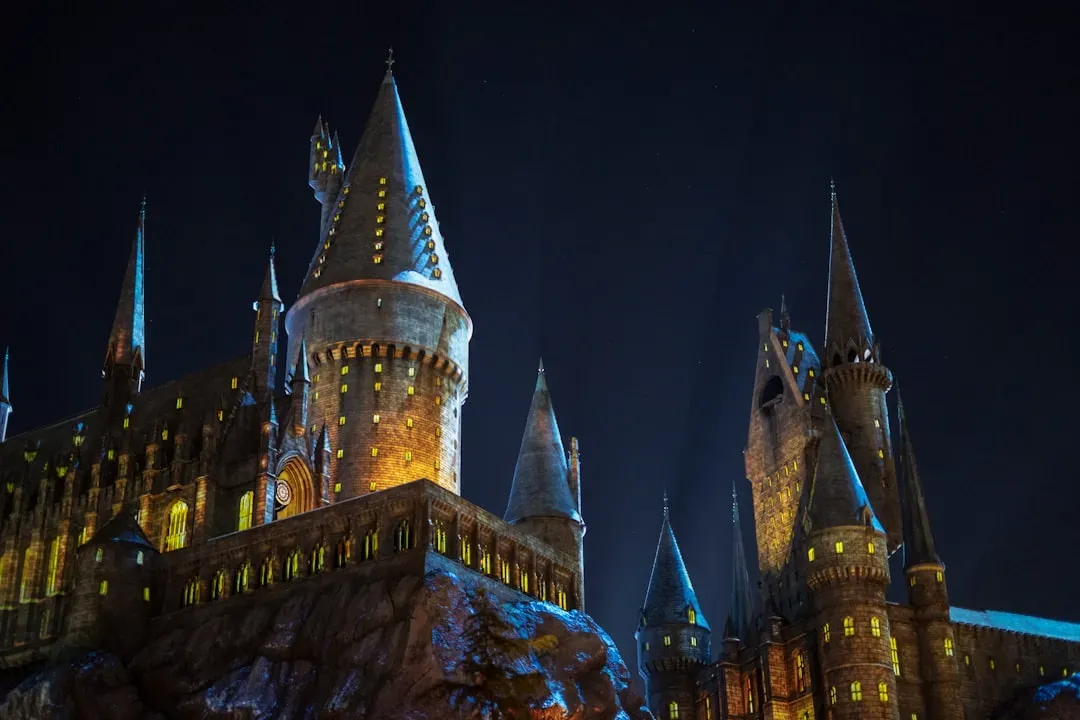
Let’s talk about scale for a moment. As of 2024, the Harry Potter books have sold over 600 million copies, and the films remain box office giants. Those aren’t just sales figures. They represent hundreds of millions of people who opened a door they didn’t want to close. That kind of reach doesn’t happen through marketing alone. It happens when a world feels genuinely inhabitable.
Rowling’s use of Latin-based spells and magical creatures rooted in folklore adds layers of believability. Themes of friendship, loss, prejudice, and resistance make Harry Potter’s journey universal, and for many, Hogwarts represents a refuge from the ordinary. Refuge. That’s the word that matters here. People aren’t just entertained by the Wizarding World. They retreat into it.
Imaginary worlds are present and often central in many of the most culturally successful modern narrative fictions, from novels like Harry Potter to TV series like Game of Thrones. Researchers propose that imaginary worlds are popular because they activate exploratory preferences that evolved to help us navigate the real world and find new fitness-relevant information. In other words, our brains are literally wired to want to explore these places. The Wizarding World doesn’t just feel real, it triggers the same neural curiosity we use to navigate actual environments.
Psychologists have studied the phenomenon of becoming so immersed in stories under the label “narrative transport,” noting that it is fairly normal for human beings in our society to become so immersed in stories that they feel like they are actually there. For millions, Hogsmeade is as familiar as their own hometown.
Westeros: A World Built on Real History’s Darkest Chapters

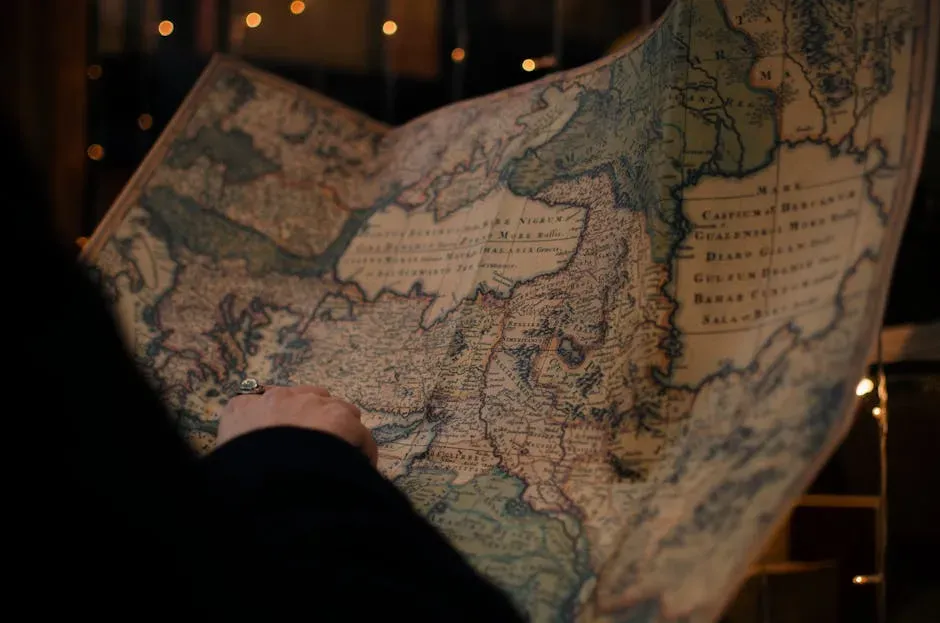
George R.R. Martin didn’t just write a fantasy epic. He essentially wrote an alternate history of medieval Europe, coded into dragons and direwolves. The world of Westeros is haunting precisely because its brutality isn’t invented. It’s remembered. The political scheming of the Lannisters echoes the Wars of the Roses. The Red Wedding mirrors real historical massacres. You feel like you’ve read this before somewhere because, in essence, you have.
One of the key factors behind the critical and commercial success of Game of Thrones has been the ability of its showrunners to popularize the alternative secondary fantasy world in which the show’s narrative takes place. Adapted from George R.R. Martin’s A Song of Ice and Fire novels, Game of Thrones sits alongside franchises like Star Wars and the Marvel Cinematic Universe that address their fans through a range of ancillary platforms, including books, websites, video games, and mobile apps.
Fans of imaginary worlds like Westeros tend to explore them in depth rather than jumping to new worlds again and again, and they end up remembering and storing huge amounts of information, for instance in Wikipedia-like online fandoms where the Star Wars fandom alone aggregates more than 175,000 pages. That depth of fan engagement is itself a kind of testament to how real these worlds feel. People don’t compile encyclopedias for things they find forgettable.
Epic fantasies with intricate world-building and deep lore continue to captivate audiences, propelled by TV adaptations like The Lord of the Rings and Game of Thrones. Westeros, like all the worlds on this list, has crossed that invisible threshold between story and something that feels like shared memory.
Why We Can’t Let Go: The Psychology Behind These Haunting Worlds

There’s a genuine scientific reason why these worlds stick. It’s not weakness or escapism, though escapism itself isn’t the problem it’s sometimes made out to be. The adaptive benefits of fantasy are manifold. Researchers have found that daydreams and fantasies can provide pleasure, teach valuable lessons, and offer insights into personal and professional aspirations.
Research also found that fictional and factual content are often indistinguishable in terms of emotional response, with sadness levels being equivalent for both fictional films and personal experiences. Anxiety levels, however, are higher for personally experienced events. Your brain, on some level, simply does not fully distinguish between grieving a real loss and grieving the end of a fictional world you loved. That’s not a bug. That’s the extraordinary power of storytelling.
Researchers propose that imaginary worlds are popular because they activate exploratory preferences that evolved to help us navigate the real world. The attraction to imaginary worlds is intrinsically linked to the desire to explore novel environments, and both are influenced by the same underlying factors. We’re built for this. Every time you fall into Middle-earth or Arrakis or Hogwarts, you’re exercising an ancient human instinct.
The worlds on this list aren’t just well-written. They are constructed with the precision of cartographers, ecologists, historians, and linguists. They earn our belief because their creators treated them as real before we did. And perhaps that’s the lesson worth sitting with: the most haunting fictional worlds are the ones that were built not for entertainment alone, but as honest attempts to understand the actual world we live in.
What fictional world has stayed with you the longest, and what does that say about what you’re really looking for? Tell us in the comments.