History loves a comeback story. The world celebrates geniuses, innovators, and legends who seem untouchable in their success. Yet behind almost every name we admire lies a trail of crushing failures, brutal rejections, and moments when quitting seemed like the only logical choice. These individuals didn’t stumble into greatness. They fought through setbacks that would have destroyed most people, turning their darkest moments into fuel for extraordinary achievement.
What separates those who ultimately succeed from those who give up isn’t talent or luck. It’s resilience, stubbornness, and an almost irrational belief that the next attempt might be the one that changes everything. The stories that follow aren’t about people who had it easy. They’re about minds that refused to accept defeat, even when the world insisted they had nothing to offer.
Albert Einstein: The Slow Learner Who Revolutionized Physics
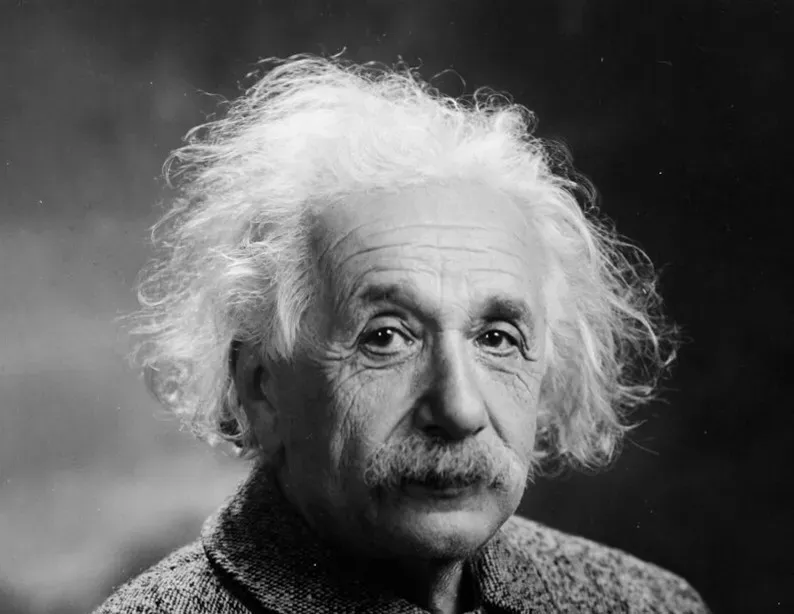
Albert Einstein, whose name is now synonymous with genius, had a rocky start in life that would shock most people today. He didn’t speak fluently until he was nine years old, worrying his parents and teachers who thought something might be wrong with him. In school, he struggled with the rigid teaching style and was even expelled for his rebellious attitude and lack of conformity. Many teachers believed he would never amount to anything, and his early academic records were unimpressive. The young Einstein was labeled lazy, slow, and destined for mediocrity by nearly everyone who encountered him during his formative years.
Upon his graduation from the Swiss Polytechnic Institute, Einstein hit his first road-bump in his adult life. He was 21, unemployed and had no idea what path to follow. His reputation as a student was in tatters from his mediocre schoolwork and his tendency to skip out on classes, meaning many of his teachers did not chomp at the bit to give him a job opportunity academically either. As a result, to get by in life he had to work several jobs just to survive. His father passed away, and he passed thinking of his son as a complete failure in life. This knowledge of his father’s thinking of him left Albert absolutely heartbroken. Despite these devastating circumstances, Einstein continued his research, eventually developing the theory of relativity that would transform modern physics. In 1921, Albert won the most notable prize for any Physicist, the Nobel Prize, cementing his place among the greatest scientific minds in history.
Steve Jobs: Fired From His Own Company

Steve Jobs was just 30 years old, wildly successful, fabulously wealthy and a global celebrity. And then it all came crashing down. He had revolutionized personal computing and created an iconic brand – only to be forced out of the company he had built into a billion-dollar colossus. Jobs and Sculley clashed when two new products, the Lisa and the Macintosh, failed to meet sales projections. Jobs was then removed from the Macintosh product, which angered him, and he took his grievances directly to Apple’s board of directors. This led to Jobs’ dismissal or resignation from Apple, depending on different accounts of the events. The man who had created Apple in a garage was now publicly humiliated, stripped of power at his own company.
Jobs recalled in a commencement speech at Stanford University: “I was out — and very publicly out. What had been the focus of my entire adult life was gone, and it was devastating.” He added, “I was a very public failure.” However, this failure became the catalyst for his greatest achievements. After leaving Apple, Jobs went on to found NeXT, a company focused on high-end computers. Though NeXT never became a commercial success, it played a crucial role in Jobs’ eventual return to Apple. In 1996, Apple, struggling to stay afloat, acquired NeXT for $429 million. This move brought Jobs back into the fold, and the rest, as they say, is history. Under Jobs’ leadership, Apple was transformed into the tech giant we know today, with iconic products like the iMac, iPod, and iPhone.
J.K. Rowling: Twelve Rejections and Rock Bottom

The manuscript was finished 5 years later, slowly etched out with an old manual typewriter. The first Harry Potter novel was rejected by 12 publishers, a fact almost barely comprehensible given its evident status as a global phenomenon. Twelve publishers turned her down. “Too long.” “Children’s books about magic don’t sell.” “Not marketable.” Rowling was living on welfare, recently divorced, severely depressed, and raising a child alone while trying to make her literary dreams a reality. Rowling was so poor, the story goes, that she manually typed out multiple versions of the first manuscript because she couldn’t afford the cost of photocopying.
One tiny publisher – Bloomsbury – decided to take a chance on the middle-aged, unknown writer and her offbeat story. Before agreeing to publish it, the acquisition’s editor, Nigel Newton, decided to give the first chapters to his 8-year-old daughter, Alice. She read them, came back, and said she wanted more. That one yes from a child changed Rowling’s life. The first print run was a meagre 500 copies. Rowling was told to get a day job and advised to change her name. Concerned a female author might put off younger male readers, Joanne Rowling thus agreed to become J.K. Rowling – and the rest is history. Today, Harry Potter has sold over 600 million copies, built a multi-billion-dollar empire, and turned Bloomsbury into one of the most successful publishing houses in history.
Oprah Winfrey: Told She Was Unfit for Television

Early in her career, she was fired from her job as a television news anchor and was told she was “unfit for television.” The criticism stung and could have ended her aspirations, but Winfrey used it as motivation to work even harder. In the late ’70s, Winfrey had been working as a news anchor and reporter at Baltimore’s WJZ station. At that job, she never felt like her authentic self. “And my bosses certainly made no secret of their feelings,” Winfrey writes. “They told me I was the wrong color, the wrong size, and that I showed too much emotion.” The young broadcaster faced rejection that attacked not just her professional skills but her very identity.
Instead of letting her go completely, WJZ-TV decided to move Oprah to a less prominent role on a daytime talk show called People Are Talking. “Well, I was demoted,” she continued. “This is what I now know with age and perspective, many times getting demoted is an opportunity to something else to show up or getting fired.” Within months, she turned the lowest-rated program into the highest-rated show in the city’s history. Renamed The Oprah Winfrey Show, it became a cultural phenomenon, revolutionizing daytime television with its focus on personal stories and emotional connection with audiences worldwide. The show’s success catapulted Oprah into the spotlight, making her a household name and paving the way for her media empire. Winfrey now wears many hats, from journalist and host to actress, author and entrepreneur – all of which have helped her become the richest Black woman in America and first Black woman billionaire in the U.S., with a $2.5 billion net worth.
Thomas Edison: One Thousand Ways That Didn’t Work
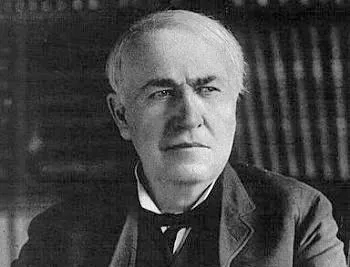
When we flick on a light switch, we rarely think about how many times Thomas Edison failed before inventing the light bulb. Edison’s path was filled with more than 1,000 unsuccessful attempts to create a working model. People often mocked his persistence, but Edison saw each failure as a step closer to success. Before changing the world with his most famous invention, the incandescent light bulb, Edison was met with a myriad of setbacks. In fact, he attempted the lightbulb with unsuccessful results 1,000 times before prevailing. When a reporter asked him, “How did it feel to fail 1,000 times?” Edison replied, “I didn’t fail 1,000 times. The light bulb was an invention with 1,000 steps.”
Thomas Edison is one of the most distinguished inventors in history, and his inventions have profoundly impacted the world. He is also among the most notable school dropouts. Before you search “Thomas Edison kicked out of school,” he only attended public school for a few weeks before being pulled out by his mother to be homeschooled. Despite this, Edison went on to become very successful. His relentless experimentation, fueled by an unshakable belief in the process of trial and error, eventually produced more than one thousand patents. Research from the University of Pennsylvania found that resilience and a positive outlook on failure can lead to greater achievements. Edison’s story remains one of the most powerful examples of how persistence transforms failure into world-changing innovation.
What Failure Really Teaches Us

These stories share a common thread that goes beyond individual brilliance. Each person faced rejection that wasn’t just professional but deeply personal. Teachers called Einstein stupid. Apple’s board sided against Jobs. Publishers dismissed Rowling’s manuscript as unmarketable. Television executives told Winfrey she didn’t belong on screen. Scientists mocked Edison’s countless failed experiments. Yet none of them internalized these judgments as final verdicts on their worth or potential.
The difference between those who bounce back and those who stay down isn’t about avoiding failure. It’s about reframing it. Einstein’s slow development gave him time to think deeply about problems others rushed past. Jobs’ exile from Apple taught him humility and management skills he lacked at thirty. Rowling’s poverty and rejection made her story more authentic and relatable. Winfrey’s demotion moved her from news to talk, where her empathy became an asset rather than a liability. Edison’s thousand failures were simply data points on the path to success. These individuals didn’t succeed despite their failures – they succeeded because of what those failures forced them to learn, adapt, and become.