


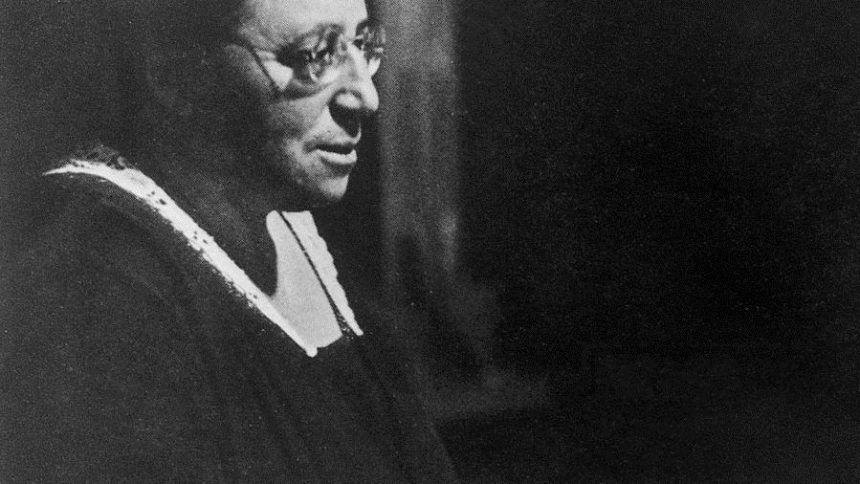
History has a frustrating habit of spotlighting the loudest voices in the room while quietly forgetting the people who actually changed the world. The names we learn in school – Edison, Darwin, Watson and Crick – are often the faces of discoveries that relied heavily on the work of others. Behind nearly every celebrated breakthrough, there is at least one brilliant mind who never got the recognition they deserved. Some were sidelined by politics, others by gender, poverty, or simply terrible timing. Their stories deserve to be told.
1. Nikola Tesla – The Inventor the World Forgot

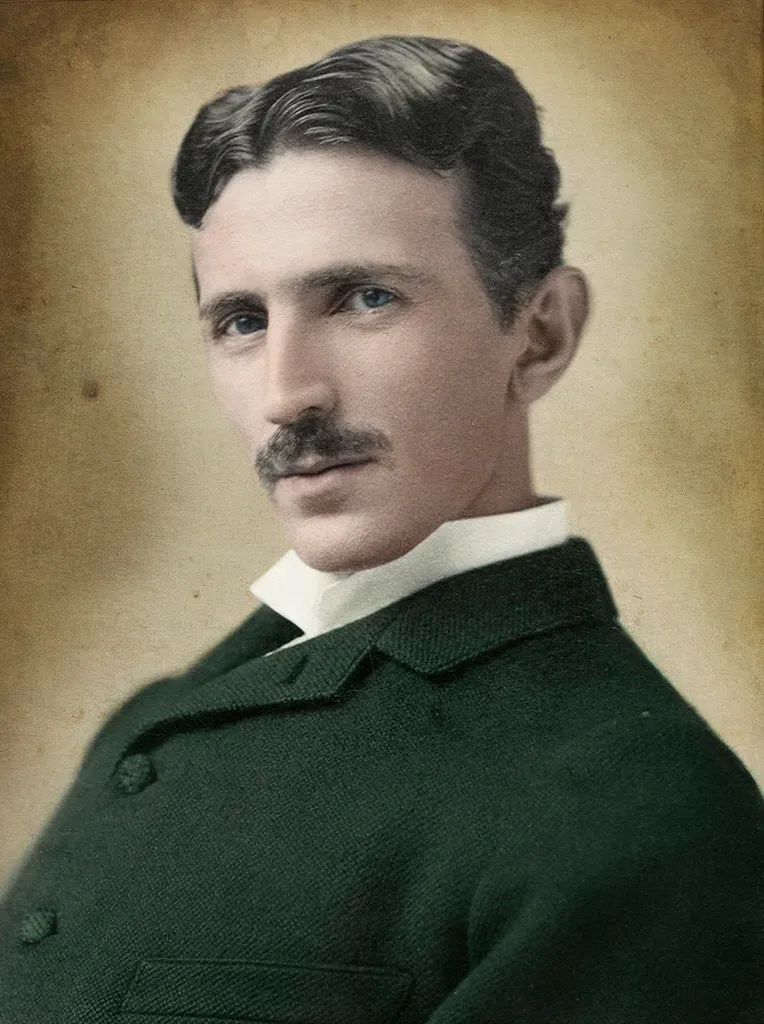
Born in what is now Croatia, Tesla’s mind was decades ahead of his peers. He envisioned wireless communication, invented the induction motor, and developed the alternating current (AC) system that powers homes worldwide. By constructing devices with rotating magnetic fields, Tesla produced electrical current that constantly switches direction – it is this alternating current electricity that operates our power grid today. Yet despite these enormous contributions, his life ended in near-total obscurity.
Tesla was constantly overshadowed by the more business-savvy Thomas Edison, who not only publicly ridiculed Tesla’s ideas but also outmaneuvered him financially. Tesla secured over 300 patents, but his inability to profit from his inventions led to a life of poverty. Tesla’s mental health suffered, and he struggled financially, leading to the abandonment of his dream project, the Wardenclyffe Tower. Tesla designed the circuitry necessary for wireless communication and was awarded the requisite patents in 1900. Before Tesla’s death in 1943, the Supreme Court negated Marconi’s patent for radio and granted full patent rights to Tesla, whose work substantially predated Marconi’s. Recognition came – but a lifetime too late.
2. Rosalind Franklin – The Woman Who Photographed DNA

Rosalind Elsie Franklin was an English chemist and X-ray crystallographer whose work was central to the understanding of the molecular structures of DNA, RNA, viruses, coal, and graphite. She was a chemist and X-ray crystallographer who studied DNA at King’s College London from 1951 to 1953, and her unpublished data paved the way for Watson and Crick’s breakthrough. Her famous “Photograph 51” was, as one archivist noted, “arguably the most important photo ever taken.”
While Gosling actually took the famous Photo 51, Wilkins showed it to Watson without Franklin’s permission. In 1962, a decade after Franklin captured the famous Photograph 51, Watson, Crick, and Wilkins were awarded the Nobel Prize for Physiology or Medicine for discovering the spiraling ladder helix structure of DNA. Franklin’s contributions to the discovery of the structure of DNA were largely unrecognised during her life, for which she has been variously referred to as the “wronged heroine,” the “dark lady of DNA,” and the “forgotten heroine.” She also had to protest against lower pay compared to her male colleagues and her lack of promotion even when she was publishing work in the top scientific journals.
3. Srinivasa Ramanujan – The Self-Taught Mathematical Visionary

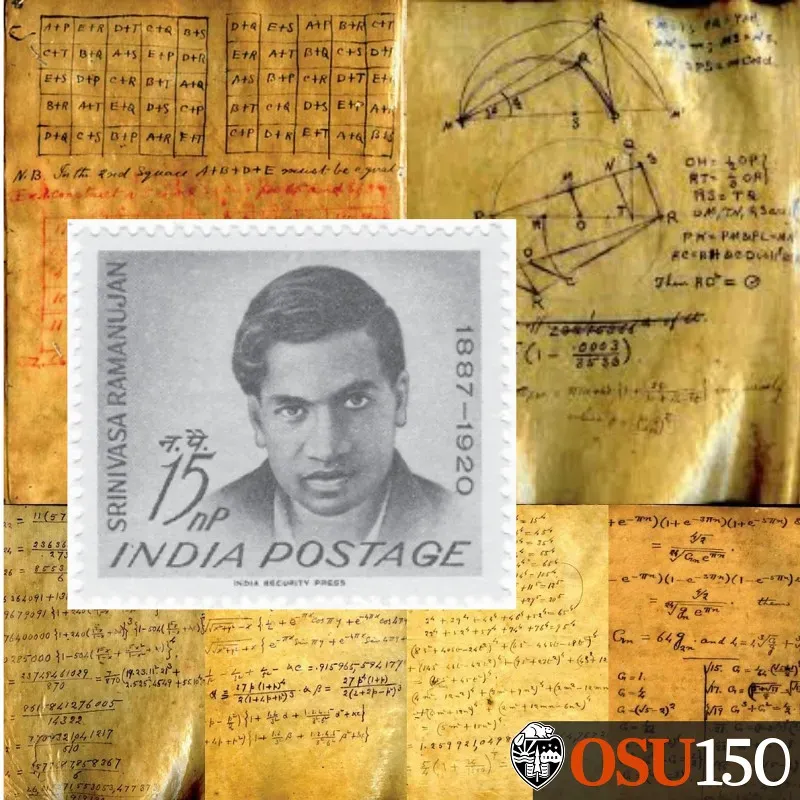
Srinivasa Ramanujan was an Indian mathematician who worked during the early 20th century. Despite having almost no formal training in pure mathematics, he made substantial contributions to mathematical analysis, number theory, infinite series, and continued fractions, including solutions to mathematical problems then considered unsolvable. In 1920 he died at age 32, generally unknown to the world at large but recognized by mathematicians as a phenomenal genius, without peer since Leonhard Euler and Carl Jacobi. His story is one of the most extraordinary in the history of human thought.
He grew up poor and uneducated and did much of his research while isolated in southern India, barely able to afford food. In 1912, when he was 24, he began to send a series of letters to prominent mathematicians. These were mostly ignored, but one recipient, the English mathematician G.H. Hardy, corresponded with Ramanujan for a year and eventually persuaded him to come to England. It became apparent to Hardy and his colleagues that Ramanujan could sense mathematical truths that others simply could not. Hardy is said to have quipped that his greatest contribution to mathematics was the discovery of Ramanujan. More than 100 years later, mathematicians are still trying to catch up to Ramanujan’s genius, as his visions appear again and again in disparate corners of mathematics.
4. Lise Meitner – The Mother of Nuclear Fission

![4. Lise Meitner - The Mother of Nuclear Fission (en:Image:Lise_Meitner_1900.jpg, from [1]. Image reprinted in Lise Meitner and the Dawn of the Nuclear Age ISBN 978-0817637323 with the caption "Shy Lise the doctoral candidate, 1906, Vienna. (Courtesy Master and Fellows of Churchill College, Cambridge, England)", Public domain)](https://nvmwebsites-budwg5g9avh3epea.z03.azurefd.net/lasvegasnews/6cbb15eadb73d61408420a09105203a8.webp)
Lise Meitner helped discover the radioactive element protactinium and was the first to describe and coin the term “nuclear fission” in a scientific paper. She was the first woman physics professor in Germany. In mid-1938, chemists Otto Hahn and Fritz Strassmann at the Kaiser Wilhelm Institute demonstrated that isotopes of barium could be formed by neutron bombardment of uranium. Meitner was informed of their findings by Hahn, and with her nephew, physicist Otto Frisch, she worked out the physics of this process by correctly interpreting their experimental data. Without her theoretical interpretation, the discovery of fission would have remained inexplicable.
Meitner did not share the 1944 Nobel Prize in Chemistry for nuclear fission, which was awarded to her long-time collaborator Otto Hahn. She was nominated 49 times for Physics and Chemistry Nobel Prizes but never won. Meitner had two difficulties: she was a Jew living as an exile in Sweden because of the Jewish persecution in Nazi Germany, and she was a woman. She might have overcome either one of these obstacles, but both proved insurmountable. In 1997, element 109 was named in her honor: meitnerium. A chemical element carries her name – a Nobel Prize never did.
5. Ignaz Semmelweis – The Doctor Who Discovered Handwashing and Was Mocked for It

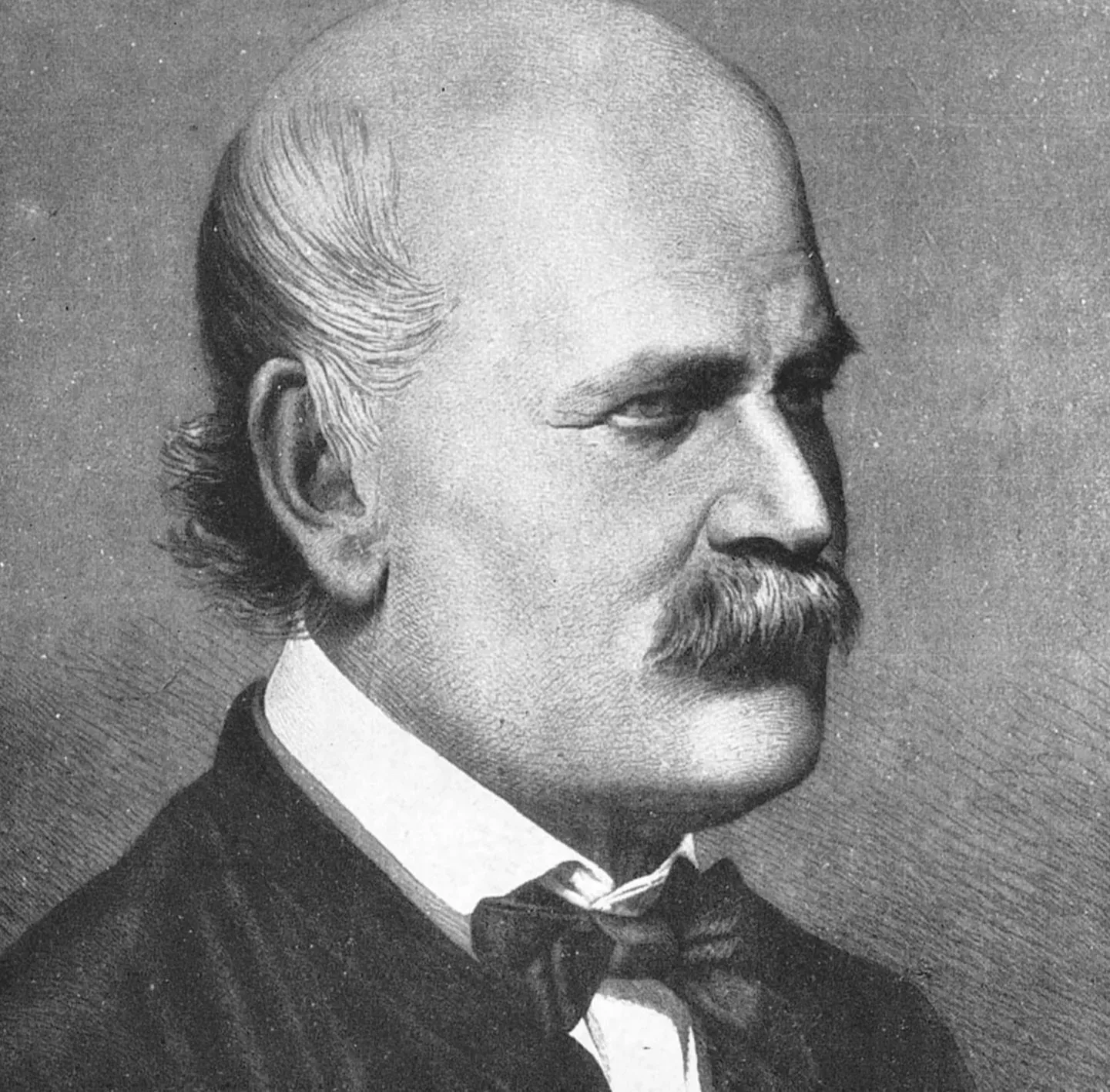
Semmelweis was a Hungarian physician and scientist and an early pioneer of antiseptic procedures. He discovered that the incidence of puerperal fever – high fever following childbirth – could be drastically cut by simply using hand disinfection in childbirth clinics. Even though his methods reduced mortality below 1%, his ideas were rejected by the medical community at the time and he remains quite an unknown scientist. The tragedy is almost impossible to comprehend: a simple, provable intervention that could save thousands of lives was dismissed because it challenged established habits.
Ignaz Semmelweis was a Hungarian physician whose simple discovery – handwashing – could have saved countless mothers from deadly infections. His colleagues refused to accept the evidence, ridiculed him publicly, and his mental health deteriorated as a result. He died in 1865, reportedly from an infection not unlike those he had spent his life trying to prevent. It wasn’t until Louis Pasteur and Joseph Lister later confirmed germ theory that Semmelweis’s ideas were finally validated – decades after his death. Today his name is a central case study in medical ethics and the sociology of science.
6. Emmy Noether – The Greatest Mathematician Nobody Taught You About

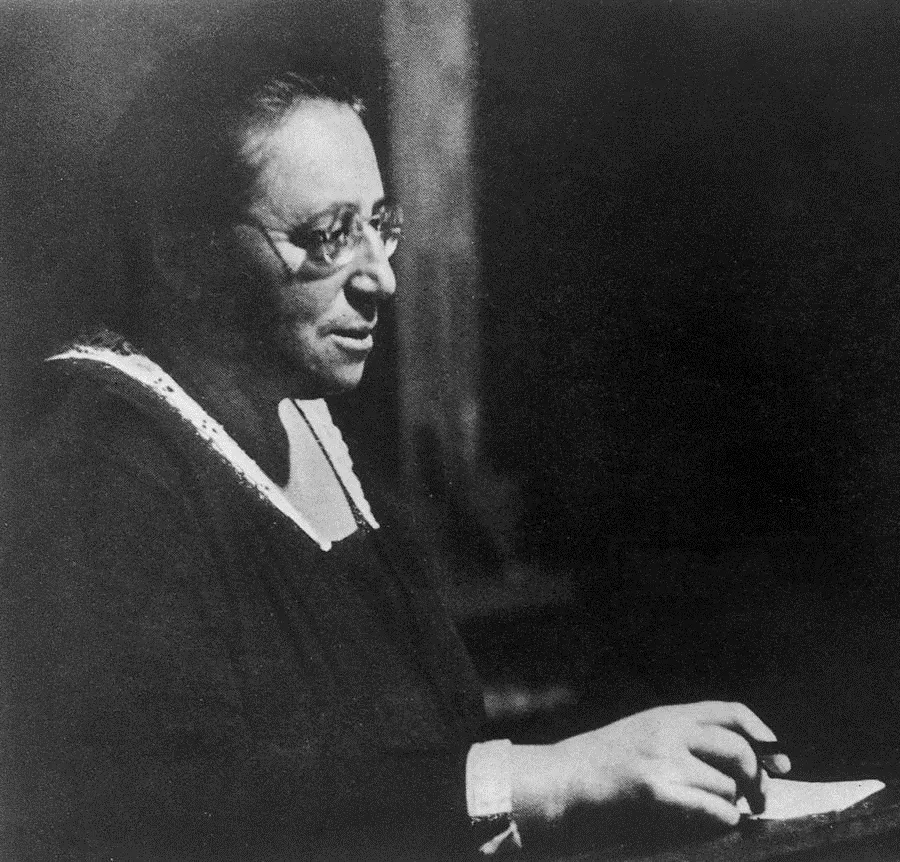
Doing Emmy Noether justice is tough for two reasons: first, she was so immensely prolific, Albert Einstein called her “the most significant creative mathematical genius thus far produced since the higher education of women began,” and second, most of her breakthroughs were in abstract algebra and theoretical physics, making them difficult to summarize. Her theorem, published in 1915, is considered one of the most important results in theoretical physics, directly connecting symmetry in nature to conservation laws. Physicists rely on it constantly, even if they rarely know her name.
Noether faced discrimination at every stage of her career. She was initially barred from lecturing at the University of Göttingen under her own name, and for years had to deliver lectures listed under a male colleague’s name. The fission discovery took place at a time of racial persecution, forced emigration, political oppression, and fear – and for most early women scientists, gender bias was never fully absent. The early generations of women scientists were regarded as doubly “other”: as women they were unconventional, as scientists they were exceptions in a thoroughly male domain. When the Nazis rose to power, Noether, as a Jewish woman, was expelled from her position entirely and emigrated to the United States, where she continued working until her sudden death in 1935. The geniuses of popular notoriety aren’t the only great minds of scientific history. Many lists overlook deserving names – the unsung geniuses overshadowed by more publicity-savvy rivals or under-appreciated because of when and where they lived.


