History books tend to spotlight generals, presidents, and visionaries. Yet some of the most consequential moments in human history were set in motion by people who were simply showing up for work, riding the bus, or standing in the wrong spot at the right time. History’s most significant moments don’t always begin with grand plans or famous figures. Sometimes, an ordinary person’s random action, lucky accident, or simple mistake changes the course of human events. These are five of those people.
1. Vasili Arkhipov – The Man Who Said No to Nuclear War

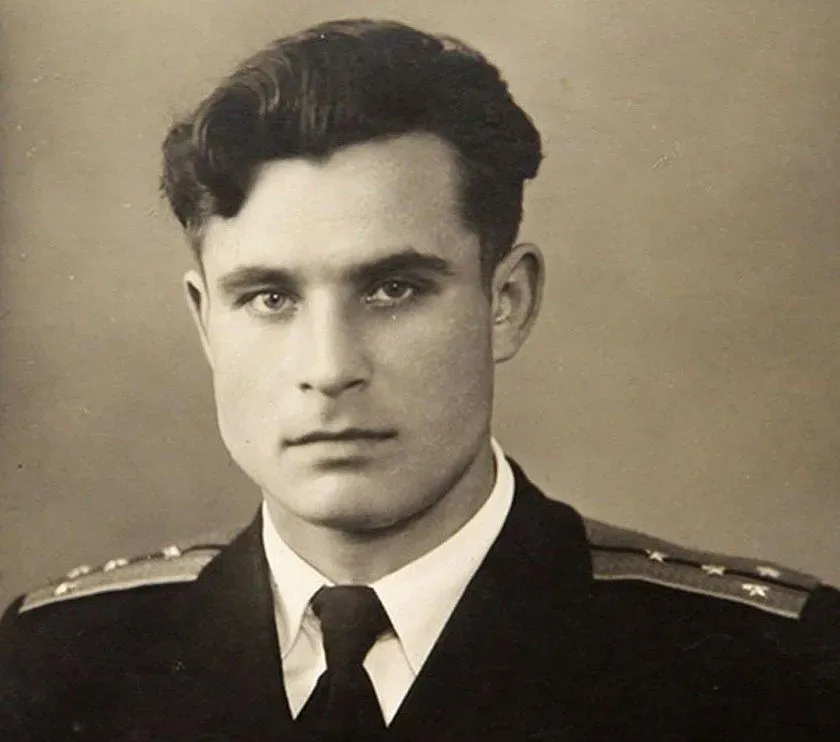
On October 27, 1962, a soft-spoken naval officer named Vasili Arkhipov single-handedly prevented nuclear war during the height of the Cuban Missile Crisis. A group of eleven United States Navy destroyers and the aircraft carrier USS Randolph detected the Soviet diesel-powered, nuclear-armed submarine B-59 near Cuba. This lack of communication led the captain of the B-59, upon seeing depth charges dropped at his vessel, to conclude that World War III had broken out. Captain Vitali Savitsky ordered the submarine’s ten-kiloton nuclear torpedo to be prepared, ready to launch at a US aircraft carrier. On B-59, a third signature was needed because Vasili Arkhipov was also chief of staff of the brigade. The three men were Captain Savitsky, Political Officer Ivan Maslennikov, and Executive Officer Arkhipov. An argument followed, with only Arkhipov opposing the launch.
Amidst the panic, the 34-year-old Arkhipov remained calm and tried to talk Captain Savitsky down. He eventually convinced Savitsky that the depth charges were signals for the Soviet submarine to surface, and the sub surfaced safely and headed north, back to the Soviet Union. Arkhipov’s actions likely prevented an all-out nuclear war, the consequences of which would have included the deaths of millions, if not billions, of innocent people, a collapse of many nation states and their economies, and an enormous amount of environmental damage. Former U.S. Defense Secretary Robert McNamara said in 2002: “We came very, very close to nuclear war, closer than we knew at the time.” It is sobering that very few have heard of Arkhipov, although his decision was perhaps the most valuable individual contribution to human survival in modern history.
2. Stanislav Petrov – The Officer Who Trusted His Gut

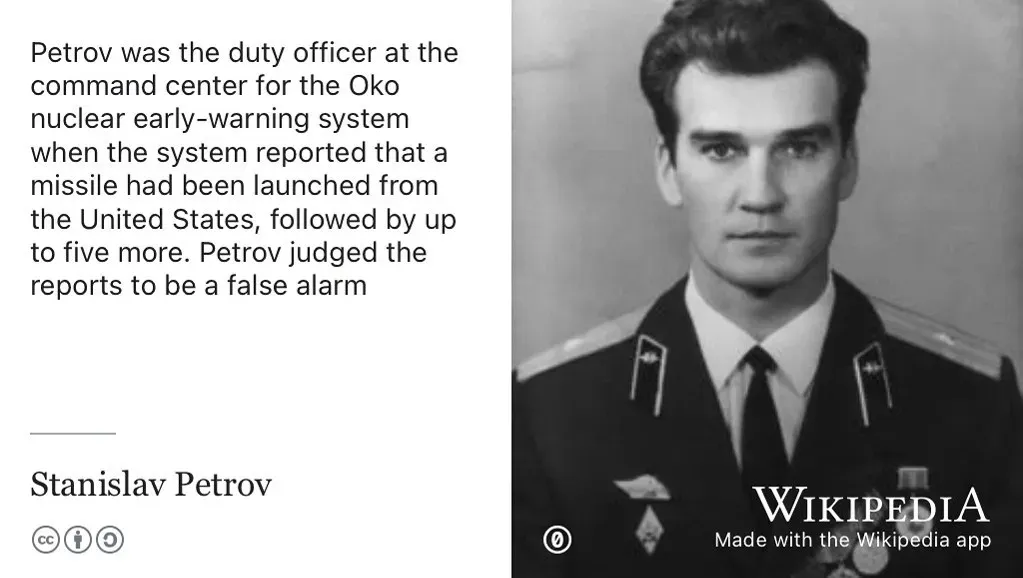
On 26 September 1983, Stanislav Petrov, a lieutenant colonel in the Soviet Air Defense Forces, was the officer on duty at the Serpukhov-15 bunker near Moscow, which housed the command center of the Soviet early warning satellites, code-named Oko. The Soviet nuclear early warning system reported the launch of one intercontinental ballistic missile with four more missiles behind it from the United States. If notification was received from the early-warning systems that inbound missiles had been detected, the Soviet Union’s strategy was an immediate and compulsory nuclear counter-attack against the United States. The date was September 26, 1983, and the world was experiencing one of the most dangerous periods of the Cold War. Just three weeks earlier, Soviet fighters had shot down Korean Air Lines Flight 007, killing all 269 people aboard including U.S. Congressman Lawrence McDonald. Tensions between the superpowers had reached a fever pitch.
Petrov went with “false alarm,” later explaining he reasoned that if the United States really were to start a nuclear war, it would do so with more than five missiles. He was correct. The satellites had mistaken the reflection of sun off clouds for attacking missiles. This decision is seen as having prevented a retaliatory nuclear strike against the United States and its NATO allies, which would likely have resulted in a full-scale nuclear war. The result, as one Stanford professor wrote later, could have been “roughly a hundred million people blown apart, burned up and poisoned on the first day of the war.” For his actions in averting a potential nuclear war in 1983, Petrov received the Dresden Peace Prize in Dresden, Germany, on 17 February 2013. The award included €25,000.
3. Henrietta Lacks – The Woman Whose Cells Never Died

Henrietta Lacks, a 30-year-old African American woman with five children, was diagnosed with an unusually aggressive form of cervical cancer at Johns Hopkins Hospital in 1951. Tissue samples were taken during her diagnosis and treatment, and portions were passed along to a researcher without her knowledge or permission, as was common practice at the time. Researchers had long endeavored without success to grow human cells outside the body, and it soon became clear that Henrietta’s cancer cells were capable of surviving and dividing in culture indefinitely. Lacks ultimately passed away on October 4, 1951, at the age of 31. Yet what happened next was extraordinary.
Today, these incredible cells, nicknamed “HeLa” cells, are used to study the effects of toxins, drugs, hormones and viruses on the growth of cancer cells without experimenting on humans. They have been used to test the effects of radiation and poisons, to study the human genome, to learn more about how viruses work, and played a crucial role in the development of the polio and COVID-19 vaccines. Over 100,000 publications were written based on research using HeLa cells. Henrietta’s story helped shape policies that would later establish the necessity of informed consent. In 1991, the U.S. government introduced the “Common Rule,” which set ethical guidelines for human research subjects. In 2023, the Lacks family reached a confidential settlement with one of the corporations that had long profited from HeLa cells.
4. Percy Spencer – The Engineer Who Melted a Candy Bar and Fed the World


Percy Spencer dropped out of grammar school when he was 12 years old to work in a weaving mill and joined the U.S. Navy at 18 as a radio operator. During his shifts he taught himself calculus and physics from textbooks. During World War II, he and his coworkers produced large amounts of radar equipment. One such piece of equipment was the compact cavity magnetron, a high-powered vacuum tube that generates microwaves. It was used as a radar system in World War II to detect enemy planes and submarines. One day while building magnetrons, Spencer was standing in front of an active radar set when he noticed the candy bar he had in his pocket had melted. Spencer was not the first to notice this phenomenon, but he was the first to investigate it.
He decided to experiment using food, including popcorn kernels, which became the world’s first microwaved popcorn. Most historians credit Spencer with inventing the first microwave oven in 1947, which was known as the Radarange. The new cooking device weighed about 750 pounds and cost more than $2,000, so it was not exactly practical for household use. In 1947, the first commercially produced microwave oven was about 6 feet tall, weighed about 750 lbs. In 1967 the first more affordable, $495, and reasonably sized counter-top Radarange microwave oven was made available for sale, produced by Amana. Spencer received 300 patents during his career.
5. Wilson Greatbatch – The Inventor Who Grabbed the Wrong Resistor

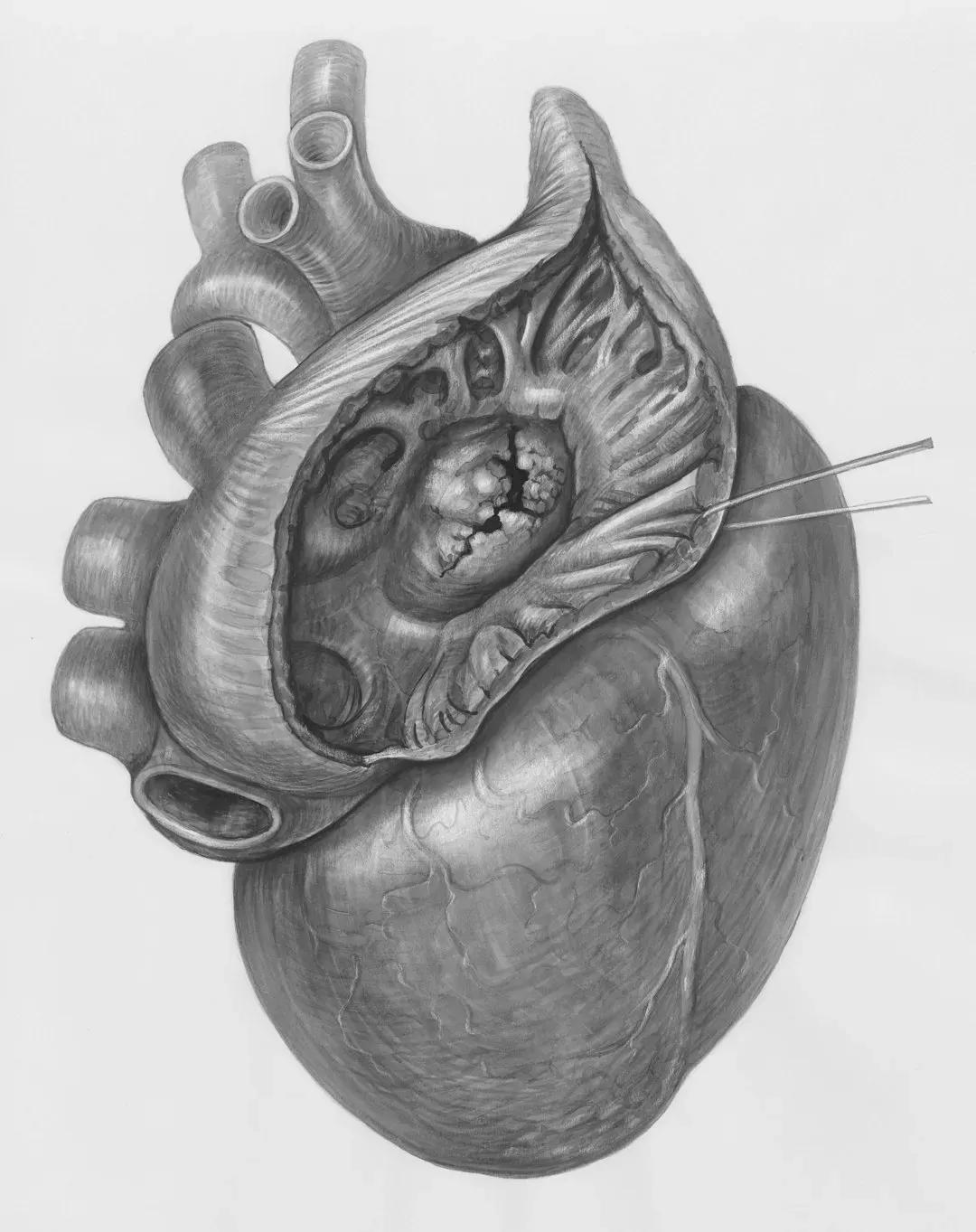
Wilson Greatbatch was an American electrical engineer working in medical research in 1956, when he made a mistake that would change his career and medicine forever. He was attempting to build a device that could record heartbeats, but he used the wrong resistor, installing a 1 megaohm component instead of a 10 kilohm one. Instead of recording the sound of a heartbeat, it produced pulses of its own instead, in a steady, rhythmic beat. Greatbatch instantly realized what this could mean, and he set about creating the first truly portable pacemaker. Most existing pacemakers leading up to this time were portable only in the sense that they could be unplugged to be moved to another room, then plugged back into the mains. The concept of a pacemaker that would allow the patient to move around freely was revolutionary.
Working with surgeon William Chardack, he developed an implantable unit; in 1960, the Chardack-Greatbatch pacemaker was successfully implanted in a patient in Buffalo. His accidental discovery and subsequent invention was honored in the 1980s when the wearable pacemaker was named one of the top 10 most impressive and influential feats of engineering. Around 200,000 pacemakers are fitted in the U.S. every year, making Greatbatch’s invention a crucial part of our modern healthcare system. Later, Greatbatch also invented the long-life lithium battery that would power the pacemakers for longer.
What These Stories Tell Us

History isn’t just plans and blueprints; it’s also detours, spills, and “uh-oh” moments that changed everything. The word serendipity itself was coined by Horace Walpole in 1754 to describe discoveries made by accident and sagacity. Each person on this list was operating in their own ordinary world. Arkhipov was just a naval officer doing his duty. Petrov was working a night shift. Henrietta Lacks was a mother seeking medical care. Spencer was building radar equipment. Greatbatch was trying to record a heartbeat. None of them knew what the moment would mean.
History is full of accounts of people who were going about their lives on what seemed like ordinary days when history intervened and forced them to become part of a larger story. The difference between these five and the millions of others who faced equally ordinary moments was simply curiosity, or calm, or the refusal to follow the easiest path. These aren’t myths polished by time; they’re documented turn-on-a-dime moments with receipts, including dates, patents, and lab notes, where curiosity met a mistake and ran with it. Five people. Five accidents. Five outcomes that still echo today.