Throughout time, certain figures have been deliberately cut out of the historical record – not by accident, but by design. More often than not, powerful forces decide that certain truths are too dangerous, too inconvenient, or too disruptive to endure. The Romans even had a formal term for it: damnatio memoriae, a collective “forgetting” of figures that stretches back as far as human history, with the burning of books, destruction of icons and images, and the retelling or rewriting of histories. These are five of the most striking cases – and the uncomfortable reasons behind each erasure.
1. Hatshepsut – Egypt’s Erased Queen
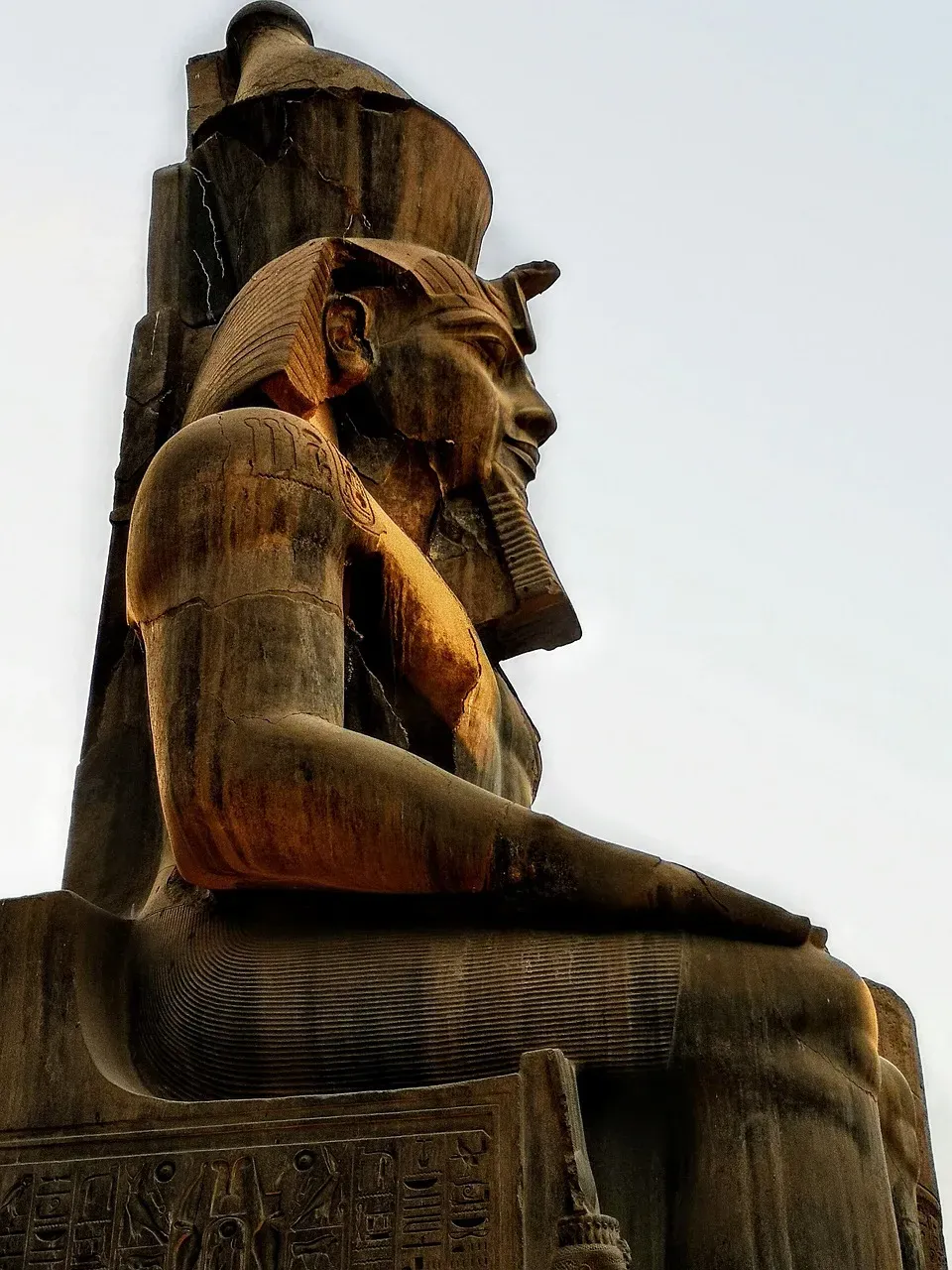
Hatshepsut was a female king of Egypt who reigned in her own right from around 1473 to 1458 BCE and attained unprecedented power for a woman, adopting the full titles and regalia of a pharaoh. She declared herself pharaoh, ruling as a man would for over 20 years and portraying herself in statues and paintings with a male body and false beard. Her reign was remarkable – essentially a peaceful one, with foreign policy based on trade rather than war, and she undertook extensive building programs on the temples of the national god Amon-Re, the Karnak temple complex, and the Dayr al-Baḥrī temple.
At the end of his reign, an attempt was made to remove all traces of Hatshepsut’s rule. Her statues were torn down, her monuments were defaced, and her name was removed from the official king list. Historian Joyce Tyldesley stated that Thutmose III may have ordered public monuments to Hatshepsut and her achievements to be altered or destroyed in order to place her in a lower position of co-regent, meaning he could claim that royal succession ran directly from Thutmose II to Thutmose III without any interference from his aunt. By the time the monuments of Hatshepsut were damaged, at least 25 years after her death, the elderly Thutmose III was in a coregency with his son Amenhotep II – and the purposeful destruction of the memory of Hatshepsut is seen as an attempt to ensure a smooth succession for Amenhotep II. A female pharaoh, no matter how successful her reign, was outside of the accepted understanding of the role of the monarchy, and so all memory of that pharaoh had to be erased.
2. Akhenaten – The Pharaoh Who Challenged the Gods
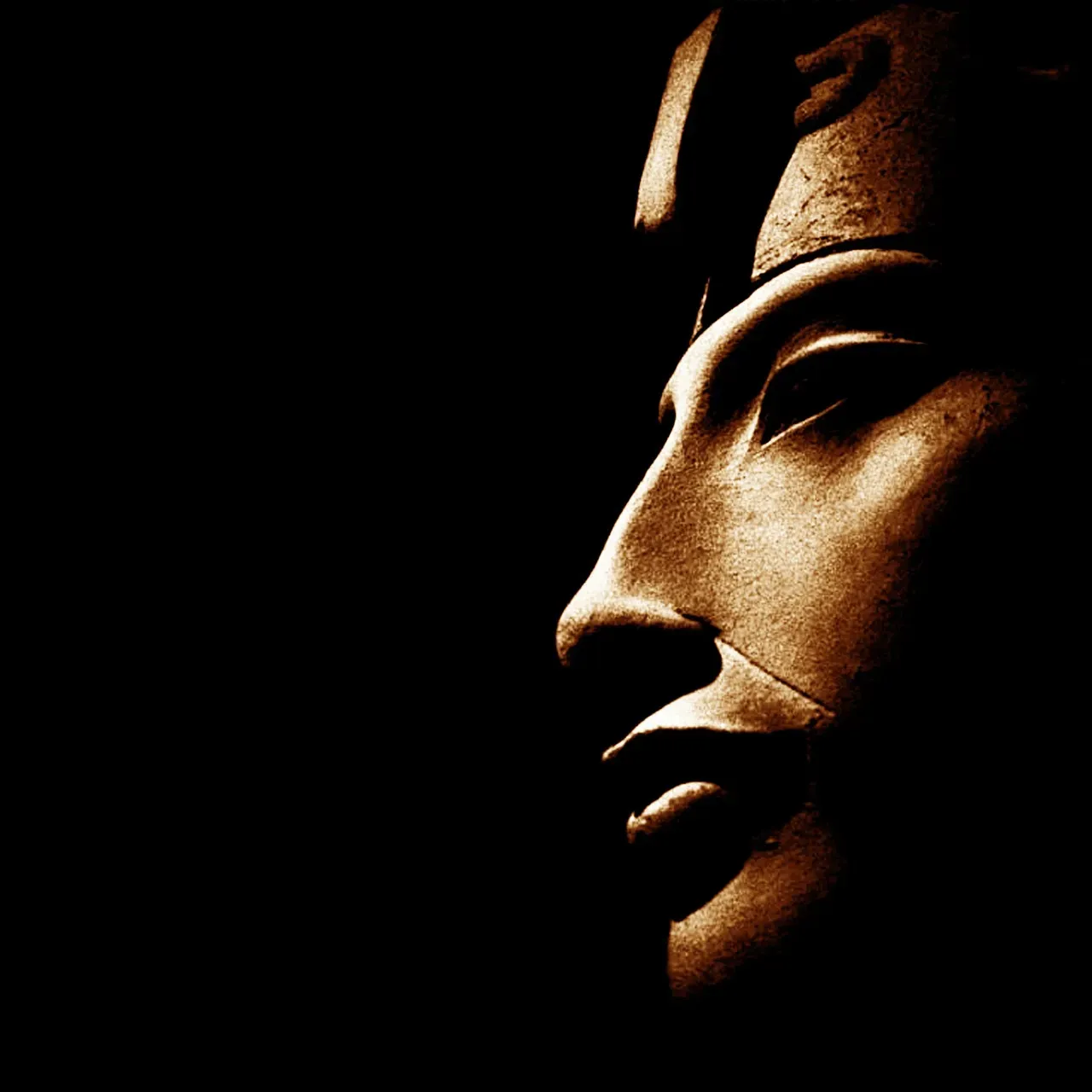
Akhenaten’s sole worship of the god Aten, instead of the traditional pantheon, was considered heretical. During his reign, Akhenaten endeavoured to have all references to the god Amun chipped away and removed. He was a ruler who upended centuries of Egyptian religious practice in one radical move, declaring Aten the supreme deity and dismantling the power of Egypt’s priestly class in the process. This was not merely a theological preference – it was a direct assault on the political and economic infrastructure built around the old gods.
After his reign, temples to Aten were dismantled and the stones reused to create other temples. Images of Akhenaten had their faces chipped away, and images and references to Amun reappeared. The priestly establishment and his successors worked systematically to undo every trace of his revolution. His name was struck from king lists, his city of Amarna was abandoned, and later pharaohs referred to him only as “the enemy” or “the criminal of Akhetaten.” Hatshepsut may have been erased from Egypt’s official record, but she was never hated as Akhenaten, who would later be called “The Great Criminal.” The erasure here was fuelled by religious fury, economic interest, and a desire to restore order after one man’s reign of radical belief.
3. Leon Trotsky – Airbrushed Out of a Revolution
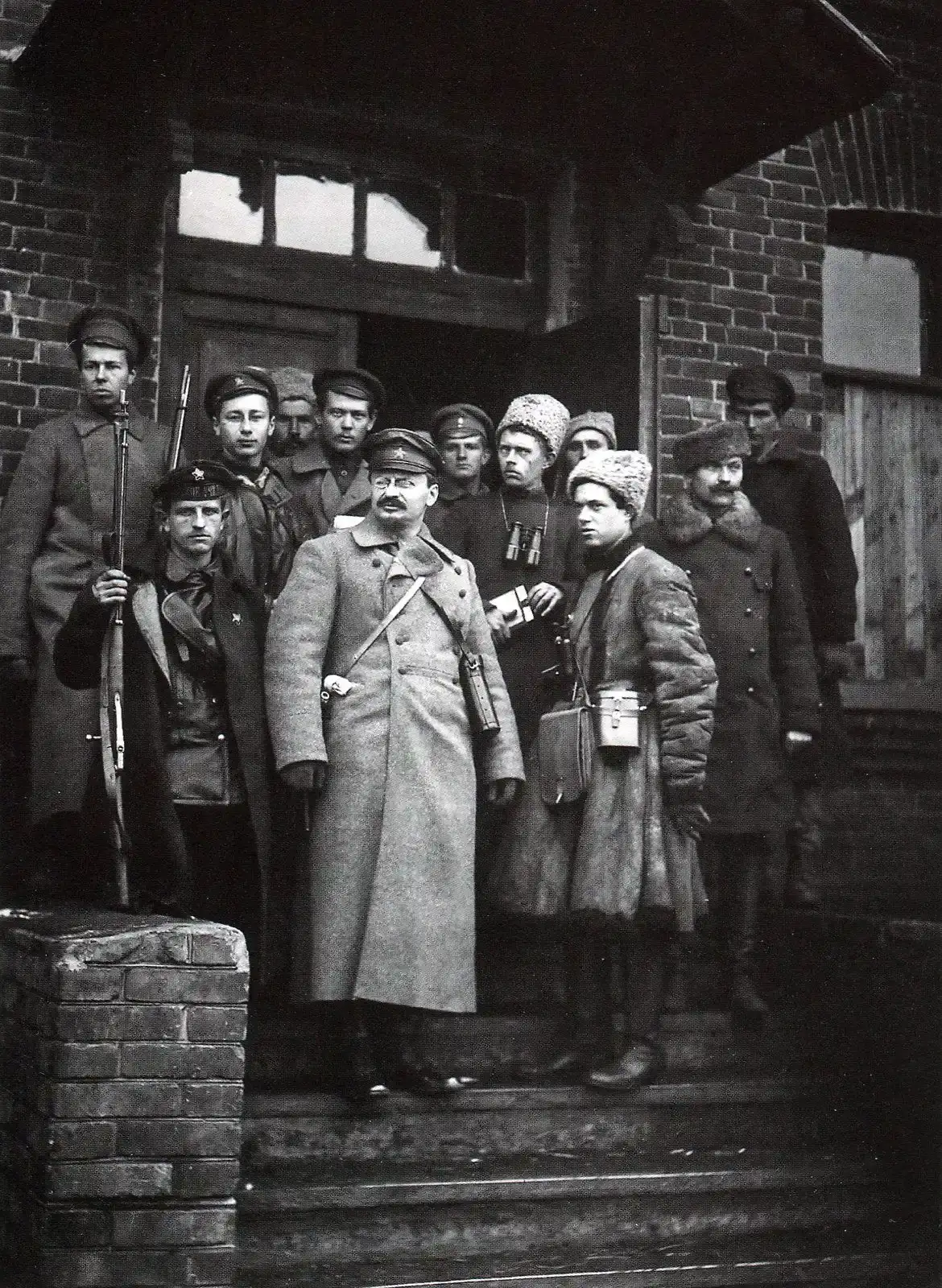
Leon Trotsky was a leader of the Russian October Revolution, second in command to Lenin. During the 1920s he opposed the policies of Stalin. As a consequence, he was deported and eventually assassinated. Stalin viewed him as a leading competitor for power, and ordered Trotsky’s name and image to be thoroughly erased from Soviet history. This went far beyond political rivalry – it was a campaign to rewrite the past so completely that an entire generation would grow up not knowing Trotsky had ever existed.
Armed with airbrushes and scalpels, censors routinely tried to erase enemies of Stalin from Soviet history by falsifying photographs. Stalin ordered Leon Trotsky, who helped create Communism, eliminated from all photos. The constant manipulation of visual evidence had profound effects on the Soviet people. It created an atmosphere of uncertainty and fear, where citizens could never be sure of what was real and what was fabricated. People began to question their own memories when confronted with contradictory “official” photographs, leading to a culture of self-censorship and paranoia. David King’s visual history of the falsification of images, The Commissar Vanishes, explores how Stalin manipulated photography to erase all memory of his victims.
4. Nikolai Yezhov – The Vanishing Commissar
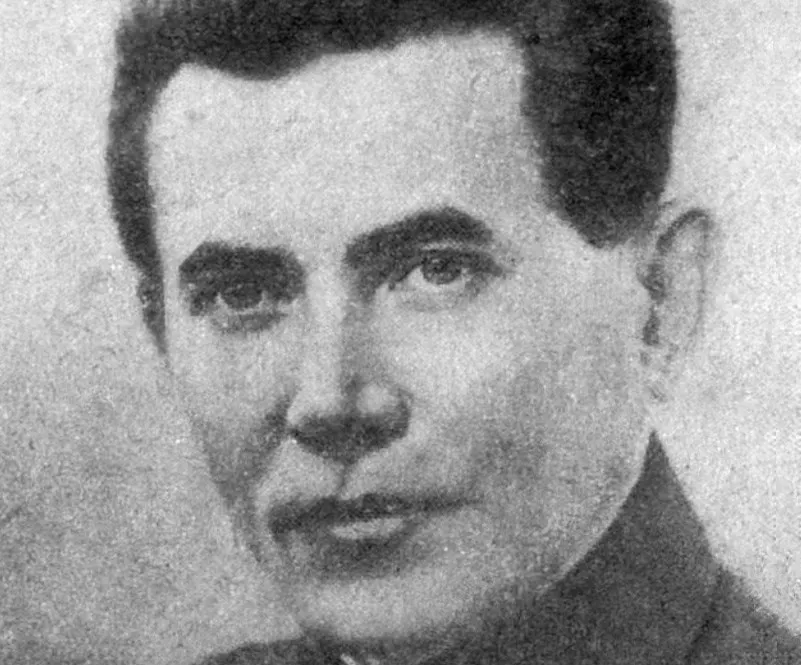
Nikolai Yezhov, the chief of the Soviet security police (NKVD) during the height of the Great Purge from 1936 to 1938, was – like Maximilien Robespierre – an eventual victim of the systematic terror he himself helped to foment. He was one of the most feared men in the USSR, personally overseeing mass arrests and executions that killed hundreds of thousands of Soviet citizens. For a time, his name was synonymous with state terror – yet almost overnight, he became someone who had never existed at all.
Photographed with Stalin along the banks of the Moscow-Volga Canal in April 1937, Yezhov was subsequently removed from the original image after his execution in February 1940. Soviet artists edited him out of photographs so thoroughly that he became known as the “Vanishing Commissar.” Newspapers and textbooks rewrote history to omit his name, and even in death, his infamy was hidden. Stalin’s commitment to censorship and photo doctoring was so strong that, at the height of the Soviet Union’s international power, he rewrote history using photo alteration. The stakes weren’t just historical: each erasure meant a swing of Stalin’s loyalties, and most disappeared subjects also disappeared – or were killed – in real life too. Yezhov’s case stands as one of history’s most complete acts of institutional vanishing.
5. Nikola Tesla – The Inventor Whose Files Disappeared
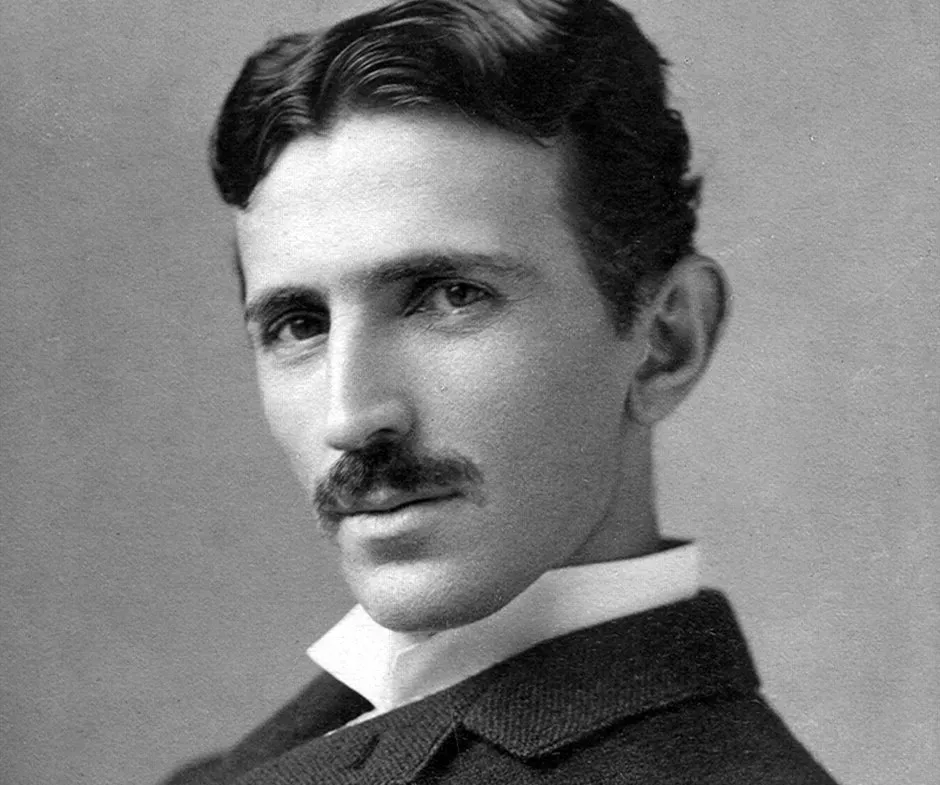
Nikola Tesla, one of history’s most brilliant inventors, transformed the world with his groundbreaking work in alternating current electricity, wireless communication, and electromagnetic theory. Despite his extraordinary achievements, Tesla spent his final years in financial hardship and relative obscurity. After Nikola Tesla was found dead in January 1943 in his hotel room in New York City, representatives of the U.S. government’s Office of Alien Property seized many documents relating to the brilliant and prolific 86-year-old inventor’s work. It was the height of World War II, and Tesla had claimed to have invented a powerful particle-beam weapon, known as the “Death Ray,” that could have proved invaluable in the ongoing conflict.
The U.S. government’s decision to seize Nikola Tesla’s papers and belongings following his death raises important ethical questions about the balance between protecting national interests and respecting the intellectual property of individuals. In 1952, after a U.S. court declared his nephew Kosanovic the rightful heir to his uncle’s estate, Tesla’s files and other materials were sent to Belgrade, Serbia, where they now reside in the Nikola Tesla Museum. But while the FBI originally recorded some 80 trunks among Tesla’s effects, only 60 arrived in Belgrade. The involvement of government agencies, including the FBI and the Office of Alien Property Custodian, coupled with the evaluation of Tesla’s work by MIT engineer Dr. John G. Trump, has fueled decades of speculation and conspiracy theories. Twenty missing trunks, a classified file, and a genius who died alone – Tesla’s erasure was quieter than most, but no less deliberate in its effect.
Why Erasing People from History Never Fully Works
A completely successful damnatio memoriae results – by definition – in the full and total erasure of the subject from the historical record. Yet here is the paradox: the very act of trying to erase someone tends to leave traces. Fully removing some of these high profile people, such as Emperors, from history proved to be exceptionally difficult, and despite the Romans’ best efforts, at least some of the people who suffered damnatio memoriae as a punishment are still in the history books. The same is true across centuries and continents – whether the tool was a chisel, an airbrush, or a government seizure order.
Damnatio memoriae often relies on the fact that history is written by the winners, and of course, the winners would always like to remove evidence of opposition against their rule as a warning for others and to perpetuate their power. Looking at cases in modern history, scholars have argued that iconoclastic vandalism only makes martyrs of the “dishonored,” thus ensuring that they will be remembered for all time. The purpose of damnatio memoriae, rather than being to erase people from history, was to guarantee only negative memories of those who were so dishonored. Every name scratched from a wall, every face airbrushed from a photograph, every trunk of papers that goes missing – each one tells us something about the person who ordered the erasure and the power they feared losing. The erased, it turns out, are often the most interesting people in the room.