When you hear about scientists teleporting information across the internet or creating living miniature brains in the lab, it’s natural to think someone’s been watching too many sci-fi films. Yet these aren’t plot devices from the latest blockbuster thriller. They’re legitimate scientific breakthroughs happening right now in laboratories around the world. The line between science fiction and reality has become remarkably thin, and in some cases, it has vanished entirely. From materials that defy our understanding of time to gene-editing techniques that could rewrite the human story, the discoveries pouring out of research centers are stranger than fiction could ever dare to be.
Quantum Teleportation Through Your Internet Cable
Northwestern University engineers successfully demonstrated quantum teleportation over a fiber optic cable already carrying regular Internet traffic in 2024, marking a feat scientists once considered impossible. A quantum state of light was successfully teleported through more than thirty kilometers of fiber optic cable amid a torrent of internet traffic. This isn’t teleporting people or objects like in Star Trek, but rather moving information instantaneously between distant points without physically carrying it. The technology works through quantum entanglement, where two particles remain mysteriously linked regardless of distance.
Researchers found the quantum information was successfully transmitted even with busy Internet traffic whizzing by, and this work marked the first demonstration of quantum teleportation alongside real, live internet traffic. The discovery introduces the new possibility of combining quantum communication with existing Internet cables, greatly simplifying the infrastructure required for distributed quantum sensing or computing applications. The practical implications are staggering. Future communication networks could be virtually unhackable, and computing power might reach levels that make today’s supercomputers look like pocket calculators. With the year twenty twenty-five designated by the UN as the International Year of Quantum Technology, this research comes at a particularly timely moment.
Miniature Human Brains Growing in Dishes
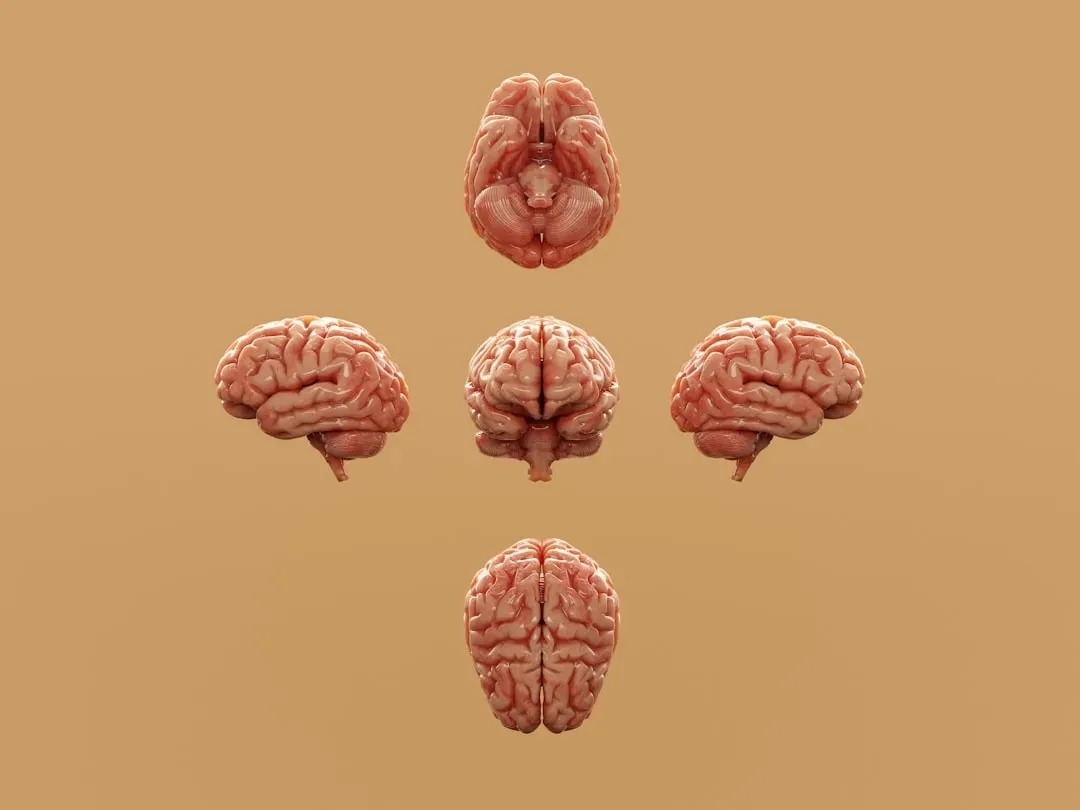
Human brain organoids, models of developing brain tissue grown in culture from human stem cells, are already producing electroencephalography patterns comparable to those of a human fetus and have even demonstrated the ability to play the computer game Pong, raising a particularly provocative question about whether they could ever develop consciousness. These three-dimensional in vitro neural models closely mimic the cellular diversity, spatial structure, and functional connectivity of the human brain, providing a groundbreaking platform that outperforms traditional two-dimensional cultures and animal models in studying neurodevelopment and neurological disorders. These aren’t just clumps of cells floating in nutrient solution. They’re organized structures with distinct brain regions showing genuine neural activity.
Most experts currently agree that brain organoids should not be classified as conscious entities, though questions about their sentience or consciousness continue to fuel debates. When the National Science Foundation launched its program on biocomputing through organoid intelligence in twenty twenty-four, it required applicants to have an ethicist as the co-principal investigator. These organoids are already being used to study conditions like Alzheimer’s disease and autism, offering insights that were previously impossible to obtain. The ethical landscape grows more complex as these structures become increasingly sophisticated, forcing us to grapple with questions that seemed purely philosophical just a few years ago.
Time Crystals You Can Hold and Watch Levitate

Discovered by a team of physicists at New York University, the new type of time crystal consists of styrofoam-like beads that levitate on a cushion of sound while exchanging sound waves. In condensed matter physics, a time crystal is a quantum system of particles whose lowest-energy state is one in which the particles are in repetitive motion, unable to lose energy to the environment and come to rest because it is already in its quantum ground state, first proposed theoretically in twenty twelve as a time-based analogue to common crystals. While regular crystals repeat their atomic structure in space, time crystals repeat their structure in time, moving in never-ending patterns without any external energy input.
Physicists at the University of Colorado Boulder created the first time crystal that humans can actually see in twenty twenty-five, using liquid crystals that swirl into never-ending patterns when illuminated by light. According to physicists, the wave-mediated interactions between the beads are not constrained by Newton’s Third Law of Motion, and the discovery could offer insights into the circadian rhythms that underpin our biological clocks because some biochemical networks also interact nonreciprocally, like the floating time crystals. These discoveries aren’t just laboratory curiosities. Researchers believe time crystals could revolutionize quantum computing and timekeeping, potentially creating clocks more accurate than anything we’ve ever built.
CRISPR Gene Editing Curing Diseases With a Single Treatment
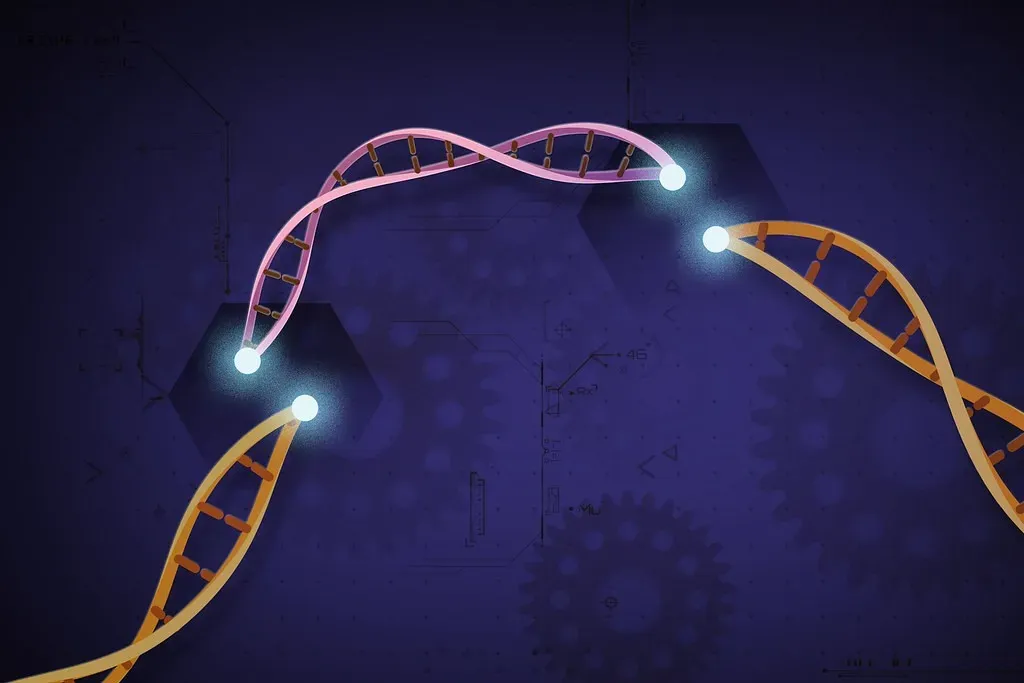
Results from a Cleveland Clinic Phase One first-in-human clinical trial showed that a one-time infusion of gene-editing therapy using CRISPR-Cas9 safely reduced LDL cholesterol and triglycerides in people with lipid disorders, with both levels substantially reduced within two weeks after treatment and staying low for at least sixty days. In a fifteen-patient trial, CTX310, an experimental CRISPR-Cas9 gene-editing treatment delivered as a one-time infusion, uses tiny fat-based particles to carry the CRISPR editing mechanism into the liver, where it switches off a gene called angiopoietin-like protein three, turning off this gene to lower LDL cholesterol and triglycerides. The concept of curing high cholesterol with a single injection rather than taking daily pills forever sounds impossibly futuristic, yet it’s happening now.
Encouraging results are being announced in clinical trials for conditions like sickle cell disease and transfusion-dependent beta-thalassaemia, with the path finally leading to recent FDA approval of the first gene therapy drug utilizing the CRISPR-Cas9 system. A trial demonstrated the first-ever use of CRISPR to directly correct a disease-causing mutation, with corrections being much more technically challenging and precise than breaking a gene, the approach used in many other trials. By early twenty twenty-five, the United States had two hundred seventeen gene-editing companies, compared with a few dozen in Europe and thirty in China. The pace of progress suggests we’re witnessing the early days of a medical revolution that will reshape how we think about treating disease.
Antimatter Created and Captured in Laboratories
Antimatter really does exist, though not for long, and scientists studying collisions of atomic nuclei at the Relativistic Heavy Ion Collider discovered the heaviest antimatter nucleus ever detected in twenty twenty-four. When matter meets antimatter, they annihilate each other in a burst of pure energy, following Einstein’s famous equation. This isn’t theoretical physics confined to textbooks anymore. Scientists are creating and studying antimatter in controlled laboratory conditions, probing the fundamental building blocks of our universe.
The implications extend beyond pure research. Antimatter could theoretically power spacecraft for interstellar voyages, though we’re nowhere near that capability yet. More immediately, positron emission tomography scans already use antimatter in medical diagnostics. The laboratory’s Scientific Data and Computing Center now stores more than three hundred petabytes of data from experiments, the largest compilation of nuclear and particle physics data in the United States, coming from experiments at the Relativistic Heavy Ion Collider and the ATLAS experiment at the Large Hadron Collider. Each discovery pushes us closer to understanding why our universe is made of matter rather than antimatter, one of the deepest mysteries in physics.
Complete Brain Maps Revealing Neural Connections
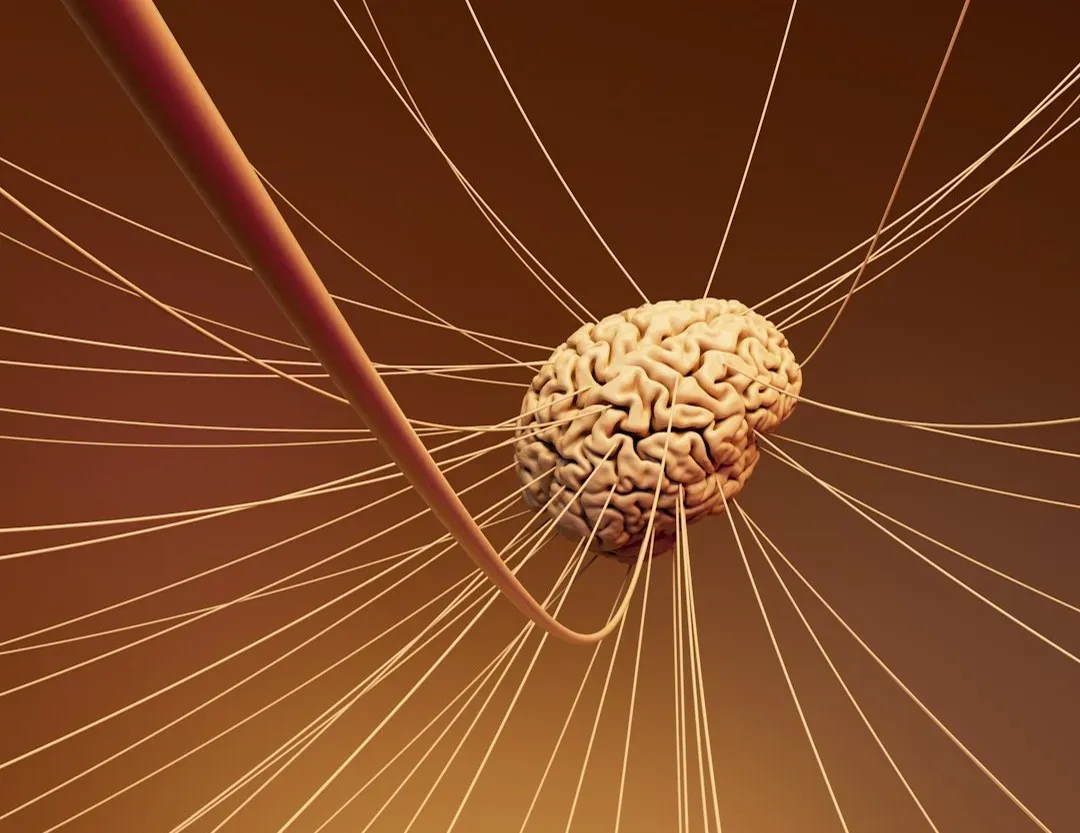
Scientists announced the first ever complete mapping of the entire brain of a fruit fly with a detail of fifty million connections between more than one hundred thirty-nine thousand neurons in October twenty twenty-four, a wiring diagram that could help experts understand how human minds process thoughts, make decisions, and store memories, with the mapping process taking an international research team ten years to complete. To map the fruit fly brain fully, the research team removed the brain about the size of a poppy seed, covered it in resin and let it harden into a block, then shaved off ultra-thin pieces thinner than human hair and photographed each piece with an extremely high-resolution microscope. The level of detail is staggering, documenting every single connection in a complete nervous system.
This achievement represents a fundamental milestone in neuroscience. While a fruit fly brain seems vastly simpler than a human brain, the principles governing how neurons connect and communicate are likely universal. Understanding these circuits could unlock mysteries of learning, memory, consciousness, and neurological disease. Recent studies reveal that the heart contains a small control center, an independent neural network that regulates its rhythm, and gaining deeper insight into this intricate system, which proves far more sophisticated than earlier believed, may pave the way for innovative therapies for cardiovascular conditions. The twenty-first century is becoming the era when we finally understand the biological machinery that makes us who we are, neuron by neuron, connection by connection.