Las Vegas has a habit of eating its own history. It builds something legendary, milks it for decades, then demolishes it overnight and dares you to remember it ever existed. And yet, if you know where to look, the ghosts are everywhere. The faded footprints, repurposed lots, salvaged signs, and forgotten foundations are all still here, scattered quietly across a city that never stops moving forward.
Some of these places carried enormous cultural weight. Others were simply the backdrops of a million nights nobody fully remembers. What’s striking is how close they all are to the surface. You could walk past them on any given Tuesday and never suspect a thing. Let’s dive in.
1. The Stardust Resort and Casino – Now Hiding Inside Resorts World Las Vegas
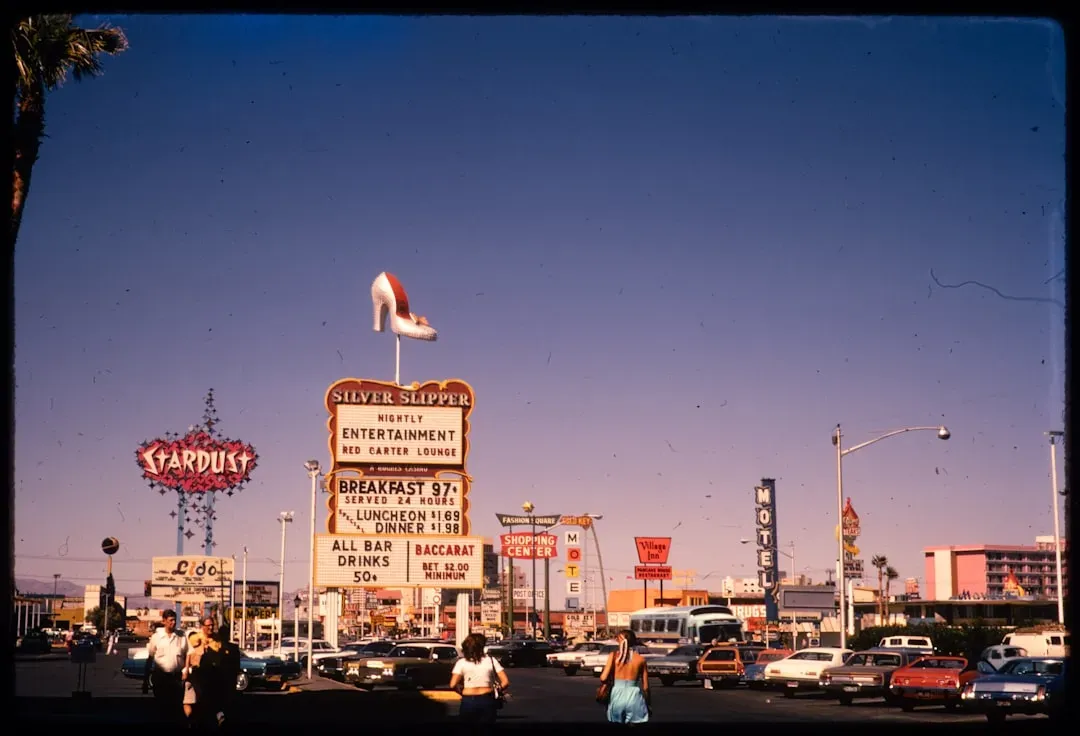
There are few more bittersweet transformations on the Strip than the corner where the Stardust once stood. The Stardust opened on July 2, 1958, as the world’s largest hotel. It was the kind of place that defined an era, loud, cosmic, a little mob-connected, and genuinely unlike anything that came before it.
The Stardust closed on November 1, 2006, and the two hotel towers were imploded on March 13, 2007. Thousands watched. It was a spectacle, as most Las Vegas endings tend to be.
The site has since transformed into Resorts World Las Vegas, which opened in June 2021, offering modern amenities and entertainment options. Honestly, it is easy to stroll right past without blinking. Resorts World pays homage to its predecessor with a special Stardust sculpture near its entrance, a quiet nod to what was once the most recognizable sign on the entire Strip.
The Stardust roadside sign was dismantled in February 2007, and was given to the Neon Museum. A 56-foot-wide sign for the property’s Lido de Paris show was also acquired by the museum and added to its tour in 2023. So pieces of the Stardust are still very much alive. You just need to know where to find them.
2. The Moulin Rouge Hotel Site – A Civil Rights Landmark Reduced to a Sign Frame
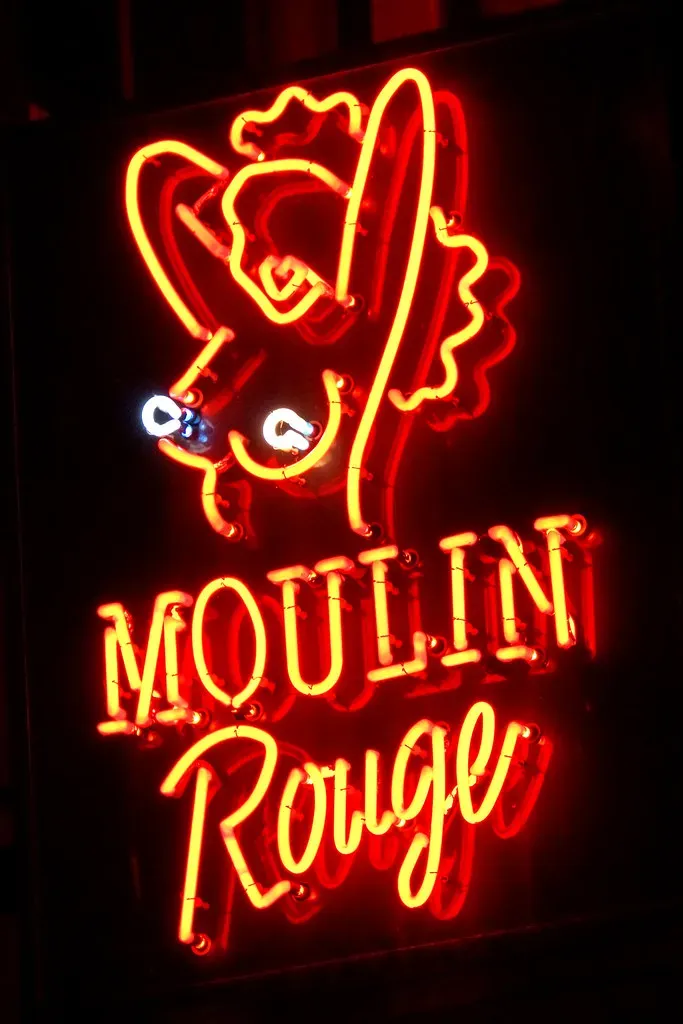
This one genuinely stings, even in 2026. The Moulin Rouge Hotel was a short-lived hotel and casino in West Las Vegas that was listed on the U.S. National Register of Historic Places in 1992. Although its peak operation lasted only six months in the second half of 1955, it was the first desegregated hotel casino and was popular with many of the Black entertainers of the time.
Until the hotel’s opening on May 24, 1955, Black entertainers performing in Las Vegas were denied access to casino and hotel dining areas and were forced to seek overnight accommodations in Black boarding houses. Think about that for a moment. This one building was built specifically to push back against an entire system. Legendary performers such as Sammy Davis Jr., Dinah Washington, and Louis Armstrong graced the stage, drawing crowds from all over.
It made the National Register of Historic Places in 1992, but three fires – in 2003, 2009, and 2017 – gutted the already-crumbling structure. After the casino’s tower was demolished in 2010, the rest of the ruins followed in 2017 – after more than 200 homeless persons were found living inside. Today, nothing but the skeleton of its roadside sign remains.
The building’s famous neon now burns on permanent display at the Neon Museum. Because of a quirk of Nevada gaming laws, which require that gambling take place occasionally to maintain a gaming license, gambling still takes place at the site every two years. Video poker machines are brought in for the day in order to keep the Moulin Rouge’s gaming license, even though the casino closed in 1955. That detail alone is one of the strangest, most poignant things in all of Las Vegas history.
3. The Riviera Hotel and Casino – Swallowed by the Convention Center
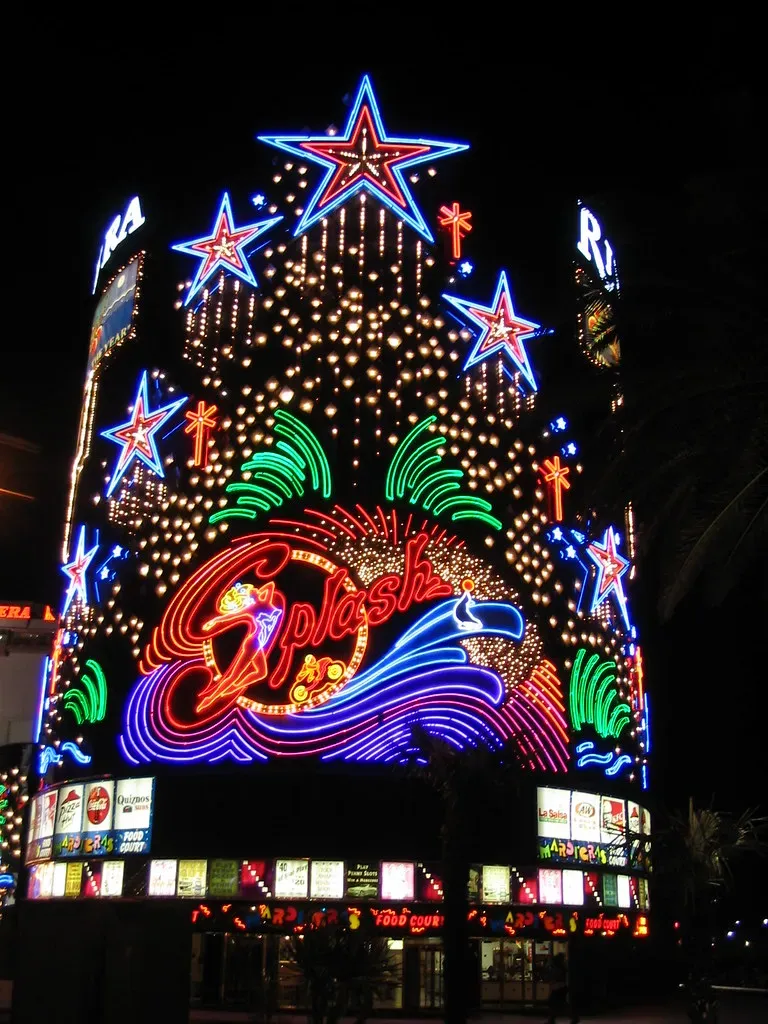
The Riviera was a hotel and casino on the northern Las Vegas Strip in Winchester, Nevada. It opened on April 20, 1955, and included a nine-story hotel featuring 291 rooms. The Riviera was the first skyscraper in the Las Vegas Valley, and was the area’s tallest building until 1956. Here’s the thing about the Riviera. It wasn’t just old. It was foundational.
The Riviera, which opened in 1955, was another classic Las Vegas hotel that couldn’t stand the test of time. Known for its glamorous history, including appearances in films like Casino and Ocean’s 11, the Riviera was ultimately imploded in two stages in 2016. The demolition made room for the expansion of the Las Vegas Convention Center.
The Las Vegas Convention and Visitors Authority purchased the Riviera in February 2015 for $182.5 million plus $8.5 million in related transaction costs. It plans to replace the 26-acre site with an expanded Las Vegas Convention Center. Today, tens of thousands of convention-goers walk that same ground without any idea what stood there before them.
Other signage from the facade, as well as another “Riviera” sign from the property’s east entrance, were donated to the city’s Neon Museum. Some fragments survived. Most didn’t. And the convention center that replaced it is honestly the least glamorous sequel imaginable to a sixty-year history of showgirls and Frank Sinatra.
4. The Desert Inn Golf Course – Buried Under Wynn Las Vegas

The Desert Inn, fondly referred to as the “D.I.,” opened in 1950 on the growing Las Vegas Strip with 300 rooms and one of the largest casino floors in Nevada at the time. For decades it was one of the Strip’s crown jewels, a quieter, more elegant alternative to the flashier properties nearby.
Partner offer
The Desert Inn, opened in 1950, was a Las Vegas landmark known for its elegance and connections to celebrities such as Frank Sinatra. After a successful run of over 50 years, the property was closed and imploded in phases in 2001 to make way for Wynn Las Vegas. The golf course that sat alongside it was part of what made the Desert Inn feel genuinely different from everything else on the Strip.
When Steve Wynn acquired the site, the Desert Inn Golf Course was closed and eventually redeveloped into what became Wynn Las Vegas and later Encore. The lush, manicured grounds where celebrities once played rounds of golf are now occupied by one of the most valuable resort properties in the world. It’s a remarkable geographic overlay, one icon quietly absorbing another.
The glory days of the now-departed Dunes, Moulin Rouge, Stardust, Sahara, and Desert Inn are captured via their signature marquees at the Neon Museum. A Desert Inn sign letter even appears in the museum’s own outdoor signage, the letter “N” in NEON. So even the name of the museum that preserves Vegas history carries a piece of the Desert Inn inside it. I think that’s quietly beautiful.
5. The El Rancho Vegas Footprint – The Original Strip Resort, Still Underfoot
Most people don’t know this, but the Las Vegas Strip as a concept was born with one single property. The first true casino resort on what would become the Las Vegas Strip was the El Rancho Vegas, which opened April 3, 1941. This resort, built by California hotelier Thomas Hull, set the pattern for the first generation of Strip resorts. Everything that came after it, the Flamingo, the Sands, the Stardust, all of it, was built on the template El Rancho established.
El Rancho burned to the ground in 1960 under circumstances that were never fully resolved. The site sat largely dormant and repurposed for years. It’s one of those places where the scale of what was lost doesn’t fully register until you realize you are standing on the exact ground where the entire concept of the modern Las Vegas Strip was born.
The original footprint of El Rancho Vegas is now part of the broader corridor near the Sahara end of the Strip. Newer construction has built directly over and around it. Despite centuries of fires, busted towns, and urban redevelopment, Nevada is still packed with historic structures. Not only do these buildings stand the test of time, each one also tells a unique part of the state’s story. El Rancho is the rare case where the story is told mostly by what is no longer standing.
You could walk past the general area today and see nothing that suggests a pioneering resort once stood there. That invisibility, honestly, feels like the point. Las Vegas has always been better at building the future than preserving the past.
6. The Neon Boneyard – Where Abandoned Vegas Gathers in Plain Sight
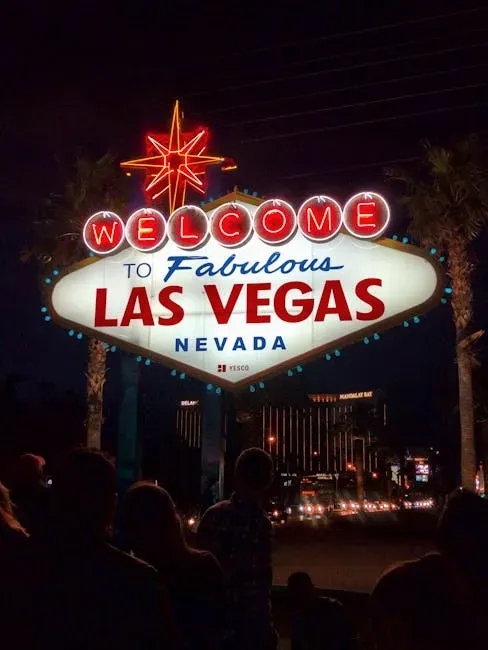
Let’s be real: the most concentrated collection of abandoned Las Vegas landmarks isn’t buried underground or hidden behind a new construction site. It’s sitting in a two-and-a-half acre lot on North Las Vegas Boulevard, open to the public, and it is genuinely one of the most moving places in the city. The Neon Museum’s collection includes more than 200 signs. Each one is a relic from a place that no longer exists in the form it once did.
As of 2023, the museum received 200,000 visitors annually, with 30,000 turned away that year as a result of sold-out tours. The demand to see what Vegas threw away is, to put it plainly, enormous. Many of the museum’s signs come from hotel-casinos throughout the Las Vegas Valley, particularly those that are no longer in operation. Signage from hotel-casinos includes the Stardust, the Riviera, the Flamingo, the Tropicana, the Moulin Rouge, and El Cortez.
An expansion of the museum site began in 2017, although hundreds of neon artifacts still remained in off-site storage due to space limitations. In 2024, the museum announced plans to relocate to a larger site, with several under consideration as of 2025. The collection has outgrown its own home, which says everything about how much of Vegas has been demolished and discarded.
Beyond the 322 signs and 977 individual pieces representing more than 200 properties, The Neon Museum is home to a dynamic and growing archive of Las Vegas history. It is the single place in the city where abandoned landmarks don’t just lurk in plain sight but are actively celebrated. Hidden in plain sight is the whole idea. It’s all right there, rusting beautifully in the desert air, waiting for someone to stop and notice.
The City That Forgets on Purpose
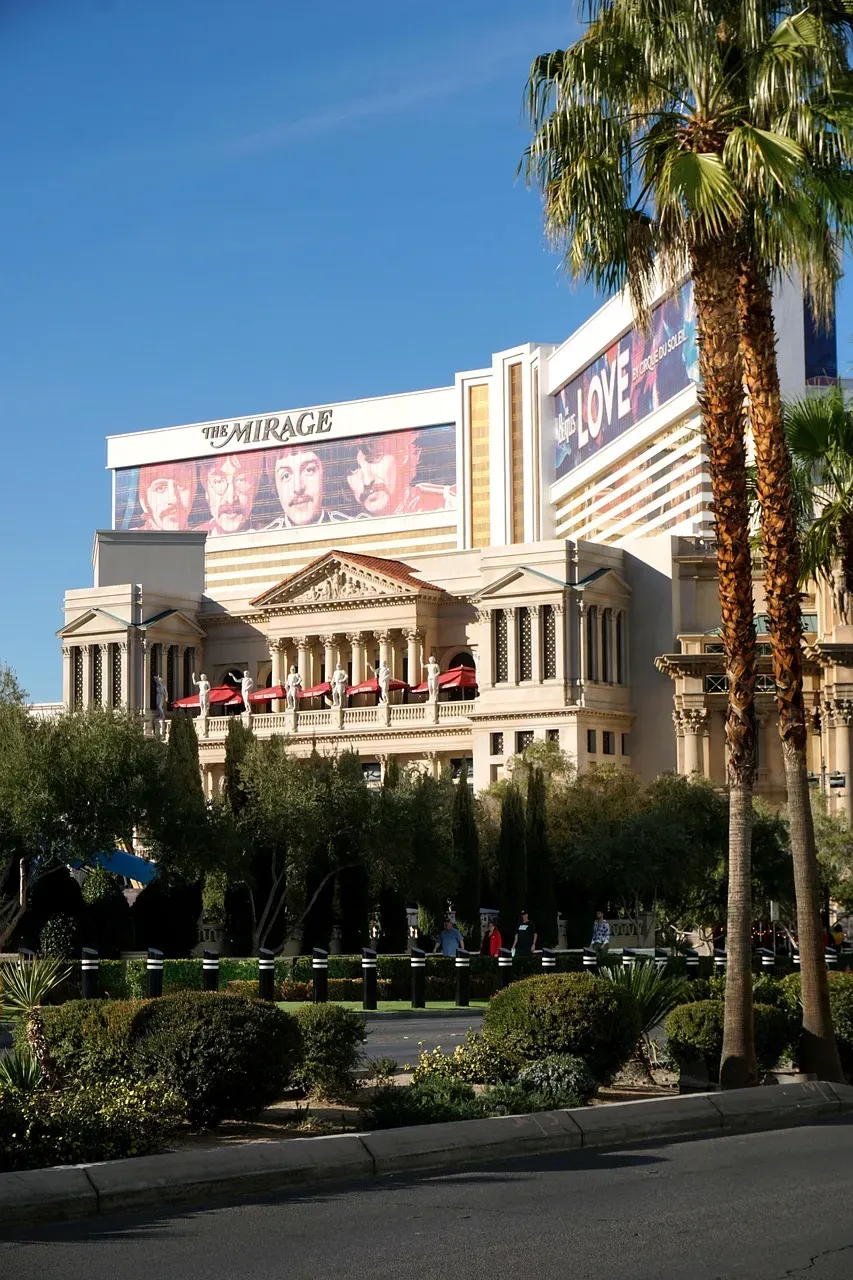
Las Vegas has always operated on a philosophy that the next thing will always be better than whatever it replaced. Sometimes that’s true. Often it isn’t. What this list reveals is that abandonment in Vegas rarely looks like neglect. It looks like a gleaming new resort, a convention center expansion, a sculpture at an entrance lobby. The old is swallowed by the new so seamlessly that you’d never know the difference unless someone told you.
The population of the Las Vegas Valley now exceeds 2.3 million people, and the pace of redevelopment shows no sign of slowing. More landmarks will be absorbed, repurposed, or quietly erased. The Neon Museum can only hold so much. And the rest gets paved over, built upon, and forgotten.
Here’s what I keep coming back to: the Moulin Rouge’s gaming license is still technically active. Video poker machines are rolled in every couple of years to an empty lot on West Bonanza Road, just to satisfy a legal technicality. If that isn’t a perfect metaphor for how Vegas treats its own history, I’m not sure what is. What would you have guessed was still hiding beneath the surface of this city?
Partner offer
Planning a trip to Vegas?
Compare hotel rates and show tickets on VEGAS.com.