Most bands fade out slowly. Album sales dip, tours shrink from arenas to theaters, and eventually a lineup quietly stops existing without anyone making an announcement. That’s the usual pattern, but it’s not the only one. Some groups walked away while the crowds were still growing and the reviews were still glowing, choosing an ending on their own terms rather than waiting for the inevitable decline. The six bands below all pulled the plug while sitting near or at the peak of their popularity, and each story explains a bit about why quitting early sometimes matters more than staying too long.
The Beatles

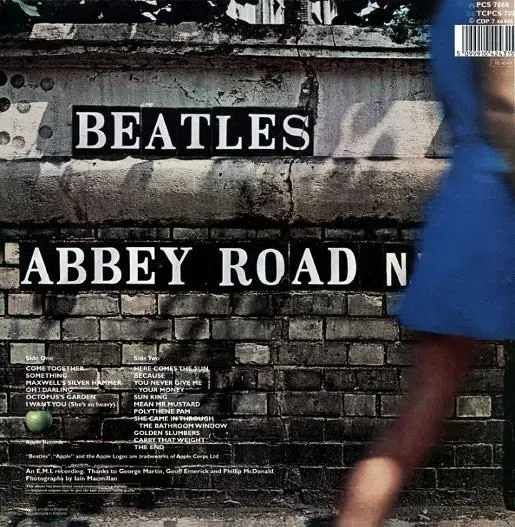
By 1969, the Beatles were arguably the most famous musical act in human history, with Abbey Road climbing charts worldwide and a catalog that had already reshaped popular music. Yet behind the scenes, the band was fracturing under business disputes, particularly disagreements over management following Brian Epstein’s death, along with growing creative friction between John Lennon and Paul McCartney. Personal relationships had also shifted, with each member increasingly pursuing side projects and solo material.
Paul McCartney formally announced his departure in April 1970, right as Let It Be was hitting shelves and topping charts around the globe. The timing stunned fans because there was no visible decline in quality or commercial appeal, only internal exhaustion that the public hadn’t fully seen coming. Few breakups in music history have been so widely mourned precisely because the band seemed, from the outside, to still be at its absolute best.
Cream


Eric Clapton, Jack Bruce, and Ginger Baker formed one of the first true rock supergroups, and by 1968 Cream had become massive, selling out arenas across the United States and pushing blues rock into new, more improvisational territory. Their double album Wheels of Fire had reached number one in America, a rare feat for a band built around extended live jams rather than radio singles. Commercially and critically, Cream stood near the very top of the rock world at that moment.
Still, the trio’s internal chemistry had never been peaceful, and constant clashes between Bruce and Baker in particular made touring an ordeal. Clapton announced the split in mid 1968, and the band played a farewell show at London’s Royal Albert Hall that November, closing the book on a group that lasted barely two years. The short lifespan only added to Cream’s mystique, turning what could have been a messy dissolution into a tightly bound legend.
The Smiths

The Smiths spent the mid 1980s as one of the most influential guitar bands to come out of Britain, with Johnny Marr’s melodic playing and Morrissey’s distinctive lyrics defining an entire strand of indie rock. Even amidst all the success of the previous four or five years, tensions arose in the band, particularly between the strong characters of Marr and Morrissey. The band’s fourth album, Strangeways, Here We Come, was recorded while relations were already strained, though it would go on to be remembered as one of their strongest records.
The first suggestion of the breakup occurred in June of 1987, when Marr decided to take a break from the group, citing that he was exhausted from the relentless schedule of writing, recording and touring. The break was not well received by the other members of the band, and just a month later, Marr called it quits for good. Marr later reflected that he and Morrissey “just saw our futures differently,” a simple line that captured a split many fans still find hard to accept given how creatively alive the band sounded right up to the end.
The White Stripes


Jack and Meg White built The White Stripes from a stripped down two piece blues rock act in Detroit into a genuine global phenomenon, with Seven Nation Army becoming one of the most recognizable riffs of the 2000s. In the band’s heyday, they peaked at number three on Billboard 200 with their 2005 album, Get Behind Me Satan. By the time their sixth album arrived, the duo had also collected multiple Grammy awards and sold millions of records worldwide.
The White Stripes officially announced their breakup on February 2, 2011, in a post on Jack White’s Third Man Records website. The statement was clear that the reason was not due to artistic differences or lack of wanting to continue, nor any health issues, as both members were feeling fine. Instead, it was for a myriad of reasons, but mostly to preserve what is beautiful and special about the band and have it stay that way, a rare example of a band choosing to end things purely to protect its own legacy rather than because anything had gone wrong.
LCD Soundsystem


James Murphy’s dance punk project LCD Soundsystem had spent roughly a decade building a devoted following, and by 2010 the band’s third album, This Is Happening, was earning some of the best reviews of its career. LCD Soundsystem, the influential dance-punk band led by James Murphy, shocked fans in 2011 by announcing their breakup right after releasing their third album This Is Happening. Rather than fading out, Murphy chose to end things at what many critics considered the band’s creative peak.
The band’s last performance was a sold-out show on April 2, 2011, at New York’s Madison Square Garden, an event so significant it was later turned into both a documentary and a live album. The story didn’t end there, though. On January 5th, 2016, James announced the band’s reunion, a new album to be released in 2016, and a tour, saying they weren’t just playing Coachella, they were “playing all over.” The reunion proved that even a carefully staged goodbye doesn’t always have to be permanent.
Oasis

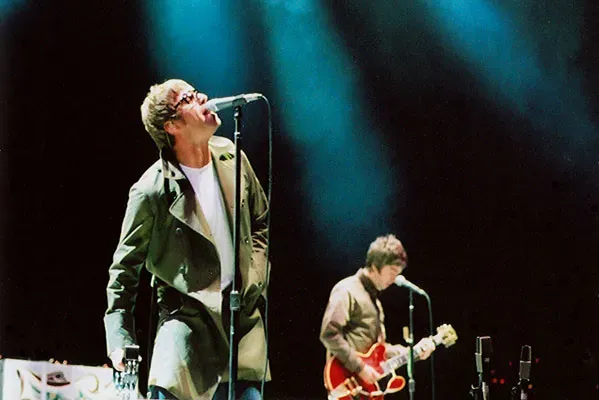
Few British bands defined an era as completely as Oasis defined Britpop in the 1990s, and by the late 2000s the group was still filling stadiums on the back of their Dig Out Your Soul album and tour. Oasis formed in Manchester in 1991 and became one of the defining bands of the Britpop era and one of the biggest bands in the world, releasing seven albums in the 1990s and 2000s. The band’s commercial pull hadn’t faded at all when things finally came apart.
The brothers split acrimoniously in 2009 during their Dig Out Your Soul Tour, between an appearance at V Festival and a scheduled performance at Rock en Seine in Paris on 28 August 2009. Noel Gallagher explained his decision bluntly at the time, stating “People will write and say what they like, but I simply could not go on working with Liam a day longer.” Fifteen years later, the Oasis Live ’25 Tour marked the band’s first live appearances since they split in August 2009, announced on 27 August 2024, two days before the 30th anniversary of their debut album, Definitely Maybe. The demand proved the split had done little to dim public interest, as the demand for tickets was astronomical, leading to the addition of extra Wembley dates to underscore fans’ insatiable appetite.
What connects these six stories isn’t a single reason for walking away. Some splits came from exhaustion, others from personality clashes, and at least one came from a deliberate choice to protect a legacy before it could tarnish. What they share is timing. Each band left while the applause was still loud, which is probably why so many of these names still get talked about with more reverence than nostalgia.