There’s a pattern that keeps repeating itself throughout music history: a video gets banned, the public becomes obsessed with finding it, and before long, the footage that broadcasters refused to air is the most talked-about piece of visual media of its era. Censorship, it turns out, is one of the most reliable engines of cultural amplification ever invented.
The six videos below were each pulled, restricted, or condemned by major broadcasters or institutions. Some were considered too sexual, others too violent, too blasphemous, or too politically uncomfortable. What they share is that the attempt to suppress them only deepened their impact – and today, each one is studied, cited, and remembered as a turning point in music, art, and culture.
1. Madonna – “Like a Prayer” (1989)

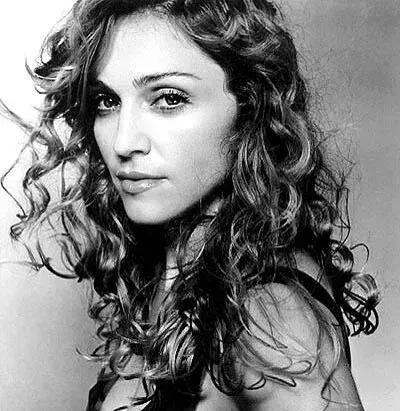
Filmed in January 1989 and directed by Mary Lambert, the video tackled racism head-on, centering a narrative about a Black man being wrongfully accused of murdering a white woman, who had actually been killed by a group of white men. The video’s overt usage of sacred religious imagery, charged eroticism, and a narrative that took the law’s racial biases to task made it jaw-dropping in 1989.
The Vatican called upon fans to boycott Madonna’s upcoming Blond Ambition tour. A Roman Catholic historian publicly condemned it as “a blasphemy and insult.” With the Vatican’s pronouncements hanging in the air, a recently struck five-million-dollar advertising partnership with Pepsi was hastily pulled. Despite all of it, “Like a Prayer” climbed the charts and peaked at number one on the Billboard Hot 100 and the Billboard 200. It remains one of the most politically and artistically daring mainstream pop videos ever released.
2. Madonna – “Justify My Love” (1990)

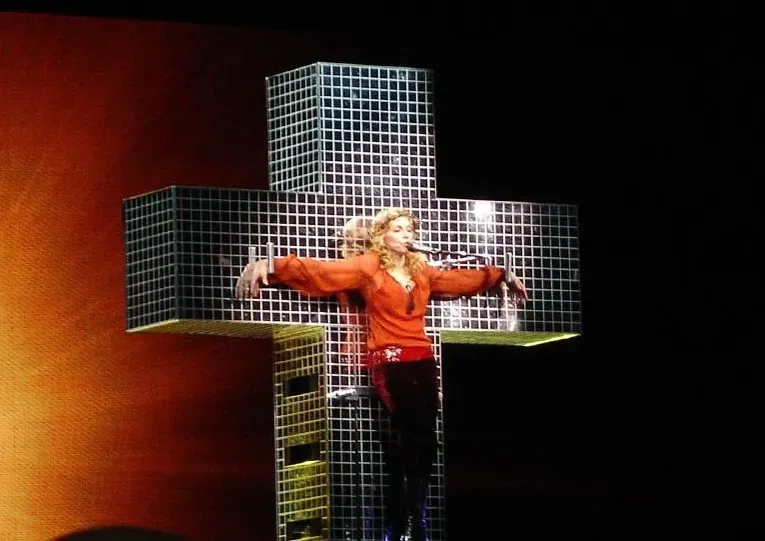
The video contained imagery of sadomasochism, voyeurism, and bisexuality, and was subsequently banned from MTV and other networks internationally due to its sexually explicit nature. On November 29, 1990, MTV’s correspondent Kurt Loder explained the network’s decision, citing steamy bed scenes, gay and lesbian snuggling, S&M imagery, and briefly bared female breasts. It was a complete ban – not an edit request, not a late-night restriction – which made it all the more remarkable.
Upon the video’s banning, Madonna made it available commercially as a video single, marking the first time an artist had released a single in this format in the United States – described as an unprecedented move in the video industry. The VHS sold over 500,000 copies and skyrocketed the song to the top of the charts. The song and video are now both considered a feminist anthem and a powerful statement of female sexual empowerment.
3. Frankie Goes to Hollywood – “Relax” (1984)

In January 1984, Radio 1’s Mike Read refused to play Frankie Goes to Hollywood’s “Relax” on his mid-morning show, declaring it “overtly obscene” – a decision which the BBC then followed with a full ban. The track had been released in October 1983, backed by a music video set in an S&M club. The fact that the group featured two openly homosexual men amplified the furore considerably.
Partner offer

The ban created publicity, associating Frankie Goes to Hollywood with youth rebellion. Within two weeks, “Relax” reached number one on the UK singles chart and stayed there for five weeks, and the BBC was forced to reverse its ban. The song remained in the UK Top 40 for 37 consecutive weeks, 35 of which overlapped with the BBC’s ban. It won Best British Single at the 1985 Brit Awards. The whole episode became a textbook case of how institutional rejection can supercharge a song’s cultural reach.
4. Nine Inch Nails – “Closer” (1994)

Set in what appears to be a 19th-century mad scientist’s laboratory, the video’s imagery involves religion, sexuality, animal cruelty, and terror – including a monkey tied to a cross, a severed pig’s head spinning on a machine, a diagram of a vulva, and Trent Reznor wearing S&M attire while swinging in shackles. The aesthetics and atmosphere were inspired by the works of Man Ray, Francis Bacon, George Tooker, the Quay brothers, and most notably photographer Joel-Peter Witkin.
MTV would agree to show the video only after edits were made. Censors objected to imagery they felt was blasphemous, too risqué, or too overtly sexual. Offending images were either blurred, vignetted, or replaced by a screen reading “SCENE MISSING.” In 2006, “Closer” was voted number one in a VH1 Classic poll for the 20 Greatest Music Videos of All Time. The “SCENE MISSING” placards, meant to sanitize the video, ended up making it feel even more unsettling and memorable.
5. Rihanna – “S&M” (2011)

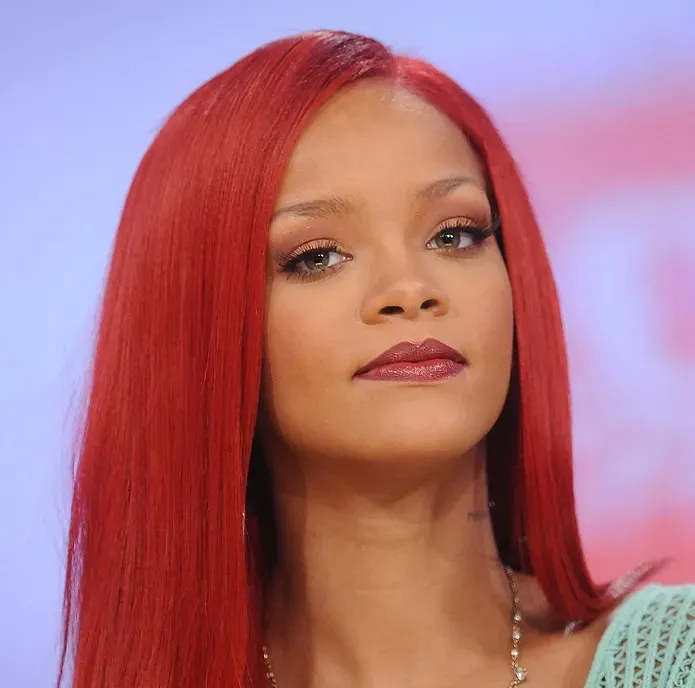
The video featured BDSM imagery, whipping, bondage, and a lesbian kiss. It was banned across eleven countries and age-restricted on YouTube. Director Melina Matsoukas delivered exactly what the brief demanded: impossible to ignore, impossible to forget. Its provocative content challenged societal norms, sparking debates about censorship and artistic freedom. Despite the controversy, the video was celebrated for its colorful aesthetic and empowering message. Rihanna’s unapologetic embrace of her sexuality resonated with fans around the world.
What made “S&M” particularly pointed was its playful, almost campy energy. Rihanna wasn’t presenting herself as a victim of the imagery – she was gleefully in charge of it. The video’s playful yet defiant tone continues to inspire discussions on freedom of expression. The clip turned the act of censorship itself into part of the commentary, and the song’s chart performance – reaching number one in more than a dozen countries – made it impossible to dismiss as fringe provocation.
6. M.I.A. – “Born Free” (2010)

M.I.A.’s “Born Free” presents a brutal military raid targeting individuals with red hair, highlighting graphic executions and the grim realities of war. Its release was met with bans from YouTube in several countries, sparking a heated debate on censorship and human rights. Some critics lauded the video for shedding light on the treatment of marginalized groups, while others deemed it too graphic for mainstream consumption.
M.I.A. defended her work by explaining that the video aimed to raise awareness about the hardships faced by refugees and the inhumanity of war. This bold message resonated widely and sparked discussions on the role of artists in social advocacy. Directed by Romain Gavras, the nearly ten-minute short film is deliberately difficult to watch – that discomfort was the entire point. The red hair was a stand-in for any persecuted minority, and the allegory landed hard enough that governments and platforms alike wanted it gone. Its absence from mainstream channels only pushed more people toward finding it. Today it’s regularly cited in discussions of political art, activist filmmaking, and the ethics of visual storytelling in music. The through-line connecting all six of these videos is simple: the ban was never the end of the story. In every case, it was the beginning of something larger. Networks and institutions trying to contain artistic expression ended up amplifying it, and the audiences who sought out the forbidden footage carried the work forward in ways no amount of standard promotion could have achieved.
Partner offer
Planning a trip to Vegas?
Compare hotel rates and show tickets on VEGAS.com.