Most sequels get planned from the start. A trilogy is pitched as a trilogy, a series gets mapped out before book one even hits shelves. But every so often, a writer finishes a story, closes the book on it mentally, and then gets pulled back in by something they never expected: a flood of letters, angry fans, or a publisher who saw dollar signs in reader obsession. These seven cases are different from ordinary franchise-building. In each one, the author had genuinely moved on, or thought they had, until the audience made it clear that moving on wasn’t an option. What follows is a look at how public pressure, sometimes gentle and sometimes fierce, changed the shape of literary history.
1. Arthur Conan Doyle brings Sherlock Holmes back from the dead


By 1893, Conan Doyle had grown tired of his own creation and decided to kill Sherlock Holmes off in “The Final Problem,” sending him plunging into the Reichenbach Falls during a struggle with Professor Moriarty. In 1893 Sherlock Holmes had never been more popular, but Sir Arthur Conan Doyle himself was tired of the character, and so had effectively killed the detective off by having him fall in the Reichenbach Falls. He assumed that would be the end of it.
It wasn’t. Over the next ten years though, the demand for Sherlock Holmes never waned, but when Sir Arthur Conan Doyle eventually gave in to the demands, he had to find a way to resurrect the character. The solution arrived in 1903 with “The Adventure of the Empty House,” where Holmes reappears with an explanation for his survival. The story was met with celebration from readers and renewed subscriptions to The Strand, which had suffered after Holmes’s “death.”
2. J.R.R. Tolkien turns a children’s tale into an epic


Tolkien wrote “The Hobbit” as a standalone story, never intending to revisit Bilbo Baggins or Middle-earth again. Its unexpected commercial success changed that plan almost immediately. When it was published a year later, the book attracted adult readers as well as children, and it became popular enough for the publishers to ask Tolkien to produce a sequel. The request for a sequel to The Hobbit prompted Tolkien to begin what ultimately developed into his magnum opus.
What started as a request for “another Hobbit” spiraled into something far larger and darker. Tolkien first considered writing another tale about Bilbo but decided instead to tell a story on an epic scale, with a darker tone. Needing a way to link the new story with the old, he chose to use a ring that Bilbo finds in The Hobbit as the catalyst for the new story. That decision, forced by publisher pressure rooted in reader appetite, eventually produced “The Lord of the Rings.”
3. Margaret Atwood returns to Gilead decades later


“The Handmaid’s Tale” was published in 1985 as a complete, self-contained novel. Atwood had no plans to revisit Gilead until years of reader questions, amplified by the Hulu adaptation, made the case for her. Author Margaret Atwood states that she wrote this sequel 35 years after The Handmaid’s Tale in response to readers and viewers of the TV series who wanted to know what happened after the end of that novel and how Gilead fell.
The result, “The Testaments,” arrived in 2019 and picked up the story more than a decade after the original left off. Margaret Atwood’s sequel picks up the story more than fifteen years after Offred stepped into the unknown, with the explosive testaments of three female narrators from Gilead. It went on to win the Booker Prize and become an international bestseller, proving the demand had substance behind it.
4. Stephen King finally answers what happened to Danny Torrance
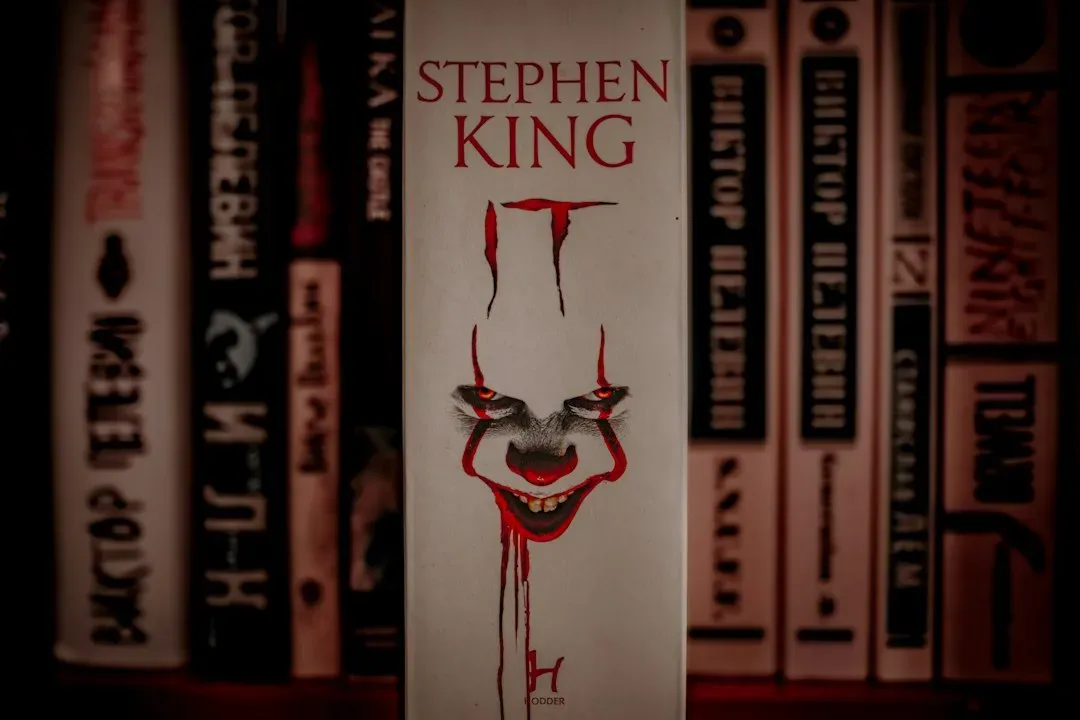
“The Shining” ended in 1977 with young Danny Torrance surviving a nightmare, but his adult life remained a mystery for decades. King kept hearing about it directly from fans at book signings. “People kept asking me,” said King in an interview with the BBC. “I’d go to autograph sessions and they’d say, ‘Whatever happened to that kid from The Shining?'”
King resisted the idea of revisiting old work for years before finally giving in. Apparently, however, a lot of fans wanted to know about what happened to the Torrance family after their rough winter in the Overlook Hotel. King – and probably his accountant – agreed. “Doctor Sleep,” published in 2013, follows a middle-aged, alcoholic Danny working in a hospice, thirty-six years after readers first met him as a terrified child.
5. L. Frank Baum keeps returning to Oz against his own wishes


“The Wonderful Wizard of Oz” was published in 1900 as a single, complete story, and Baum initially had no intention of writing a series around it. Children’s fan mail changed his mind almost immediately, and by 1904 he had produced “The Marvelous Land of Oz.” The demand never let up, and Baum tried more than once to end the series for good, even having Dorothy’s connection to Oz severed within the books themselves.
Each time he attempted to close the door, another wave of letters from young readers pried it back open. By the time of his death in 1919, Baum had written fourteen Oz novels, far more than he ever planned, almost entirely because children kept writing to ask what happened next. The series became one of the earliest and clearest examples of an author’s audience literally dictating the shape of a body of work.
6. Louisa May Alcott gives readers a second volume of Little Women


Alcott published the first half of “Little Women” in 1868 as a complete story centered on the March sisters during the Civil War years. Reader reaction was immediate and intense, with many writing to ask whether Jo would marry her neighbor Laurie and what would become of the rest of the family. Her publisher, sensing a commercial opportunity in that curiosity, pushed her to write a follow-up.
Alcott delivered “Good Wives” in 1869, continuing the March sisters’ story into adulthood and marriage. The two volumes were later combined into the single novel now known simply as “Little Women.” The demand didn’t stop there either, since readers kept wanting more of the March family, which eventually led Alcott to write “Little Men” and “Jo’s Boys” in the years that followed.
7. Mark Twain follows Tom Sawyer with Huckleberry Finn
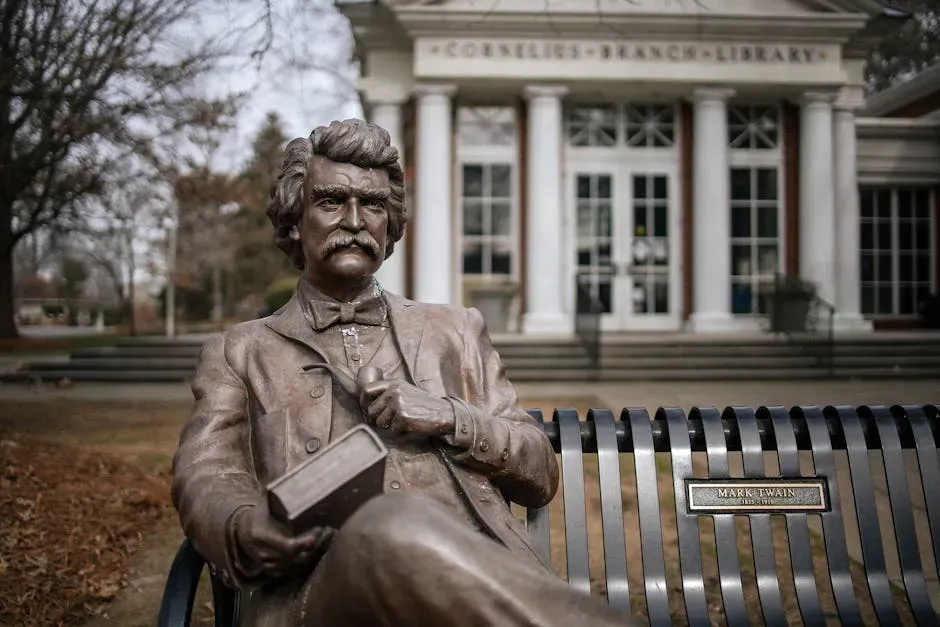
“The Adventures of Tom Sawyer” was published in 1876 to strong sales and enthusiastic reviews, quickly making Twain’s young protagonist a household name. Readers wanted more of that world, and more specifically, more of Huck Finn, the scrappy sidekick who had stolen scenes throughout the book. Twain began sketching out a follow-up almost immediately, drawn partly by that appetite and partly by his own curiosity about where Huck’s voice could take a longer narrative.
The result, “Adventures of Huckleberry Finn,” took nearly eight years to complete and was published in 1884, arriving as a direct continuation of characters and setting from the first book. It ended up eclipsing its predecessor in literary reputation, frequently cited as one of the most important American novels ever written. What began as a response to public appetite for more Tom Sawyer turned into a work that stood entirely on its own merits.
These seven stories share a common thread that goes beyond simple commercial calculation. In each case, the author had a finished piece of work, a sense of closure, sometimes even a wish to leave a character behind for good. Readers refused to let that happen, and in several instances, the resulting sequel became more significant, more celebrated, or more enduring than anyone, including the writer, had anticipated. It’s a reminder that books don’t only belong to the people who write them. Once they’re out in the world, the audience sometimes gets a vote too.