History is full of brilliant generals, massive armies, and carefully laid battle plans. Yet time and again, something as unpredictable as the clouds overhead has swept those plans away completely. Weather has never cared about strategy, rank, or reputation. It just does what it does.
The stories below will probably surprise you. Some of the most famous military victories and catastrophic defeats in world history came down not to tactics or numbers, but to rain, mud, storms, and fog. Let’s dive in.
1. The Battle of Waterloo (1815): A Volcano in Indonesia Helped Defeat Napoleon
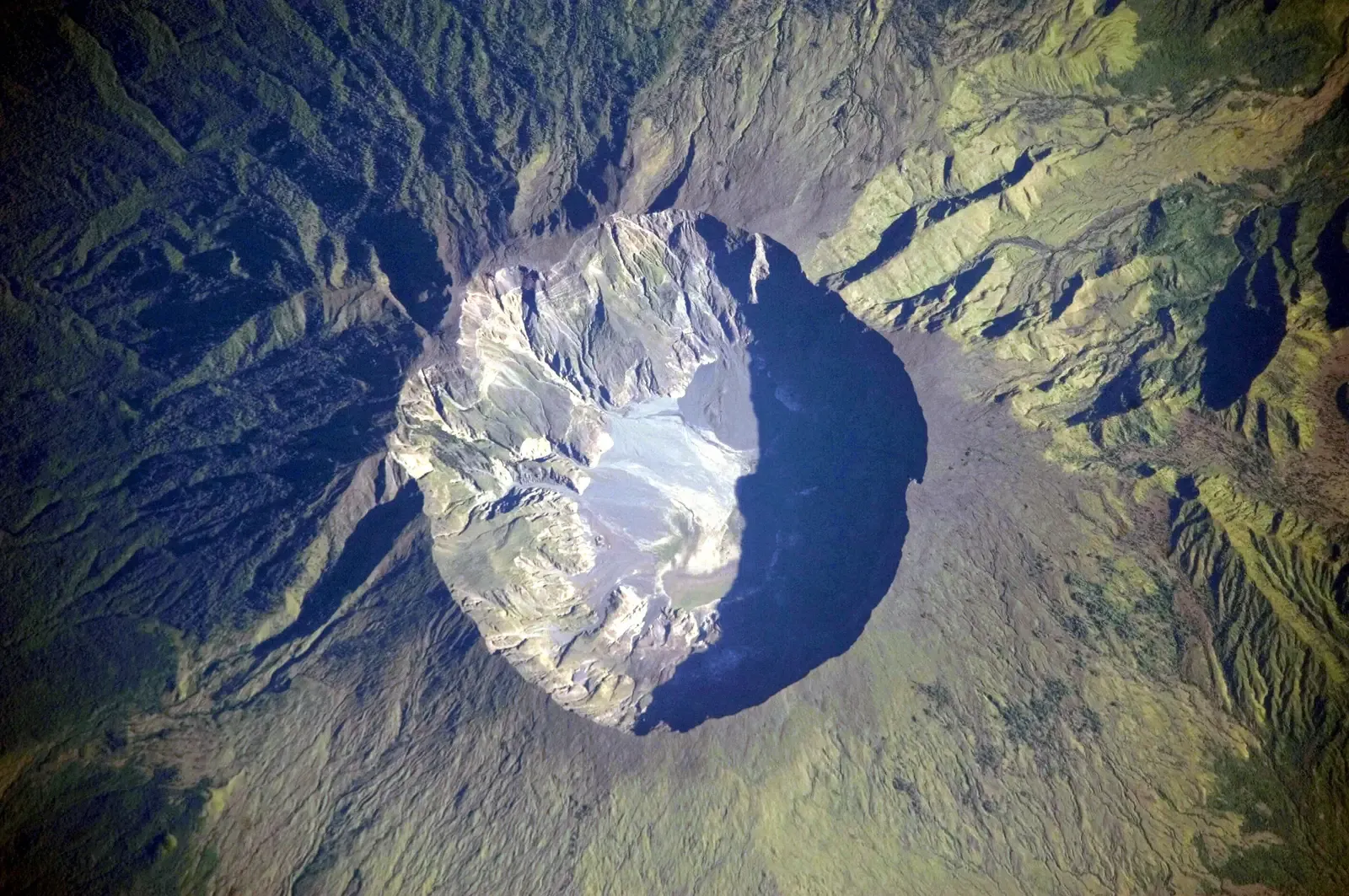
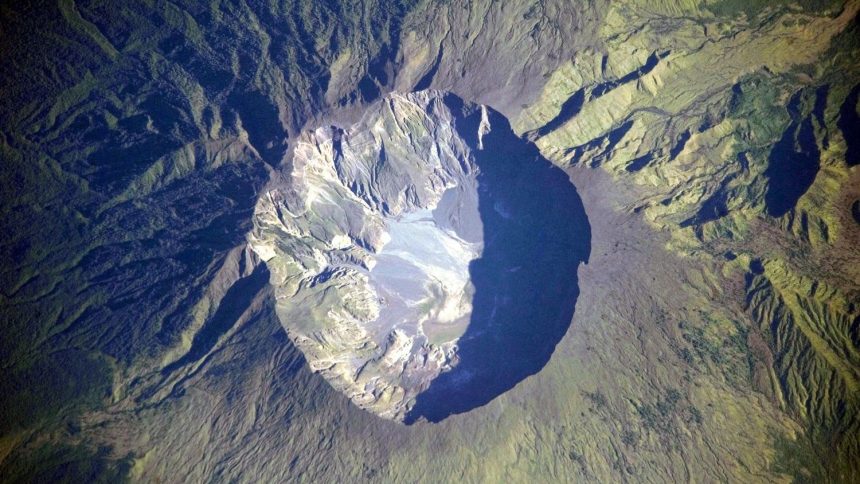
Here is something most people don’t know. The rain that soaked the battlefield of Waterloo on June 18, 1815 may have had its origins thousands of miles away, in a volcanic eruption. Two months before the battle, the volcano Mount Tambora erupted on the Indonesian island of Sumbawa, killing 100,000 people and sending huge amounts of ash 62 miles into the atmosphere. Electrified ash “short circuited” the ionosphere, the upper atmospheric layer responsible for cloud formation. The resulting “pulse” of cloud formation led to heavy rain across Europe, according to lead scientist Dr. Matthew Genge from Imperial College London.
A terrible storm broke during the night, and they had to wait until 11am the following day for the rain-soaked ground to dry out enough to enable the French army to get their artillery into position and to make that artillery effective. That delay was fatal. Heavy rains in the days leading up to Waterloo resulted in saturated ground, turning the battlefield into a quagmire. This adversely affected the mobility of both infantry and cavalry, particularly impeding the effectiveness of French artillery.
This gave the Prussian army, led by Blücher, time to arrive and reinforce the Duke of Wellington’s troops. Weather had prevented Napoleon from using cannons as effectively as he may have hoped, both in terms of mobility and the actual impact of cannonballs and shells. The delay caused by the mud cost Napoleon the battle and, ultimately, his empire. Napoleon abdicated four days later, ending his Hundred Days return from exile and precipitating his second and definitive abdication as Emperor of the French, ending the First French Empire.
Honestly, this connection between an Indonesian volcano and a Belgian battlefield is one of the strangest cause-and-effect chains in all of military history. The explanation of how the eruption of Tambora in April 1815 affected weather in Europe through electrostatic levitation of volcanic ash into the ionosphere provides a reason for the unpredictably wet weather during the battle of Waterloo. It shows how a natural disaster on the other side of the world impacted the human slaughter that would affect the military and political face of Europe for decades.
2. Napoleon’s Invasion of Russia (1812): Winter as a General
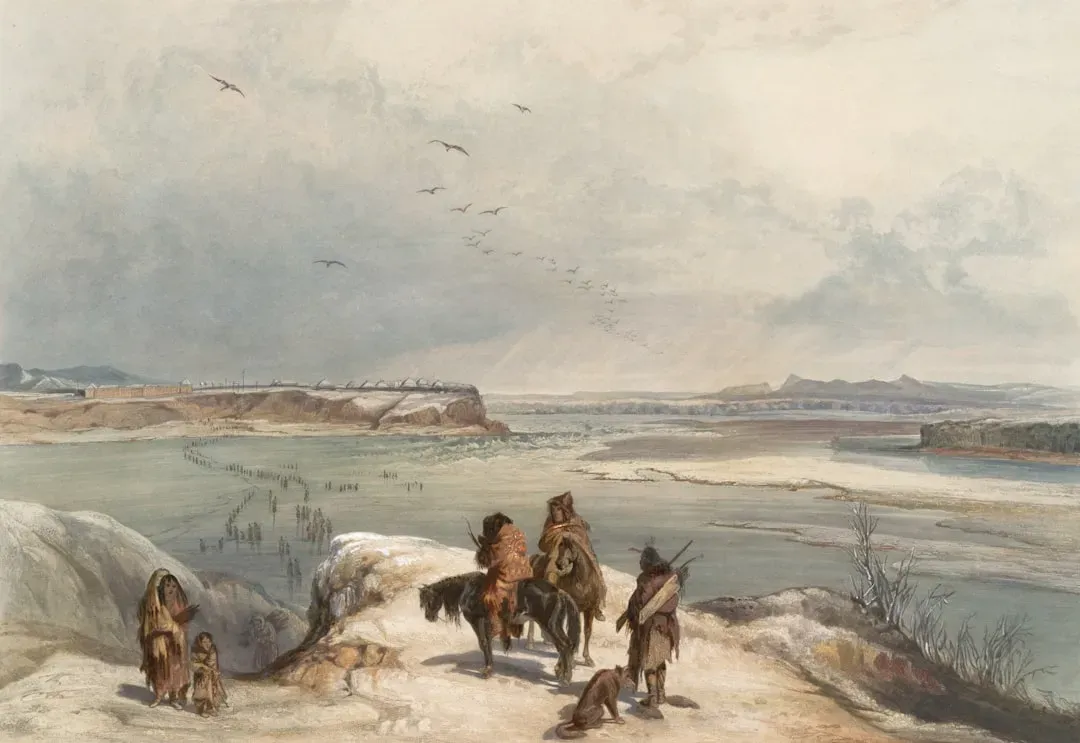
Napoleon ignored every warning he was given. Advisors told him Russia’s climate would be lethal. He waved them off. In 1812, Napoleon decided it was time to expand his French empire eastward. He amassed a multi-national army and led them across the Neman River, kicking off what would be a six-month invasion of Russia. Advisors warned Napoleon that Russia would meet his Grande Armée with hostile terrain and inhospitable weather. Napoleon assured them that the invasion would be complete before the Russian winter took hold. He was wrong.
Napoleon’s Grande Armée of 610,000 men invaded Russia, heading through territory of today’s Belarus towards Moscow, in the beginning of summer on 24 June 1812. The Russians played it brilliantly, simply retreating further and further east, letting the vast distances and the coming cold do their work for them. His Grand Army marched deep into Russian territory, capturing Moscow. But as the harsh winter set in, temperatures plummeted to as low as minus 30 degrees Celsius. Soldiers froze, horses collapsed, and supplies ran out.
The retreat became a nightmare, with over 400,000 troops dying or deserting. Eyewitness accounts describe men dying where they stood and entire units vanishing in snowdrifts. The ferocious cold broke Napoleon’s army and shattered his reputation. Napoleon’s army was ultimately reduced to 100,000 men. Starting with over 600,000 and ending with roughly 100,000 is not a retreat. It is annihilation.
The Russian winter did not just win a battle. It broke the mythology of Napoleon’s invincibility forever. No military genius, however brilliant, can outmaneuver minus 30 degrees and a thousand miles of frozen steppe. It’s a lesson that would need to be relearned more than a century later by a different European army attempting the same mistake.
3. The Mongol Invasions of Japan (1274 and 1281): The Divine Wind
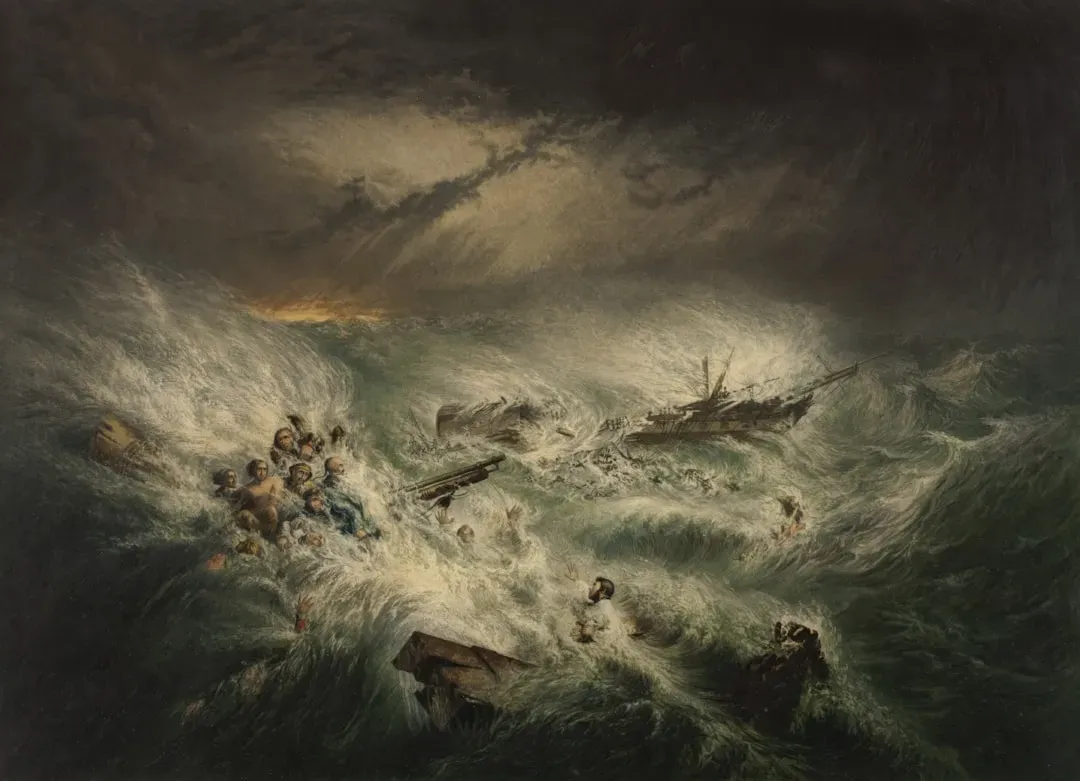
The Mongol Empire was, by any measure, the most terrifying military force on Earth in the 13th century. They conquered enormous swaths of Asia, Russia, and the Middle East. Japan looked like the next target. In the late 13th century, the Mongol Empire, famed for conquering huge parts of Asia, twice tried to invade Japan. Both times, their fleets were struck by powerful typhoons. The Japanese called these storms “kamikaze,” meaning “divine wind.” In 1274, the first Mongol fleet was battered by a sudden storm, forcing a retreat.
In 1281, a much larger fleet of more than 4,000 ships was destroyed by another monstrous typhoon. Tens of thousands of Mongol soldiers drowned as their ships were smashed against the coast. The scale of destruction is almost impossible to comprehend. A fleet of more than 4,000 ships is larger than most modern naval forces in the world today. Wiped out by weather. Japan’s survival against impossible odds became legendary, and the kamikaze storms remain a symbol of national pride.
The word “kamikaze” would take on a very different and darker meaning in World War II, when Japanese pilots flew suicide missions against Allied warships, invoking the same spiritual concept of a divine, selfless wind protecting Japan. The original storms of 1274 and 1281 shaped Japanese identity in ways that echoed across seven centuries. That is the kind of influence only weather, not generals, can produce.
4. D-Day, Normandy (1944): The Most Important Weather Forecast in History

This one is almost too dramatic to believe, but it is all true. It is a little-known fact that perhaps one of the most important weather forecasts ever made was the one for D-Day, the Allied invasion of France. For the Allied invasion to have any chance of success, General Eisenhower needed a full moon, a low tide, little cloud cover, light winds, and low seas.
Eisenhower had tentatively selected June 5 as the date for the assault. However, at 13:00 on June 3, a young weather observer first forecast a severe storm approaching Europe from over the Atlantic Ocean. The entire operation was thrown into uncertainty. In the days leading up to D-Day, Stagg and his team forecast that weather conditions would worsen, and on June 4 Eisenhower postponed the invasion by 24 hours. The decision to postpone was a difficult one, as any delay made it increasingly difficult to keep the operation a secret.
On the other side of the English Channel, German forecasters also predicted the stormy conditions that indeed rolled in. The Luftwaffe’s chief meteorologist reported that rough seas and gale-force winds were unlikely to weaken until mid-June. Armed with that forecast, Nazi commanders thought it impossible that an Allied invasion was imminent, and many left their coastal defenses to participate in nearby war games. German Field Marshal Erwin Rommel even returned home to personally present a pair of Parisian shoes to his wife as a birthday present.
In a memorandum to Eisenhower, Stagg noted that had the invasion been delayed until the next suitable tides two weeks later, the troops would have run into the worst Channel weather in 20 years. On June 6, 1944, two naval task forces landed over 132,000 ground troops on the beaches of Normandy as part of Operation Neptune. The window of slightly better weather on June 6 made it all possible. The Germans were caught completely off guard, many literally absent from their posts.
5. The Battle of Long Island (1776): Fog Saves an Army and a Revolution

In August 1776, the American Revolution was in serious danger of being strangled before it really started. On August 27, 1776, a British force of 20,000 strong attacked Brooklyn on three fronts and won victory over the Continental Army, leading to the capture of Long Island. The American forces were outnumbered and ill-equipped to handle the battle.
After several days of intense battle, the British cornered Washington and his 9,000 troops in Brooklyn Heights with their backs to the East River. The colonial troops needed to cross the East River into Manhattan without being detected. An inconspicuous exit seemed impossible with the British forces surrounding the encampment. Fortunately, a dense fog had taken hold over the river. The fog allowed Washington and all 9,000 troops to escape into Manhattan without any casualties.
When the sun rose, the British moved in, stunned to find that the Continental Army had vanished. The midnight escape in Brooklyn Heights preserved the perilous American war effort. Without that fog, Washington’s entire army would have been captured or destroyed. The American Revolution would almost certainly have ended on that muddy riverbank. Think about what would have disappeared with it: the Declaration of Independence, the Constitution, and an entire experiment in democracy that changed the world.
Whether it was snowstorms, fog, rain, or unbearable heat, weather entirely out of the control of any army played an enormous role in 18th-century warfare. Thus, the fates of people, nations, and empires often changed as the result of the weather. The fog over the East River is perhaps the clearest example of that principle in all of American history.
6. The Battle of the Bulge (1944): Clouds That Saved Germany Briefly, Then Damned It
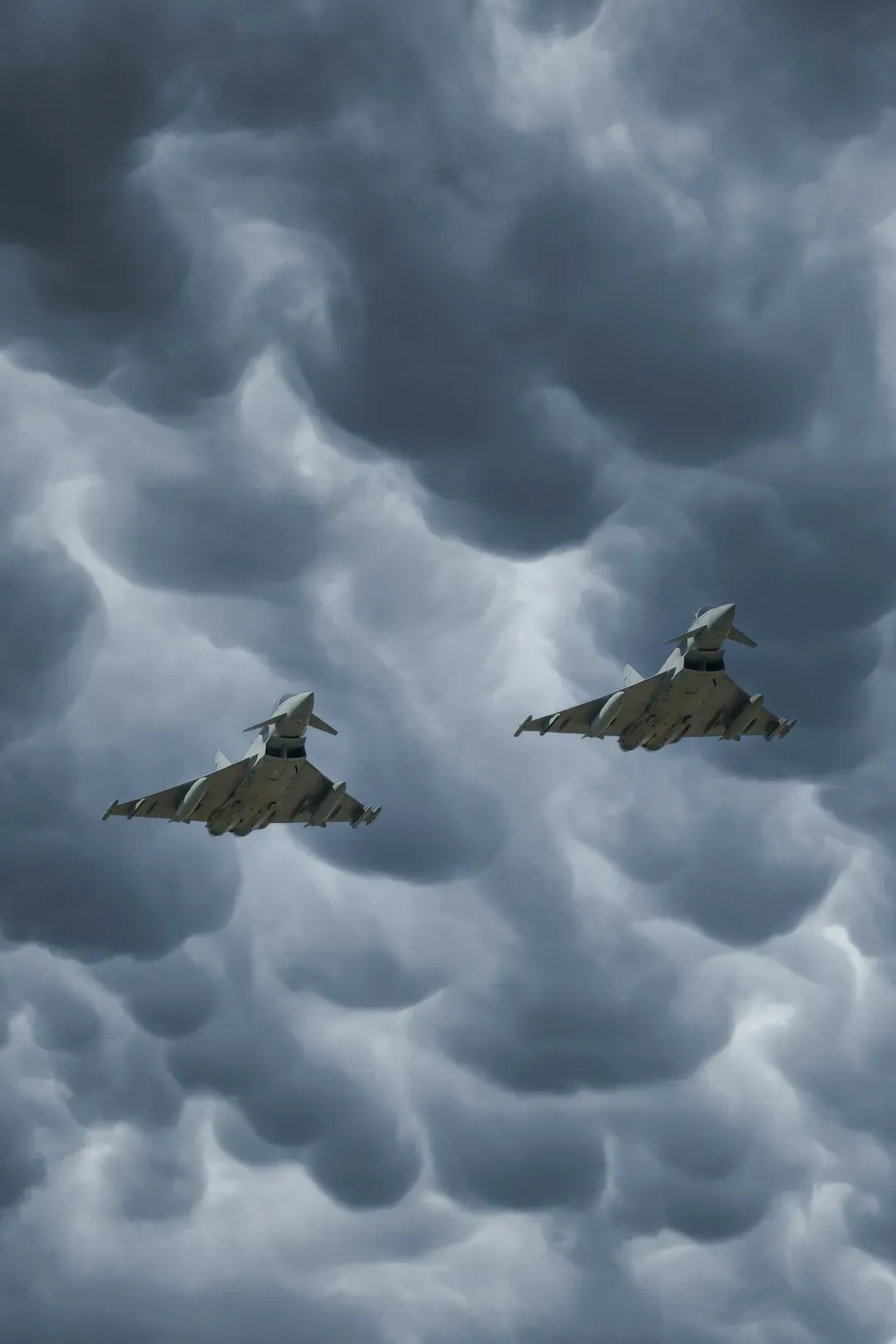
In December 1944, the Germans launched one last, desperate gamble in the Ardennes forest. It nearly worked. The Germans achieved a total surprise attack on the morning of December 16, 1944, due to a combination of Allied overconfidence, preoccupation with Allied offensive plans elsewhere, and poor aerial reconnaissance due to bad weather. The thick cloud cover was doing Germany’s work for it, grounding the Allied air forces that might otherwise have spotted the massive German buildup.
The overcast skies were crucial to the German plan’s initial success. Allied air power was essentially neutralized. Without it, German armored divisions were free to push forward at shocking speed. As the weather turned, so did the tide of battle. Cut off from their supply lines, the Germans stopped advancing. The battle continued for several more weeks as the Allies pushed the Nazis back. The Battle of the Bulge was the bloodiest single battle fought by the United States during World War II.
Then the clouds broke. When clear skies finally returned, Allied aircraft swarmed the battlefield in massive numbers. Supply lines that the Germans had counted on cutting were restored, and the Luftwaffe could do nothing to stop it. The same weather that had gifted Germany a brief tactical advantage ultimately sealed its fate when it cleared. It was the last offensive attempt by the Axis Powers during World War II. The clouds had given Germany a window and then slammed it shut.
7. The American Civil War: Rain, Mud, and the Armies That Could Not Move
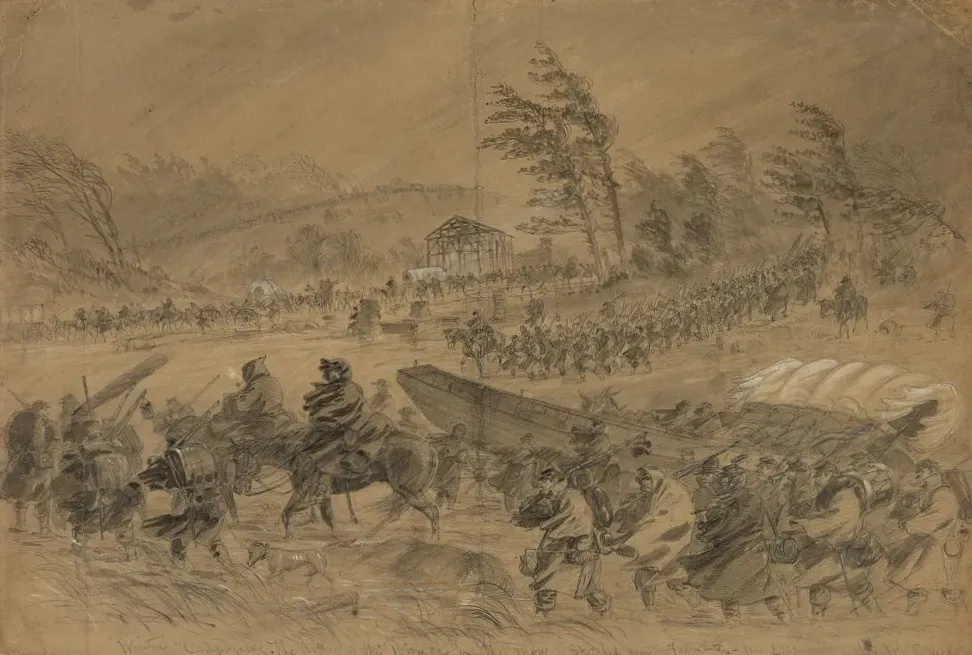
The American Civil War is a story of brilliant commanders and devastating slaughter. It is also, less famously, a story of weather that paralyzed armies at critical moments. Weather operates beyond the control of politicians, military leaders, soldiers, and civilians. Despite efforts of Civil War-era Americans to overcome rain, snow, wind, and heat, these elements set real limits to how armies moved, how crops flourished or failed, and how soldiers and civilians felt in the elements.
The most famous weather impact of the war was Burnside’s Mud March in January 1863. Though started in reasonable weather, a strong storm with numbing temperatures, howling wind, and heavy precipitation bogged down a bold plan and led to dramatic and demoralizing failure. Hundreds of artillery pieces and wagons sank into Virginia mud so thick that teams of mules disappeared into it. The Confederates reportedly mocked the Union troops from across the river and put up signs that read “Burnside stuck in the mud.” William T. Sherman and Ulysses S. Grant encountered heavy rain and flooding that stymied two attempts to capture Vicksburg in late 1862 and early 1863.
Weather, one of the biggest factors of the American Civil War, is often overlooked. Both strategy and tactics were affected, as generals, privates, and presidents gazed at the skies, trying to decide when to begin campaigns or end them, guessing at river floodings and the accumulation of mud. The Civil War was fought during the tail end of what is called the Little Ice Age, meaning winters were significantly colder than today and annual weather fluctuations were extreme. Annual fluctuations in weather were both terrible and constant, and winters were much colder than today. One year could bring an intensely cold winter and biting easterly winds, while the next year might deliver heavy rains and raging heat.
Conclusion: Nature’s Veto Power Over History
Across a thousand years of warfare, from medieval French knights sinking in October mud to Allied meteorologists arguing over atmospheric pressure charts in a Hampshire country house, the same truth repeats itself with remarkable consistency. The most powerful armies in the world can be undone in hours by the right storm, the wrong fog, or a field that is simply too wet to cross.
Nature and weather play a vital part in any strategic or tactical situation, and can either provide unique advantages or lead to disastrous defeat, depending on the situation. Generals plan. Weather decides. The greatest military minds in history, from Napoleon to Eisenhower, understood that weather was either an ally or an enemy more powerful than any human opponent. The ones who respected it survived. The ones who ignored it often didn’t.
So the next time someone dismisses the weather as small talk, remember that a rainstorm in Belgium ended an empire, and a patch of fog over a river saved a revolution. What other moments in history, do you think, were secretly decided not by human will but by the simple turn of the clouds? Tell us in the comments.