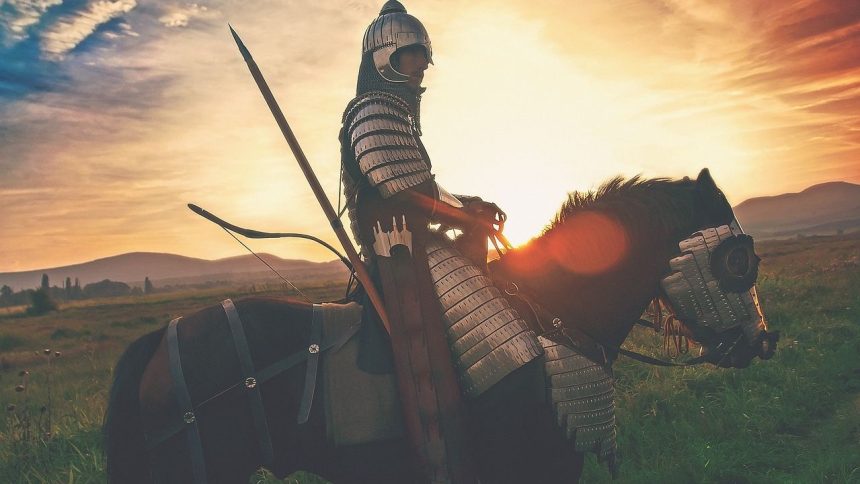
There is something deeply stirring about watching the smaller force win. No matter the era or the corner of the world, history keeps handing us these jaw-dropping moments where outnumbered, outgunned, and often exhausted warriors somehow pulled off the unthinkable. It’s not just good storytelling. These battles actually happened, and the facts behind them are even more staggering than the legends.
From ancient mountain passes to muddy medieval fields, the pattern repeats itself in ways that defy easy explanation. Strategy, terrain, desperation, and sheer human will all played a role. So if you think a numbers advantage always decides the outcome of a battle, buckle up. Let’s dive in.
1. The Battle of Thermopylae (480 BC): 300 Against a Persian Empire

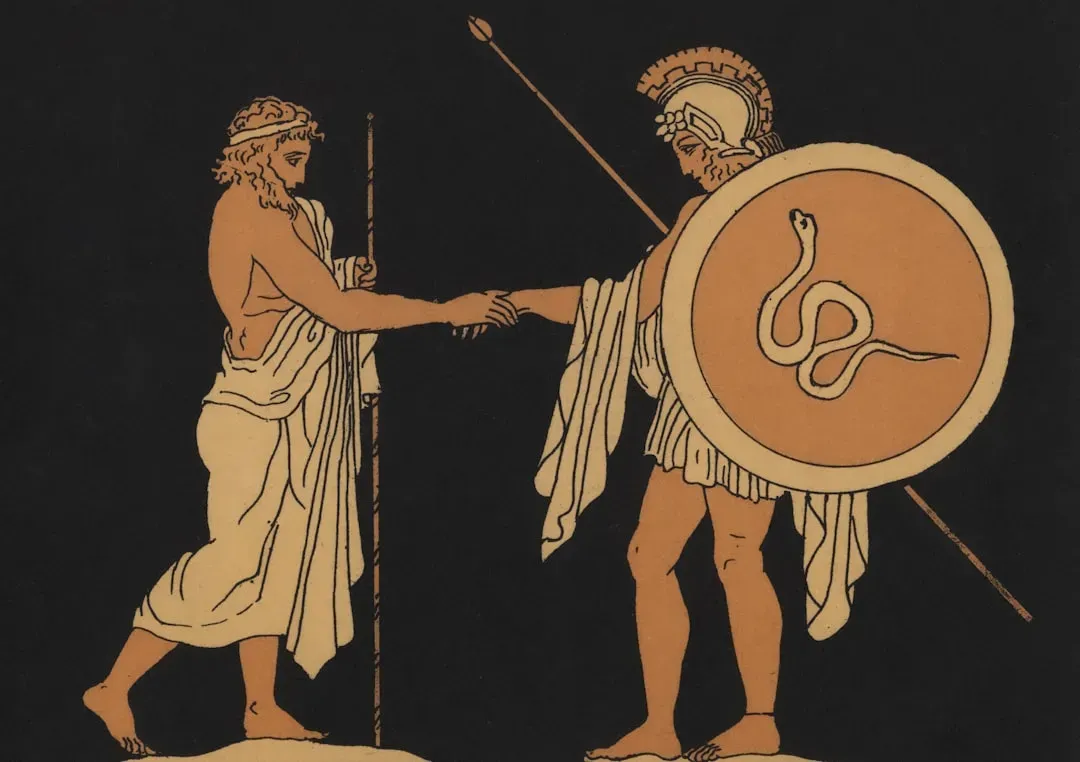
Few stories in military history hit quite like this one. Around the start of the invasion, a Greek force of approximately 7,000 men, including an estimated 300 Spartans, led by Leonidas marched north to block the pass of Thermopylae. Their opponents were not just an army. They were an empire.
Ancient authors vastly inflated the size of the Persian army, with estimates in the millions, but modern scholars estimate it at between 120,000 and 300,000 soldiers. Even at the lowest end, the Greeks were outnumbered by a factor that would make any sane general turn around and go home.
The Greeks strategically positioned themselves at the narrow pass of Thermopylae, which allowed them to hold off the Persian advance for two days, inflicting heavy casualties on their opponents. The geography was their greatest weapon. With the sea on one side and high impassable cliffs on the other, the Spartans chose the narrowest point to make their stand. The region’s geography has changed over the millennia, but it is usually accepted that where the Spartans decided to form up, it was between 12 and 30 meters wide.
On the third day, a Greek traitor named Ephialtes revealed a secret mountain path to the Persians, allowing them to encircle the Greek forces. In a moment of bravery and sacrifice, Leonidas chose to remain with a small contingent of his soldiers to fight to the death, while the majority of the Greek army retreated to safety. At the end, the Persians lost at the very least 20,000 men. The Greek rearguard, meanwhile, was annihilated, with a probable loss of 4,000 men, including those killed on the first two days of battle.
The Spartans’ selfless sacrifice for their country inspired and gave hope to the citizens of Greece, who were awed that such a small force could trouble the mighty Persian Empire. The Battle of Thermopylae also lowered the morale of the Persian troops. The defeat planted a seed of resistance that would eventually bloom into a full Greek victory. Honestly, it’s hard not to feel something reading about it.
2. The Battle of Salamis (480 BC): A Naval Trap Centuries Ahead of Its Time

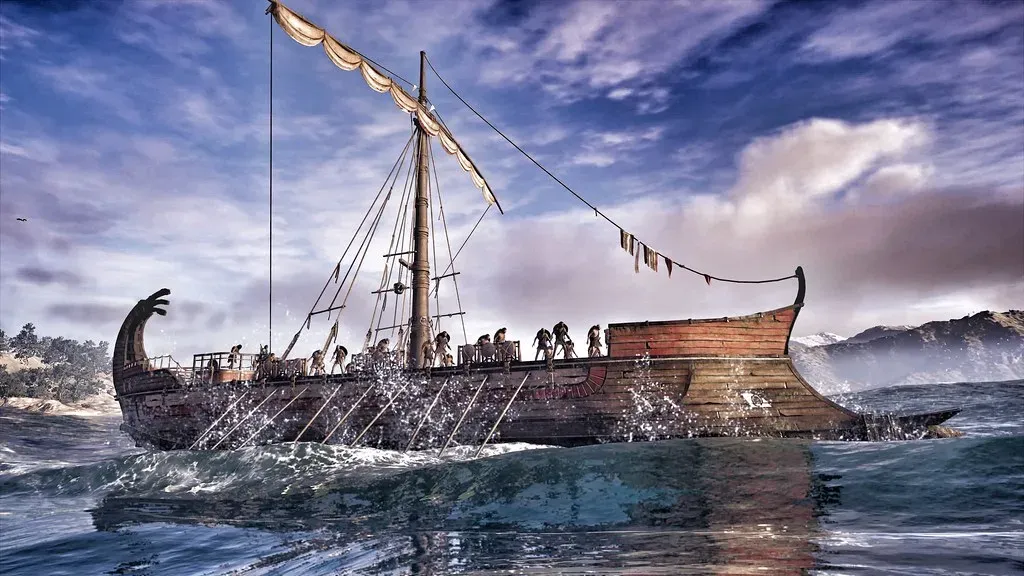
The Battle of Salamis was a naval battle fought in 480 BC, between an alliance of Greek city-states under Themistocles, and the Achaemenid Empire under King Xerxes. It resulted in a victory for the outnumbered Greeks. Fresh from the heartbreak at Thermopylae, the Greeks were not done fighting.
Themistocles devised a clever strategy, misleading the Persian King Xerxes into believing that the Greeks were retreating, which prompted Xerxes to engage the Greek fleet, significantly larger in number at around 800 ships. However, the Greek fleet, numbering about 300 triremes, utilized superior seamanship and tactical positioning, allowing them to exploit the narrow channel’s constraints to their advantage.
In the cramped waters, the great Persian numbers were an active hindrance, as ships struggled to maneuver and became disorganized. Seizing the opportunity, the Greek fleet formed in line and achieved a victory. It’s a bit like luring a giant into a narrow hallway and then fighting it. The size advantage vanishes.
The Greek triremes then attacked furiously, ramming or sinking many Persian vessels and boarding others. The Greeks sank about 300 Persian vessels while losing only about 40 of their own. As Xerxes watched the battle unfold from a nearby hill, he was so horrified by what he saw that he ordered a retreat. The man who had come to conquer all of Greece sat on a golden throne and watched his navy collapse around him.
In 480 BCE, the Greeks defeated the Persian fleet off the island of Salamis in the largest naval battle ever fought in the ancient world. The Greek victory proved to be the turning point in the war, for the Persian king, Xerxes, returned to Asia with his surviving ships and the majority of his land troops. Western civilization might look very different without this moment.
3. The Battle of Gaugamela (331 BC): Alexander the Great’s Most Brilliant Gamble

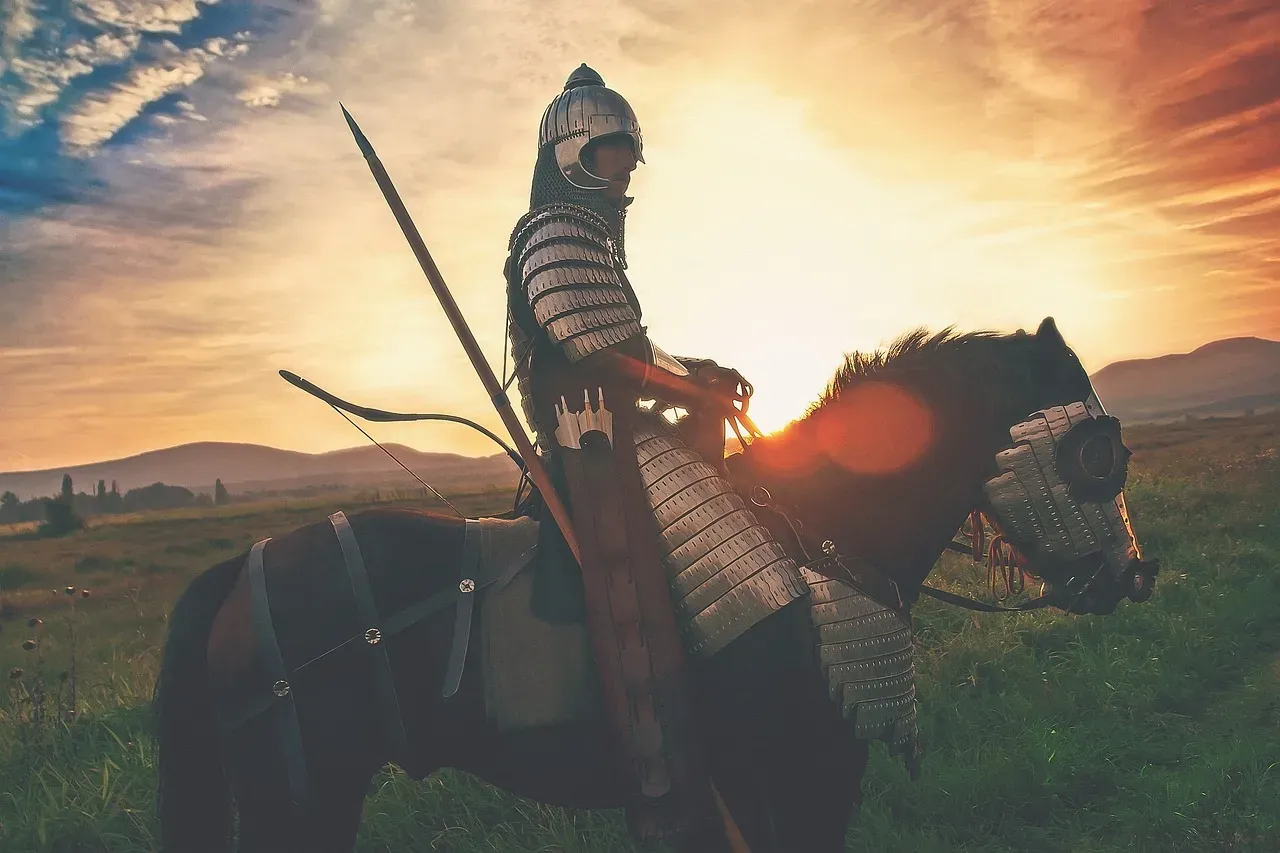
Let’s be real. Alexander the Great was not a man who shied away from impossible odds. The Battle of Gaugamela took place in 331 BC between the forces of the Army of Macedon under Alexander the Great and the Persian Army under King Darius III. It was the second and final battle between the two kings, and is considered to be the final blow to the Achaemenid Empire, resulting in its complete conquest by Alexander.
Alexander’s Macedonian army, about 40,000 strong, confronted Darius III’s Persian force, estimated at 100,000 or more. Despite being outnumbered, Alexander devised a bold plan, using feigned retreats and swift cavalry maneuvers to exploit weaknesses in the Persian lines. He essentially turned chaos into a weapon.
The plain of Gaugamela, northeast of Nineveh, was chosen by Darius for a battle with Alexander’s advancing force because of its suitability for Darius’s cavalry, which outnumbered Alexander’s. The total troop strengths given by ancient authorities vary, but in any case, the Persians outnumbered the Macedonians. Darius even had the terrain leveled to give his scythed war chariots clear running room.
Despite being heavily outnumbered, the Army of Macedon emerged victorious due to the employment of superior tactics and the clever usage of light infantry forces. Alexander himself led a daring charge straight at Darius, sending shockwaves through the enemy ranks. The Persians, unable to regroup, fled the battlefield. Alexander’s victory at Gaugamela signaled the end of the Persian Empire and cemented his place as one of history’s greatest military leaders.
4. The Battle of Agincourt (1415): Mud, Longbows, and a Desperate March

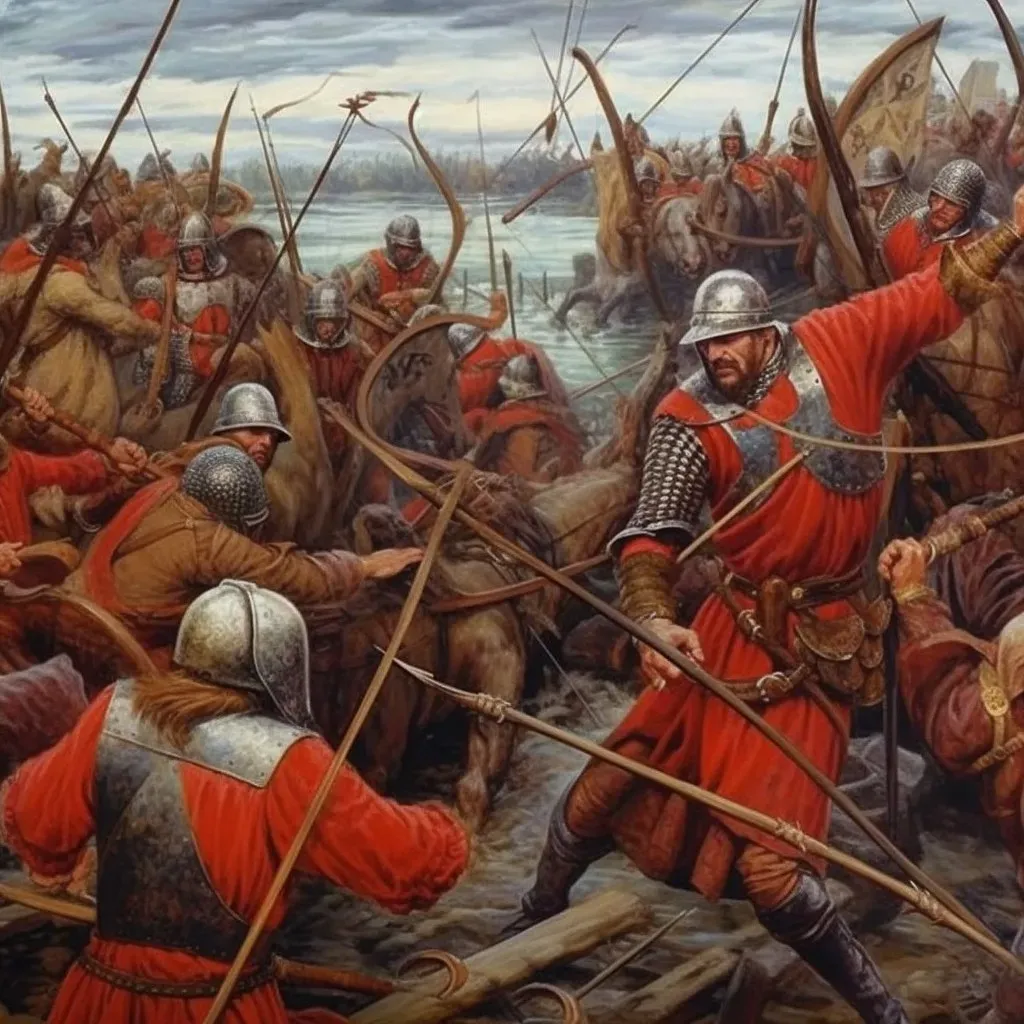
Picture an exhausted, disease-ridden English army trying to limp its way to safety. That was the situation before Agincourt, and it makes the result all the more shocking. Two months before the Battle of Agincourt began, King Henry V crossed the English Channel with some 11,000 men and laid siege to Harfleur in Normandy. After five weeks the town surrendered, but Henry lost half his men to disease and battle casualties.
Common estimates place the English army at about 6,000, while the French army probably consisted of 20,000 to 30,000 men. This suggests that the French could have outnumbered the English 5 to 1. The French were the flower of medieval chivalry. The English were hungry, sick, and hundreds of miles from home.
This battle is notable for the use of the English longbow in very large numbers, as English and Welsh archers comprised nearly 80 percent of Henry’s army. The English stood their ground as French knights, weighed down by their heavy armor, began a slow advance across the muddy battlefield. The French were met by a furious bombardment of artillery from the English archers, who wielded innovative longbows with a range of 250 yards. French cavalrymen tried and failed to overwhelm the English positions, but the archers were protected by a line of pointed stakes. As more and more French knights made their way onto the crowded battlefield, their mobility decreased further, and some lacked even the room to raise their arms and strike a blow.
Partner offer

Facing odds of perhaps three-to-one, Henry V’s exhausted, disease-ridden force had inflicted catastrophic losses on the cream of French nobility. At least 6,000 French were killed, including much of the high nobility, the Constable of France, three dukes, nine counts, and numerous barons and knights. English casualties are harder to estimate but were minimal by comparison, perhaps 300 to 600 men at most. The gap in losses is almost hard to believe.
Amongst the fallen at Agincourt were most of the French nobility, including three dukes, six counts, 90 barons, the Constable of France, the Admiral of France, and almost 2,000 knights. This culling of the French nobility meant there was limited resistance to Henry’s next moves in terms of large field armies clashing. One single day on a muddy field reshaped the politics of two kingdoms for decades.
5. The Battle of Bannockburn (1314): Scotland’s Fight for Its Life

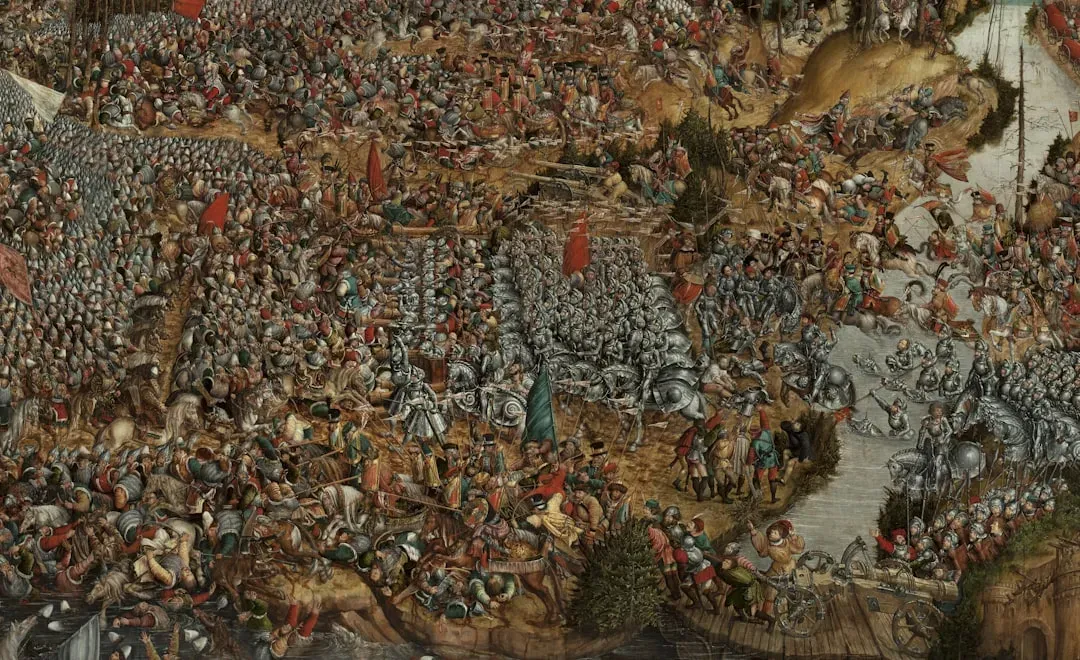
Here’s the thing about Bannockburn. It wasn’t just a battle. It was the entire question of whether Scotland would exist as an independent nation. The Battle of Bannockburn, fought from June 23 to June 24, 1314, was a pivotal conflict in the First War of Scottish Independence. It marked a significant victory for the Scots, led by Robert the Bruce, against the English forces commanded by King Edward II, who had invaded Scotland to reassert control.
The battle took place near Stirling and was characterized by strategic brilliance from Bruce, who utilized the terrain to his advantage despite being heavily outnumbered, with estimates of his forces around 6,000 against an English army of 14,000 to 20,000. That is roughly a three-to-one disadvantage, and that estimate is on the conservative side.
The Scots employed a formation known as schiltrons, which effectively thwarted the English cavalry and disrupted their infantry, leading to chaos within the English ranks. To further strengthen his defences, Bruce ordered his men to dig pitholes his side of a small river. Protected by marshy ground, pit holes, elevated woodland, and the Bannockburn itself, Bruce’s army occupied a formidable defensive position. He used every inch of the landscape against a technically superior foe.
English losses included 34 barons and knights as well as thousands of footmen killed or captured while fleeing from the battle. The Scots claimed to have lost only two knights but several hundred infantrymen. Edward II’s army suffered very heavy losses, was effectively destroyed as a fighting force, and driven back into England. The victory secured Scotland, enabling Bruce to take not only Stirling but also the fortress of Berwick, and thus the whole of Scotland was regained. Scotland would eventually have its independence formally recognized in the Treaty of Northampton in 1328.
6. The Defence of Rorke’s Drift (1879): One Night That Became Legend

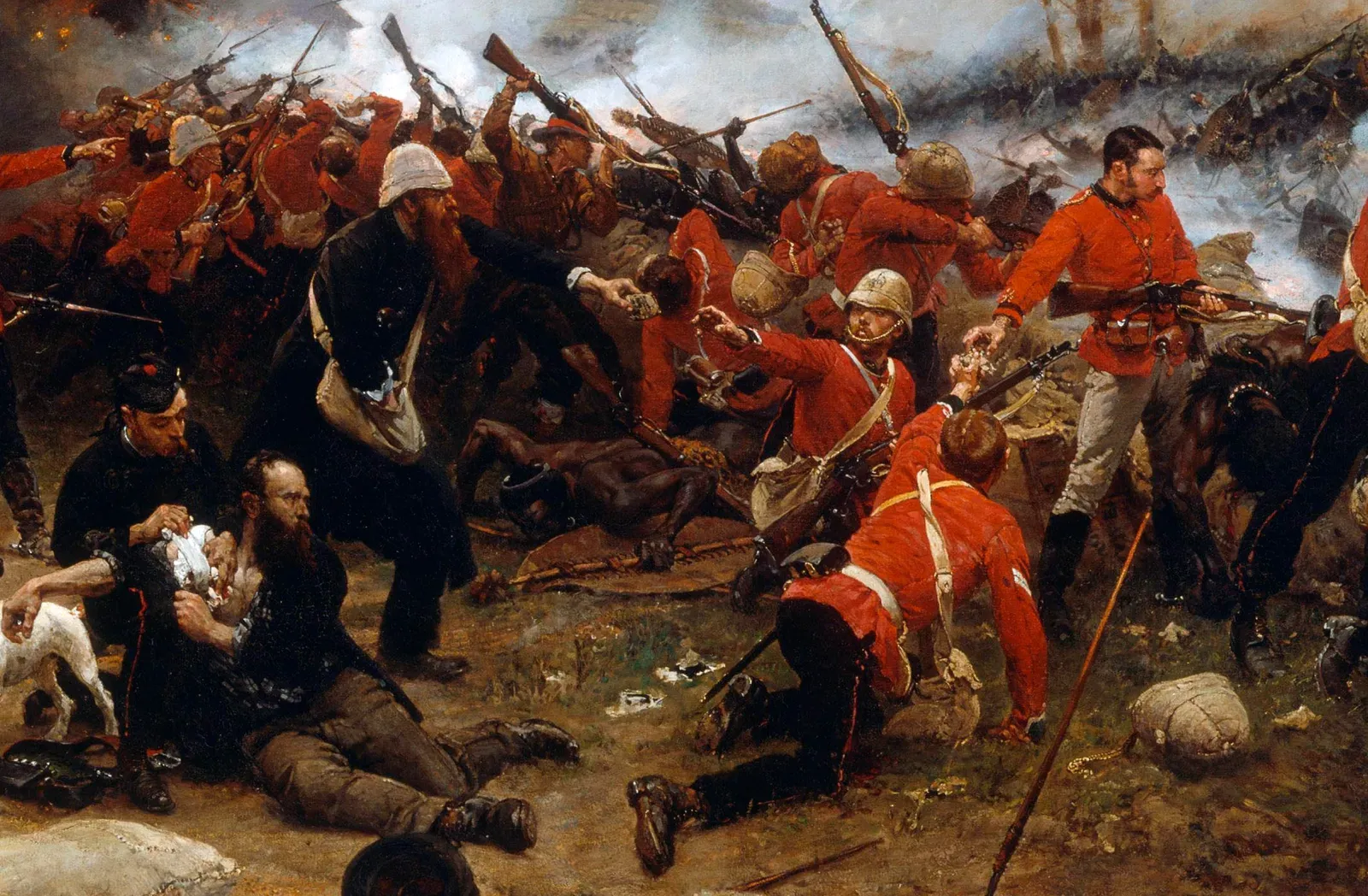
This one is almost surreal. On January 22, 1879, British troops suffered one of the worst defeats in their history when 20,000 Zulu warriors attacked a 1,500-man column at Isandhlwana, killing 1,329. While that catastrophe unfolded, a tiny garrison nearby was about to face its own impossible battle.
Approximately 150 British soldiers defended a makeshift barricade against an assault from around 4,000 Zulu warriors, led by Dabulamanzi kaMpande, who crossed into British-held territory in Natal. The British forces, positioned at a Swedish mission station, successfully withstood multiple intense attacks over the course of five hours, ultimately forcing the Zulu to retreat before dawn.
For more than five hours, British troops resisted six furious Zulu attacks, before the Zulu finally withdrew shortly before dawn. Some 500 Zulu warriors were killed, and a similar number were wounded. British casualties included 15 killed and 12 seriously wounded. Think about that ratio for a moment. A garrison of fewer than 150 men against 4,000 hardened warriors, and they held on all night.
Eleven Victoria Crosses, the highest and most prestigious medal in the British military, were awarded to the defenders of Rorke’s Drift during the Anglo-Zulu War in 1879. Seven of the decorated soldiers were from the 2nd and 24th Foot, and this constituted the most Victoria Crosses ever conferred for a single action carried out by one regiment.
While the battle held minimal strategic significance, it emerged as a moral victory for the British, symbolizing their resilience and determination in the face of overwhelming odds. The defense at Rorke’s Drift became emblematic of British military valor during the era of imperial expansion. Whether you view the broader Anglo-Zulu War through a critical or sympathetic lens, the sheer human endurance at Rorke’s Drift is undeniable.
7. The Battle of Stalingrad (1942–1943): When a City Refused to Die


If the ancient battles on this list feel remote, Stalingrad brings it crashing into the modern age. The Battle of Stalingrad stands as one of the most brutal and pivotal battles in modern history. Nazi Germany’s armies initially overwhelmed the city’s defenses, but Soviet troops refused to yield. Intense street fighting, shortages, and winter cold turned the city into a nightmare for both sides.
At the start of the campaign, the Wehrmacht appeared nearly unstoppable. The Soviet Union’s back was against the wall. Soviet leaders launched Operation Uranus, encircling more than 290,000 German soldiers. Starvation, disease, and bitter cold took their toll, with only about 91,000 Germans surviving to surrender. Stalingrad marked the first major defeat of Hitler’s armies and shifted the momentum of World War II in favor of the Allies.
The staggering loss of life, over 2 million casualties, underscored the ferocity of the struggle and the high price of underestimating a determined enemy. No army in history had handed the German war machine a reversal quite like this. The Soviets transformed what looked like certain defeat into one of the most decisive encirclements in all of military history.
The Battle of Stalingrad (1942–1943) was a turning point in World War II, with the Soviet Union defeating the German army. In hindsight, the city’s name would become synonymous with resistance itself. The Germans had superior equipment and more experienced logistics at the start. Yet they could not break a city that simply refused to fall.
Conclusion: The Pattern Behind the Impossible Win

Look across all seven of these battles and a pattern emerges. The underdog rarely wins by accident. Terrain, discipline, superior tactics, and a kind of desperate clarity seem to give the smaller force an edge that raw numbers cannot cancel out. Leonidas chose a narrow pass. Bruce dug pit traps in boggy ground. Themistocles lured a fleet into a strait. Henry V planted his archers where the mud would do the work for them.
Numbers matter, obviously. I’m not going to pretend otherwise. But history keeps reminding us that the side with the most soldiers doesn’t automatically win. The side with the best plan, the best ground, and sometimes just the most to lose tends to find a way.
These battles are not just thrilling stories. They shaped languages, religions, national identities, and the course of entire civilizations. Imagine a world where the Persian fleet triumphed at Salamis, or where the Scottish nation was crushed at Bannockburn. The world you live in today might look unrecognizable. Which of these underdog victories surprises you the most? Drop your thoughts in the comments.
Partner offer
Planning a trip to Vegas?
Compare hotel rates and show tickets on VEGAS.com.