Fifty years is a long time in publishing terms, long enough for a book to go from bestseller list to college syllabus to bargain bin to, sometimes, back to the bestseller list again. 1976 turned out to be an unusually rich year for American and international fiction, producing books that tackled race, identity, violence, and power with a bluntness that still stings today. Revisiting them in 2026 is less nostalgia trip than a reminder that some problems just don’t age out.
What follows isn’t a random nostalgia list. These are seven novels published in 1976 that, read now, feel less like period pieces and more like warnings that never got heeded.
1. Roots by Alex Haley


Alex Haley’s sprawling family saga hit shelves in October 1976 amid significant advance expectations, and it was immediately successful, garnering positive reviews and debuting at number five on The New York Times Best Seller list. It went on to spend forty-six weeks on The New York Times Best Seller list, including twenty-two weeks at number one. The book traces the story of Kunta Kinte, an eighteenth-century Mandinka captured as an adolescent and transported to North America, exploring his life and those of his descendants down to Haley himself.
Beyond the numbers, Roots did something rare: it turned a personal genealogical search into a national reckoning. It stimulated interest in African American genealogy and an appreciation for African American history that hasn’t really faded. Fifty years on, as debates over how slavery gets taught in classrooms remain unresolved, the book’s insistence on naming names and tracing bloodlines through bondage still feels like unfinished business rather than settled history.
2. The Woman Warrior by Maxine Hong Kingston

Kingston’s genre-blurring debut, part memoir, part reimagined Chinese folklore, was published by Alfred A. Knopf in 1976 and blends autobiography with old Chinese folktales. It became a classic for its innovative portrayal of multiple and intersecting identities: immigrant, female, Chinese, American. The book follows a girl caught between the California to which her parents have immigrated and the China of her mother’s talk stories, where fierce women warriors clash jarringly with the harsh reality of female oppression.
What makes the book endure isn’t just its formal daring, it’s how precisely it captures the friction of growing up between two cultures that don’t quite recognize each other. That tension between inherited myth and lived reality remains a live wire for immigrant families navigating identity in any decade. Half a century later, conversations about who gets to tell whose story, and in what language, sound remarkably similar to the ones Kingston was already having on the page.
3. Interview with the Vampire by Anne Rice

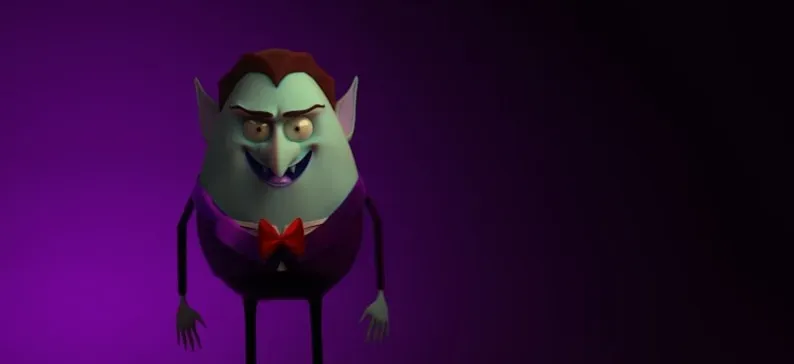
Anne Rice’s debut, published on May 5, 1976, reinvented the vampire novel by making its monster achingly self-aware. The story follows Louis, a plantation owner outside New Orleans in the early 1790s, distraught and suicidal over his brother’s death, before he’s transformed by the seductive, reckless Lestat. Rice reportedly began the tale as a short story not long after the death of her young daughter, and that grief runs underneath the book’s gothic surface.
Strip away the fangs and velvet, and what’s left is a story about loneliness, addiction, and the impossibility of outrunning your own nature. Critics have long noted that the novel marked a shift in how vampires were portrayed, making them unaccountably evil yet also relatable, capable of sparking empathy on a level not really seen previously in the genre. In an era obsessed with antiheroes and morally gray protagonists, Rice’s confessional format, a monster explaining himself to a stranger with a tape recorder, feels like it invented a whole mode of storytelling we still use constantly.
4. Trinity by Leon Uris


Leon Uris’s epic of Ireland’s struggle for independence was published in 1976 by Doubleday and became a genuine cultural event, spending twenty-one weeks atop The New York Times Best Sellers list in 1976 and another fourteen weeks in 1977. The novel follows roughly thirty years after the 1880s, centered on Conor Larkin, weaving together Catholic and Protestant families whose fates are bound by land, faith, and rebellion.
Trinity is unapologetically old-fashioned in its sweep, but its portrait of sectarian violence, colonial resentment, and the way grievance gets passed down through generations reads with uncomfortable clarity today. Ireland’s own peace has held for decades now, yet the underlying dynamics Uris described, communities defined by inherited enmity, land as both livelihood and battleground, still describe conflicts well beyond that one island. It’s a reminder that historical fiction about old wars often doubles as commentary on newer ones.
5. 1876 by Gore Vidal

Gore Vidal’s political novel, published in the bicentennial year it’s named for, is set during one of the most corrupt and contested presidential elections in American history, the Hayes-Tilden race that was ultimately settled by backroom compromise rather than a clean popular mandate. Vidal, writing through the eyes of a fictional narrator returning to America after decades abroad, used the chaos of that election to skewer the gap between the country’s founding ideals and its grubby political machinery.
The book arrived as part of Vidal’s larger “Narratives of Empire” series, and its cynicism about elite self-dealing and electoral legitimacy hasn’t lost any bite. Disputed elections, questions about who actually won, and backroom deals brokered far from any voter’s view are not exactly foreign concepts to anyone following American politics recently. Vidal’s sardonic take on 1876 America reads less like history and more like a mirror held up at an unflattering angle.
6. Slapstick by Kurt Vonnegut


Kurt Vonnegut’s Slapstick, released in 1976, imagines a near-future America fractured into isolated communities, run by a president who ran on a platform of ending loneliness, and populated by a set of twins whose combined intelligence far exceeds their individual selves. Vonnegut himself considered it one of his weaker efforts, but its central preoccupation, technology and progress hollowing out human connection even as they promise to fix everything, has aged into something closer to prophecy than satire.
The novel’s fictional political slogan, essentially promising to cure isolation through policy, sounds almost quaint next to today’s very real debates about loneliness as a public health crisis and the role algorithms and screens play in deepening it. Vonnegut’s blend of absurdist comedy and genuine sorrow about disconnection captures something that feels more urgent now than it did to some critics in 1976. Sometimes a writer’s “minor” book turns out to be the one that ages best.
7. Ratner’s Star by Don DeLillo


Don DeLillo’s dense, cerebral 1976 novel follows a fourteen-year-old math prodigy recruited by a shadowy scientific organization to help decode a signal that might be coming from outer space. What begins as a satire of scientific institutions and their faith in pure logic slowly spirals into something closer to paranoid comedy, as the search for extraterrestrial meaning collapses under the weight of bureaucracy, ego, and human error.
DeLillo would go on to become one of the defining chroniclers of American anxiety, and Ratner’s Star already contains the seeds of the themes he’d spend decades refining: the unreliability of institutions, the seductive but hollow promise of technical solutions to human problems, and the strange comedy of experts talking past each other. In an age of AI hype cycles and institutional distrust, a novel about brilliant people building elaborate systems that ultimately reveal more about human folly than cosmic truth feels oddly current.
Taken together, these seven books say less about 1976 than about the questions America and the wider world still haven’t answered. Race, migration, loneliness, political legitimacy, institutional trust, none of these problems got solved in the intervening decades, they just changed shape. Reading them now isn’t an act of nostalgia so much as an act of recognition.