There’s a specific kind of magic in a song that refuses to age. Most music dates itself – a production trick here, a cultural reference there – and suddenly something that felt urgent sounds like a museum piece. A handful of tracks from the 1990s, though, seem immune to that process. They arrive in your ears in 2026 with exactly the same weight they carried the first time around.
The 90s were a wildly fertile decade for popular music. The era was marked by the rise of MTV, the explosion of diverse genres, and the birth of iconic artists, with grunge, alternative rock, hip-hop, and the resurgence of pop music all finding their footing. Out of everything that decade produced, these seven songs stand apart. Not just because they were hits, but because they still feel completely alive.
1. Nirvana – “Smells Like Teen Spirit” (1991)

Released in 1991 as the lead single from their second album, Nevermind, this anthem of a disaffected generation catapulted the band and its frontman Kurt Cobain into the stratosphere of musical legend. The raw energy and simplicity of the song came together quickly, with Cobain’s raspy voice, Grohl’s thunderous drumming, and Novoselic’s driving bassline creating a sound that was both powerful and melodic.
Butch Vig’s production played a crucial role in shaping the song’s final sound. He managed to capture the rawness of Nirvana’s live performances while adding a polished sheen that made the song accessible to a wider audience. The dynamic shifts between the verses and choruses, the layered guitars, and the anthemic quality of the chorus all contributed to a track that was as radio-friendly as it was revolutionary. In summer 2021, the song surpassed a billion streams on Spotify, a figure that keeps climbing well into the 2020s. Over three decades later, it still sounds urgent.
2. Sinéad O’Connor – “Nothing Compares 2 U” (1990)

Pop legend Prince originally wrote the song, and in 1985, funk band The Family released a version of it on their only album. What O’Connor did with it, though, was entirely her own. O’Connor recorded “Nothing Compares 2 U” with a new arrangement by her and producer Nellee Hooper. The result was something that felt less like a cover and more like a confession.
O’Connor’s version became a worldwide hit, topping charts in Ireland, Australia, Austria, Canada, Denmark, Germany, Mexico, Netherlands, New Zealand, Norway, Sweden, Switzerland, the United Kingdom, and the United States. The music video features mostly a closeup of O’Connor’s face as she sings through feelings of sadness and anger. By the end of the video, two tears are seen rolling down her face. O’Connor later said that the tears were real. That video, those tears, that voice – nothing about it has dimmed.
3. Alanis Morissette – “You Oughta Know” (1995)
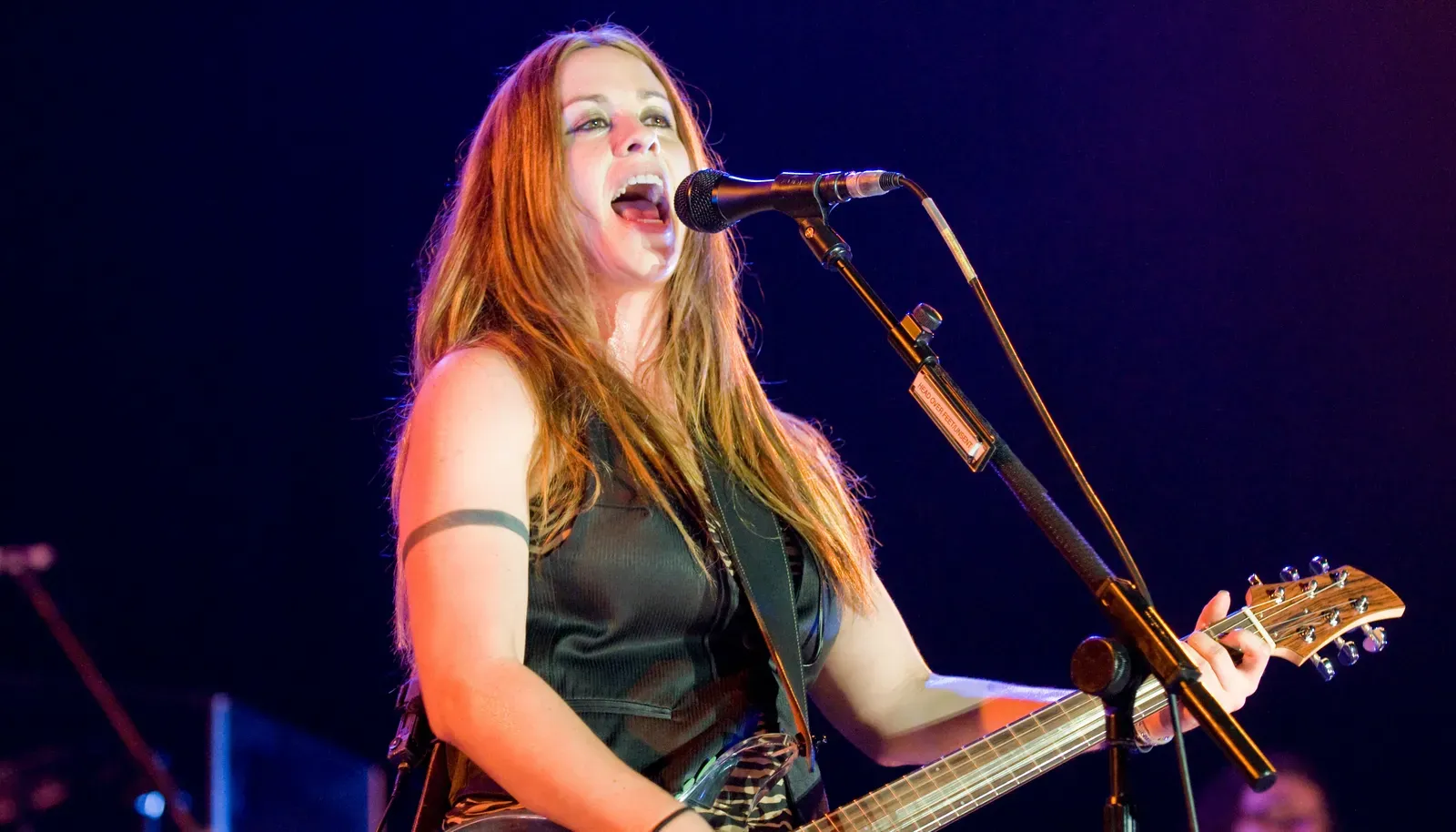
The second track on Morissette’s third studio album, Jagged Little Pill, “You Oughta Know” was released in July 1995 as the album’s lead single. It didn’t take long for it to shoot up the charts, on the strength of both Morissette’s tremendous vocals and the musical contributions of Dave Navarro and Flea, who played guitar and bass respectively on the track.
In 1996, the song won the Grammy Awards for Best Rock Song and Best Female Rock Vocal Performance. The song is more than just a track; it’s described as a BC/AD moment in 90s alternative rock where everything before it would be remembered as the lead-up to an explosive change, and everything after would be judged against it. It remains one of those rare songs that still sounds genuinely raw no matter how many times you’ve already heard it.
4. R.E.M. – “Losing My Religion” (1991)

“Losing My Religion” arrived in 1991 as the lead single from R.E.M.’s seventh studio album, Out of Time, and immediately stood out as something unusual. Its central melodic hook was built around a mandolin riff rather than an electric guitar, giving it a texture unlike almost anything else on mainstream radio at the time. The song stands out as a unique and atmospheric track, defined by that memorable mandolin riff.
Partner offer
The song reached number four on the Billboard Hot 100 and topped the charts in multiple countries, helping Out of Time win the Grammy for Album of the Year in 1992. What makes it endure is how the instrumentation and Michael Stipe’s deeply personal vocal performance lock together into something that feels timeless rather than tied to a specific era. Authenticity is a key part of why so many 90s songs still resonate today: artists were chasing expression rather than algorithms, and that honesty makes these tracks connect decades later.
5. TLC – “Waterfalls” (1995)
A socially conscious song with a catchy beat and a powerful message, “Waterfalls” remains one of TLC’s most defining achievements. Released from the group’s second album CrazySexyCool, it spent seven weeks at number one on the Billboard Hot 100 in 1995, making it one of the longest-running number-one singles of the decade. The production by Dallas Austin and Organized Noize struck an unusually delicate balance between smooth R&B and something more cinematic.
The song addressed HIV, drug use, and street violence at a time when those topics rarely reached mainstream pop radio with this kind of nuance. That directness is part of why it holds up so well. The 90s mastered slow jams, and songs like this remain iconic for their emotion and smooth vocals precisely because feelings never go out of style. The combination of Left Eye’s rap verse and the harmonized chorus remains one of the most effective sonic moments of the entire decade.
6. Santana featuring Rob Thomas – “Smooth” (1999)

The song was always an anomaly. When it came out in June 1999, Santana hadn’t logged a Billboard Hot 100 hit in 14 years, and hadn’t broken into its top 10 since 1970. Santana was loved by Boomers, but wasn’t a presence in the late-90s pop game until he released Supernatural, a feature-heavy Latin rock album that paired the legendary band with numerous contemporary artists.
“Smooth” spent 12 consecutive weeks at number one on the Billboard Hot 100, on the charts dated from October 23, 1999, to January 8, 2000. The song bridged the gap between the new era of music and the classic rock guitar riffs Carlos Santana was best known for. In 2026, it still carries that specific late-summer heat, which is a genuinely rare quality for a pop record. The guitar tone alone is enough to stop a room.
7. Portishead – “Glory Box” (1994)

At the heart of Portishead’s sound was a conspiracy of contradictions that defined trip-hop. Combining heavy hip-hop beats and throbbing basslines with jazz and soul samples, the music was striking, but the vocals of Beth Gibbons were outstanding. “Glory Box” is the shining example: a soul-searching love song delivered over a smoky backing track of jazz drums, tinkling pianos and wistful strings, that veers from delicate downtempo moments to ear-shredding guitar crescendos with breathtaking ease.
Released from the debut album Dummy in 1994, the track helped introduce a whole generation to trip-hop as a genre capable of genuine emotional depth. It peaked at number 13 in the UK Singles Chart and became one of the most defining tracks of the Bristol sound. The slow-building intensity of the song, built around a sample of Isaac Hayes’ “Ike’s Rap II,” gives it a weight that contemporary production rarely achieves. The elegant trip-hop melancholy, with Beth Gibbons drowning her sorrows to a timeless Seventies sample, created something that has proven genuinely hard to replicate.
What connects all seven of these songs is something beyond nostalgia. Each one was built around a genuine emotional or sonic idea that didn’t need a particular moment in time to make sense. Some songs are products of their era. These ones just happened to arrive in the 90s.
Partner offer
Planning a trip to Vegas?
Compare hotel rates and show tickets on VEGAS.com.