
There is something deeply American about believing that if you just work hard enough, the world will eventually reward you. It is a promise so powerful it became its own mythology, passed down through families, etched into political speeches, and, perhaps most powerfully, woven into literature. Books have always been the place where the American Dream gets tested, stretched, and sometimes shattered.
Some of these novels lifted a nation’s spirit. Others quietly revealed the cracks underneath the surface. A few of them did both at the same time. Here is a gallery of eight books that, each in their own extraordinary way, both built and broke the American Dream. Let’s dive in.
1. The Great Gatsby by F. Scott Fitzgerald (1925): The Dream in a Champagne Glass

F. Scott Fitzgerald’s The Great Gatsby is a profound exploration of the American Dream, wealth, love, and moral decay set in the Roaring Twenties. It is hard to think of another novel that has defined a national obsession with such devastating precision. Gatsby is not just a character. He is a mirror.
The Great Gatsby is most commonly understood as a pessimistic critique of the American Dream. In the novel, Jay Gatsby overcomes his poor past to gain an incredible amount of money and a limited amount of social standing in 1920s New York, only to be rejected by the “old money” crowd. The lesson is brutal and timeless. Wealth alone does not buy belonging.
According to a national survey of English teachers, Gatsby is the most frequently assigned novel in American high schools. That is a stunning fact, honestly. It means generation after generation of young Americans have been handed a story of spectacular failure as an introduction to their own country’s mythology.
Recent research by the American Library Association shows that Gatsby’s popularity has only grown, with more than half a million copies sold annually as of 2024. The dream keeps selling, even when the story warns us not to believe in it too fiercely. Make of that what you will.
2. Of Mice and Men by John Steinbeck (1937): The Dream That Never Had a Chance

Of Mice and Men was published in 1937 during the tumultuous period of the Great Depression. It tells the story of two migrant field workers, George Milton and Lennie Small, as they dream of possessing their own ranch and reaping wealth from their work. It sounds almost like a classic rags-to-riches story, except it absolutely is not.
Steinbeck ultimately demonstrates that working hard will not help people achieve either the financial success or emotional fulfillment they desire. Characters like Candy and Crooks, who have seemingly worked hard their entire lives, have gotten nowhere. That is Steinbeck’s gut punch. Effort, it turns out, is not enough.
For George, this vision of the America he was promised is ultimately just a fantasy, unattainable yet necessary in order to bear the difficult reality of life. The dream does not come true, but it gives people a reason to keep going. That is both comforting and quietly heartbreaking. I think it is one of the most honest things any American novel has ever said.
Today, the novella is considered to be one of the key works of American literature, largely owing to its representation of the plight facing the working poor during this difficult time period. Indeed, the novella is a social commentary which investigates numerous social and economic issues related to poverty, racism, and discrimination, among others.
3. The Grapes of Wrath by John Steinbeck (1939): When the Land Itself Betrays You

John Steinbeck’s The Grapes of Wrath, published in 1939, tells the story of the Joad family as they migrate from Oklahoma to California in search of a better life. The premise is almost archetypal. Move west, work hard, start over. That is the American story. Except Steinbeck refuses to let it end neatly.
The Dust Bowl migrants in The Grapes of Wrath faced not just natural disasters but human cruelty and indifference that made their pursuit of a better life nearly impossible. California was supposed to be paradise. Instead, it was another trap. The dream moved further away the closer the Joads got to it.
Steinbeck’s criticism of the failing American dream, which he often blames on the rise of industry, the spread of capitalism, and a corresponding moral decline, appears in several of his works. This was not an accident. Steinbeck was deliberate. He understood that broken systems crush individuals who have done nothing wrong.
In The Grapes of Wrath, the American Dream is shown as an illusion, because America was going through the Great Depression and it was very difficult to make a living or even have food on a plate. The novel won the Pulitzer Prize in 1940. It also reportedly prompted real political responses to migrant labor conditions in California, making it one of the few novels that genuinely changed policy.
4. Death of a Salesman by Arthur Miller (1949): The Ordinary Man’s Catastrophe

Arthur Miller is considered one of the greatest American playwrights of the twentieth century. His masterpiece, Death of a Salesman, tells a tragic story about an ordinary American and chronicles the changing connotation of the American Dream. It is not a story about a villain or a fool. It is a story about a man who believed everything he was told.
Arthur Miller’s Death of a Salesman delivers perhaps the most devastating critique of the American Dream by focusing on an ordinary man’s spectacular failure. Willy Loman is not Jay Gatsby. He is not glamorous. He is exhausted, deluded, and desperate. That is what makes it so much harder to watch.
Both Arthur Miller’s Death of a Salesman (1949) and F. Scott Fitzgerald’s The Great Gatsby (1925) provide critical insights into the illusion of this dream and the tragic repercussions of adhering to such an ideal. Together, these two works form something like a bookend around the dream’s most dangerous promises. One story is flashy and opulent, the other painfully mundane. Both end the same way.
In examining its lure and promise, writers often find that for those who fall short, failure can be devastating because material success is a part of cultural expectations. Willy Loman is destroyed not just by capitalism but by the cultural message that failing to succeed is a personal moral failing. That message, unfortunately, has not faded.
5. Invisible Man by Ralph Ellison (1952): The Dream That Was Never Meant for Everyone

Here is the thing about the American Dream: it was never written to include everybody. Ralph Ellison knew that better than almost anyone. Published in 1952, Invisible Man follows an unnamed Black narrator navigating a society that refuses to see him as fully human. The novel is a masterwork of identity, race, and the specific cruelty of exclusion.
Frederic I. Carpenter argues in his book American Literature and the Dream that there is much to be learned about American beliefs by looking at how the dream has been shaped and reshaped by different periods in American literary history. Ellison’s novel is perhaps the most searing example of how the dream was actively reshaped to keep certain people out. The narrator is not invisible because he cannot be seen. He is invisible because people choose not to see him.
Invisible Man won the National Book Award in 1953 and is regularly ranked among the greatest American novels ever written. Its power comes from the fact that the narrator wants exactly what the Dream promises, equality, dignity, and opportunity, yet the system denies him at every turn. The irony is almost unbearable.
The various voices and multitude of perspectives within American literature, without specifically referring to the American Dream, inherently all have elements of the values that define the dream. Ellison embodies this complexity more than almost any other writer. His novel is not anti-American. It is a demand that America live up to its own promises.
6. Beloved by Toni Morrison (1987): The Dream Built on Stolen Lives
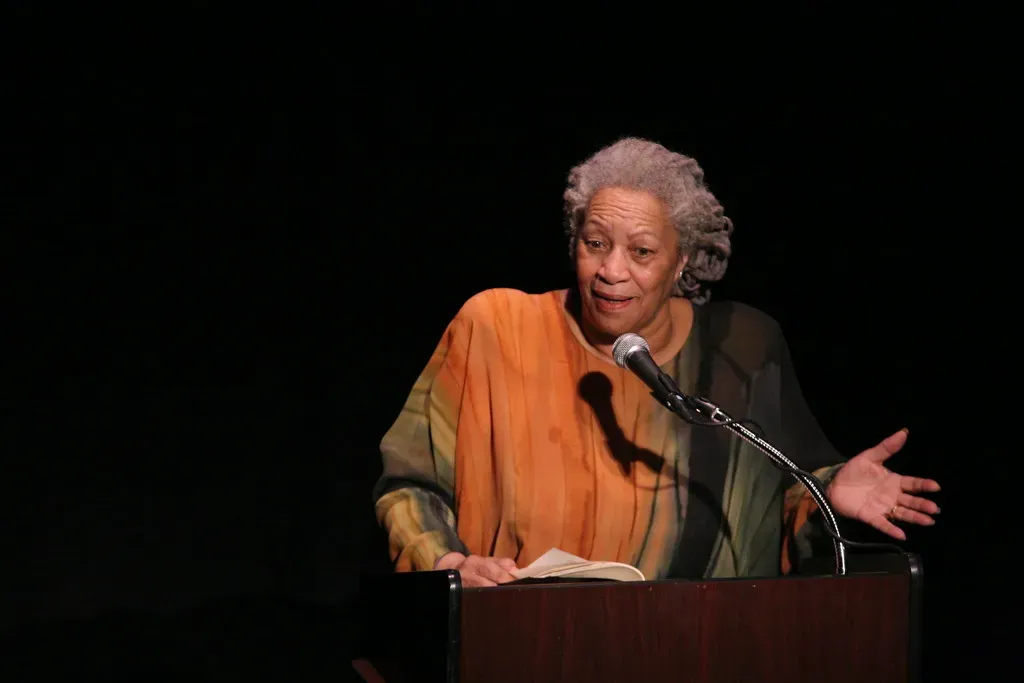
Morrison’s works, such as Beloved (1987), delve deeply into the lived experiences of Black women. Morrison highlights how the interlocking forces of systemic racism and sexism shape their identities and social roles. Her narratives often center on marginalized characters grappling with the legacy of slavery, the impact of racial discrimination, and the pursuit of identity in an environment that seeks to dehumanize and silence them.
Today we might call it intergenerational trauma. In Beloved, Morrison describes it for readers in less clinical terms, while tacitly showing how the rhetoric of racism has been reinvented repeatedly in American politics. The novel does not let the reader look away. It insists on confronting what prosperity in America was actually built upon.
Morrison’s work not only highlights the trauma passed down across generations but also addresses how Black women continue to face structural violence, economic inequality, and negative stereotypes. Her work serves as a critical lens allowing readers to understand how the social injustices addressed in her novels remain relevant to challenges Black women face today. That relevance has only sharpened in recent years.
In 1993, the Nobel Prize for Literature was awarded to Toni Morrison, whose novels, characterized by visionary force and poetic import, gave life to an essential aspect of American reality. Beloved won the Pulitzer Prize. It is, without question, one of the most important American novels ever written, and it forces an uncomfortable question: whose dream, exactly, was being built all along?
7. The Adventures of Huckleberry Finn by Mark Twain (1884): Freedom and Its Contradictions
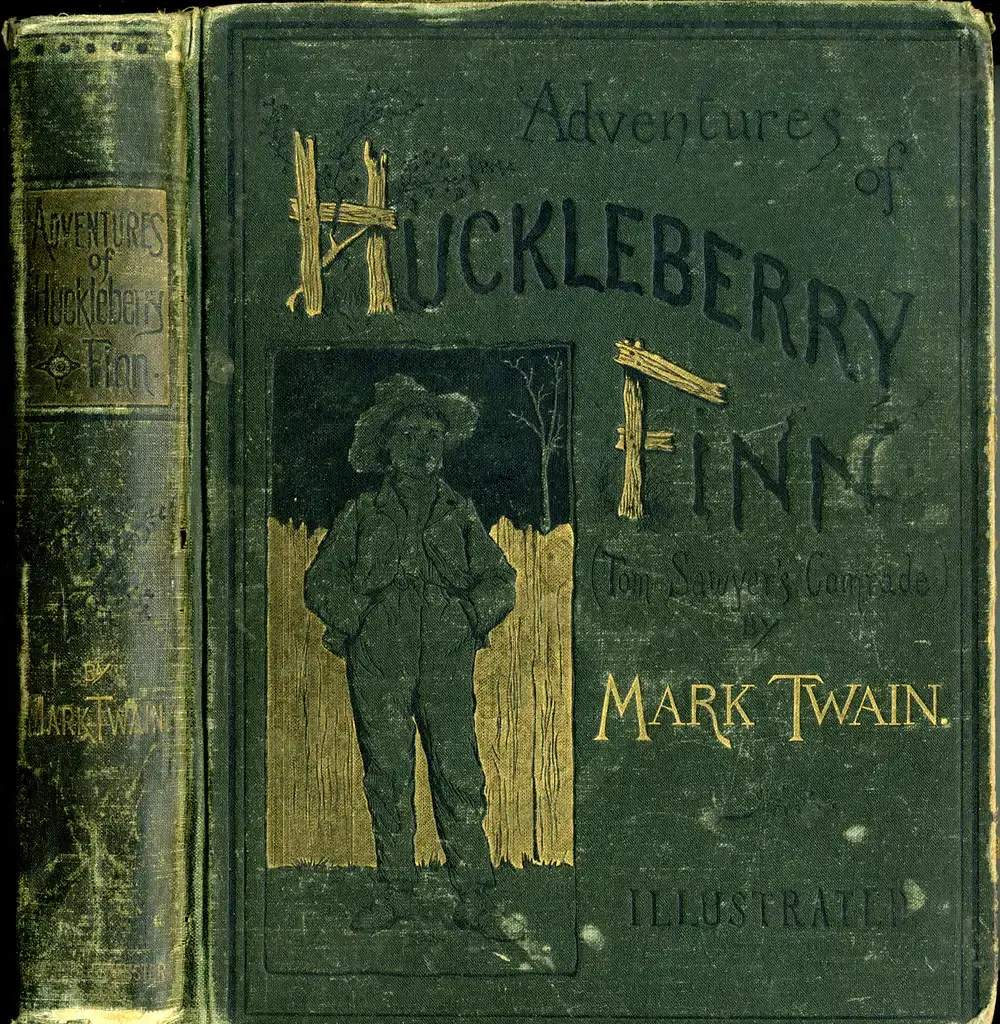
Mark Twain, writing during the rise of nineteenth century finance capitalism and industrialism, became increasingly disillusioned with social corruption in the Gilded Age. In The Tragedy of Pudd’nhead Wilson, he addresses the dehumanizing, brutal aspects of slavery, and in “The Man That Corrupted Hadleyburg” he depicts the greed and self-serving hypocrisy of an allegedly honest and upright town.
In his classic novel Adventures of Huckleberry Finn, before Huck “lights out for the territory” to escape being civilized, he struggles with a corrupt world of frauds, desperadoes, and money-grubbing confidence men. The American frontier was supposed to represent boundless freedom. Twain was not so sure. He saw the con beneath the canvas.
Huckleberry Finn, one of the most widely taught novels in American literature, has long been the subject of ongoing debates over issues ranging from immorality to racism. Those debates have never truly ended, and honestly, they should not. A book that keeps generating serious moral argument is doing exactly what literature is supposed to do.
Twain gave America a hero who is free-spirited, kind-hearted, and fundamentally decent. He also gave America a mirror. In that mirror, you could see the river, the rafts, and the beautiful open sky. You could also see Jim, and all that America owed him, and all it refused to pay.
8. Hillbilly Elegy by J.D. Vance (2016): The Dream’s Forgotten Country

Hillbilly Elegy by J.D. Vance is a passionate and personal analysis of a culture in crisis, that of white working-class Americans. Published in 2016, it arrived at a moment when the country was reckoning with a different kind of collapse. Not the collapse of the wealthy chasing excess, but the collapse of communities that had believed in the Dream and watched it dissolve around them.
Vance describes Appalachia and his family’s own move from Kentucky to Ohio. Initially many sympathized with Vance’s story about the tribulations of growing up in Middletown as his mother battled substance abuse, about being tethered to a white working-class community in peril. It is a story about people who feel abandoned by the very dream they were promised.
The book became a cultural flashpoint. Some readers saw it as a compassionate portrait of forgotten America. Others criticized it for placing the blame on individuals rather than on structural and economic failures. That debate itself reflects something important about how the dream is understood differently depending on where you stand.
Vance later entered politics and became Vice President of the United States in 2025, making his memoir one of the few books in American history whose author lived out a real rags-to-influence story. Whether that vindicates the dream or simply complicates it further is a question worth sitting with for a while.
The Bigger Picture: What These Books Tell Us Together

Taken as a group, these eight books tell a story more complicated than any single one of them could tell alone. They span more than a century. They follow men, women, Black Americans, white Americans, immigrants, farm laborers, salesmen, and millionaires. What connects them is the Dream itself, persistent, seductive, and perpetually out of reach for so many who pursue it.
The term “American Dream” was coined back in 1931 by James Truslow Adams, who defined it as “the pursuit of a happier and a better life for all citizens of every rank,” a dream of a land where life should be better and richer and fuller for everyone, with opportunity for each according to ability or achievement. That is a beautiful idea. Every single book on this list asks whether it is also a true one.
The American Dream presents a rosy view of American society that ignores problems like systemic racism and misogyny, xenophobia, and income inequality. It also presumes a myth of class equality, when the reality is America has a pretty well-developed class hierarchy. Literature does not pretend otherwise. It never has.
The American Dream canon, including Gatsby, Of Mice and Men, and A Raisin in the Sun, collectively offers hardly a glimmer of hope. Maybe that is not a flaw. Maybe that is the most honest thing American literature can do, hold up the dream and ask us, clearly and without flinching, whether we are brave enough to make it real. What do you think? Are these books cautionary tales, or blueprints for change? Drop your thoughts in the comments.