Most of us grew up thinking there was basically one way to do school: sit down, listen, take a test, repeat. It felt like a universal truth, baked into the walls of every classroom on earth. Turns out, it isn’t. Some countries looked at that model and quietly decided to tear it up entirely – and what happened next is genuinely fascinating.
From a tiny Nordic nation that sends kids home with almost no homework, to a small city-state that reengineered its entire curriculum from the ground up, these eight education systems chose a different path. Some of their choices look almost counterintuitive. A few might even make you a little jealous. Let’s dive in.
1. Finland – Less Is Genuinely More


Finnish students spend fewer hours in school, receive little homework, and rarely take standardized tests – yet they consistently rank high in academic performance, critical thinking, and life satisfaction. That might sound like a riddle, but it’s not. Think of it less like a sprint and more like a slow, deliberate marathon where every runner actually finishes.
One of the most notable features is Finland’s minimal use of standardized tests. Unlike many countries where students take national exams almost every year, Finnish students do not sit for any national standardized tests until the very end of upper secondary school – and even then, the matriculation examination is voluntary for those planning to apply to university. Honestly, that alone is enough to make educators in most other countries do a double take. Finland’s adult population has some of the highest levels of literacy, numeracy, and adaptive problem-solving skills in the OECD, and the average literacy score in Finland stands at 297 points compared to 259 across OECD countries.
2. Singapore – Reinventing Rigor From Scratch


Singapore consistently ranks at the top of the PISA charts and was the top performer in all three subjects in 2022 – and it has built this enviable system since becoming independent in 1965. That’s remarkable when you think about it. In just a few decades, a small city with no natural resources built one of the most formidable education machines on the planet.
One hallmark of Singapore’s approach is its deliberate shift away from rote learning toward deep conceptual understanding. Educational reforms like the “Teach Less, Learn More” initiative encouraged teachers to focus on quality of learning rather than quantity of content, and problem-based learning and critical thinking are now emphasized over memorization. In PISA 2022, Singaporean students placed first in all three domains – math, reading, and science – with scores far ahead of the OECD average, and almost half of Singaporean students reached the most advanced proficiency levels, compared to fewer than one in ten across OECD countries.
3. South Korea – Building an Entire System From Near Zero

South Korea has been a top performer on every PISA test since 2000, and its academic achievement is remarkable for a country that essentially built a brand-new education system in the second half of the 20th century. The speed of that transformation is staggering. It is arguably the most dramatic educational turnaround in modern history.
South Korea has built one of the most academically ambitious systems in the world. Its students scored sixth globally in math on PISA 2022 and remained well above average in reading and science. Beyond those test scores, the scale of participation is unmatched – roughly seven in ten Koreans aged 25 to 34 now hold a tertiary qualification, the highest rate among OECD countries. Only about one percent of 25 to 34 year-olds lack upper secondary education, the lowest share among OECD countries and far below the OECD average. The cultural expectation to learn isn’t just a stereotype here – it’s woven into the national identity in a way that is genuinely hard to replicate elsewhere.
4. Estonia – The Little Country That Outperformed Everyone in Europe

Estonia has emerged as a surprise leader in Europe, outperforming larger economies in PISA 2022, with particularly strong scores in math and science. For a country of just over a million students, that is an extraordinary feat. I think it’s one of the most underappreciated education stories of the past two decades.
After gaining independence in 1991, the Estonian economy grew nearly eightfold, driven partly by its strong education system. Estonia embraced digital tools early and demonstrated remarkable learning resilience during crisis periods. In PISA 2022 mathematics, Estonia scored 510 points, well above the OECD average of 472. The country essentially rebuilt itself through education after decades of Soviet rule – a detail that makes its success feel even more powerful.
Partner offer

5. Japan – Equity as a National Obsession

Japan has consistently ranked among the top performers on PISA since 2000, particularly in mathematics. Its scores have been highly equitable, likely because Japan has long held education for all students in high regard. This isn’t just about top-tier students pulling up national averages. The Japanese system is built with the quiet conviction that every single student deserves to be brought along.
Tertiary attainment among young adults in Japan increased from 62 percent in 2019 to 66 percent in 2024, placing Japan among the top five OECD nations and well above the OECD average of 48 percent. Among adults aged 25 to 64, the rate is 57 percent, compared to an OECD average of 42 percent. Japan has attracted more than 232,000 international students in recent years, and the country is renowned for its breakthroughs in robotics and AI, standing at the forefront of technological and engineering education. The discipline, the community focus, the deep respect for the learning process – Japan makes rigorous education feel almost graceful.
6. Canada – Decentralized, Diverse, and Quietly Brilliant


Canada had one of the strongest performances when PISA was first administered in 2000 and has remained a top performer since. It is particularly notable for the equity of this performance and its decentralized education system. That last part is worth pausing on. Unlike most high-performing nations that run tight, centralized models, Canada essentially lets its provinces lead – and it works anyway.
Canada’s education system is known for its inclusivity, offering strong support for immigrant and low-income students. Universities such as Toronto, McGill, and the University of British Columbia are fixtures in the global top 50. The country’s mix of research universities, affordable community colleges, and strong vocational options ensures that education remains widely accessible, and for parents, Canada’s promise is clear – children are likely not only to complete their education but also to progress successfully through higher education. It is one of the few countries where genuine diversity in the classroom has been turned into an educational advantage rather than a challenge to manage.
7. The Netherlands – Student Choice as a Design Principle

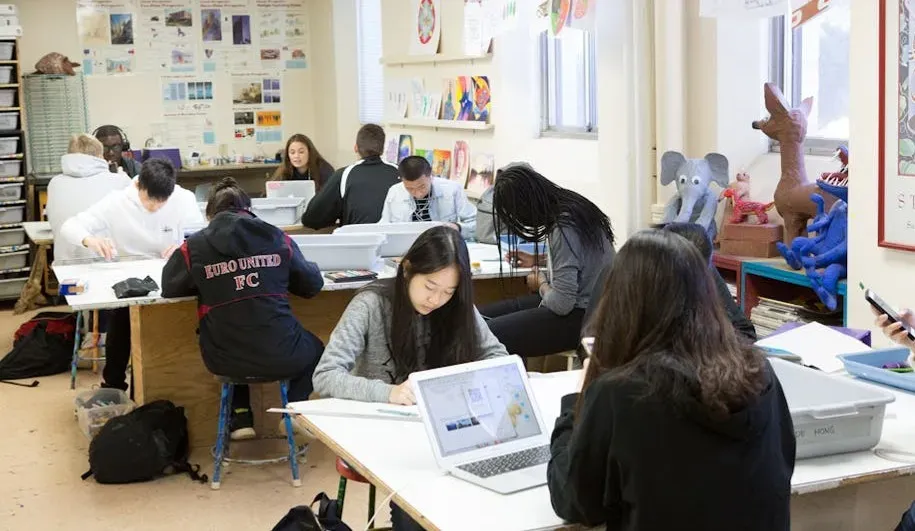
The Netherlands ranks among the top countries with the best education system for its innovative, student-focused approach. Dutch schools score above OECD averages in core subjects and emphasize collaboration and creativity. Here’s the thing – the Dutch system is built around the radical idea that not every 12-year-old should follow the same path. Students are streamed early into different tracks based on ability and genuine interest, rather than forced into a single mold.
The Netherlands stands out with its education system that helps students improve both their academic and professional development. Education is compulsory from ages 5 to 16, and after primary school, children enter secondary education which offers different tracks including pre-university, senior general secondary, and vocational programs. Dutch universities rank highly for innovation and research collaboration, particularly in sustainability and technology. The vocational track, in particular, is treated with genuine respect – it’s not seen as a consolation prize but as a legitimate and honored pathway.
8. Denmark – Where Happiness Is Part of the Curriculum

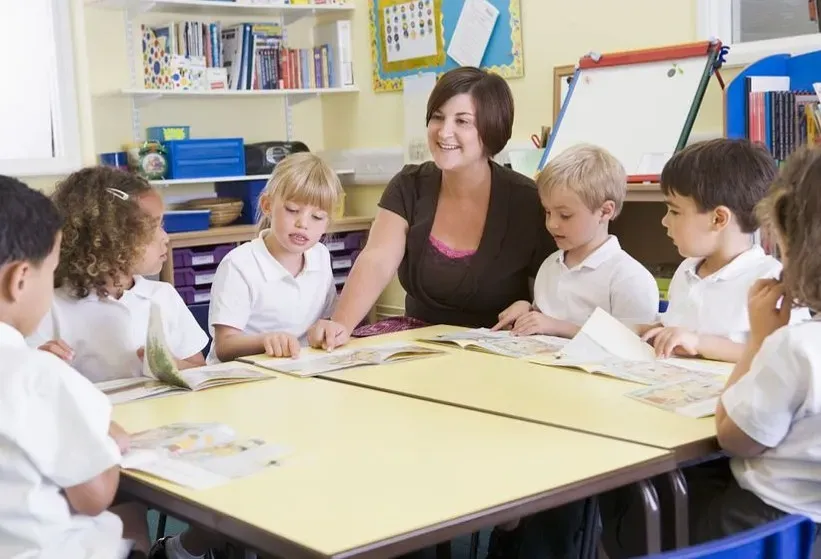
Denmark has consistently outperformed the OECD average since the first PISA assessment in 2000. Denmark’s education system is known for its focus on creativity and innovation. What makes Denmark’s approach so distinct is that academic performance is not treated as the singular goal of schooling. Student well-being, autonomy, and happiness are considered legitimate educational outcomes – not soft extras.
Denmark enjoys a remarkable near-universal literacy rate, with education being both free and mandatory until the age of 16. Denmark offers many programs that are free of charge to Danish people, EU citizens, and Nordic citizens. Students in Danish schools are actively encouraged to question authority, push back on ideas, and own their learning journey in ways that would feel unusual in more traditional systems. It’s a bet on intrinsic motivation rather than external pressure – and by nearly every measurable standard, it keeps paying off.
What all eight of these systems share is a willingness to question what everyone else assumed was fixed. Some abolished high-stakes testing. Some dismantled hierarchy. Some decided to trust teachers rather than manage them. None of them got where they are by doing things the conventional way. The most striking takeaway? There is no single blueprint for educational success – only the courage to think differently. Which of these approaches do you think your own country could learn the most from?
Partner offer
Planning a trip to Vegas?
Compare hotel rates and show tickets on VEGAS.com.