There are concerts. And then there are those shows that collapse the boundary between music and history, where something happens on stage that no replay or recording can fully capture. The ones that make people say, “I was there,” with a quiet kind of awe, years after the fact. These are not just the biggest, loudest, or most expensive shows ever staged. They are the ones where something clicked into place, something almost impossible to explain.
Some of these moments involved crowds the size of small cities. Others involved artists who had everything to prove and somehow delivered beyond all expectation. What they share is a quality that live music, at its most extraordinary, can still produce: an electricity that refuses to leave the room.
Let’s dive in.
1. Queen at Live Aid, Wembley Stadium, 1985 – The Gold Standard
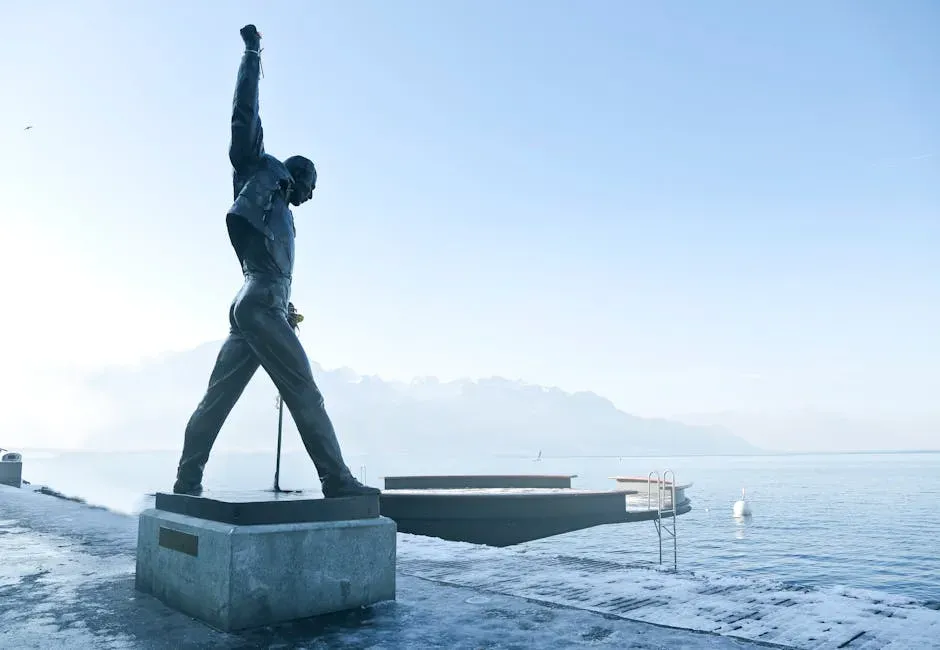
Honestly, if you ask most music historians to name one single live performance that stands above everything else, this is the one they land on. Queen’s 21-minute set at Wembley Stadium during Live Aid on July 13, 1985, began at precisely 6:41pm. Twenty-one minutes. That’s less time than some people spend choosing what to watch on television, and yet it rewrote the rulebook for what a live performance could be.
Freddie Mercury delivered an electrifying masterclass in showmanship and vocal power, widely hailed as one of the most legendary performances in rock and roll history. Ironically, going into the gig, the band was considered past its prime. They were expected by many insiders to fade quietly into the background of a star-studded bill. Instead, they detonated.
Of all the high-caliber artists on display that day, there was unanimous agreement that Queen’s Live Aid performance stole the whole show with a magnificent, 21-minute tour-de-force set. In 2005, it was voted the best rock gig of all time. Not for that year. Of all time. The band had prepared obsessively, renting out a small London theatre and spending an entire week tightening their setlist to a razor’s edge.
An estimated audience of 1.9 billion people in 150 nations watched the live broadcast, nearly 40 percent of the world population. The scale of that number is hard to wrap your head around even today. According to the BBC’s presenter David Hepworth, their performance produced “the greatest display of community singing” Wembley had ever seen, and cemented Queen as the most-loved British group since the Beatles. Paul Brannigan of Classic Rock called it “arguably the most iconic moment of the band’s storied career.”
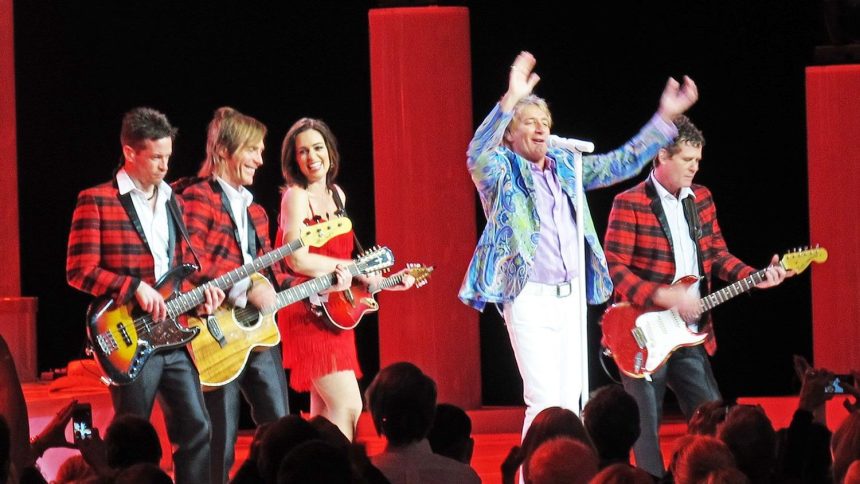
2. Rod Stewart at Copacabana Beach, New Year’s Eve 1994 – A City Becomes a Concert Hall
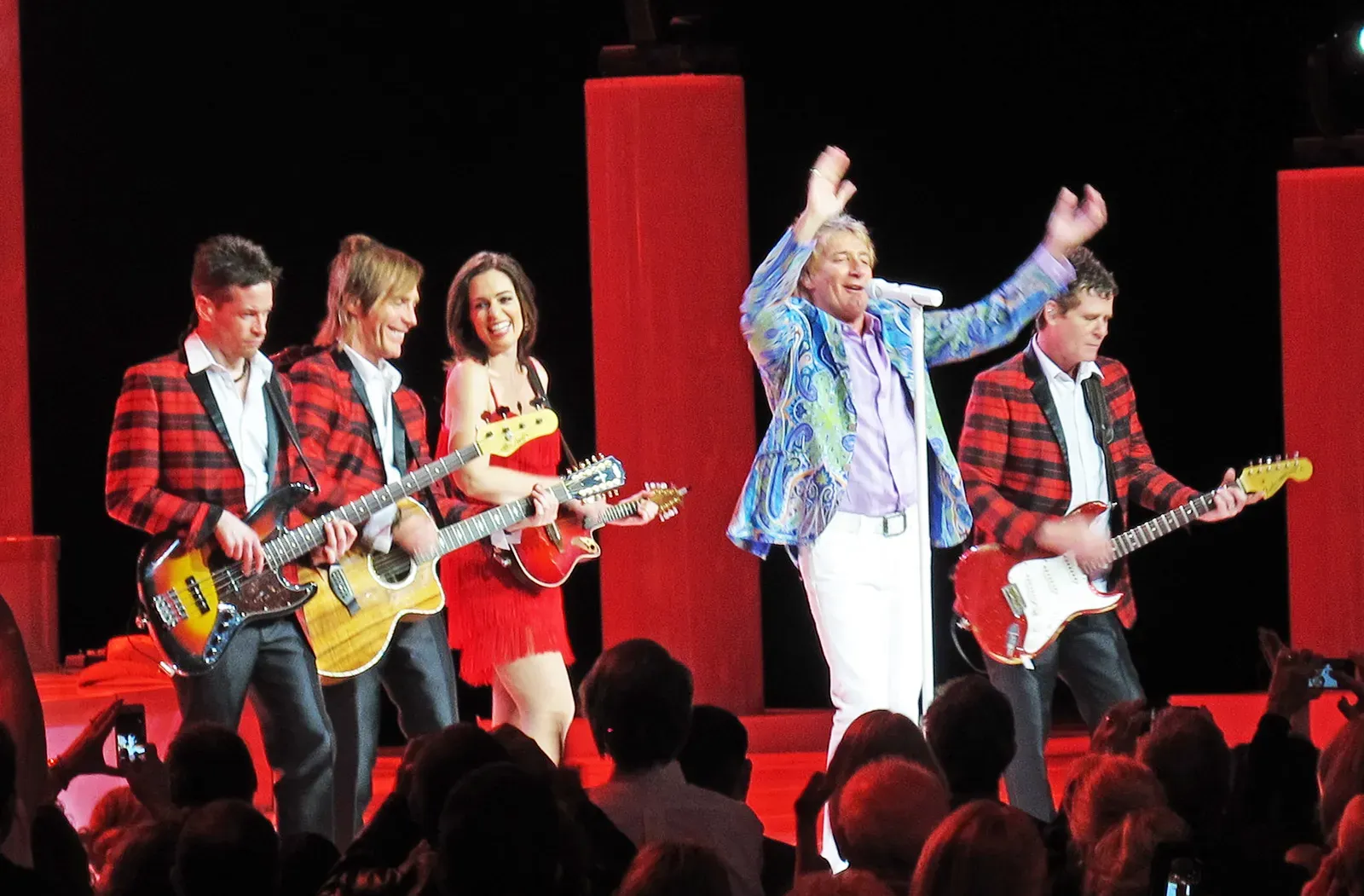
Picture this: a beach. A beach so packed with human beings that it stops looking like a beach at all and starts looking like a breathing, pulsing organism stretching toward the horizon. On December 31, 1994, Rod Stewart performed in front of a staggering 3.5 million people at Copacabana Beach in Rio de Janeiro to ring in the New Year. This iconic performance holds the record for the largest free concert audience ever.
It is estimated that around 3.5 million New Year’s Eve revelers lined the 2.5-mile-long beach to hear his set, with some sources going as high as 4.2 million. The gig still set a Guinness World Record for the “largest attendance of a free concert.” Those are numbers that most countries’ entire populations would struggle to match.
This free concert was part of the city’s New Year’s Eve celebrations. The combination of Stewart’s global appeal, the holiday festivities, and the iconic beach setting drew an unprecedented crowd. The performance not only celebrated Stewart’s illustrious career but also marked the coming of a new year, adding to the event’s festive atmosphere. It was a perfect convergence of timing, place, and artist that may never be repeated quite the same way.
3. Madonna’s Celebration Tour Finale, Copacabana Beach, May 2024 – Pop Royalty Rewrites History
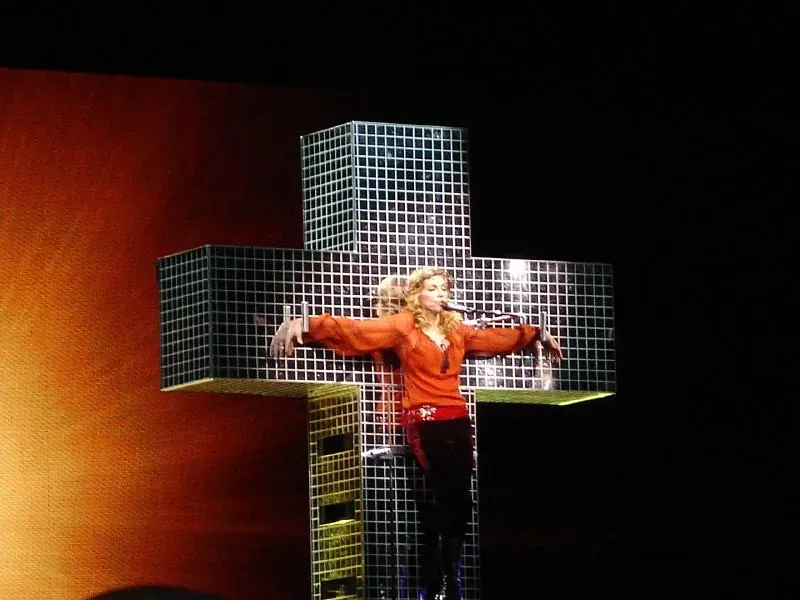
Nearly three decades after Rod Stewart set his Copacabana record, the same stretch of beach became the backdrop for another genuinely stunning moment in live music history. On May 4, 2024, Madonna transformed Rio de Janeiro’s Copacabana Beach into the world’s largest dance club as she performed the final night of her Celebration Tour before some 1.6 million fans, making it the largest audience ever assembled for a stand-alone concert.
The free show surpassed the Rolling Stones’ record-setting 2006 concert in the same locale, which had brought in 1.5 million fans. The attendance is also more than ten times Madonna’s previous record attendance of 130,000 at Paris’ Parc des Sceaux in 1987. That jump, from 130,000 to 1.6 million, tells you everything about the sheer gravitational pull this concert had.
Putting together a show for 1.6 million people required eighteen sound and video towers, an 8,700-square-foot stage, along with chartering cargo planes to fly in production. Rio’s state and city governments spent $3.9 million on the concert. However, the city hall reported that the show generated the equivalent of around $60 million when accounting for fan spending on hotels, transport, and food. An investment that paid off on every possible level.
4. Monsters of Rock, Tushino Airfield, Moscow, 1991 – When Metal Meant Freedom
Here is a show that was never just about music. It was about a society cracking open. On September 28, 1991, Moscow’s Tushino Airfield was packed with 1.6 million heavy metal fans for the Monsters of Rock festival, featuring AC/DC, Metallica, Pantera, The Black Crowes, and E.S.T. The concert became a symbol of newfound freedom in Russia after the fall of the Soviet Union.
The concert represented more than just a music event. It was a moment of cultural and political significance, as Western rock music had long been restricted in the Soviet Union. This concert marked a shift in the cultural landscape of Russia, with heavy metal and rock music symbolizing newfound freedom for the people. Think about that for a moment. Songs that were once considered dangerous contraband were now shaking the ground of the country that had banned them.
Metallica’s 1991 Moscow performance to a crowd of approximately 1.6 million remains iconic to this day. While exact figures are debated, the scale was undeniably enormous. This event is often referred to as Metallica’s biggest concert and a defining moment in rock history. There are not many shows where the social and political subtext was as loud as the amplifiers.
5. Jean-Michel Jarre, Moscow State University, 1997 – Technology Meets Ten Miles of Audience
Jean-Michel Jarre is a name that casual music listeners might not always recognize immediately. Serious fans of large-scale live performance, however, know exactly who he is: the man who turned entire cities into stages. French electronic composer and performer Jean-Michel Jarre holds the record for the largest concert attendance at a single outdoor event. In 1997, during the Oxygen In Moscow concert, he performed in front of a staggering 3.5 million people, celebrating the 850th anniversary of Moscow.
The event drew a ticketed audience of 500,000, though people who failed to get tickets watched the show from the surrounding hills, bringing estimates up to around 3.5 million. The ticketed crowd alone would fill most of the world’s biggest stadiums several times over. The rest simply arrived with blankets and watched from every available hillside and rooftop.
Jarre’s use of cutting-edge technology in his concerts, including laser shows and fireworks, set the stage for large-scale outdoor concerts in the years to come. The event was a symbol of the end of the Cold War era and a celebration of freedom and unity for Moscow’s citizens. While Moscow was the biggest show of Jarre’s career, it is not the only time the musician has performed for more than a million fans, as he has done so on four other occasions. A remarkable and strangely underappreciated record.
6. Jean-Michel Jarre, La Défense, Paris, 1990 – A City as a Canvas
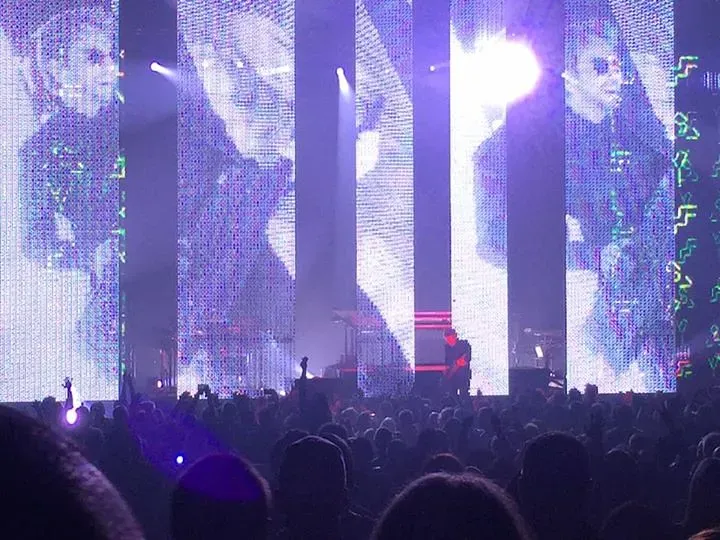
Two entries for one artist might seem unusual. But Jarre simply occupies a different territory of live performance than almost anyone else in music history. Jean-Michel Jarre delivered a spectacular electronic music concert in La Défense, Paris, attracting 2.5 million attendees. Featuring 3D projections, laser shows, and synchronized lights, this event was a technological marvel. The concert celebrated Bastille Day, making it a significant moment in French music history.
In July 1990, Jarre performed in Paris to 2.5 million attendees. This free concert at La Défense was a multimedia masterpiece. The venue, surrounded by skyscrapers, became a canvas for projections, fireworks, and futuristic lighting, blending technology and music in a way only Jarre could. I think it is fair to say that this remains one of the most visually audacious live events ever conceived. The architecture itself became part of the show.
Jean-Michel Jarre held a total of five free concerts with over a million attendees. No other artist in recorded music history comes close to that specific achievement. It places him in a category so far outside the mainstream conversation about live music that it almost defies belief.
7. The Rolling Stones, Copacabana Beach, 2006 – Rock’s Greatest Band, World’s Most Famous Beach
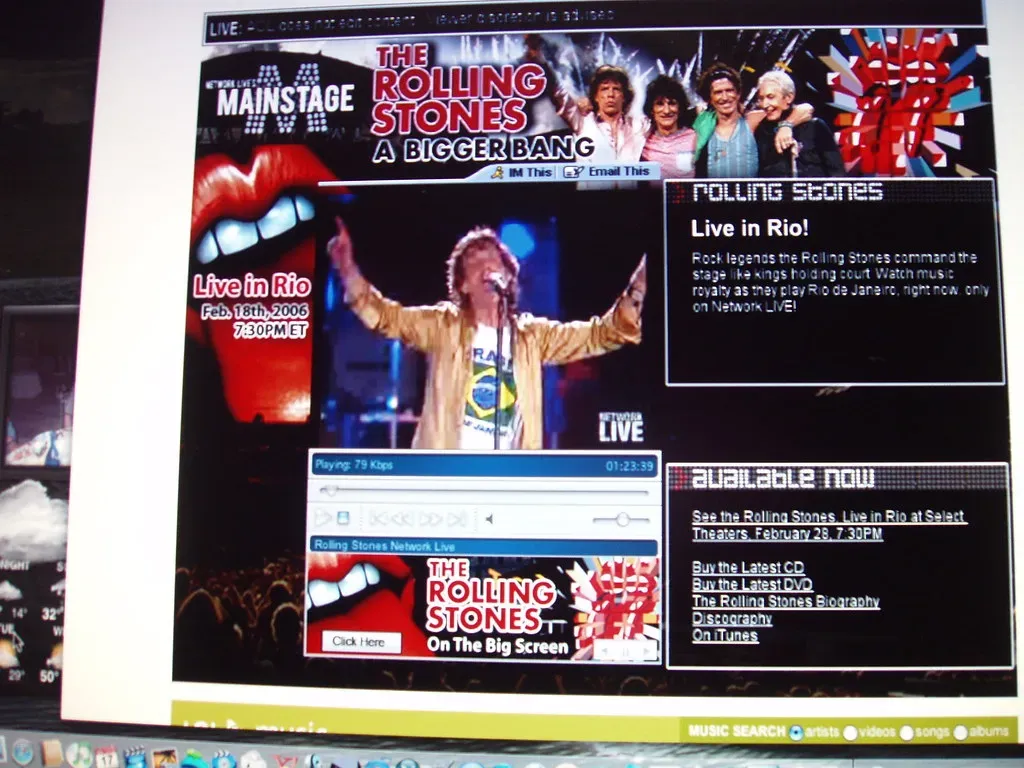
There is something almost mythological about Copacabana Beach as a venue. The famed beach in Rio de Janeiro was the scene of one of the biggest rock shows ever when the Stones performed to 1.5 million fans on February 18, 2006. It was carnival week too, so the city was already bursting at the seams with people ready to party. The timing was, to put it lightly, impeccable.
The Rolling Stones have been synonymous with massive crowds throughout their career, and in 2006 they broke a monumental record for concert attendance. They performed to an audience of 1.5 million people, making it one of the largest crowds in rock history. The backdrop of the Corcovado mountains and the Atlantic Ocean behind them elevated it from a rock show into something closer to a natural event, like a storm or an eclipse.
The Rolling Stones have long been known for their high-energy live performances and are often referred to as the greatest rock band of all time. The legendary rock band performed their greatest hits against the iconic backdrop of Rio, making this one of the biggest crowds ever for a live rock show. For a band that had already been performing for over four decades at that point, the Copacabana show was proof that some acts simply do not have a ceiling.
8. Woodstock, August 1969 – The Concert That Became a Cultural Earthquake
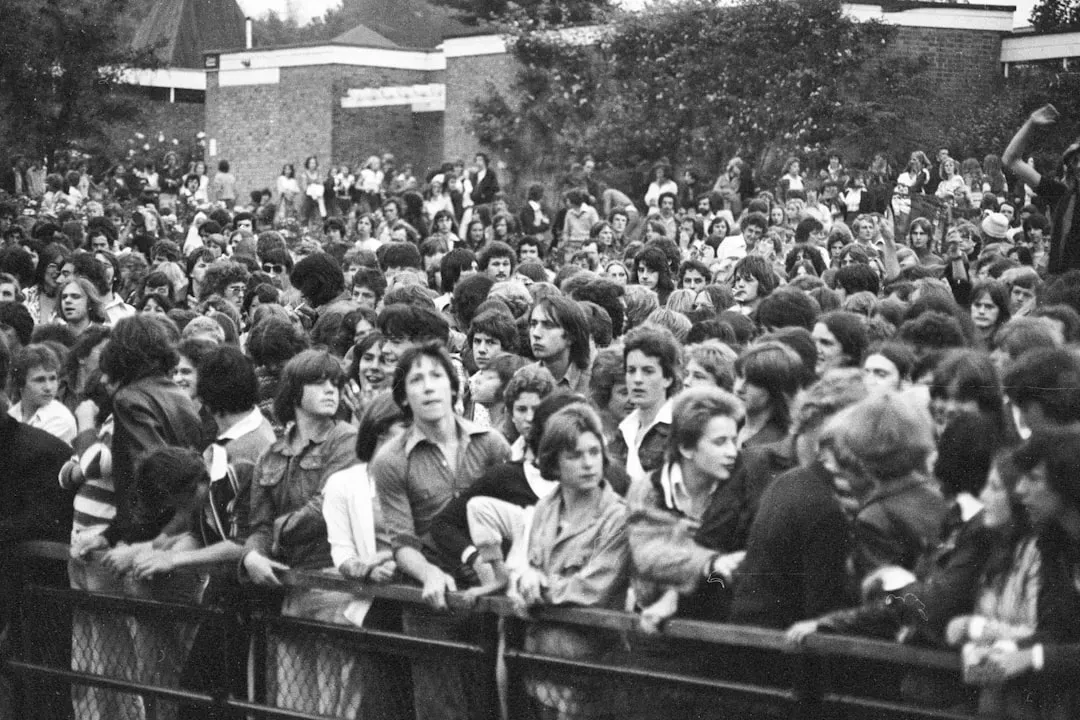
No list of legendary live shows can honestly exist without Woodstock. Full stop. Woodstock 1969 saw nearly 500,000 people attend the festival, with The Who’s electrifying performance being one of its highlights. The festival symbolized the cultural revolution, and The Who’s performance became a defining moment. The massive crowd and iconic music of the era created an unforgettable atmosphere, cementing Woodstock’s place in music history.
The event was not designed to host half a million people. It was designed for a fraction of that. When the fences went down and the crowd simply kept arriving, the organizers had to make a decision that changed everything: they declared it a free concert and let it happen. That improvised generosity is, in many ways, the whole story of what Woodstock was. The first concert to sell at least 100,000 tickets in recorded history was by the Grateful Dead at Englishtown Raceway Park in 1977, years after Woodstock, which shows just how unprecedented those 1969 crowds truly were.
What is it about Woodstock that still resonates so powerfully? It’s hard to say for sure, but I think it goes beyond the performances. It was the feeling, captured in photographs and documentary footage, that an entire generation briefly believed it could build something new. A concert becomes historically significant when it transcends being just a performance and becomes a cultural event. Factors like the scale of the crowd, the importance of the artist, and the event’s impact on the music industry contribute to its legacy. By every single one of those measures, Woodstock remains without equal.
Conclusion: What Makes a Show Truly Legendary?
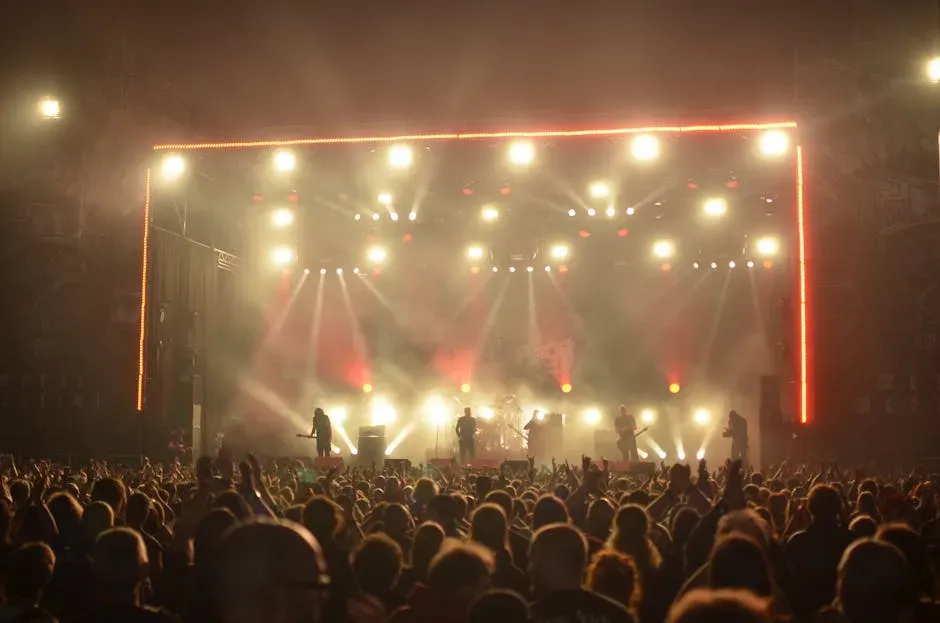
Looking back across these eight shows, a pattern starts to emerge. Numbers matter, sure. Three and a half million people on a beach is objectively staggering. But numbers alone do not make a show legendary. Queen’s Live Aid performance had only 72,000 people in the stadium, yet it reached nearly two billion globally and was voted the greatest rock gig of all time twenty years later. Scale and impact are not always the same thing.
What each of these shows shares is a quality of irreversibility. Something happened that could not be undone, could not be replicated, and could not be fully described to someone who was not there. These record-breaking concerts are more than just performances; they represent the immense energy of live music and its ability to unite people. In an age of infinite streaming and perfect recordings, that quality, the sense of something genuinely unrepeatable, is more valuable than ever.
Which of these shows do you wish you could have witnessed? Tell us in the comments.