Every year, the Academy hands out its golden statue to the film it considers the very best of its moment. Yet history has a funny way of correcting that judgment. Some Best Picture winners fade so completely that even devoted classic film fans forget they exist, tucked away behind flashier titles like Casablanca or Gone with the Wind. Here are eight Oscar winners that once dominated the conversation and now sit almost entirely unwatched.
1. The Broadway Melody (1929)

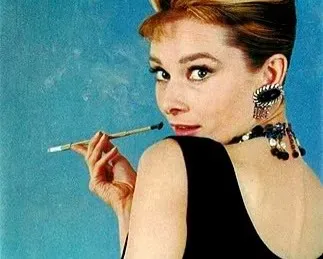
The Broadway Melody carries genuine historical weight as the first sound film and first musical to win Best Picture, arriving right after the silent era winner Wings. Released in 1929 and directed by Harry Beaumont, it was groundbreaking during Hollywood’s transition from silent films to sound, marking the first all-talking Hollywood musical and the first sound film to win Best Picture. It was also a massive hit in its day, becoming the highest-grossing film of 1929, earning about 4.4 million dollars worldwide on a modest budget of 379,000 dollars.
Despite that success, modern audiences rarely seek it out, and even film scholars admit it hasn’t aged gracefully. Critics say the film now feels dated due to its stage-style acting and uneven storytelling. Adding to its obscurity, part of its original charm is simply gone forever, since the technicolor musical sequence is now entirely lost, making The Broadway Melody the only Best Picture winner not to survive intact to the present day.
2. Cimarron (1931)

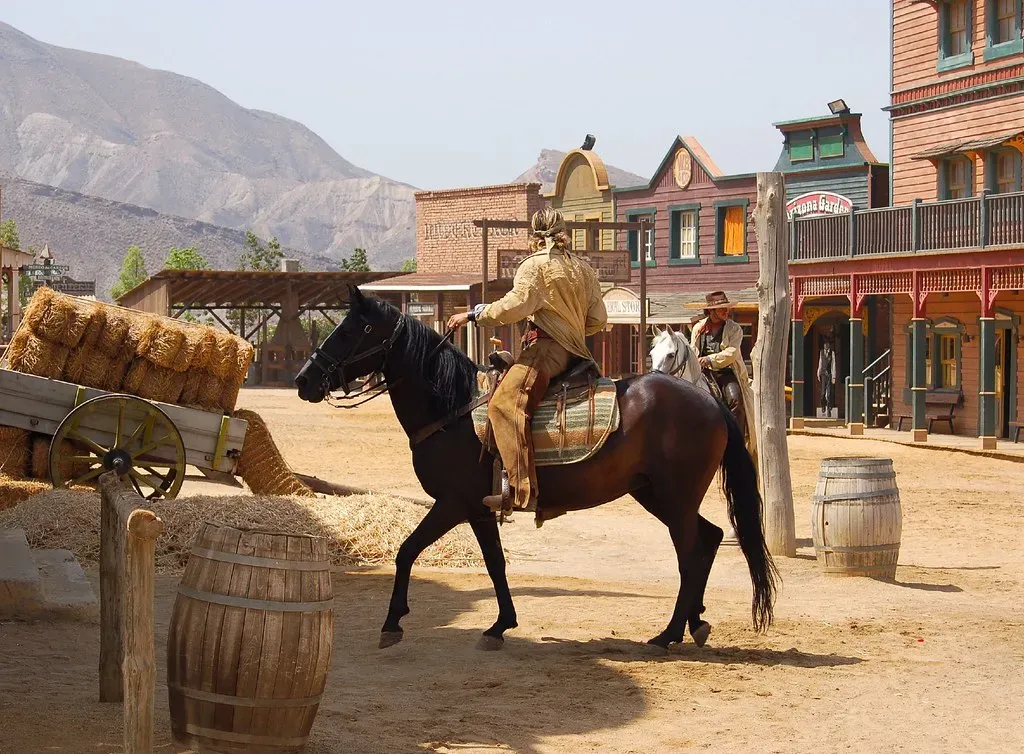
Cimarron holds a strange distinction as a trailblazer that nobody talks about anymore. It was the first Western to win Best Picture, and would remain the only one to do so until Dances With Wolves won in 1990. At the time it was a genuine spectacle, mounted at RKO with thousands of extras recreating the Oklahoma land rush, and it swept the ceremony with wins beyond the top prize. Beyond Best Picture, Cimarron won Adapted Screenplay and Art Direction, and tallied six more nominations.
Time has not been kind to it, though. Among the early Oscar winners, Cimarron takes its place alongside those that are poorly remembered and rarely watched by modern audiences, and it is not generally regarded as a classic. Its reputation took a further hit for its outdated racial depictions, and according to IMDb’s rating system, it has the lowest score of any Best Picture winner. A misguided 1960 remake with Glenn Ford did nothing to revive interest either; it simply came and went.
3. Cavalcade (1933)

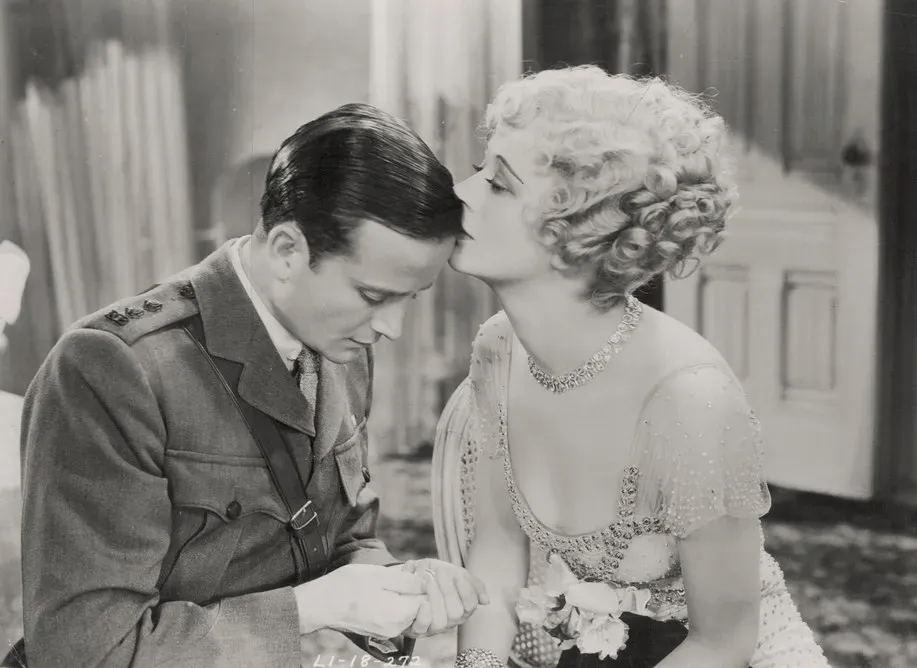
Cavalcade was once considered the height of prestige filmmaking, a sprawling saga following two British families through decades of history, from the Boer War to the sinking of the Titanic and beyond. Frank Lloyd’s Cavalcade, the Oscar winner of 1933, was Fox’s most prestigious and most important production to date, based on Noel Coward’s stage spectacular. It won convincingly at the ceremony, and its Best Director win produced one of the Oscars’ first famous mix-ups, when Will Rogers simply announced “Come up and get it, Frank!” and Frank Capra, certain he was the winner, ran to the podium only to discover Rogers had meant Frank Lloyd, who had won for Cavalcade.
Today the film is genuinely hard to even find, let alone watch. One longtime IMDb reviewer describes it as an often forgotten, but very excellent Best Picture winner that stands up amazingly well after seventy years, a lonely defense against the tide of obscurity. For decades, it also had a distribution problem that kept casual viewers away entirely, since at one point it was the only Best Picture Oscar winner not to be available on DVD in the Region 1 territory.
4. The Great Ziegfeld (1936)

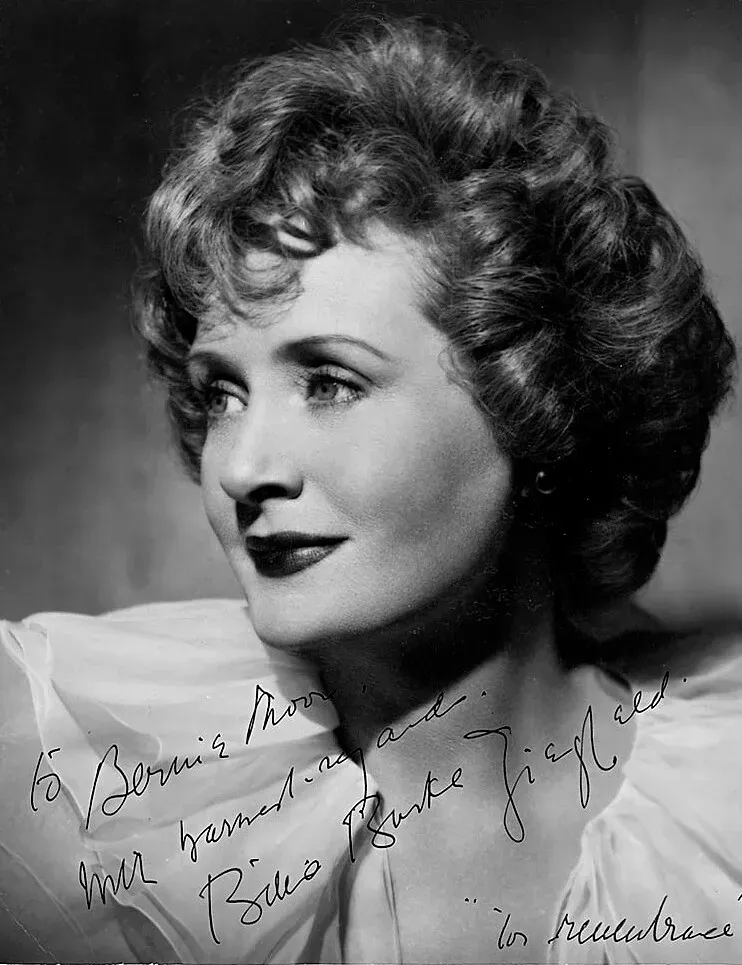
The Great Ziegfeld was MGM’s answer to lavish, star-studded spectacle, a three-hour biopic of Broadway impresario Florenz Ziegfeld Jr. built around musical numbers that were considered jaw-dropping for their time. It was helmed by Robert Z. Leonard and starred William Powell, Myrna Loy, and Luise Rainer, tracing roughly forty years of Ziegfeld’s life. Rainer’s performance earned her a Best Actress win, and the film’s centerpiece production number remains a genuine curiosity of early Hollywood excess. Even so, it has slipped almost entirely from public memory.
Film historians now describe it in blunt terms. Robert Z. Leonard’s musical epic The Great Ziegfeld is probably one of the most forgotten-about Best Picture winners to ever pull off the big win. Part of the problem is length and pacing; as one review puts it, the movie, which won raves in the 1930s upon its initial release, represents one of a number of highly respected motion pictures that has not aged well, and many of the musical numbers are dated. It also took an unusually long time to reach home video in high definition, trailing behind almost every other winner of its era.
5. The Life of Emile Zola (1937)


This one is a genuine surprise on any “forgotten” list because the underlying material, the Dreyfus Affair, still resonates as a story about injustice and moral courage. The film chronicles Zola’s days as a struggling writer in Paris through his brilliant J’accuse, which exposed the Dreyfus Affair as a gross injustice covering up government incompetence, and it earned three Academy Awards including Best Picture. Paul Muni’s central performance was widely praised at the time and still holds up reasonably well for viewers who stumble across it. It also marked Warner Bros’ first-ever Best Picture Oscar, a milestone that mattered enormously to the studio at the time.
Yet almost nobody watches it now, and even the people who do tend to frame it as a rediscovery rather than a known classic. It’s one of the hidden Best Picture winners that reviewers hope experiments like retrospective viewing projects can shed some much needed light on. One IMDb reviewer went so far as to call it one of the great forgotten films of all time. Its title doesn’t help either, since the film is really about the Dreyfus case rather than a full biography of Zola, which confuses modern audiences searching for it.
6. You Can’t Take It with You (1938)


Frank Capra directed this adaptation of the Pulitzer Prize winning stage comedy, and it swept the Best Picture and Best Director categories at a time when Capra was arguably the most trusted filmmaker in America. It starred Jean Arthur, Lionel Barrymore, and a young James Stewart, playing a wealthy, eccentric family navigating class differences and a looming business deal. The film’s gentle, whimsical tone about a household that refuses to conform to conventional ambition made it a crowd favorite on release.
Its problem today is simply comparison. Capra made several films around the same period, including Mr. Smith Goes to Washington and, later, It’s a Wonderful Life, that have become permanent fixtures of American film culture, while You Can’t Take It with You gets remembered mostly by classic film completists. It isn’t a bad film by any measure, but it lives in the shadow of its own director’s better known work, which is an unusual kind of obscurity for a Best Picture winner.
7. Going My Way (1944)


Going My Way turned Bing Crosby into an unlikely Oscar winner, casting him as a modern, guitar-playing priest sent to revitalize a struggling New York parish. The film won seven Academy Awards that year, including Best Picture, Best Director for Leo McCarey, Best Actor for Crosby, and Best Original Song, making it one of the most dominant winners of its decade. Its sequel, The Bells of St. Mary’s, released the following year, actually earned more nominations, which says something about how quickly the original faded from cultural relevance.
Part of the reason Going My Way rarely airs today is tone. Its gentle, sentimental portrait of faith and community feels distant from contemporary storytelling, and unlike Crosby’s Christmas specials or White Christmas, it has no annual holiday tradition keeping it in circulation. Film scholars still study it as a snapshot of wartime American values, but casual viewers essentially never encounter it outside of classic film retrospectives or academic film courses.
8. Around the World in 80 Days (1956)

Producer Mike Todd built Around the World in 80 Days as an enormous, star-stuffed spectacle based on Jules Verne’s adventure novel, featuring David Niven as the meticulous Phileas Fogg racing to win a wager. The film leaned heavily on the “cameo” concept, stuffing dozens of famous faces into brief appearances, a novelty that felt thrilling in 1956 but reads as gimmicky and dated now. At nearly three hours, its episodic globe-trotting structure hasn’t aged particularly well against tighter modern epics.
It remains one of the least discussed Best Picture winners of the 1950s, largely absent from streaming platforms and rarely mentioned alongside its more enduring contemporaries like The Bridge on the River Kwai or Ben-Hur. Its home video history has also lagged behind other winners of its era, contributing to its low visibility among younger film audiences. What was once considered the height of big-budget showmanship now mostly survives as a trivia answer rather than a film people actually sit down to watch.
Taken together, these eight winners tell a consistent story about how quickly cultural relevance can slip away, even for a film wearing Hollywood’s highest honor. Spectacle fades, sentimentality dates faster than drama, and being first at something guarantees a footnote in history books more than a spot in anyone’s rewatch list. The Oscar itself never expires, but audience attention clearly does.