
There’s a particular kind of trick pop music plays on listeners. A song gets stuck in your head, you sing along at parties, maybe you even walk down the aisle to it, and then one day you actually listen to the words. What follows can be a small betrayal, the realization that a tune you loved for its bounce was quietly describing something devastating all along. The gap between a song’s sound and its subject isn’t always accidental. Sometimes it’s the entire point, a way of smuggling a hard truth past listeners who’d otherwise change the station. Here are eight songs where the melody promises one thing and the lyrics deliver something else entirely.
Pumped Up Kicks by Foster the People


Released in 2010, this breezy indie pop track spent eight weeks at number one on Billboard’s Rock Songs chart, and its whistled hook made it a festival and radio staple for years. The upbeat 2010 pop hit “Pumped Up Kicks” by Foster the People spent eight weeks at number one on Billboard’s Rock Songs chart. Underneath the sunny production, the song is narrated from the perspective of a troubled, isolated teenager named Robert. Although its tone is jubilant and upbeat, prompting some fans to blast it during celebratory times, “Pumped Up Kicks” is about a boy named Robert, who fantasizes about shooting up his school.
Frontman Mark Foster has said the song grew out of watching youth mental health struggles and the recurring pattern of school shootings in America. He described writing it from a place of wanting legislation passed that could limit access to weapons because mass shootings were becoming disturbingly common. The band’s connection to the subject wasn’t abstract either. Bassist Cubbie Fink’s cousin survived the Columbine shooting and was in the library when it happened. After the Sandy Hook tragedy, several radio and TV outlets scaled back or dropped the song entirely, and Foster has since spoken about considering retiring it from live sets altogether.
Timothy by The Buoys


Few songs have a stranger origin story than this 1970 bubblegum pop single. Songwriter Rupert Holmes, years before writing “Escape (The Piña Colada Song),” set out deliberately to write something controversial enough to get banned. The Buoys’ 1970 hit “Timothy” has such a catchy melody and beat that you wouldn’t expect its lyrics to be dark, but indeed they are. “Timothy” recounts the story of a mining accident that traps several workers in a cave, and implies that while the miners waited for rescuers to find them, they ate one of their crew, the titular character.
Holmes was careful never to state the cannibalism outright. He made the lyrics just vague enough that the act is only an implication, never an outright confession. The gamble worked exactly as planned. The song had already attracted such a following that as some radio stations banned it, competing stations picked it up to meet the demand, and instead of dropping off it kept climbing the Billboard Hot 100. It eventually peaked in the upper reaches of the chart, becoming a peculiar footnote in pop history: a peppy singalong about eating a friend to survive.
Every Breath You Take by The Police


This 1983 single is one of the most licensed wedding songs of all time, its smooth guitar line and Sting’s gentle delivery making it feel like a tender promise. In reality, Sting has repeatedly described it as something far darker. He once called it “a nasty little song, really rather evil,” adding that “it’s about jealousy and surveillance and ownership.”
The lyrics track an obsessive narrator watching a former partner’s every move, not out of affection but out of a need for control. Sting has said the song “sounds like a comforting love song,” but that he “didn’t realize at the time how sinister it is,” explaining he was thinking of Big Brother, surveillance and control. The song’s staggering popularity, including recognition as one of the most played tracks in radio history, only deepens the irony that so many couples chose it for their first dance without registering what it’s actually describing.
Semi-Charmed Life by Third Eye Blind


With its doo-wop intro and singalong “doo-doo-doo” hook, this 1997 single sounds like the ultimate summer anthem, and radio treated it that way for months. Beneath the surface, though, it traces a relationship collapsing under the weight of crystal meth addiction. This song describes a drug user’s descent into crystal meth addiction.
Frontman Stephan Jenkins built the contrast into the song on purpose, pairing a jittery, bright riff with lyrics about a habit spiraling out of control. Jenkins explained that he intentionally put a chipper melody to the dark lyrical content, wanting the guitar riff to have “this shiny thing, because that was a feeling of speed,” and calling meth “a bright, shiny drug.” Some radio stations edited or distorted the line referencing the drug directly, yet the song still became one of the defining hits of the decade, a testament to how effectively an upbeat arrangement can disguise a grim narrative.
Born in the U.S.A. by Bruce Springsteen

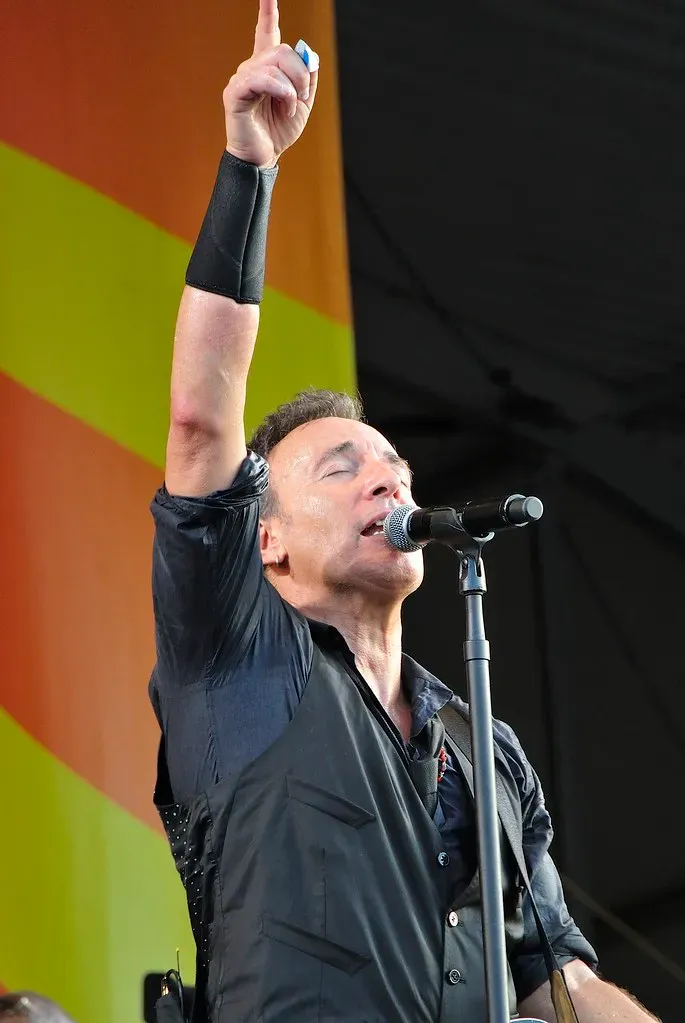
The thundering synths and shouted chorus of this 1984 track made it an instant stadium anthem, and it was widely mistaken for a flag waving celebration of American pride. The verses tell a very different story about a Vietnam veteran returning home to unemployment, indifference, and a country that has moved on without him. Often misinterpreted as a full-throated patriotic anthem, the song is actually about the problems Vietnam veterans faced when they returned to America, at a time when they were mostly ignored while many suffered from post-traumatic stress and other lasting effects.
Springsteen drew inspiration in part from meeting Vietnam veteran and author Ron Kovic, whose memoir described his own return home in a wheelchair after being paralyzed in combat. Springsteen had read Kovic’s book after buying it at a gas station in Arizona and was moved by the story of a young man who enlisted, went to Vietnam, and came home paralyzed from the waist down. Even Springsteen has acknowledged the song’s fate as one of the most misread pieces of music ever recorded, its rousing chorus overpowering the bleak story sitting right beneath it.
Tubthumping by Chumbawamba


“I get knocked down, but I get up again” turned this 1997 single into an inescapable party anthem, played at everything from sporting events to celebrations. The song is far from a simple drinking singalong, though. It was written as a tribute to the resilience of working class communities enduring hardship, unemployment, and the daily grind of getting by.
The band has pushed back firmly whenever politicians or corporations have tried to co-opt the song for causes at odds with its original meaning. Chumbawamba’s lead guitarist Boff Whalley has denounced the use of the song by figures whose politics clash with its intent, stating that it was written to celebrate the resilience of working-class folk. Underneath its bar anthem energy, “Tubthumping” is really about people who keep going despite being ground down by circumstances well outside their control, a theme far heavier than its drunken sing-along reputation suggests.
Hey Ya! by OutKast


Few songs have made heartbreak sound as fun as this 2003 hit, with its clapping beat and instantly danceable energy turning it into an inescapable radio and wedding staple. Beneath the funk influenced production, the lyrics describe a relationship that both partners know is broken but neither is willing to end. Lines about staying together despite unhappiness and questioning whether “forever” ever really works out point to quiet resignation rather than celebration.
André 3000 has spoken over the years about the song being about the difficulty of sustaining commitment and the gap between how relationships are idealized and how they actually play out. The joyful call and response of the chorus, with the crowd shouting along, masks verses that are essentially a confession of romantic disillusionment. It remains one of the clearest examples of a song whose infectious energy completely overshadows its more resigned, even sad, subject matter.
99 Luftballons by Nena


This 1983 German new wave hit bounces along with a driving synth line and singalong chorus that made it a global smash, even for listeners who didn’t speak German. The lyrics describe a group of children releasing ninety-nine balloons into the sky, an image mistaken for radar signals that triggers a chain reaction ending in nuclear war. Written during a period of heightened Cold War tension in Europe, the song used a catchy pop format to comment on how easily paranoia and military posturing could spiral into catastrophe.
The English language version, titled “99 Red Balloons,” softened some of the original German lyrics but kept the same underlying arc from innocent gesture to global destruction. Despite the grim ending the song describes, it remains a fixture of eighties nostalgia playlists, often stripped of the context that made it a pointed piece of anti-war commentary in its own era. Few one-hit wonders manage to pack a warning about nuclear annihilation into three minutes of danceable synth pop, which is part of why the song has endured.
Taken together, these eight songs share a similar sleight of hand. A hook that sounds carefree buys a few seconds of a listener’s guard being down, just long enough for the actual story underneath to slip in unnoticed. That gap between sound and subject is often deliberate, a way for songwriters to say something uncomfortable while keeping people dancing. None of this makes the songs any less enjoyable to hear. If anything, knowing the real story adds a layer that a passive listen never would have revealed, turning a familiar chorus into something worth paying closer attention to the next time it comes on.