
There’s a certain kind of book that doesn’t just entertain you. It rewires you. You put it down and realize, with a strange and slightly unsettling clarity, that you can never go back to thinking the way you did before. That’s not a comfortable experience, honestly. It’s a little like finding out the map you’ve been using your whole life was printed upside down.
These nine books are exactly that kind of read. They span history, psychology, philosophy, and human behavior. Some are decades old. Some are newer. All of them have quietly reshaped how millions of people understand themselves, other humans, and the civilization we’ve all built together. Be prepared for a few uncomfortable truths.
1. Sapiens: A Brief History of Humankind – Yuval Noah Harari

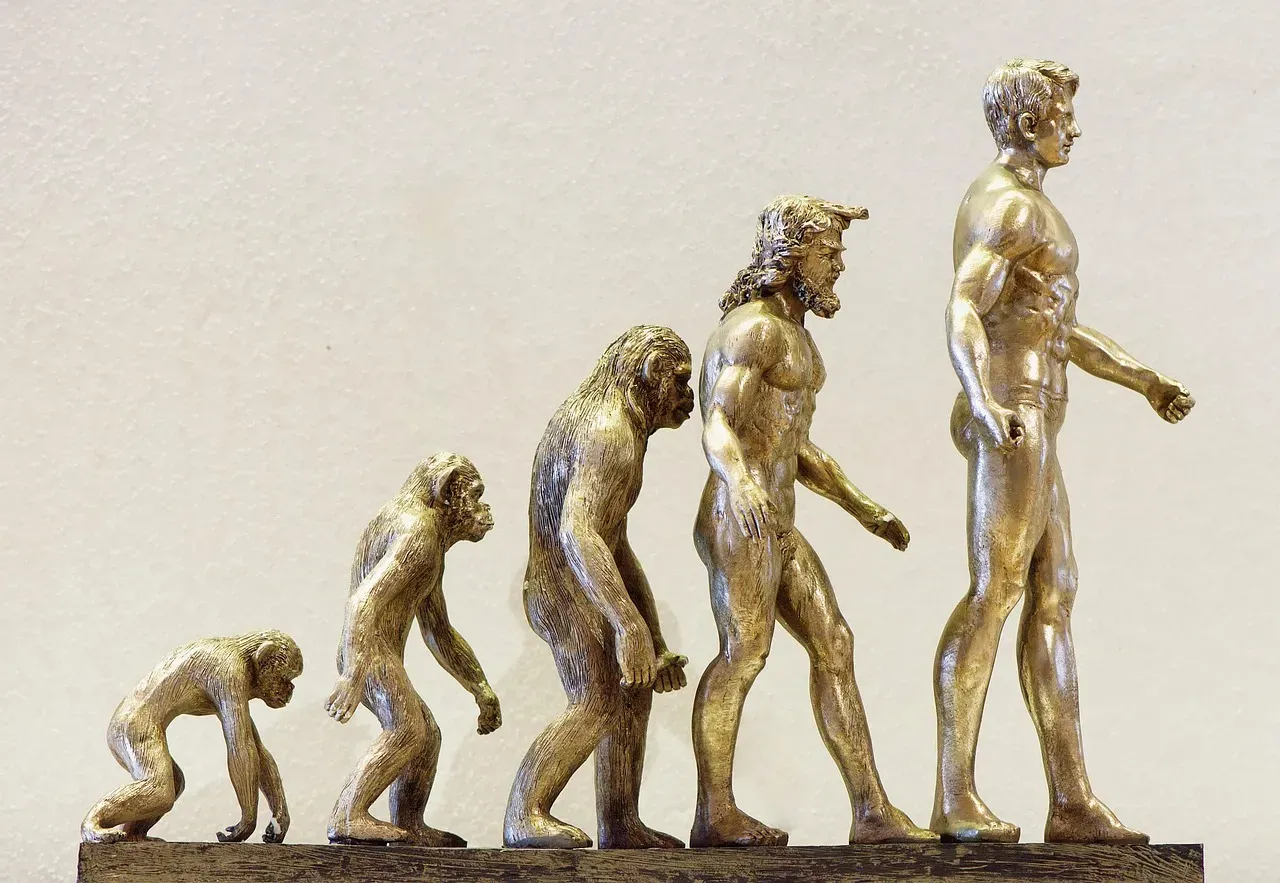
Let’s get the obvious one out of the way first, because it absolutely earns its reputation. Harari’s books have sold over 45 million copies in 65 languages, with Sapiens alone selling 25 million copies since it was first published in 2013. That’s not a bestseller. That’s a cultural phenomenon.
Sapiens takes us on a breathtaking ride through the entire history of our species, from our evolutionary roots to the age of capitalism and genetic engineering, seeking to uncover why we humans are the way we are, and how we rose from insignificant animals to the rulers of planet Earth.
Harari argues, for instance, that the Agricultural Revolution was history’s biggest fraud, with wheat domesticating humans rather than the other way around. He also proposes that money is the most universal and pluralistic system of mutual trust ever devised. Provocative? Very. Hard to argue against? Even more so. A New York Times and Sunday Times number one bestseller, Sapiens spent an incredible 96 consecutive weeks in the top three of the Sunday Times bestseller list.
2. Man’s Search for Meaning – Viktor E. Frankl

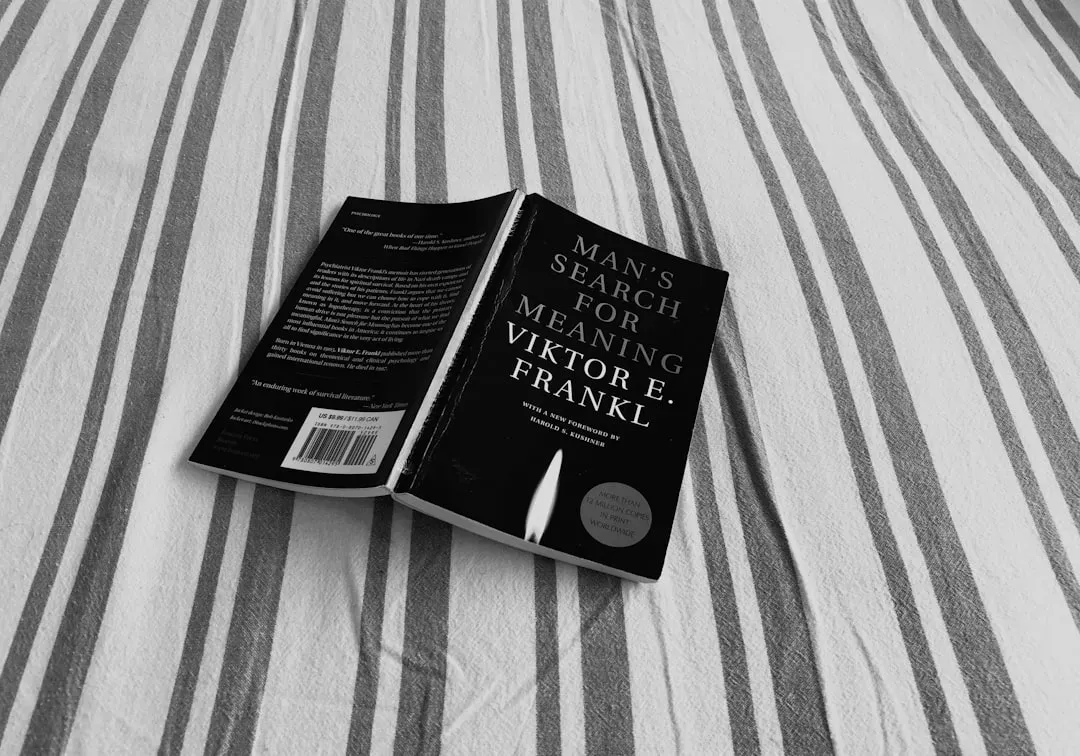
Few books hit you quite as hard as this one. I know it sounds intense, but nothing else on this list deals so directly with the deepest question a human being can ask: why go on? In one of the most influential books of the 20th century, psychiatrist Viktor Frankl documents the three years he spent in Nazi concentration camps. His memoir confronts the daily realities of violence, dehumanization, and suffering, but its lasting power lies in Frankl’s exploration of how meaning can help people endure even the worst circumstances.
Frankl describes how prisoners who held onto a sense of purpose, whether it was reuniting with a loved one, achieving a goal, or simply maintaining hope, often survived longer than those who could not find meaning in their lives. After his liberation, Frankl developed logotherapy, a form of psychotherapy based on the idea that the deep human drive to find purpose is central to one’s capacity for resilience, hope, and fulfillment.
According to a survey conducted by the Book-of-the-Month Club and the Library of Congress, Man’s Search for Meaning belongs to a list of the ten most influential books in the United States. At the time of the author’s death in 1997, the book had sold over 10 million copies and had been translated into 24 languages. As of 2022, the book has sold 16 million copies and been printed in 52 languages. The numbers keep climbing because the need for meaning never goes away.
3. Thinking, Fast and Slow – Daniel Kahneman


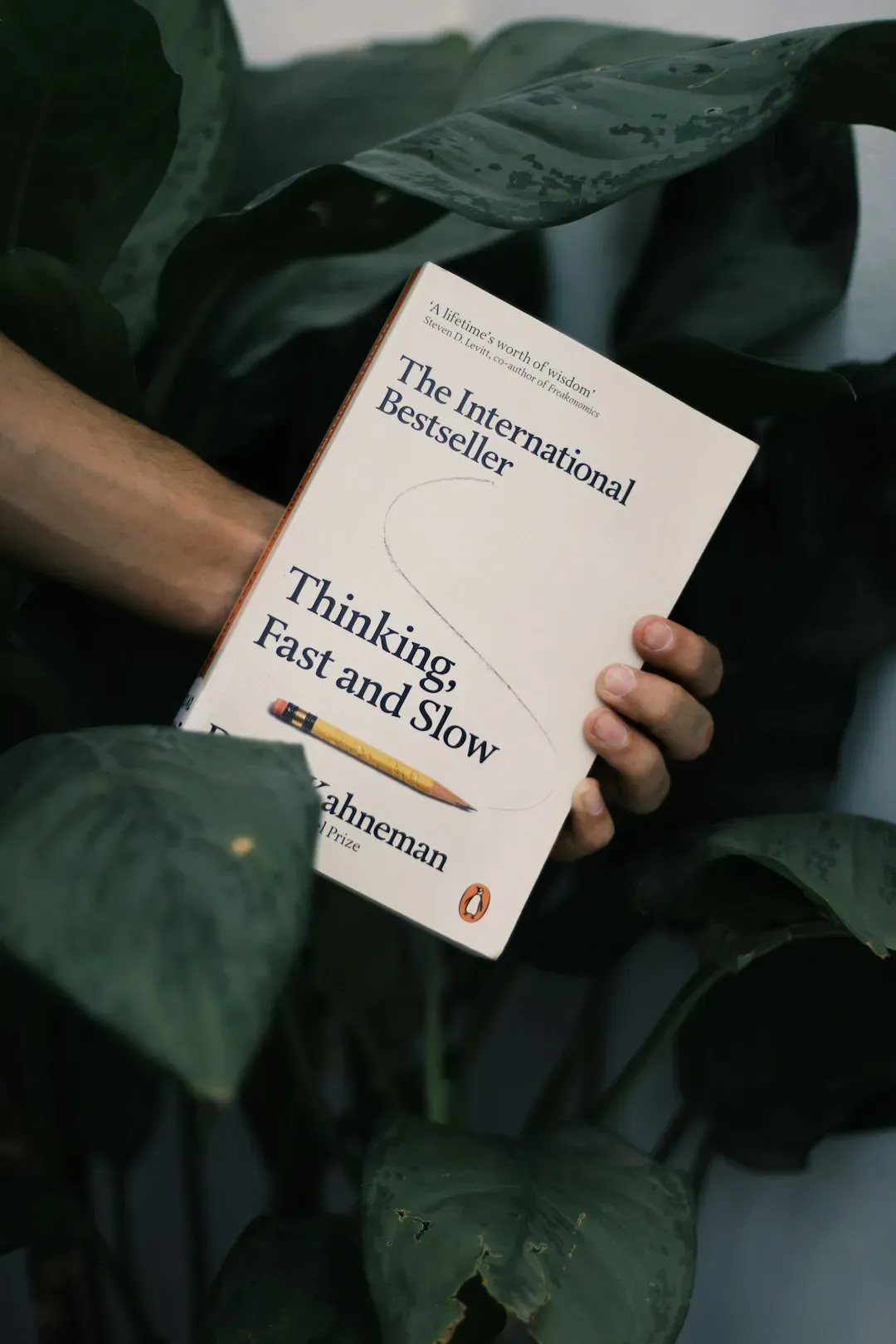
Here’s the thing – you believe you are a rational person. You make thoughtful decisions. You weigh the evidence. Or at least, you think you do. Thinking, Fast and Slow is a popular science book by the Israeli-American psychologist Daniel Kahneman. Its main thesis is a differentiation between two modes of thought: System 1, which is fast, instinctive, and emotional; and System 2, which is slower, more deliberative, and more logical.
From framing choices to people’s tendency to replace a difficult question with one that is easy to answer, the book summarizes several decades of research to suggest that people have too much confidence in human judgment. That stings a little, but it should. With Amos Tversky and others, Kahneman established a cognitive basis for common human errors using heuristics and biases, and developed Prospect Theory. He was awarded the 2002 Nobel Prize in Economics for his work.
Topping bestseller lists for almost ten years, Thinking, Fast and Slow is a contemporary classic, an essential book that has changed the lives of millions of readers. It’s the kind of book that makes you second-guess almost every instinct you have, which is, it turns out, exactly the point. Daniel Kahneman’s Thinking, Fast and Slow continues to rank consistently among the top psychology and nonfiction bestsellers year after year.
4. Atomic Habits – James Clear

Honestly, a book about habits might not sound like it will change your entire worldview. But here’s what makes Atomic Habits different: it doesn’t just tell you to be better. It explains with remarkable precision why you aren’t, and what you can actually do about it. The argument is simple but devastating: you don’t rise to the level of your goals, you fall to the level of your systems.
With sales just shy of 85,000 copies in the first half of 2025 alone in the UK market, Atomic Habits by James Clear is the most popular popular psychology title, retaining its crown from the same point in 2024, according to data from Nielsen IQ BookScan’s Total Consumer Market. That’s a staggering figure for a book first published in 2018.
Clear’s sales figures are still twice as many as his nearest rival, and all the more impressive as Atomic Habits was initially released way back in 2018 and is on course to be the bestselling popular psychology title of the year, a feat it has achieved annually since 2021. When a book this practically minded refuses to leave the charts year after year, you have to take it seriously.
5. Robert Sapolsky’s “Behave: The Biology of Humans at Our Best and Worst”


Why do we do the terrible things we do to each other? Why do we also do the beautiful things? Sapolsky, a neuroendocrinologist who has spent decades studying human and primate behavior, takes a radical swing at these questions. The answer, he argues, is never simple. Behave is an extraordinary exploration into the biological and environmental factors that shape human behavior. Drawing from neuroscience, psychology, endocrinology, and sociology, Sapolsky unpacks why we act the way we do, from acts of kindness to violence. The book delves deeply into brain chemistry, genetics, and social influences, illustrating the complex interplay between nature and nurture.
The author, a neuroendocrinologist and sociologist, lays out a broad survey of different ways to think about the world, from genetics to quantum physics. Based on his observations and a lifetime of interdisciplinary study, Sapolsky makes the argument that there is no action we take that can be explained by free will and not by a series of chemical, hormonal, environmental, and evolutionary factors that do a better job explaining why we do what we do.
That idea, that free will might be a story we tell ourselves, is deeply unsettling to a lot of people. It was unsettling to me, at least the first time I sat with it. Still, it is also strangely liberating. If behavior is biology, then understanding it is the beginning of changing it. That reframing alone is worth the price of the book.
6. The Power of Now – Eckhart Tolle

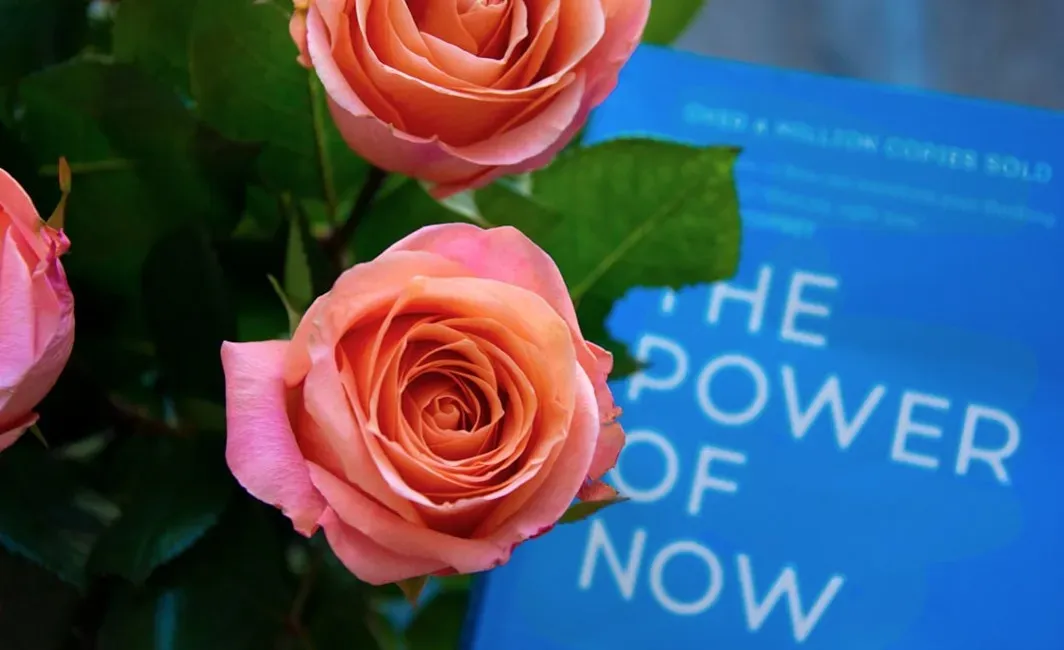
Some books make you smarter. This one makes you quieter. Eckhart Tolle’s guide to presence and consciousness has sold tens of millions of copies worldwide and has been translated into more than 33 languages. It is one of the rare books that crosses every cultural and demographic boundary you can name, resonating equally with a stressed-out executive in New York and a philosophy student in Seoul.
Tolle’s central argument is deceptively simple: most human suffering is created by thinking too much about the past or worrying too much about a future that doesn’t exist yet. The only place life actually happens is right now, in this moment. It sounds obvious until you spend three hours anxious about a meeting next Tuesday, and then it doesn’t sound obvious at all.
Books can have a life-altering effect, with a simple idea able to provide the catalyst for change. They allow us to see through the eyes of others and experience ways of living that can transform our original view of the world. From reflecting on our individual actions to understanding the complexities of life and how our past can influence the future, books can inherently change us. The Power of Now is probably the most direct example of that principle on this entire list.
7. The Checklist Manifesto – Atul Gawande


This one might surprise you. A book about checklists? Stay with me. Atul Gawande, a surgeon and staff writer for The New Yorker, begins with a sobering observation: highly trained experts, including surgeons, pilots, and engineers, make avoidable, catastrophic mistakes at an alarming rate. The solution, it turns out, is almost embarrassingly straightforward.
Gawande demonstrates that a simple, well-designed checklist can prevent failures that no amount of skill or intelligence can reliably prevent on its own. Think about what that means for how we understand expertise. The idea that even the world’s best surgeons need a list of steps is genuinely humbling, and it changes how you think about human performance in almost every field.
Some books synthesize history to reveal patterns and introduce lessons from the past. Still others tell stories, real or invented, that remind us of essential human truths. All have the power to inspire readers to think differently, use their imagination, and ask new questions. The Checklist Manifesto does all three, wrapped inside a medical thriller structure that is hard to put down.
8. Why Nations Fail – Daron Acemoglu and James A. Robinson


Ever wondered why some countries thrive and others don’t? This book will dismantle every lazy explanation you’ve ever heard, whether that’s geography, culture, or resources, and replace them with something far more compelling. Acemoglu and Robinson argue, using centuries of historical data, that the real difference between rich and poor nations comes down to institutions, specifically whether those institutions are inclusive or extractive.
The implications are enormous. It means poverty is not an accident of geography. It means prosperity is not a natural state. Every thriving society made deliberate choices, or stumbled into lucky historical moments, that created systems where people were incentivized to work, create, and innovate. That’s a deeply political argument with very human consequences.
Research consistently shows that political and economic systems shape outcomes in ways that challenge long-held assumptions about how power changes hands and who benefits from it. Mass movements succeed or fail based on conditions that are built into the structure of institutions themselves. Why Nations Fail builds on this kind of systemic thinking across a truly global canvas, and it never gets boring for a second.
9. Educated – Tara Westover


This memoir is different from everything else on this list, and that’s precisely why it belongs here. Tara Westover grew up in rural Idaho in a survivalist family that did not believe in public education or modern medicine. She had never set foot in a classroom before she was seventeen years old. She went on to earn a PhD from Cambridge University. The story between those two facts is one of the most extraordinary things you will ever read.
What makes Educated a worldview-changer is not just the dramatic arc of her life. It’s the questions she raises about identity, knowledge, and what it means to know something at all. When your entire reality has been constructed for you by people who love you but are also deeply wrong, how do you begin to separate truth from what you were told? That’s not just Westover’s problem. It’s everyone’s.
Books allow us to see through the eyes of others and experience ways of living that can transform our original view of the world. From reflecting on our individual actions to understanding the complexities of life and how our past can influence the future, books can inherently change us. Educated achieves this at a depth that is almost unbearably personal, and yet somehow universally relatable. It is a book about education, yes. But more than anything, it is a book about the courage it takes to question everything you think you know.
Final Thoughts

Nine books. Nine different angles on the same essential question: what is actually going on, and why? The most remarkable thing about all of these titles is that none of them give you easy answers. They give you better questions. And in a world that is moving faster and getting more complex by the month, better questions might be the most valuable thing you can carry with you.
The hard part is not picking one of these books up. The hard part is picking it up and then truly letting it work on you, sitting with the discomfort when it challenges something you’ve always believed. That’s where the real change happens. So, which one is calling your name? What would you have guessed you needed to read?