
There is something genuinely strange about the way a character who never existed can leave a mark so deep you carry them around for years. You finish the book, close the laptop, leave the cinema – and somehow, they stay. Not as a memory of a story, but as a kind of inner voice. A way of looking at the world that wasn’t quite there before.
Science has actually started catching up to what readers and viewers have felt for centuries. Research shows that the greater one’s identification with a character, the more likely it is that one’s self-beliefs, attitudes, and behaviors will change to become more similar to those of the character. These nine characters did exactly that – on a scale that touched millions. Let’s dive in.
1. Hamlet – The Man Who Made Self-Doubt Respectable

Before Hamlet, inner turmoil wasn’t particularly glamorous. Hesitation was weakness, introspection was self-indulgence. Then Shakespeare placed a grieving prince on stage sometime between 1599 and 1602, and everything shifted. Hamlet is regarded as the most complex character in modern literature, and his indecisiveness, thoughtfulness, loyalty, and morality are what make him so. He didn’t just entertain – he gave permission to an entire civilization to ask difficult questions about existence, duty, and moral ambiguity.
Honestly, I think Hamlet’s greatest achievement is that he made thinking feel heroic. The famous “To be or not to be” speech is less a dramatic monologue and more an open wound that readers recognize as their own. Words such as “quixotic,” “oedipal,” and “herculean” show how fictional characters permeate our language – and Hamlet, more than almost any other, reshaped how Western culture frames internal conflict. Nearly every brooding protagonist who followed owes him something.
2. Atticus Finch – The Moral Mirror We Still Hold Ourselves Up To

Few characters have inspired real career choices the way Atticus Finch has. Many attorneys have pursued a law career in part because of Harper Lee’s Atticus Finch. That is remarkable. A fictional lawyer from 1960 Alabama shaped the professional identities of real people across decades and continents. Atticus Finch is a fictional character and the protagonist of Harper Lee’s Pulitzer Prize-winning novel of 1960, To Kill a Mockingbird.
Through his unwavering dedication to upholding justice and fighting for what is right, Atticus becomes an iconic symbol of moral integrity and justice. What makes him so enduring is that he doesn’t preach. He simply acts. Beside his unwavering moral compass, Atticus Finch stands as a beacon of justice and empathy, representing the fight against injustice and instilling in you the importance of standing up for what is right, even when it is difficult. For many readers, meeting Atticus was the first time they had a name for the kind of person they wanted to become.
3. Holden Caulfield – The Voice That Told Teenagers They Weren’t Alone

Let’s be real – J.D. Salinger’s misfit hero is one of the most polarizing characters in literary history. Some readers find him exhausting. Others found him life-changing. One of literature’s most relatable figures, Holden Caulfield embodies the struggles of adolescence and the quest for identity, and his candid narration prompts readers to introspect about the complexities of growing up and the transition into adulthood. There’s something almost electric about a character who refuses to pretend the world makes sense.
Holden’s quest for authenticity amidst a backdrop of perceived phoniness highlights a yearning for genuine connections, and his journey illustrates that vulnerability can be a strength, encouraging readers to embrace their feelings and navigate the tumultuous path of self-discovery. For generations of teenagers, The Catcher in the Rye was the first time a book spoke directly to them, in their language, without cleaning anything up. That kind of recognition changes a person.
4. Hermione Granger – The Girl Who Made Intelligence Worth Celebrating

Before Hermione Granger arrived in 1997, the “smart girl” in popular fiction often existed to support the hero, not to be one. Hermione flipped that. Hermione Granger from the Harry Potter series, whose intelligence, determination, and sense of fairness inspire readers to value knowledge, advocate for justice, and persevere in the face of adversity. She was never ashamed of raising her hand in class. She never pretended to know less than she did to be more likeable.
That might sound like a small thing, but for millions of young girls who had been quietly taught to hide their abilities, it wasn’t small at all. Characters who resemble real people – uncertain, conflicted, shaped by circumstance – create stronger emotional imprints; they feel less like inventions and more like encounters. Hermione was that encounter for an entire generation. She gave brainy girls a template. She told them, without a word of direct instruction, that being the smartest person in the room was absolutely fine.
5. Harry Potter – The Orphan Who Taught Us We Could Choose Our Own Family
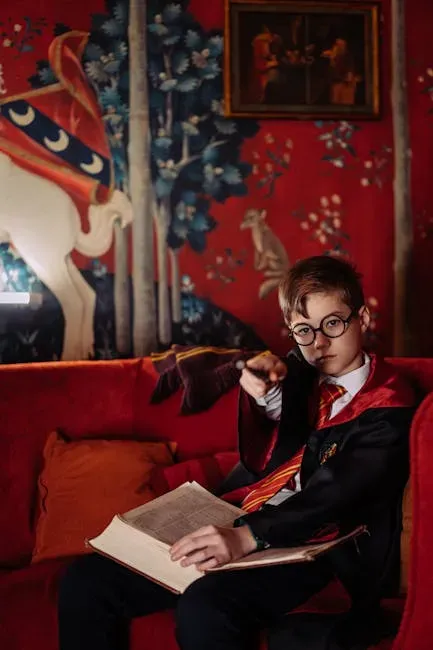
Harry Potter is sometimes dismissed as a simple hero for children. That’s a serious underestimation. A collection of essays from adults who grew up reading Harry Potter explores the way in which the books influenced people’s coming of age, the way in which they matured together with Harry and his friends, and the lessons they learned along the way. The series grew with its readers. Kids who started with The Philosopher’s Stone at age nine were confronting war, sacrifice, and loss by the time they reached The Deathly Hallows as teenagers.
What Harry offered wasn’t just magic – it was the idea that your origins don’t define your identity. He was unwanted, underestimated, and raised in a cupboard. Yet he built a family through loyalty, not blood. The sympathetic portrayal of characters with psychological disorders may enhance moral development and promote understanding of mental illness – something Harry Potter handled more carefully than most children’s series ever attempted. Think about that Patronus Charm: the idea that a happy memory, summoned with intention, can push back the dark. That’s not just story magic. That resonates.
6. Katniss Everdeen – The Reluctant Hero Who Redefined Female Strength

Katniss Everdeen didn’t want to save the world. She wanted to protect her sister. That distinction matters enormously. When Katniss makes the choice to enter the competition, she is not consciously making a choice to become a hero or the face of the revolution – it’s her continual refusal to play by the rules and her instinct to survive that catapults her into the public eye as a figure of the rebellion. She redefined heroism not as ambition, but as love made stubborn.
In the world of Katniss, female empowerment was a crucial part of growing up, and her example of a strong young woman is important for pop culture because it enables social participation and advocacy for the rights of the oppressed. Here’s the thing – Katniss wasn’t flawless. She was traumatized, suspicious, emotionally guarded, and frequently made the wrong call. That imperfection made her more powerful as a role model, not less. She showed a generation of young women that strength doesn’t require composure.
7. Elsa – The Character Who Told Millions It Was Okay to Stop Hiding

When Frozen arrived in 2013 and Elsa finally stopped suppressing her powers and let them loose, something happened in cinemas around the world that went well beyond entertainment. Elsa remains one of the most influential modern animated characters, and her impact extends into global merchandise, theme park experiences, and children’s cultural trends. Those numbers don’t lie – but they also undersell what actually made her matter.
Elsa’s story is, at its core, about the damage caused by concealment. She was taught that her true self was dangerous, that she had to hide it for everyone else’s safety. The message of her arc – that suppression causes destruction, that release can be transformation – hit with extraordinary force for people who had spent years hiding parts of themselves. Our fears, longings, regrets, and unmet desires quietly attach themselves to characters who seem capable of holding them. Elsa held a great deal for a great many people, children and adults alike. That’s rare for a Disney character. That’s rare for any character.
8. Elizabeth Bennet – The Woman Who Made Self-Respect Non-Negotiable
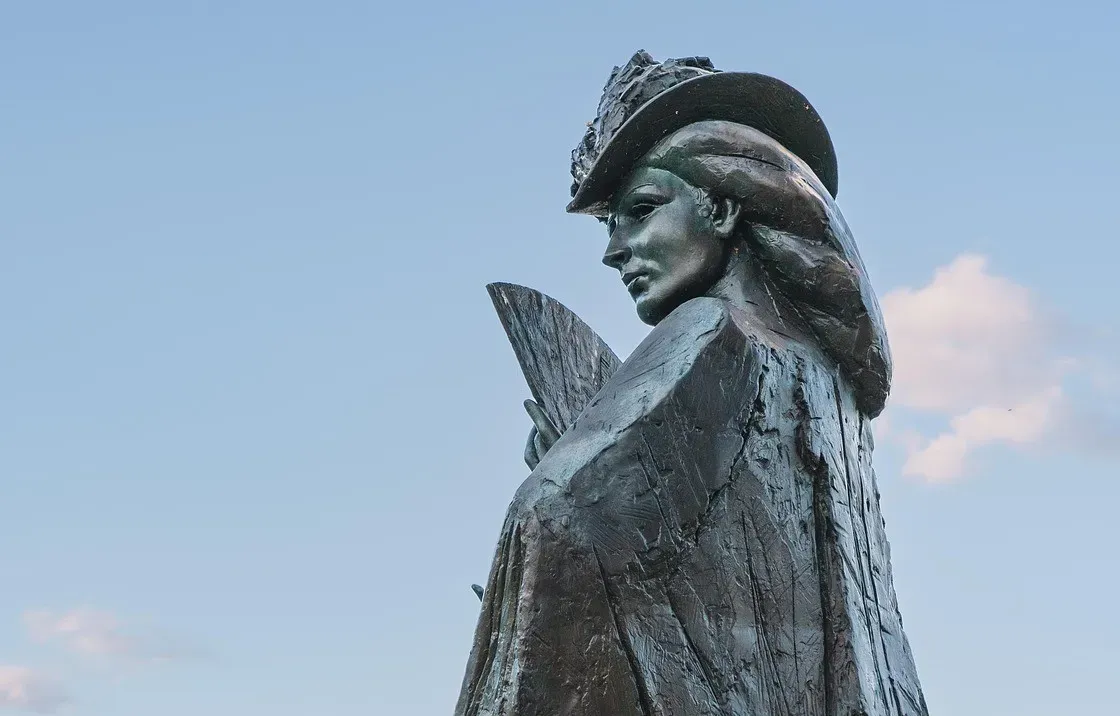
Jane Austen published Pride and Prejudice in 1813, and Elizabeth Bennet has been annoying the wrong people and delighting the right ones ever since. She was witty, economically vulnerable, and deeply unwilling to compromise her sense of self for social convenience. Elizabeth Bennet’s sharp wit reveals her strong opinions on class and marriage, and her attitude fosters both tension and growth throughout the story. In the early 19th century, that was genuinely radical.
Two centuries later, she still feels radical. There’s something about her refusal to perform deference that strikes a nerve in every era. Through Lizzy Bennet, readers vicariously defy class boundaries to find romantic happiness. More than the romance, though, what Elizabeth Bennet gave readers was a vision of a woman who negotiated the world entirely on her own terms. She didn’t reject social structures by ignoring them – she understood them thoroughly and refused to let them diminish her. That’s a more sophisticated kind of defiance, and it still teaches.
9. Winston Smith – The Character Who Made Us Fear Comfortable Numbness

George Orwell’s protagonist in Nineteen Eighty-Four is not a triumphant hero. Winston Smith is crushed. He resists, he loves, he dares to think privately – and in the end, the system breaks him completely. That’s the point. In this fictional society, everyone in the community is under surveillance and reminded that “Big Brother” is watching, and this character was so influential that in modern culture, the term “Big Brother” has entered our vocabulary as a synonym for abuse of government power, normally related to mass surveillance.
Winston’s tragedy isn’t that he failed – it’s that he almost didn’t try. Winston Smith in 1984, whose cynicism underscores the oppressive nature of totalitarian regimes, forces readers into an uncomfortable place: recognizing their own capacity to comply, to look away, to convince themselves that comfort is the same as safety. That recognition is enormously valuable. No character in modern fiction has done more to make ordinary people aware of how easily self-deception can masquerade as acceptance. Reading about Winston changes something in how you look at the world – and at yourself.
What all nine of these characters have in common is that they didn’t just entertain us. They modeled ways of being. There is evidence that identification with characters continues to influence people after the narrative experience is over, and this work demonstrates that the merging of self and other that identification with fictional characters entails can leave lasting impacts on the self. That’s the quiet power of storytelling – it doesn’t announce itself. It just slowly shifts who you are.
Which of these nine characters left the deepest mark on how you see yourself? The answer might tell you more than you expect.