Some films become so culturally dominant that their source material practically disappears into the background. You know the movie beat for beat, quote the dialogue, maybe even own it on four different formats, yet the novel or novella that started it all sits unread on a shelf somewhere, if it’s even still in print.
That gap between screen fame and page obscurity is more common than you’d think, especially with movies from the 1980s and 1990s. Below are nine films whose literary roots rarely get the credit, or the readership, they deserve.
1. Die Hard and the forgotten thriller Nothing Lasts Forever

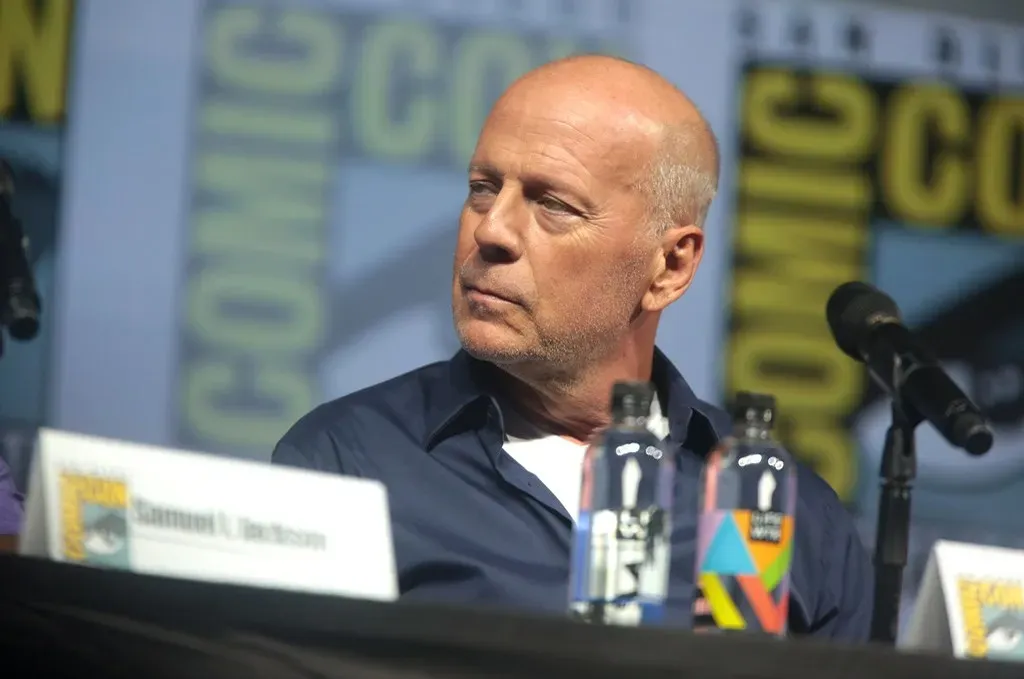
Before Bruce Willis was crawling through air ducts in a Los Angeles high rise, Roderick Thorp had already written the whole scenario in a 1979 novel. Nothing Lasts Forever is a 1979 thriller novel by American author Roderick Thorp, who wrote it as a sequel to his popular novel The Detective, which was made into a movie starring Frank Sinatra. The hero wasn’t even named John McClane. Joe Leland is a middle aged ex-cop who now works as a security consultant with an emphasis on anti-terrorism tactics who goes to visit his daughter Steffie in L.A.
The film sticks unusually close to its source, which is part of why the book still surprises people who track it down. The terrorists are politically motivated in the book and give strong argument to the greedy motivations of corporations and governments. One detail from real life bleeds directly into the fiction too: Thorp wrote his notes while living in Laurel Canyon, in a house overlooking a high-rise building on the Wilshire Corridor, and that building became the inspiration for the one taken over by terrorists in the book. It’s a rare case where reading the book feels less like discovering something new and more like watching an alternate cut of a movie you already love.
2. Children of Men and P.D. James’s very different dystopia

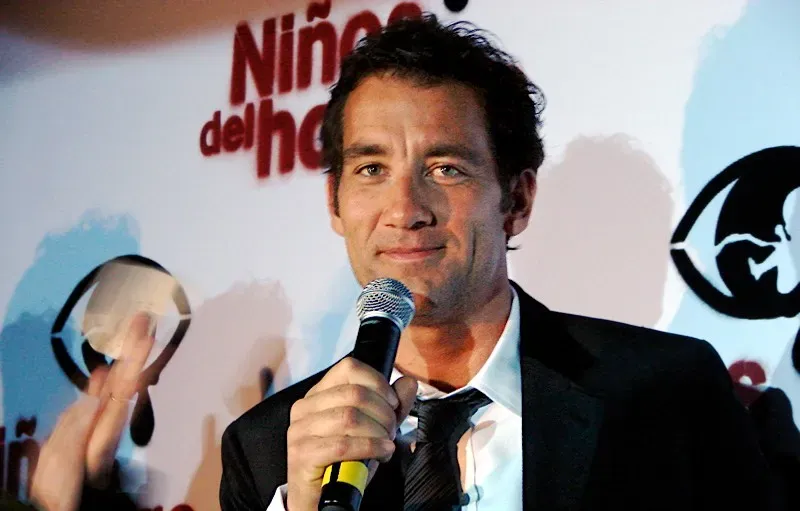
Alfonso Cuarón’s 2006 film is often praised as one of the finest science fiction movies of its era, but almost nobody outside dedicated readers has picked up the novel it’s loosely drawn from. The Children of Men is a novel written by Phyllis Dorothy James in 1992. James wasn’t exactly known for this kind of story either. P.D. James is primarily known as a writer of thrillers, and although Children of Men is different from her usual style, it is gripping.
What throws readers who come to the book after seeing the film is how differently the infertility crisis plays out. In Cuaron’s film women are the infertile ones, while in the book it is men who have gone sterile. Several major characters simply don’t exist in James’s version. Julian was never Theo’s wife in the novel, and there is no character of Kee, no young girl being swept away from everything she’d ever known. It’s less a straightforward adaptation than a movie that borrowed a premise and built its own house on top of it.
3. First Blood and the Rambo who doesn’t survive


The Sylvester Stallone action franchise traces back to a 1972 novel by David Morrell that reads almost nothing like the movie series it inspired. In 1972, author David Morrell released First Blood, a novel about a war veteran named Rambo, who is wronged by the police chief of a Kentucky town and wages a one-man war against the local and state police as a result. The tone is grimmer than anything in the film franchise. By the end of the book, literally dozens are dead and the small town of Madison, Kentucky is in flames.
The biggest shock for anyone who only knows the movie is the ending itself. Rambo gets shot in the head by Trautman, dies satisfied that he has come to a fitting end, while Teasle relaxes, experiences a moment of affection for Rambo, and then dies. Morrell wasn’t writing a hero’s journey so much as a tragedy about two damaged men. Book Rambo places no value on human life, whereas film John Rambo does. That single shift in characterization explains almost everything different between the page and the screen.
4. Big Fish and its quiet, magical origin novel

Tim Burton’s 2003 film gets remembered for its visual whimsy, but the book behind it is a slim, understated piece of Southern fiction. Big Fish: A Novel of Mythic Proportions is a 1998 novel by Daniel Wallace, adapted into a film in 2003 by Tim Burton. The premise is straightforward enough to summarize in a sentence. The book runs just 180 pages, built from a chronological series of tall tales.
Partner offer

What’s interesting is how the project found its way to the screen at all. Screenwriter John August read a manuscript of the novel about six months before it was published, following the death of his own father. Wallace’s structure, told as a series of loosely connected legends, required real reshaping for film. August worked hard to make the episodic book into a cohesive screenplay, deciding on several narrators for the script. Readers who track down the novel after loving the film often find it quieter and sadder than expected, closer to a meditation on fatherhood than a fantasy adventure.
5. The Shawshank Redemption began as a Stephen King novella

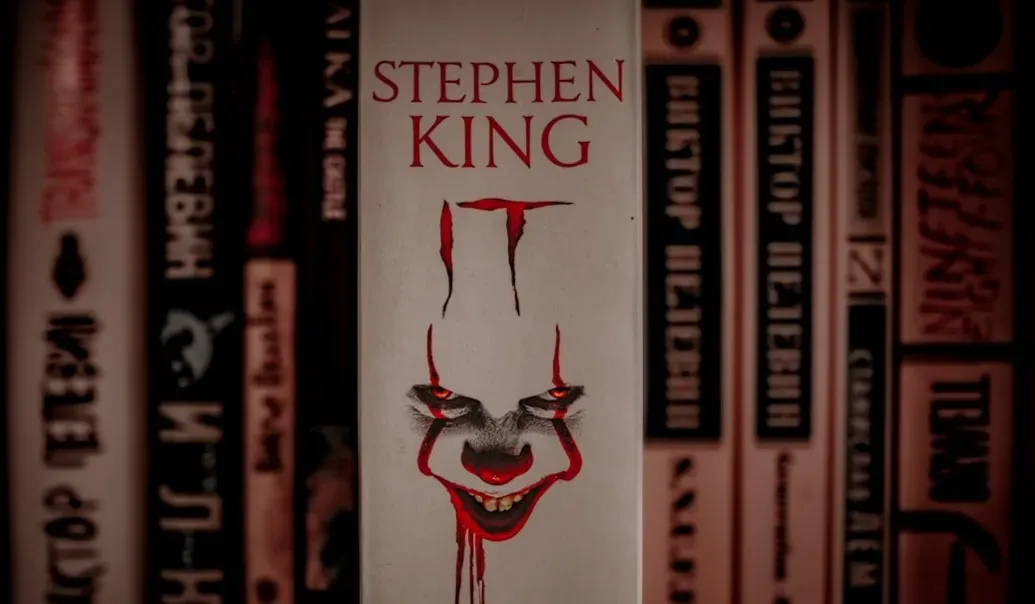
It’s easy to forget that one of the most beloved films of all time isn’t based on a novel at all, but on a novella tucked inside a 1982 Stephen King collection. The story, originally titled Rita Hayworth and Shawshank Redemption, appeared alongside three other novellas in a book called Different Seasons, a collection better known for producing Stand By Me than for this particular story. King’s prose version leans harder into narrator Red’s voice and internal reflection, since the format allows for that kind of interiority in a way a two hour film can’t fully replicate.
Frank Darabont’s 1994 adaptation expanded certain relationships and softened or reshaped several plot beats for the screen, which is typical when a roughly one hundred page novella gets stretched into a feature length film. Most people who count this movie among their favorites have never actually read the source material, partly because it’s easy to overlook a novella buried inside an anthology rather than sold as its own standalone book. That obscurity is almost ironic given how thoroughly the film has entered the cultural conversation.
6. Forrest Gump started as a much stranger novel

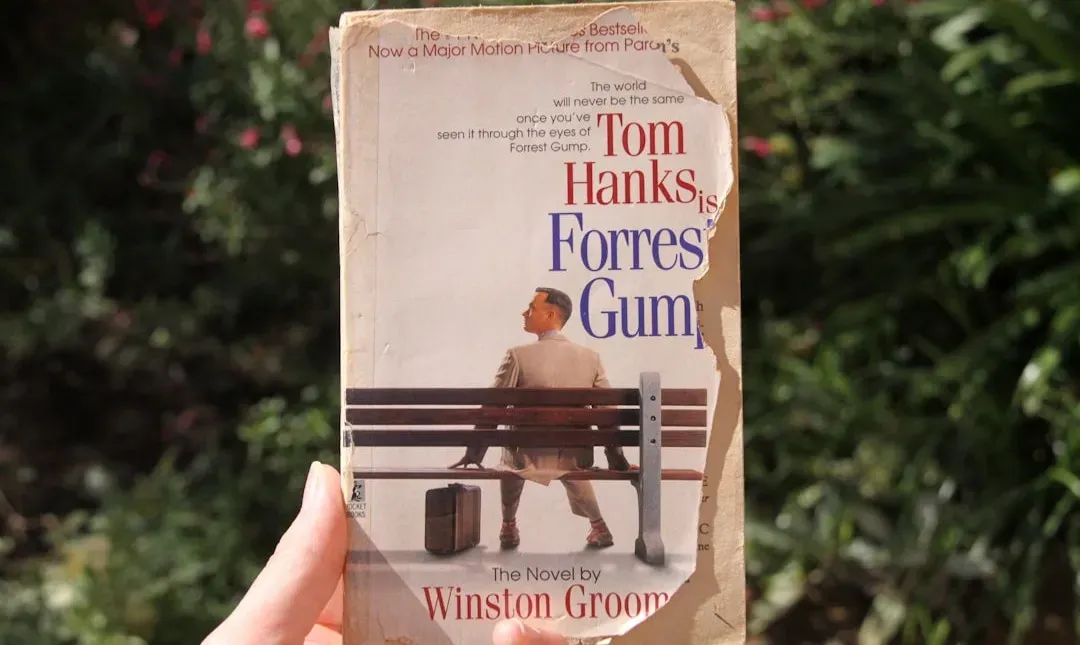
Winston Groom’s 1986 novel Forrest Gump shares its basic premise with the 1994 Tom Hanks film, but the details diverge wildly once you start comparing them side by side. In the book, Forrest is depicted as a savant with genuine intellectual gifts in specific areas, rather than the simpler, more purely good-hearted character audiences fell in love with on screen. He also ends up in far stranger situations in the novel, including a stint as an astronaut and a period spent playing professional chess, neither of which made it anywhere near the film. Groom’s original tone carries more satire and grit than the movie’s gentler, more sentimental approach to American history. The film’s screenwriter reshaped the character and story substantially, trimming the more absurdist elements in favor of the earnest, folksy narrative that eventually won six Academy Awards. Readers who go looking for the book expecting more of the same movie magic often come away surprised at how different, and how much rougher around the edges, the original novel actually is.
7. Blade Runner and Philip K. Dick’s electric sheep


Ridley Scott’s 1982 film draws its plot and atmosphere from Philip K. Dick’s 1968 novel Do Androids Dream of Electric Sheep?, though the two works diverge considerably in tone and detail. Dick’s book leans more heavily into questions of empathy, religion, and a fictional technology called mood organs, none of which survive intact in the film’s noir-inflected visual world. The novel also gives far more attention to a subplot involving a fake police department, something largely dropped from Scott’s adaptation. Despite the film’s massive cultural footprint, and its own sequel decades later in Blade Runner 2049, the original novel remains something many fans reference without having actually read. Part of the reason is that the film’s title bears no resemblance to the book’s, which makes the connection less obvious to casual viewers who might not realize a literary source exists at all. Dick died in 1982, just months before the film’s release, and never saw the final cut that would eventually cement his novel’s ideas into mainstream pop culture.
8. 2001: A Space Odyssey and Arthur C. Clarke’s short story roots

Stanley Kubrick’s 1968 landmark film has an unusual origin story, since it developed in tandem with Arthur C. Clarke’s novel of the same name rather than as a straightforward adaptation of an already published book. The starting point was Clarke’s much earlier short story The Sentinel, written in 1951, which supplied the core idea of an alien artifact discovered on the Moon. Clarke and Kubrick expanded that seed concept together, writing the novel and screenplay in parallel, which is part of why the two versions tell recognizably the same story but diverge in tone and detail. The novel actually clarifies several plot points that the film leaves deliberately ambiguous, including more explicit explanations around the monoliths and the ending sequence. Many viewers who found the film’s final act baffling have never realized that Clarke’s book, published shortly after the film’s release, answers a good number of those questions directly. It remains one of the more unusual cases on this list, a movie and book born from the same creative process rather than one strictly adapting the other.
9. Stand By Me and Stephen King’s The Body


Rob Reiner’s 1986 coming of age film Stand By Me traces back to another novella from King’s Different Seasons collection, this one titled The Body. Like Shawshank, this piece sits inside an anthology rather than as a standalone novel, which likely explains why so few people who love the film have ever picked up the original text. King’s novella carries a heavier, more melancholic undertone in places, with a framing device involving the narrator as an adult writer looking back on the events of that childhood summer. The film trims some of King’s more digressive passages while keeping the central plot largely intact, the story of four boys walking the railroad tracks to find a body. Different Seasons has proven to be an unusually fertile source for filmmakers, also producing Apt Pupil and, of course, The Shawshank Redemption, making it one of the more quietly influential short story collections in modern film history despite most readers never touching the book itself.
What ties these nine examples together isn’t just that the books are obscure. It’s that the films built such distinct identities of their own that they no longer feel like adaptations at all. For anyone curious about where their favorite movie actually came from, tracking down the original text often reveals a story that’s stranger, darker, or simply different enough to be worth the read on its own terms.
Partner offer
Planning a trip to Vegas?
Compare hotel rates and show tickets on VEGAS.com.