There is something almost poetic about the idea that the same brain wiring behind a killer guitar solo could also decode the mysteries of the universe. Most of us are conditioned to think in boxes: you are either a scientist or an artist, a lab coat or a leather jacket. History, though, keeps proving that assumption completely wrong.
Some of the most extraordinary minds in human history have refused to stay in one lane. They rocked stages, wrote landmark dissertations, consulted for NASA, and taught evolutionary biology between tour dates. It sounds impossible, but it happened. Let’s dive in.
1. Brian May (Queen) – Astrophysicist
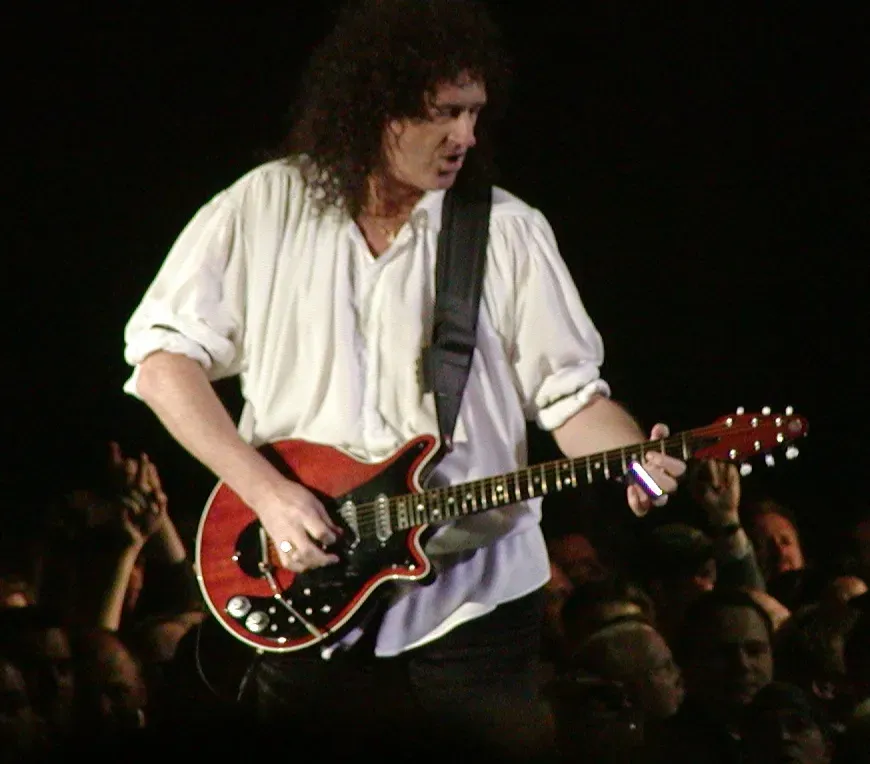
Most people know Brian May as the man behind the iconic guitar riffs of Queen, but his scientific credentials are just as staggering. May earned a PhD in astrophysics from Imperial College London in 2007. What makes this even more remarkable is the backstory: May studied astrophysics at Imperial College London and then embarked on a PhD, suspending his studies in 1974 to take what turned out to be a 33-year hiatus to be the lead guitarist for Queen, one of Britain’s most successful rock groups.
He didn’t just collect a degree for the sake of it, either. He was a “science team collaborator” with NASA’s New Horizons Pluto mission and is also a co-founder of the awareness campaign Asteroid Day. On top of that, Asteroid 52665 Brianmay was named after him, and in 2023, May contributed to NASA’s OSIRIS-REx mission, the agency’s first successful collection and Earth delivery of samples directly from an asteroid.
Honestly, I think his story is the ultimate proof that you never truly give up on what you love. Not only did he show musical promise early, forming his first group while still at school, he also got his A Levels in physics, mathematics, and applied mathematics, going on to earn a Bachelor of Science in Physics with honours at Imperial College London, then continued for his PhD, studying the velocity of, and light reflected by, interplanetary dust in the Solar System.
2. Albert Einstein – Theoretical Physicist and Passionate Violinist
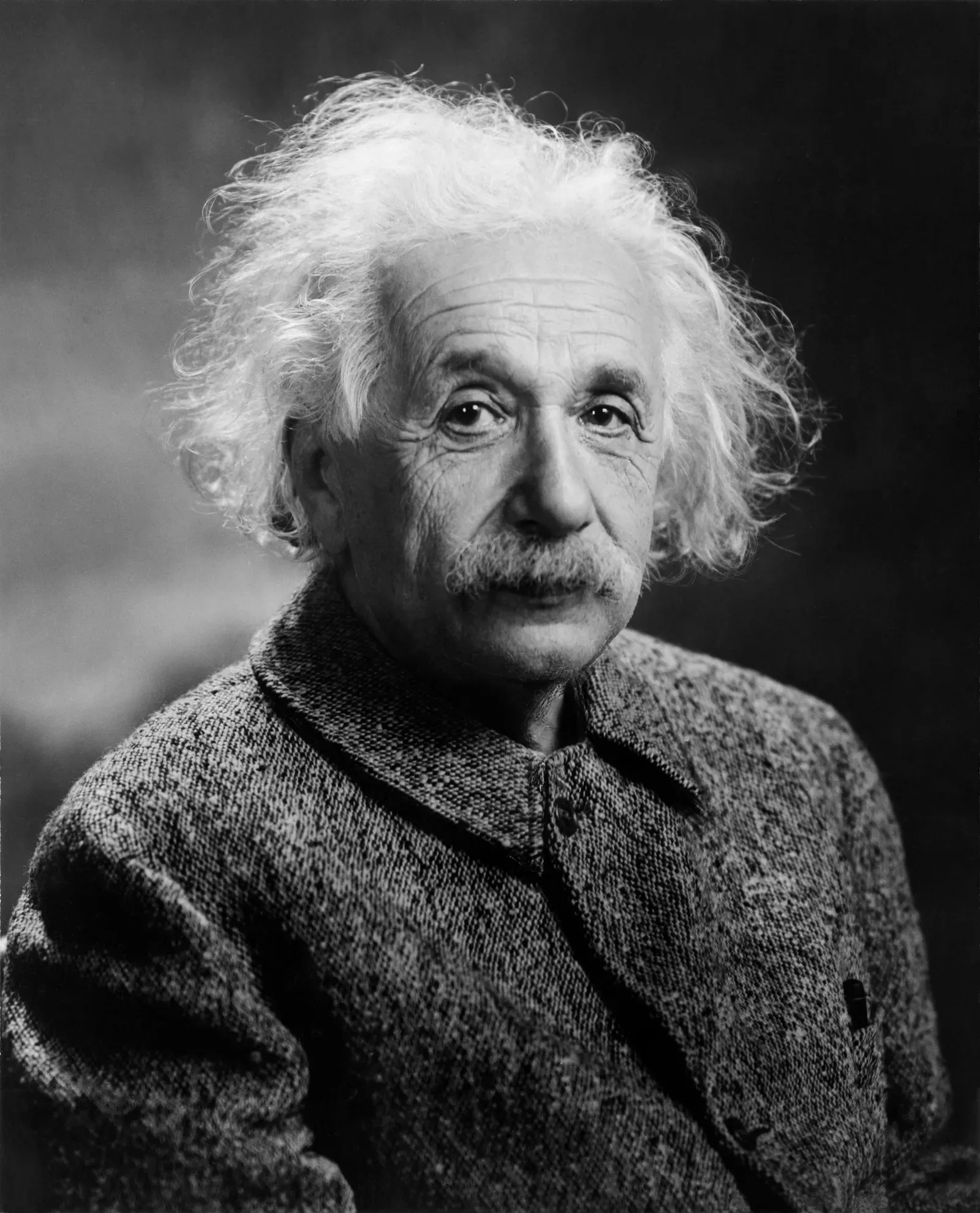
Here’s the thing: Einstein was not just casually interested in music. He was genuinely serious about it. Einstein’s interest in music developed as a child thanks to his mother, who was a reasonably decent piano player. She wanted her son to learn the violin and help him assimilate into the German musical culture, and Einstein began learning instruments from the young age of 5. By 16, he had mastered Mozart’s and Beethoven’s violin sonatas.
Einstein’s scientific ideas were often firstly created in the shape of images and intuitions, and later converted into mathematics, logic and words. Music helped Einstein in this thought process and helped convert the images to logic. That is an astonishing window into how one of history’s greatest minds actually worked.
Einstein and Planck supposedly used to play together, finding not only a shared love for science but also music. Two founding fathers of modern physics, sitting together and playing chamber music. It’s a scene almost too wonderful to imagine.
3. Greg Graffin (Bad Religion) – Evolutionary Biologist

Greg Graffin is the kind of person who makes you question your own life choices in the best possible way. While most of us were trying to keep up with one thing, he was fronting one of the most influential punk bands in history and earning an advanced science degree simultaneously. Graffin attended El Camino Real High School, then obtained both his BA in Biology, BS in Geology and a master’s in Geology at the University of California, Los Angeles. In 2003 he went on to earn his PhD in Zoology from Cornell University.
His thesis examined religion’s effect on humanity and included asking evolutionary biologists if they believed in God; almost 90% of those surveyed did not. That research is, in itself, a striking piece of scientific work. Graffin has a second career as an esteemed author and academic. The venerated punk icon has served as a lecturer in life sciences and paleontology at UCLA and published a bestselling science memoir.
What really seals the deal is this: paleontologists including Dr. Jingmai O’Connor discovered an ancient bird fossil in the Gansu Province of north-western China and named the important find “Qiliania graffini” in honor of the singer, explaining the species name was chosen for his contributions to evolutionary biology, his public outreach through music, and his inspiration to budding scientists. Having an extinct bird species named after you is not something most punk rock singers can put on their resume.
4. Brian Cox (D:Ream) – Particle Physicist
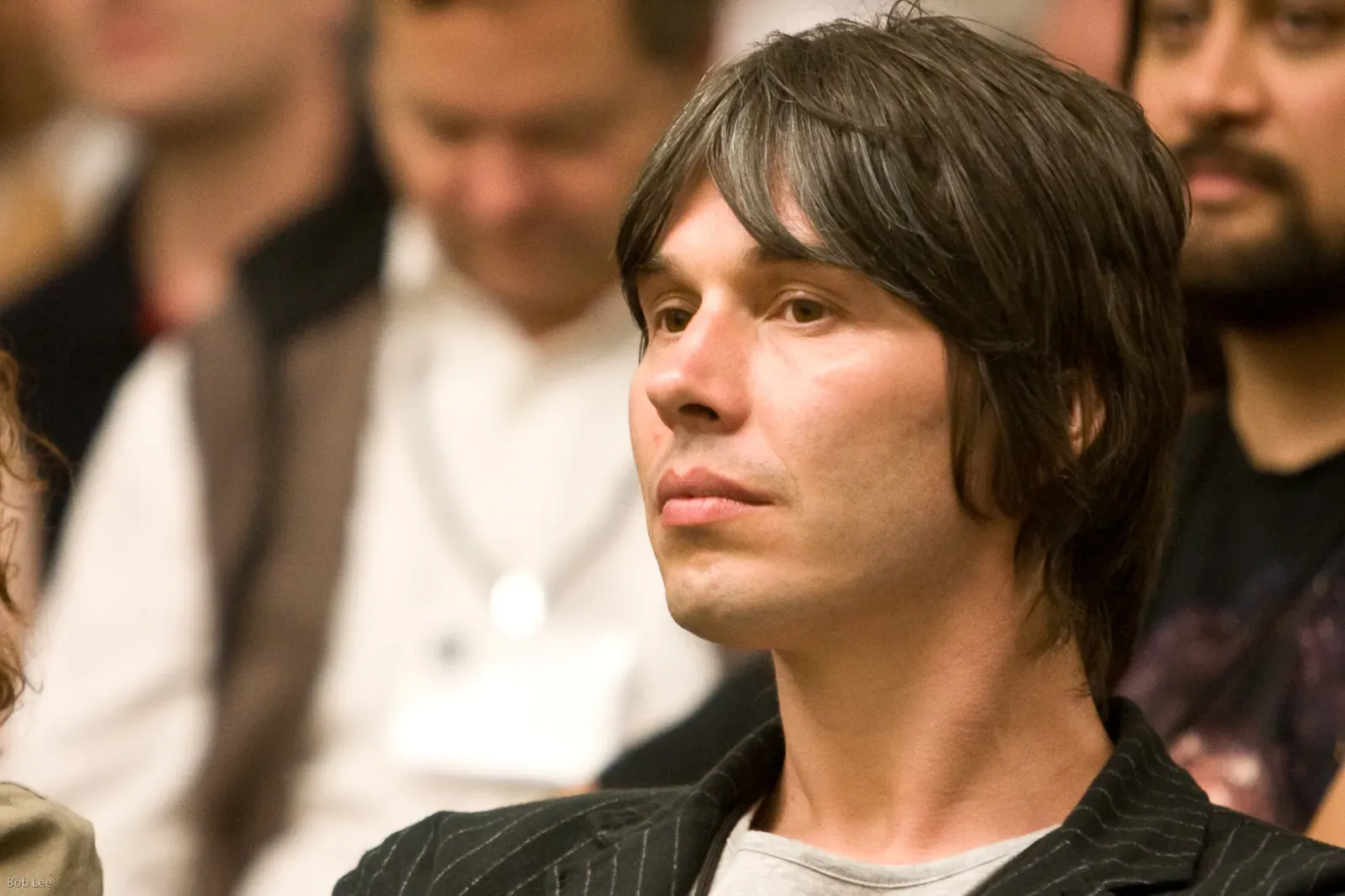
Brian Cox’s entry into the music world was, by his own admission, almost accidental. Whilst waiting for his degree course to begin, he needed a job and found one as a sound engineer and driver for D:Ream. Because he had long hair and played keyboards, the lead singer asked him to step in and mime the part, and in this way, he accidentally joined D:Ream. From there, one of the UK’s most famous number one hits followed.
Cox studied physics at the University of Manchester during his music career. In 1991, he earned a Bachelor of Science degree with first-class honours in physics. After D:Ream disbanded in 1997, he completed his Doctor of Philosophy degree in high-energy particle physics at the University of Manchester in 1998.
Today he is arguably better known as a scientist than a musician. He is a professor of particle physics in the Department of Physics and Astronomy at the University of Manchester and the Royal Society Professor for Public Engagement in Science. He worked on the ATLAS experiment at the Large Hadron Collider at CERN, near Geneva, Switzerland. Not a bad second act.
5. Max Planck – Quantum Pioneer and Multi-Instrumentalist

Max Planck gave the world quantum theory, which is essentially the foundation of all modern physics. What fewer people realize is that he was also an accomplished musician in his own right. Max Planck played various musical instruments including piano, organ, and cello, and he also composed his own songs and operas. Composing operas while simultaneously reinventing our understanding of energy and matter is, let’s be real, a little overwhelming to think about.
For Nobel laureates like Thomas Südhof, music gave important inputs and ideas. Südhof played the bassoon and says that classical music and his music teacher had a huge influence on him. Planck embodied that same connection decades earlier. Classical music requires a creative mind as well as enormous discipline, and these two factors are said to have shaped the development of scientists. The repetitive and disciplinary task of practicing the same symphony over and over again slowly becomes a part of one’s personality.
6. Milo Aukerman (Descendents) – Biochemist

The Descendents literally named their debut album after Milo Aukerman’s decision to go to university. The first full-length Descendents album was released in 1982 and was titled “Milo Goes to College,” as Aukerman had by then decided to leave the group to pursue a degree in biochemistry at the University of California, San Diego. That level of dedication to both passions is genuinely rare.
He holds a PhD degree in biology from UC San Diego, conducted postdoctoral research in molecular biology at the University of Wisconsin-Madison and the University of Pennsylvania, and formerly worked as a plant researcher at DuPont and as an adjunct professor at the University of Delaware. Bouncing between punk tours and postdoctoral fellowships is not something most people manage, but Aukerman made it his life.
Since first singing his punk lyrics, Aukerman spent three decades doing everything to live up to a remarkable dual identity. As both the lead singer of the Descendents and a plant molecular biologist at DuPont, Aukerman followed a decidedly nontraditional career path, one that allows him to embrace the most dynamic qualities of his two passions.
7. Tom Scholz (Boston) – MIT-Trained Mechanical Engineer and Inventor
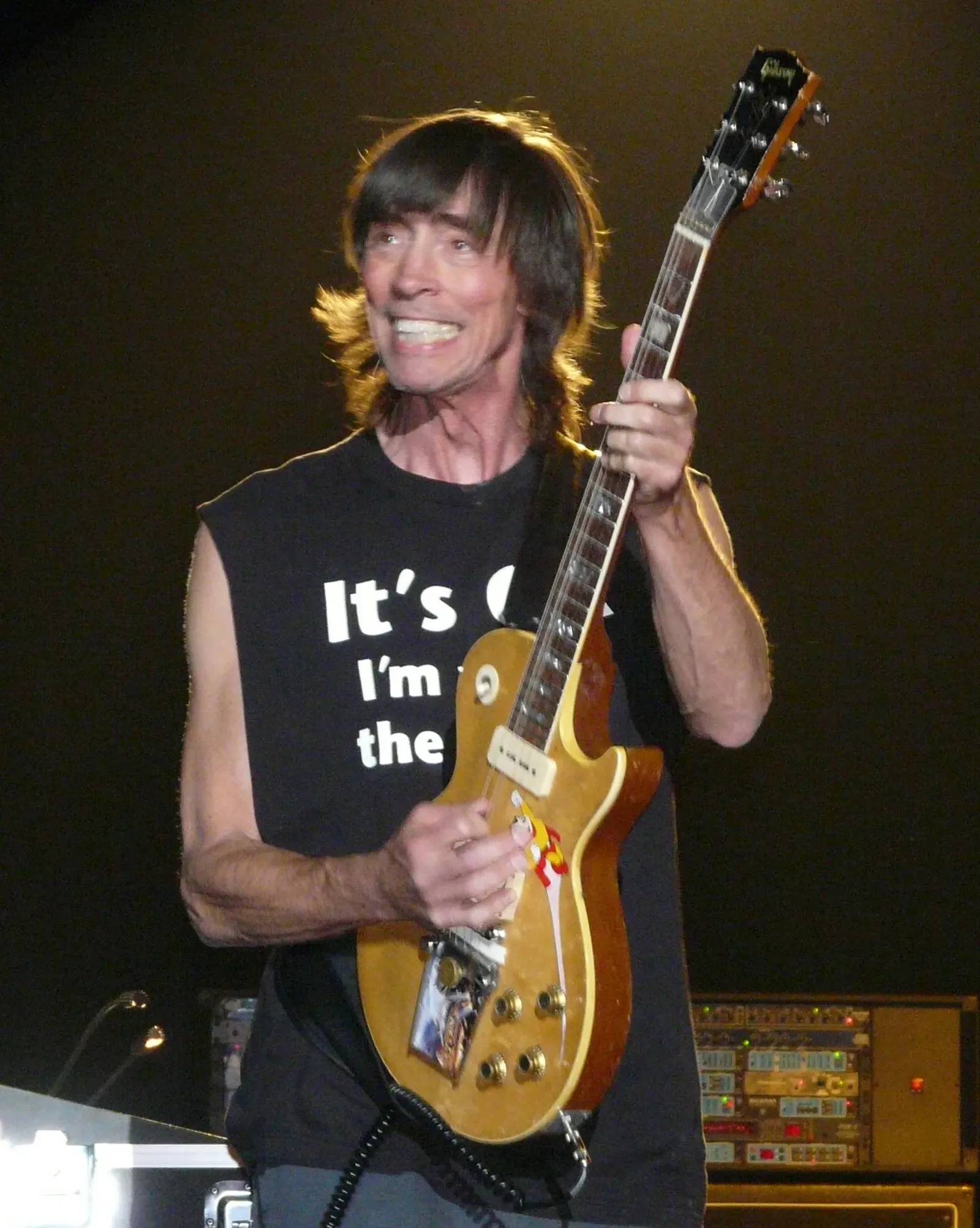
Before the band Boston ever played a note in public, Tom Scholz was already deep in the world of engineering. Scholz earned both his bachelor’s and master’s degrees in mechanical engineering from MIT, one of the world’s top universities. Before his music career took off, he worked at Polaroid, where he honed his technical skills and invented new recording technologies.
His engineering mind did not just support his music career, it actively shaped it. Scholz designed the Rockman, a portable guitar amplifier that revolutionized how musicians practice and record. His engineering know-how helped Boston achieve their signature sound, with meticulous layering and effects that set them apart. Scholz holds dozens of patents related to music technology.
Think of the Rockman like the Swiss Army knife of guitar gear: compact, brilliantly engineered, and utterly ahead of its time. His engineering know-how helped Boston achieve their signature sound, and Scholz holds dozens of patents related to music technology, showing that his scientific mind never rests. He is, in every sense of the word, a creator in two worlds at once.
8. Dan Snaith (Caribou) – PhD Mathematician

Dan Snaith, the Canadian artist who records and performs under the name Caribou, is one of the most inventive electronic musicians of the past two decades. He is also a serious mathematician. Dan Snaith, who records under the names Caribou and Daphni, is not just an acclaimed electronic musician but also a mathematician. Snaith earned his PhD in mathematics from Imperial College London.
According to the math genealogy project, he received a PhD in number theory in 2005, with Kevin Buzzard as his thesis advisor, and the title of his dissertation was “Overconvergent Siegel Modular Symbols.” That is, without any exaggeration, one of the most beautifully named PhD theses ever written by someone who would later make psychedelic dance music.
His academic achievements and musical creations exemplify how mathematical concepts can intersect with and enrich the arts. Snaith’s ability to navigate complex mathematical theories and produce emotionally resonant music highlights the unexpected connections between the disciplines. His music feels like someone solved an equation and turned the answer into sound.
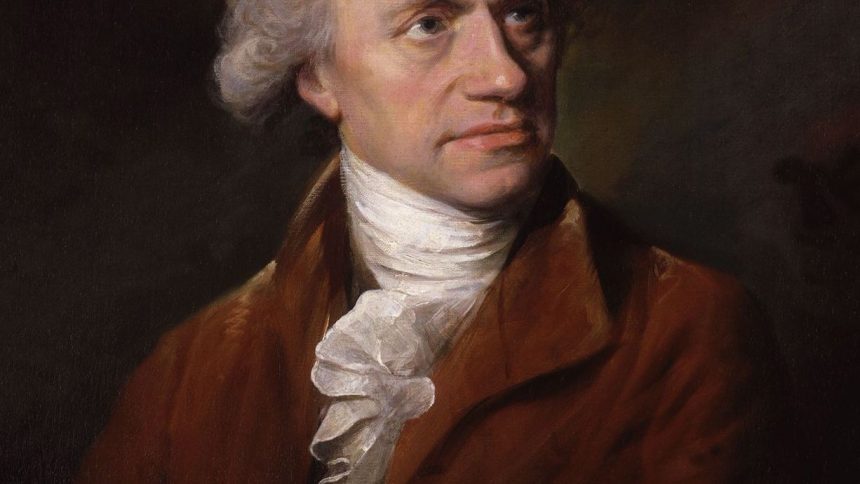
9. William Herschel – Professional Organist and Discoverer of Uranus
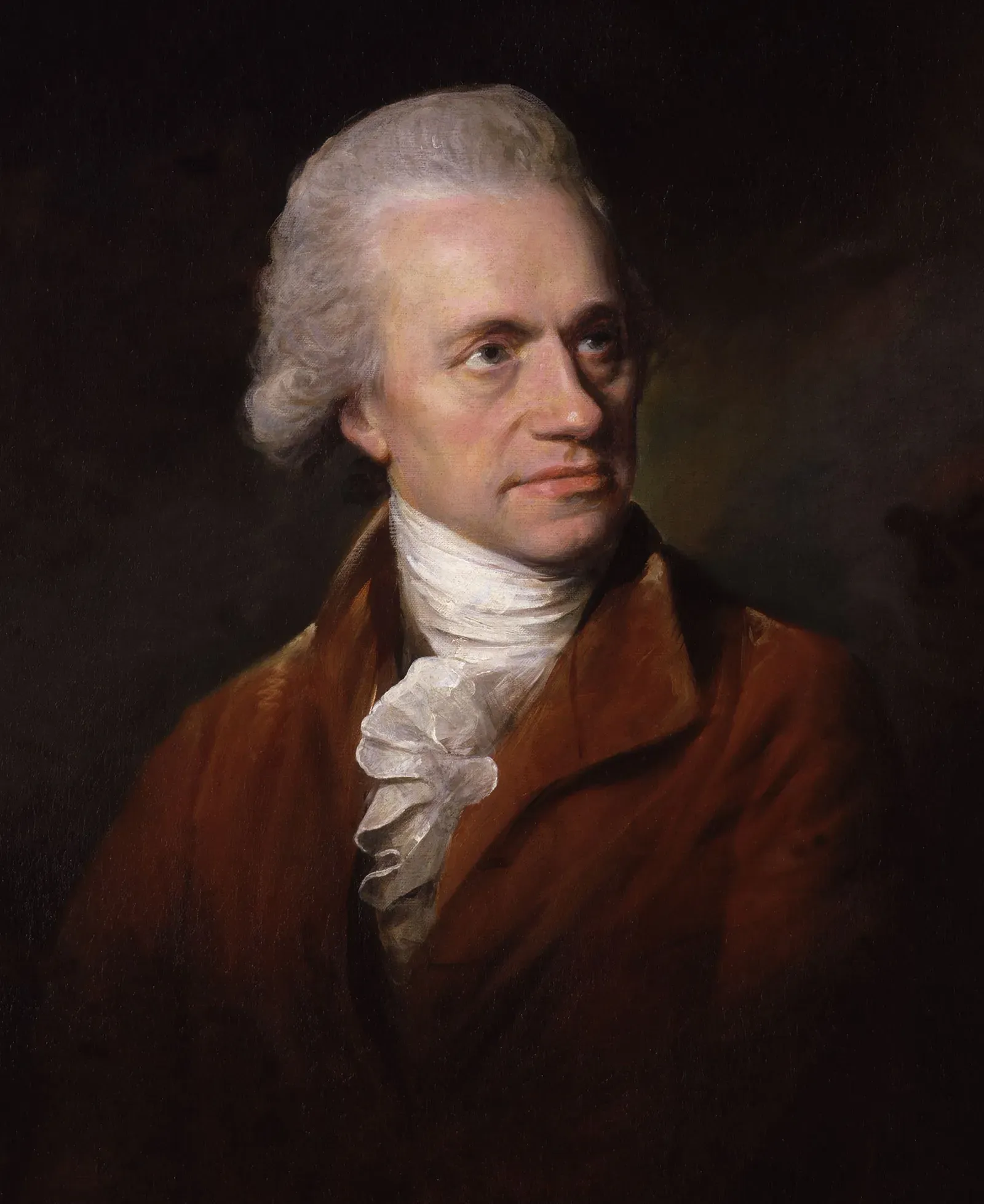
As such, use of this image in the jurisdiction of the claimant or other countries may be regarded as copyright infringement. Please see Commons:When to use the PD-Art tag for more information., Public domain)
William Herschel might be the most dramatic example on this entire list. Here was a man who worked as a professional musician while quietly building telescopes in his spare time, and ended up making one of the greatest astronomical discoveries in history. William Herschel was the composer and organist at the Octagon Chapel in Bath, England, but in his spare time he made telescopes. His telescopes were so good, he was able to view the night sky in much more detail than anyone had ever seen it before.
Herschel became the first person ever to observe the planet Uranus. Let that sink in for a moment. A church organist, moonlighting with a homemade telescope, discovered an entire planet. It is the kind of story that sounds invented, but it happened.
His legacy stretched beyond himself too. William’s sister Caroline Herschel moved from Germany to join her brother in England. She worked as a singer, but William also trained her to help him with his astronomy work. Caroline made several discoveries of her own, including eight comets, and was the first woman to receive an official salary for scientific work. A musician turned astronomer who then trained another musician turned astronomer. That family tree is almost unbelievable.
Conclusion: Two Worlds, One Mind

What ties all ten of these people together is something deeper than just unusual résumés. It is curiosity. The same restless, probing quality that makes a great scientist also fuels a great musician. Both fields demand pattern recognition, creativity under constraint, and an almost obsessive willingness to keep digging until something clicks.
From Brian May consulting on NASA asteroid missions to William Herschel discovering Uranus between organ recitals, these stories are a quiet argument against the idea that we must specialize and narrow ourselves to succeed. The breadth of human potential is genuinely staggering when you look at it this way.
Next time someone tells you to pick a lane, maybe think of Greg Graffin teaching evolutionary biology at Cornell between punk rock tours. What would you have guessed was possible for a person like that? Tell us in the comments below.