
Hollywood treats release calendars like chess boards, except the pieces keep moving after the game has already started. A single date change, made months or even years in advance, can turn a promising film into a punchline or bury a genuinely good one under a bigger title’s shadow. The strange part is how often studios see the danger coming and still can’t avoid it.
What follows are nine real cases where scheduling decisions, not the movies themselves, played a decisive role in how much money got left on the table. Some of these mistakes stretch back decades, others happened within the last two years, but they all share the same lesson: timing is never just a footnote in a film’s story.
1. Jupiter Ascending’s last minute retreat from summer

Warner Bros. had Jupiter Ascending slotted for a prime July 18 release before pulling it at the eleventh hour. The studio shifted the film to February 2015 after a weak research screening and visual effects that weren’t finished in time for a summer rollout.
That left the marketing team without enough strong content or time to build an effective launch campaign. Warner still ended up spending heavily on the film’s promotion, but the sudden move from a marquee summer slot to the industry’s traditional dumping ground signaled trouble before anyone even saw the finished cut. Studios often find themselves racing to make a release date set far in advance amid a competitive landscape that allows no margin for error, and this was not the first time Warner had moved a film that wasn’t yet cooked.
2. The Iron Giant’s slow walk to nowhere


Sometimes the mistake isn’t moving a date, it’s failing to set one soon enough. After Warner Bros.’ animated Quest for Camelot underperformed in 1998, the studio hesitated over what to do with its next animated feature.
The studio was slow to set a release date for The Iron Giant, leaving little time to mount a proper marketing campaign. The film went on to earn a devoted following and strong critical praise years later, but that came after it had already underperformed at the box office when it mattered most for the studio’s bottom line. It’s a reminder that indecision carries its own cost, even when nobody actively pulls a bad lever.
3. Kraven the Hunter’s four year game of musical chairs

Few recent films illustrate scheduling chaos better than Sony’s Kraven the Hunter. The release date jumped around the calendar repeatedly, first dated for MLK weekend 2023, then October 6, 2023, then Labor Day weekend 2024, before finally landing on December 13, in the pre-holiday frame Sony had previously used for the Jumanji films and Spider-Man: Into the Spider-Verse.
By the time the film actually opened, years of stop-and-start planning had drained whatever momentum an early trailer might have built. Despite the eventual date, Kraven the Hunter tanked with roughly 25 million dollars domestic and 62 million dollars worldwide. A single wrong date is bad enough. Four wrong dates in a row left almost no room for recovery.
4. Horizon: An American Saga’s sequel that arrived too soon, then not soon enough


Kevin Costner’s ambitious western saga ran into scheduling trouble almost immediately. The original plan called for Chapter 2 to arrive in theaters less than two months after its predecessor, in August 2024.
That plan collapsed once reality set in. Critics didn’t hold back with their disdain for Chapter 1, which also grossed under 40 million dollars, a dismal performance that led New Line Cinema to push the second film back. Trying to release two expensive, unproven films within weeks of each other left almost no buffer for course correction once the first one struggled.
5. Antz and A Bug’s Life split one audience two ways


Animation rivalries don’t come more literal than this one. In 1998, DreamWorks and Pixar both released computer animated films centered on ant colonies within weeks of each other, a scheduling collision that few audiences could avoid noticing.
Partner offer

Both animated ant comedies released within weeks of each other, and when two movies targeting the same audience open close together, the core audience gets divided, lowering each title’s box office below what either might have achieved alone. Neither film was a disaster on its own terms, but the overlap meant both left money on the table that a few months of separation could have preserved.
6. The spinoff Universal pulled off the calendar entirely

Sometimes the biggest scheduling mistake is the one a studio makes to avoid a bigger one. Universal’s M3GAN spinoff, SoulM8te, was set for a January 9 release before the studio abruptly removed it.
The single biggest indicator that a film will flop is when its own studio decides not to release it, and Universal unceremoniously pulled the M3GAN spin-off from the calendar just weeks before its debut. Pulling a film that close to launch doesn’t just cost the marketing spend already committed. It signals to audiences and exhibitors alike that something went wrong internally, which makes any future date for the project a harder sell.
7. Supergirl’s 2026 miscalculation of what “enough” looks like

Warner Bros. built Supergirl around a late June 2026 release meant to capitalize on early summer crowds, but the math behind that plan didn’t hold up. After Supergirl opened to 37.1 million dollars domestically in late June 2026, a figure that falls somewhere between painful and alarming for a movie that cost 170 million dollars to produce and another 120 million dollars to market, the silence inside Warner Bros. was telling.
The math involved was brutal, since the studio needed between 300 and 375 million dollars worldwide just to break even. Current projections put the film’s global total between 200 and 210 million dollars, with the resulting loss estimated anywhere from 80 million to 120 million dollars. Placing a tentpole in a crowded early summer window without a clear point of differentiation turned what should have been a safe date into a costly gamble.
8. Coyote vs. Acme’s detour through the shelf
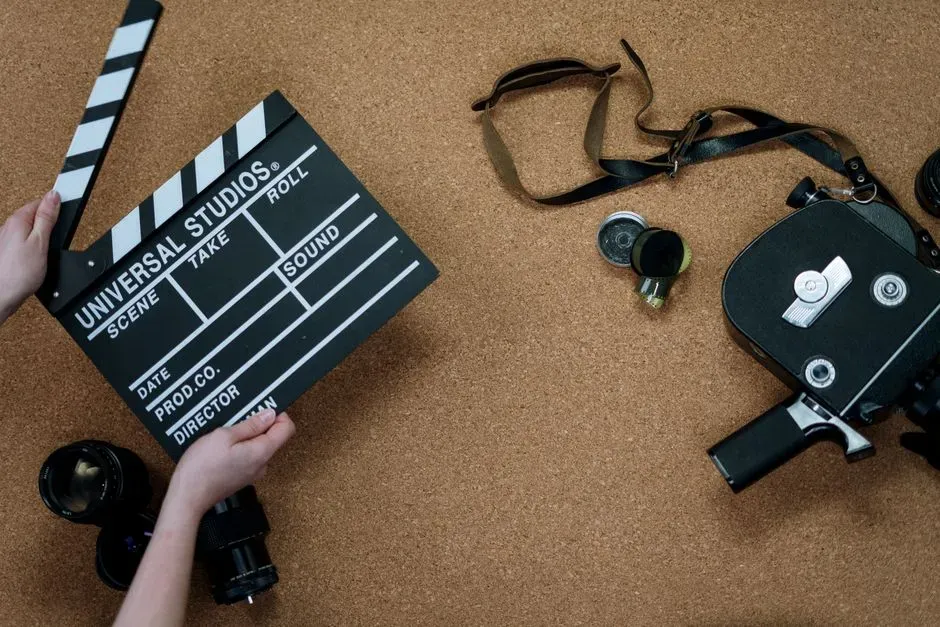
Few films demonstrate the financial strangeness of modern release scheduling better than Coyote vs. Acme. Warner Bros. originally planned to shelve the finished film entirely for a tax write-off, only to reverse course after public backlash forced a rethink.
While the internet famously rallied to save this film after Warner Bros. originally tried to delete it for a tax write-off, social media outrage rarely translates into actual box office dollars. The film eventually found a home with a new distributor and a much later release date than originally intended, but the months of uncertainty and the shift away from a major studio’s marketing muscle left it fighting for attention it might have had under the original plan.
9. Mickey 17’s long road to a March landing


Bong Joon-ho’s follow-up to his Best Picture winner Parasite carried enormous expectations, which made its scheduling all the more consequential. Warner Bros. Pictures eventually snagged the chance to release his next project, an adaptation of Edward Ashton’s novel Mickey7, which was set for release in March 2025.
The film had originally been targeted for a 2024 release before repeated delays pushed it back nearly a full year. Those delays gave rival studios time to fill the calendar slots Mickey 17 might have claimed earlier, and by the time it finally opened, the conversation around it had shifted from anticipation to simple curiosity about whether the wait had been worth it.
Across all nine of these cases, the pattern holds steady. A release date isn’t a footnote decided after the real work of filmmaking is done. It’s a bet placed months or years in advance, one that assumes competitors will stay put, marketing timelines will hold, and audience appetite won’t shift. When any of those assumptions breaks, the cost rarely stays small. It shows up in opening weekend numbers, in marketing budgets spent twice, and in the quieter, harder to measure damage of a film that never got the chance its content deserved.
Partner offer
Planning a trip to Vegas?
Compare hotel rates and show tickets on VEGAS.com.