
Ask any working musician where their money habits came from, and the answer rarely traces back to a finance class. It usually traces back to a parent, an older bandmate, or a teacher who swore by a certain way of doing things. Some of that inherited wisdom holds up fine. A surprising amount of it does not, and it keeps getting passed along anyway because nobody stops to question it.
These habits are not the obvious mistakes people warn you about, like blowing an advance on jewelry. They are quieter, more socially acceptable, and baked into how families and mentors talk about “paying dues.” That is exactly what makes them so persistent, and so costly over a career.
Buying gear you cannot quite afford yet


There is a long tradition in music families of treating a nicer instrument or amp as proof that you are serious about the craft. Parents who played themselves often encourage kids to stretch financially for better gear, framing it as an investment rather than a purchase. That framing sticks, and it follows musicians into adulthood, where the upgrade cycle rarely slows down.
The problem is not owning good equipment. It is financing it before there is steady income to support the payments, then doing it again a few years later with a new model. Older musicians who grew up trading gear at pawn shops sometimes forget how easy it now is to run a balance on cards or buy now, pay later plans, which turns a one time splurge into a recurring drag on cash flow.
Playing shows for exposure instead of fair pay

Plenty of musicians were taught by an older generation that you play for free early on because that is simply how it works. The idea gets repeated so often that it starts to sound like a rule rather than a choice, and younger artists absorb it without questioning whether it still makes sense. In a live music economy where performance income actually matters more than ever, that inherited habit costs real money over time.
For the vast majority of working musicians, live performance is still the largest single source of income, and it is the income stream that scales most directly with audience size while opening the door to other revenue. Treating early gigs as automatically unpaid, rather than negotiating even modest fees, trains venues and promoters to expect free labor. That habit rarely reverses itself once a career is underway.
Sealing royalty splits with a handshake

Older musicians often talk fondly about the days when a verbal agreement between bandmates was enough. It sounds romantic, and sometimes it worked out fine for them, but it also quietly encouraged the next generation to skip the paperwork too. Splits that felt obvious in the moment, back when a song was written on a couch, look very different once that song starts generating steady income.
Without a written agreement, disputes over songwriting credit or percentage shares tend to surface exactly when money starts flowing, which is the worst possible time. Bands that inherited the casual approach often end up paying lawyers later to untangle what a simple signed document would have settled upfront. It is one of the more avoidable financial wounds in the business, and one of the most common.
Never registering for publishing royalties

A generation of musicians grew up assuming that labels or performing rights organizations would automatically sort out publishing money on their behalf. That assumption gets passed down almost as folklore, and it leads plenty of independent artists today to skip formal registration entirely. The result is money sitting unclaimed simply because nobody filed the paperwork.
At one million streams, master royalties run around three thousand five hundred dollars, while fully registered publishing royalties, covering both mechanical and performance income, can add roughly nine hundred to twelve hundred dollars on top of that. As one industry breakdown put it, this is money that already exists and just needs to be claimed. Musicians who inherited the old habit of letting someone else handle the paperwork are often leaving a meaningful chunk of income on the table without realizing it.
Overspending on studio time to sound “professional”

There is a persistent belief, often passed from mentor to student, that a real album requires a real studio, booked by the week, with a big name engineer attached. That belief made more sense in an era when physical sales could recoup the cost. It makes far less sense now, when a large share of a song’s lifetime earnings will come from streaming payouts measured in fractions of a cent.
Streaming platforms pay substantially different rates per stream, with Spotify ranging from roughly zero point three to zero point five cents, Apple Music around six tenths to one cent, and Tidal leading the industry near one and a quarter to one and a third cents. Musicians who take on debt for elaborate studio sessions, based on an outdated cost-benefit calculation, often find the math simply does not close in the streaming era. A more modest, well planned recording budget tends to serve careers better than an inherited sense that bigger studios equal bigger success.
Mixing personal money with music money

Many musicians learned their financial habits from relatives who treated gig income as pocket money rather than business revenue, depositing cash straight into a personal checking account. That pattern gets copied without much thought, since separating finances can feel like unnecessary paperwork for something that still feels like a hobby half the time. It rarely stays a hobby for long once touring, merch, and session work start adding up.
Without a dedicated business account, tracking deductible expenses becomes a guessing game at tax time, and it becomes nearly impossible to see whether a music career is actually profitable. This inherited shortcut also makes it harder to build credit under a business name or apply for the kind of funding that could eventually support bigger projects. It is a small habit with outsized long term consequences.
Financing tours and vans with high interest debt

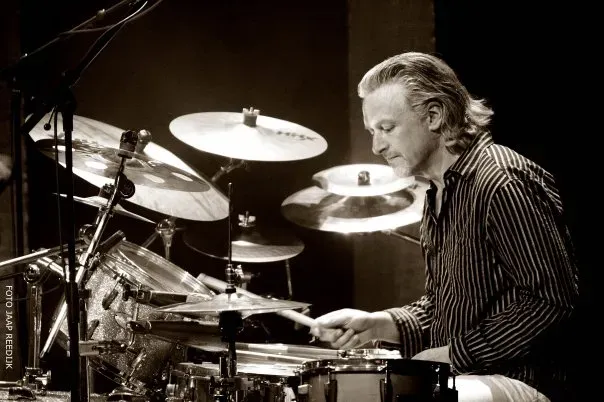
Touring has always required upfront cash for vans, gas, lodging, and gear repairs, and older generations often modeled the workaround of simply putting it on a credit card and sorting it out later. That approach made a certain kind of sense decades ago, when interest rates were lower and margins on merch and ticket sales were a bit more forgiving. It is a riskier habit today, when even a short run of shows can rack up debt that outlasts the tour itself.
A 2024 Wellness in Music survey found that income instability remains a major hurdle, with more than half of respondents saying their earnings still had not stabilized since the pandemic. That kind of unpredictable income makes debt financed touring especially precarious, since a canceled show or a slow merch table can turn manageable interest payments into a genuine financial setback. Musicians who inherited this habit rarely learned an alternative, simply because nobody in their circle modeled saving ahead for tour costs instead.
Underpricing lessons and session work


It is common for musicians who teach or do session work to set their rates based on what their own teacher charged years earlier, adjusted only slightly for inflation. That pricing habit gets passed down almost unchanged, even as the cost of living, gear, and travel have all shifted considerably. The result is a generation of skilled musicians charging rates that undervalue their actual expertise and time.
This habit is particularly stubborn because raising rates can feel uncomfortable, especially when a mentor’s old pricing still echoes as the “normal” benchmark. Musicians who never questioned that inherited number often end up subsidizing their teaching or session income with money from other, less stable sources. Reassessing rates against current market conditions, rather than an inherited figure, is one of the simplest fixes available, even if it takes some nerve to implement.
Treating retirement savings as something for later

Because music income has always felt irregular, older generations often modeled the habit of skipping retirement contributions entirely, reasoning that gigs would simply continue as long as health allowed. That mindset gets absorbed by younger musicians almost by osmosis, since nobody around them was doing it differently. It becomes a habit of omission rather than a deliberate choice, which makes it easier to keep repeating year after year.
Financial habits themselves show a generational split, with younger consumers increasingly shaped by informal sources like social media, while older generations lean more on traditional influences such as family. For musicians, that traditional family influence often did not include retirement planning at all, since it was rarely modeled in the first place. The habit of treating today’s gig money as the only money that matters tends to catch up with musicians later, precisely when touring becomes harder and income options narrow.
None of these nine habits are dramatic on their own. They are small, familiar, and often well intentioned, which is exactly why they survive from one generation of musicians to the next without much scrutiny. Recognizing which inherited habit is quietly shaping a musician’s finances today is usually the first real step toward changing it, long before it becomes a pattern passed on to someone else.