Watch a thriller with the sound off, and you may find the tension is oddly missing. The picture shows a quiet hallway, but the score is what tells you to worry. Composers have long used music as an early warning system, a hint, or a gentle nudge toward an emotion the scene hasn’t yet earned.
The techniques below aren’t secret, and film music scholars have described most of them for decades. Still, hearing them named makes them easier to notice the next time a cue creeps in underneath a calm moment.
Leitmotifs That Announce a Character or Idea

A leitmotif is a short musical theme tied to a person, object, or idea. When it appears before that element shows up, the audience gets advance notice. The technique comes from Wagner’s operas and was carried into cinema by composers such as Max Steiner and later John Williams.
Williams’ Imperial March in Star Wars is the textbook case. Its brass rhythm tells you Darth Vader’s presence is near, even when he is still off camera. The viewer learns the association through repetition, then the film can use it as a shortcut.
Low Drones That Build Dread

Sustained low tones work on the body before the mind catches up. They sit under dialogue and image, and many viewers don’t consciously register them. Yet the unease they create can tell us a scene is heading somewhere bad.
Hans Zimmer’s work on Dunkirk leaned on a continuous rising effect to keep tension high, a technique often compared to a Shepard tone, an auditory illusion that seems to climb forever. The film’s constant pressure was built into the sound itself rather than shown in the images.
Sudden Silence Before the Event


Taking music away can be as telling as adding it. When a cue that has been humming along stops, viewers sense that something is about to break. The absence works as a kind of held breath.
Composers and sound teams often plan these drop outs carefully, so the quiet lands right before a reveal or a jolt. Hitchcock’s Psycho is famous for its screeching strings, but much of its power comes from the contrast with stillness around them.
Dissonance Slipping Into Warm Harmony

A pleasant melody with a few wrong notes can signal that comfort won’t last. The clash between a cheerful surface and a slightly sour harmony makes an audience suspicious. It’s a quiet way of saying the scene isn’t what it appears to be.
Horror and suspense films use this often, with lullaby like tunes bent just out of tune. Rosemary’s Baby, scored by Krzysztof Komeda, opens with a wordless lullaby that sounds sweet but faintly uneasy from the first bar.
Partner offer

Tempo and Rhythm Speeding Up


Heartbeat like pulses that gradually quicken tell us time is running out. The picture may not change at all, but the music suggests acceleration. Viewers read it almost instinctively, since faster rhythm tends to feel more urgent.
Jaws is the classic example. John Williams’ two note motif for the shark grows in speed and intensity as the threat approaches, and the film often uses it when the shark is not visible at all.
Instrument Choice as a Genre Signal

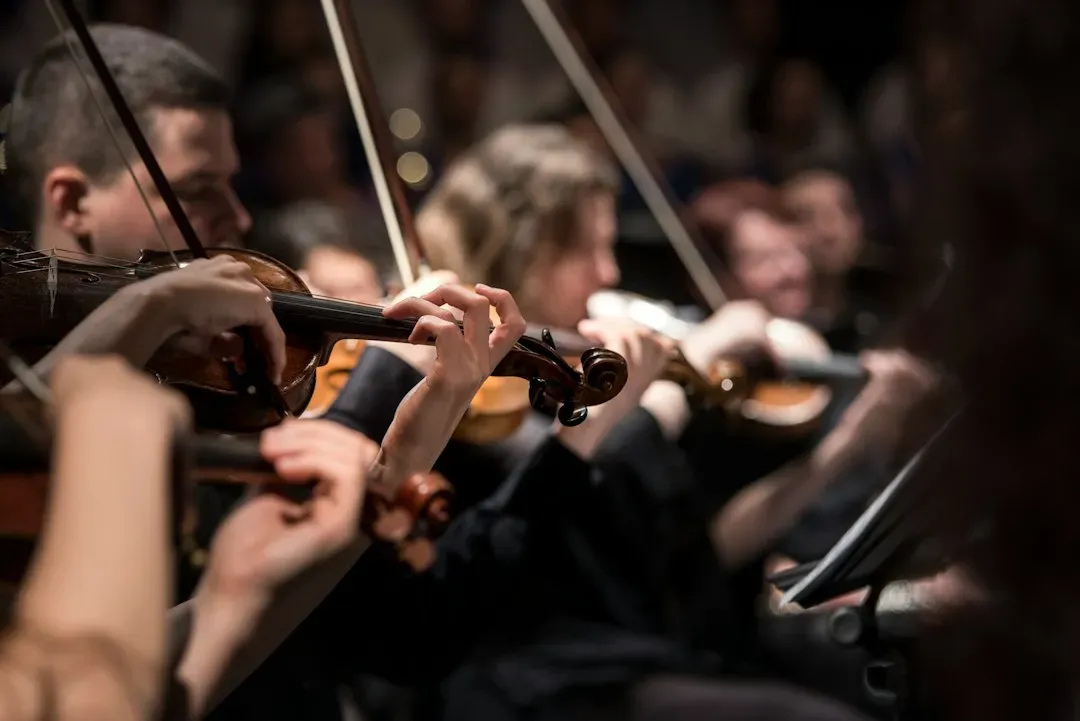
The instruments a composer picks can set expectations within seconds. Strings, brass, synthesizers, or a solo piano each carry cultural associations built up over decades of film. A change in instrumentation can hint at a change in tone.
Ludwig Göransson’s Oppenheimer score, which won the Academy Award for Best Original Score at the 2024 ceremony, used a heavy violin presence to evoke anxiety and momentum. The sound frames the story as one of mounting pressure before the bomb itself is even discussed.
Key Changes and Unresolved Chords
A chord that doesn’t resolve leaves the ear waiting. That small sense of incompleteness tells us the situation is unsettled, even when the characters appear fine. When resolution finally arrives, it feels like relief or sometimes like a trap closing.
Composers also use sudden shifts of key to signal a turn in the story. A move from major to minor can warn that hope is about to be tested, and audiences tend to feel it before they can explain it.
Music From the Future Scene Arriving Early

Sometimes a composer lets the next scene’s music begin under the current one. This overlap is often called a sound advance or J cut in editing terms, and it pulls viewers forward in time. They hear where the story is going before the picture catches up.
The effect can be gentle, as a new theme fades in to suggest a location change, or sharp, as an alarming cue bleeds into a peaceful moment. Either way, the audience gets a preview that shapes how they read the images.
Music Contradicting What the Characters Know

Dramatic irony works well with a score. The characters may feel safe while the music tells us they aren’t, which puts the audience one step ahead. That gap between what is heard and what is seen creates suspense without a single line of dialogue.
Film music researchers often describe this as music offering information that the narrative has not yet given. A calm scene with an ominous undertone is the simplest version, and it remains one of the most reliable tools in a composer’s kit.
Partner offer
Planning a trip to Vegas?
Compare hotel rates and show tickets on VEGAS.com.