Think about how you listened to music ten years ago. Maybe you owned a CD collection, or perhaps you were already streaming on Spotify. Fast forward to today and the landscape is almost unrecognizable. We’re living through a moment where vinyl records sit alongside algorithmic playlists, where the tactile experience of dropping a needle competes with instant access to millions of songs at our fingertips.
The way we consume music has always been evolving. From wax cylinders to cassettes, from radio waves to digital files. Yet the past few years have brought changes that feel particularly dramatic. Streaming has become the undisputed king of music consumption, commanding the vast majority of how we discover and enjoy music. Physical formats, once left for dead, are experiencing unexpected resurgences in niche markets. Let’s dive into what’s really happening in music consumption as we move through 2026.
Streaming Dominance Reaches New Heights

The global music industry hit 5.1 trillion streams in 2025 according to Luminate’s Year-End Report, marking a new single-year record with a 9.6% increase from 2024. That’s not a typo. Five point one trillion. To put that in perspective, if you tried to listen to every single one of those streams back to back, you’d be sitting there for roughly sixteen million years.
Let’s be real, these numbers are staggering. In the U.S., on-demand audio streams reached 1.4 trillion, up 4.6% from last year, though attention remains firmly on older music with less than half of all U.S. on-demand audio streams (43%) coming from tracks released in the last five years. This tells us something fascinating about listening habits. People aren’t just chasing the latest releases anymore. They’re building relationships with catalog music, returning to old favorites, exploring decades-old albums.
The shift toward streaming hasn’t just been about convenience. It’s fundamentally changed how artists release music, how charts are calculated, and how the entire industry generates revenue. Honestly, it’s hard to imagine going back.
Streaming Revenue Takes the Crown
Figures released in IFPI’s Global Music Report 2025 show that total trade revenues reached USD $29.6 billion in 2024, up by 4.8% YoY, and global recorded music revenues grew in every region for the third consecutive year. While growth has slowed slightly compared to previous years, the trajectory remains upward.
Paid subscription streaming revenues increased 9.5% YoY in 2024, accounting for 51.2% of the global market. Think about that for a moment. More than half of all recorded music revenue now comes from people paying monthly subscriptions to platforms like Spotify, Apple Music, and Amazon Music. Users of paid subscription accounts grew 10.6% YoY to 752 million globally.
Yet there’s a catch. Streaming revenue grew by a more modest 6.2% in 2024 compared to 10.3% in 2023. The rate of growth is decelerating. Industry experts have been anticipating this slowdown, and it seems to have arrived despite recent price increases across major platforms.
The Music Streaming Market Outlook for 2026

Global Music Streaming Market is estimated to be valued at USD 49.09 Bn in 2026 and is expected to reach USD 176.84 Bn by 2033, growing at a compound annual growth rate (CAGR) of 19.4% from 2026 to 2033. These projections suggest that despite the recent slowdown in growth rates, the overall market continues to expand substantially.
Multiple market research firms have released similar forecasts, all pointing toward continued dominance of streaming as the primary music consumption method. The question isn’t whether streaming will remain king, but rather how platforms will continue to innovate and extract value from their user bases. Super premium tiers, high-fidelity audio options, and enhanced features are all on the table as streaming services look for new revenue streams.
It’s interesting to note that the projected growth isn’t uniform across all regions. Markets in Asia, Latin America, and Africa are showing particularly strong expansion potential as smartphone adoption and affordable data plans make streaming more accessible to billions of new listeners.
Vinyl’s Surprising Resilience
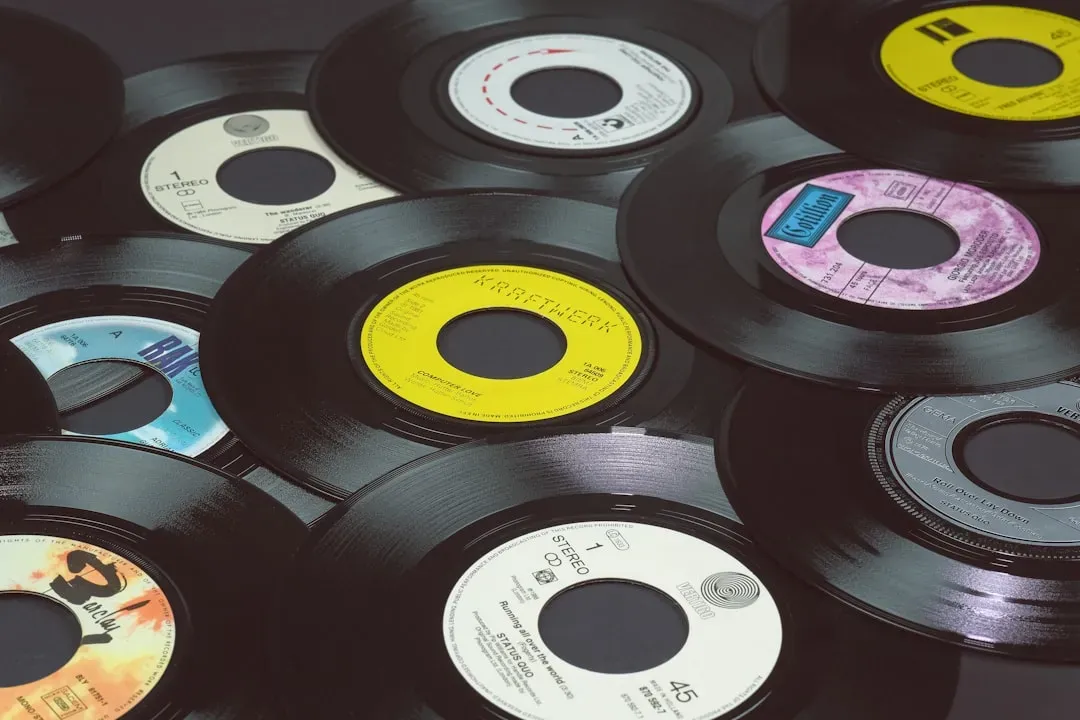
Here’s where things get really interesting. While streaming steamrolls ahead, vinyl records are experiencing something nobody predicted two decades ago: sustained growth. By 2024, vinyl music sales of $1.4 billion on 43.6 million units easily outpaced sales of CDs at $541 million on 33 million units. Vinyl outselling CDs? That would have sounded absurd in 2005.
Vinyl revenues continued to grow in 2024, up 4.6%, which was the 18th consecutive year of growth. Eighteen consecutive years. This isn’t a flash in the pan or a nostalgic blip. It’s a genuine market phenomenon driven by collectors, audiophiles, and increasingly, younger listeners who never experienced the original vinyl era.
The appeal seems to be multifaceted. There’s the tactile pleasure of handling large format album art, the ritual of placing a needle on a record, and yes, the warm analog sound that many listeners prefer. Vinyl accounted for 60% of all physical sales by midyear 2025, while CDs stood at 40%.
Physical Formats Face Mixed Fortunes
Global physical revenues declined 3.1% YoY and reached $4.8 billion in 2024, set against a very strong performance for the format in 2023, when revenues increased by 14.5%. Physical music isn’t disappearing, but it’s definitely not the growth driver it once was.
CDs have taken the biggest hit. Global CD and music video revenues fell by 6.1% YoY and 15.5% YoY, respectively, in 2024. The compact disc, once the revolutionary format that killed vinyl, now finds itself struggling for relevance in a streaming-first world. Still, CD sales aren’t zero, and in certain markets like Japan and Germany, the format maintains surprisingly strong support.
The story of physical formats in 2026 is really a tale of two products. Vinyl thrives as a premium, collectible format for engaged fans. CDs decline as a utilitarian format squeezed between the convenience of streaming and the prestige of vinyl. It’s a fascinating market dynamic.
Revenue Distribution Tells a Revealing Story

Let’s talk money. Total streaming revenues grew 7.3% YoY and represented 69% of total recorded music revenues, with paid subscription streaming revenues accounting for 51.2% of the global market. Physical formats, meanwhile, represent a small but persistent slice of the pie, hovering around ten percent of total revenues.
Here’s the thing: while paid subscriptions dominate, ad-supported streaming hasn’t kept pace. Ad-supported streaming formats grew by a modest 1.2% YoY. This disparity highlights an important trend. Listeners are increasingly willing to pay for premium, ad-free experiences. The freemium model still attracts users, but it’s not where the revenue growth lives.
Digital downloads continue their slide into irrelevance, now accounting for roughly three percent of industry revenues. Remember when iTunes was going to save the music industry? Those days feel like ancient history now.
Global Markets Show Divergent Patterns

Global recorded music revenues grew in every region for the third consecutive year, with breakneck growth in Latin America (+22.5%), the Middle East and North Africa (+22.8%), and Sub-Saharan Africa (+22.6%). These aren’t mature markets gradually expanding. These are explosive growth stories.
Representing the largest share of global recorded music revenues (40.3%), the USA and Canada grew 2.1% in 2024, with the USA posting growth of 2.2% YoY. That’s a stark contrast. Mature Western markets are growing, but at a glacial pace compared to emerging regions.
Streaming in the MENA region accounted for 99.5% of total revenues. Nearly everything in that region flows through streaming platforms. Physical formats barely register. It’s a preview of what the global market might look like in a decade.
The Shift in How Music Success Is Measured

Streaming data now heavily influences chart positions and measures of success. The Billboard charts, once dominated by radio airplay and sales figures, now weight streaming numbers substantially. This has fundamentally altered what it means for a song to be successful.
A track can accumulate billions of streams without ever dominating radio. Conversely, radio hits that don’t translate to streaming numbers struggle to claim chart supremacy. Artists and labels have adapted their strategies accordingly, focusing on playlist placements, algorithmic discovery, and sustained streaming performance rather than traditional promotion tactics.
This shift has democratized music discovery to some extent. Independent artists can reach massive audiences without major label backing, provided they can crack the streaming platform algorithms. Yet it’s also created new gatekeepers in the form of playlist curators and algorithm designers.
Consumer Behavior Points to Access Over Ownership
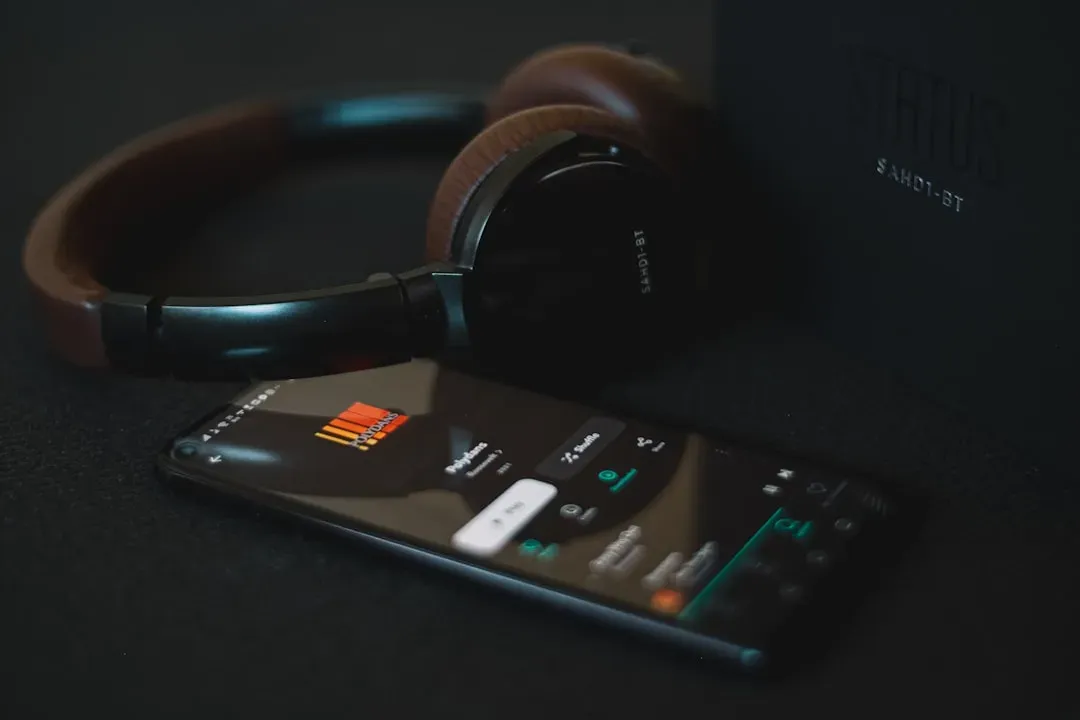
The fundamental shift we’re witnessing is from ownership to access. Previous generations built CD or vinyl collections, taking pride in their physical libraries. Today’s listeners overwhelmingly prefer unlimited access to vast catalogs over owning individual albums.
This doesn’t mean ownership has disappeared entirely. The vinyl resurgence demonstrates that some consumers still value owning music in physical form. They’re just a minority, and often they stream music daily while also collecting vinyl for specific artists or albums they particularly love.
Streaming’s convenience is simply too compelling for most people. Discovering new music, creating playlists for different moods, accessing entire discographies instantly. These benefits have proven more valuable to most listeners than the concept of owning music files or physical copies. It’s hard to argue with that logic, even if something feels lost in the transition.
What Comes After Streaming Dominance?

Industry analysts are already looking beyond streaming’s current model. What’s next? Some point to immersive audio experiences, spatial audio, and high-fidelity streaming as potential differentiators. Others suggest direct artist-to-fan platforms that bypass traditional streaming services entirely.
Artificial intelligence is another wildcard. AI-generated music, personalized recommendations taken to new extremes, and dynamic playlists that adapt to context and mood in real-time. These technologies could reshape consumption patterns in ways we haven’t fully imagined yet.
The thing is, nobody really knows what comes after streaming dominates. We might see a continued consolidation of the current model. Alternatively, some breakthrough technology or approach could disrupt the entire system. History suggests that music consumption formats don’t stay stable for long.
The Bottom Line: Where We Are and Where We’re Heading

As we move through 2026, the music consumption landscape is simultaneously more consolidated and more fragmented than ever. Streaming commands the vast majority of listening and revenue, yet physical formats persist and even thrive in specific niches. The global market continues to grow, though at varying rates across regions and formats.
In 2024, global recorded music revenues grew by 4.8%, marking the tenth consecutive year of global growth, with revenues increasing in every region. That’s a success story by almost any measure. The industry has rebuilt itself after the piracy-driven collapse of the early 2000s, finding a sustainable model in streaming subscriptions.
What does this mean for listeners? More music is accessible to more people than ever before in human history. Artists have new pathways to reach audiences, even if monetization remains challenging for all but the biggest stars. The experience of music consumption has become simultaneously more convenient and, for some, less meaningful. It’s complicated, messy, and constantly evolving. That’s probably exactly how it should be.
What do you think the next big shift in music consumption will be? Are we heading toward a completely streaming-dominated future, or will new formats and approaches emerge to challenge the current model? The only certainty is that music consumption will keep changing.