Few things in cinema stick with you quite like a twist that catches you completely off guard. That moment when everything you thought you knew about a film suddenly flips, forcing you to reconsider every scene you just watched. Let’s be real, these revelations are what separate memorable films from forgettable ones. Here are twenty twists that genuinely shocked audiences and permanently altered how we talk about movies. Fair warning though, if you haven’t seen these films, you might want to bookmark this and come back later.
The Sixth Sense (1999) – Dead All Along
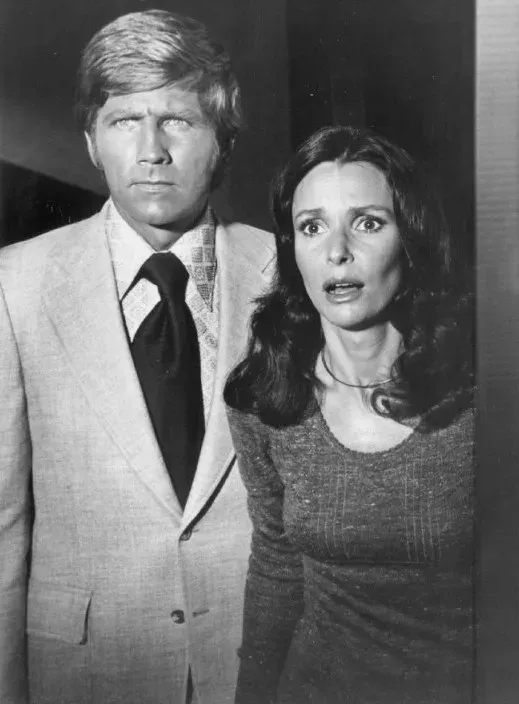
The Sixth Sense received six Oscar nominations including Best Picture and Best Director, establishing M. Night Shyamalan as a master of thriller filmmaking. The revelation that Dr. Malcolm Crowe himself has been dead the entire time changes the whole story, forcing viewers to rethink everything they just saw. What makes this twist so devastatingly effective is how Shyamalan hides it in plain sight. Throughout the film, Malcolm never directly interacts with anyone besides Cole, yet we’re so engrossed in the emotional journey that we miss the obvious clues. The film grossed over $672 million worldwide, becoming the second-highest-grossing film of 1999. Honestly, even knowing the twist, watching it again reveals how meticulously every scene was crafted to support this revelation without giving it away. This touching yet terrifying ghost story ends with one of the greatest twists in movie history, a final revelation that carries a pop cultural impact rivaled only by The Empire Strikes Back.
The Usual Suspects (1995) – Verbal Is Keyser Söze

According to the main protagonist, Keyser Söze is a crime lord whose ruthlessness and influence have acquired mythical status among police and criminals alike, though further events make these accounts unreliable as a police sketch identifies Verbal Kint and Söze as one and the same. The beauty of this twist lies in how effectively Kevin Spacey plays the seemingly harmless, disabled con man. News clippings on a corkboard and other items in the office share names from Verbal’s story, showing he made it all up right there in the room. That final shot, where Verbal’s limp disappears as he walks away, is cinema perfection. Absolutely no one saw it coming since The Usual Suspects was a brand new script not based on previous material, and Christopher McQuarrie won the Oscar for Best Original Screenplay. The twist doesn’t just shock you. It makes you want to immediately rewatch the entire film to catch what you missed.
The Empire Strikes Back (1980) – I Am Your Father

The film obtained a Rotten Tomatoes tomatometer score of 95 and popcornmeter of 97, and has been praised as a revolutionary game changer with one of the greatest plot twists in cinema history. Even if you’ve never seen Star Wars, you probably know this line. During the climactic lightsaber duel between Luke and Darth Vader, Vader reveals that he is Luke’s father Anakin Skywalker, a massive shock not only to Luke but to the entire audience. Here’s the thing though, this wasn’t just a shocking moment for the sake of it. An original script reveals the plot twist was hidden from actors with the iconic line omitted from copies completely. The revelation completely redefined the relationship between hero and villain, adding emotional depth that elevated the entire saga. It became such a cultural touchstone that it’s been referenced and parodied countless times across decades.
Psycho (1960) – Mother Is Dead
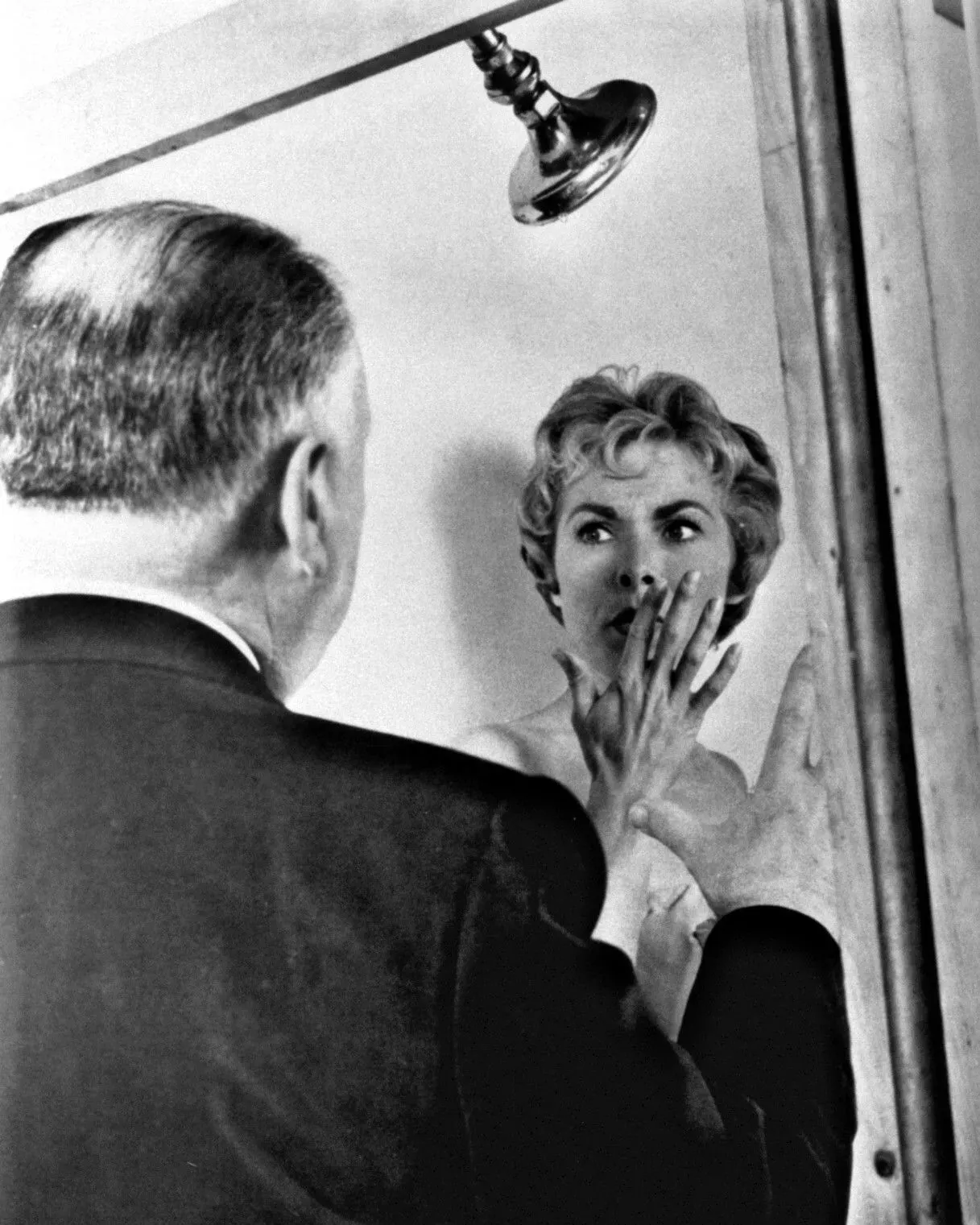
Psycho obtained a near perfect Rotten Tomatoes tomatometer score of 97, featuring impressive camerawork, stellar performances, and a score by Bernard Hermann that makes what happens to Marion even more toe-curling. The iconic twist comes when it’s revealed that Norman Bates’ mother, whom the audience believes to be the killer, is actually a mummified corpse. Norman has been impersonating her all along, dressing up and committing the murders himself. Marion’s murder in the shower is the first twist, as we thought she was the protagonist. Director Hitchcock anonymously bought rights to the novel and purchased as many copies as he could so no one would have foresight into the movie, even making the cast and crew swear an oath to not reveal any parts of the story. The film essentially rewrote the rules for psychological thrillers, proving that horror could come from the human mind rather than supernatural forces.
Fight Club (1999) – Tyler Durden Doesn’t Exist

Tyler Durden and the Narrator are the same person, as Tyler is a figment of the Narrator’s imagination. This might be the twist that defined an entire generation’s relationship with cinema. Several reasons make the twist so effective including great performances, an evocative style and tone, thought-provoking themes, and clues that hint toward the final surprise. Once you know the truth, rewatching reveals how director David Fincher peppered hints throughout, from Tyler appearing in single frames before his official introduction to the fact that other characters only respond when the Narrator speaks, never Tyler. Fincher wants you to find the clues after you’ve seen the movie once, as they are everywhere within frame. The multiple personality plot has been done many times since, yet Fight Club remains the gold standard for this type of narrative trickery.
Planet of the Apes (1968) – It Was Earth All Along

Astronaut George Taylor stumbles upon the ruins of the Statue of Liberty on a beach, a shocking discovery that reveals the alien planet he thought he crashed on is actually Earth in the future. Imagine watching this in theaters in 1968 without any prior knowledge. The entire film, you’re led to believe Taylor and his crew are on some distant alien world. Though the film is based on Pierre Boulle’s 1963 novel, the Statue of Liberty ending came from one of the film’s writers, Twilight Zone creator Rod Serling, a master of plot twists and twist endings. That final image of Charlton Heston falling to his knees before the half-buried statue is one of cinema’s most iconic moments. In her review, Pauline Kael urged readers to see the film as soon as possible so the ending wouldn’t be spoiled, noting it has the ingenious kind of plotting that people love to talk about.
Se7en (1995) – What’s In The Box

Inside the mysterious box is the severed head of Mills’ wife Tracy, and in one final calculated move, serial killer John Doe reveals himself as Envy due to the fact that he envied Mills’ life, provoking Mills into fulfilling the last sin Wrath by murdering him. It’s a brutal revelation that helped the 1995 film set a new benchmark for psychological thrillers. The genius here isn’t just the shock value. It’s how perfectly the twist completes the killer’s masterplan while destroying Detective Mills in the process. The iconic “What’s in the box” moment has taken on a life of its own as a meme online. David Fincher crafted a climax so dark and uncompromising that Hollywood rarely attempts anything similar. You don’t walk away from this ending feeling entertained exactly, more like emotionally devastated in the best cinematic way possible.
The Prestige (2006) – The Twin Trick

The first twist is that Alfred Borden’s incredible magic trick The Transported Man is possible because he has a twin brother. The second twist reveals that Robert Angier uses a teleportation device built by Nikola Tesla which doesn’t transport him but duplicates him, and each time he performs the trick he creates a clone and kills one version by drowning. Christopher Nolan essentially made a film about obsession disguised as a period piece about magicians. The film’s themes of sacrifice and obsession make the twist even more powerful, as the reveal surprises the audience while deepening the narrative’s exploration of rivalry and deception. It’s hard to say which character’s secret is more disturbing, making this a rare double twist that actually works.
Oldboy (2003) – The Daughter Reveal

Dae-su discovers he has been manipulated into falling in love with and sleeping with Mi-do, who is revealed to be his daughter. This South Korean revenge thriller pulls absolutely no punches. This shocking and disturbing twist is one of the most memorable in film history, challenging viewers’ moral boundaries and leaving a lasting impact due to its unexpected nature. The entire elaborate scheme was revenge for a past wrong Dae-su committed, making him unknowingly commit an even worse act. The exploration of revenge and the consequences of one’s actions resonate deeply, making the twist not just shocking but profoundly unsettling, with the film’s emotional intensity and moral complexity elevating it to iconic status.
Shutter Island (2010) – Teddy Is The Patient

Leonardo DiCaprio’s Teddy Daniels is revealed to be a patient at the mental institution on Shutter Island, not a U.S. Marshal. Throughout the film, we follow Teddy investigating the disappearance of a patient from the asylum, convinced there’s a massive conspiracy. The slow realization that Teddy himself is Andrew Laeddis, a patient undergoing experimental therapy, recontextualizes every scene. His dead wife, the missing patient, the suspicious doctors – all part of an elaborate role-play designed to help him accept the truth that he murdered his wife after she killed their children. Martin Scorsese keeps you guessing right until the end, and that final line leaves you wondering whether Teddy is still delusional or making a conscious choice.