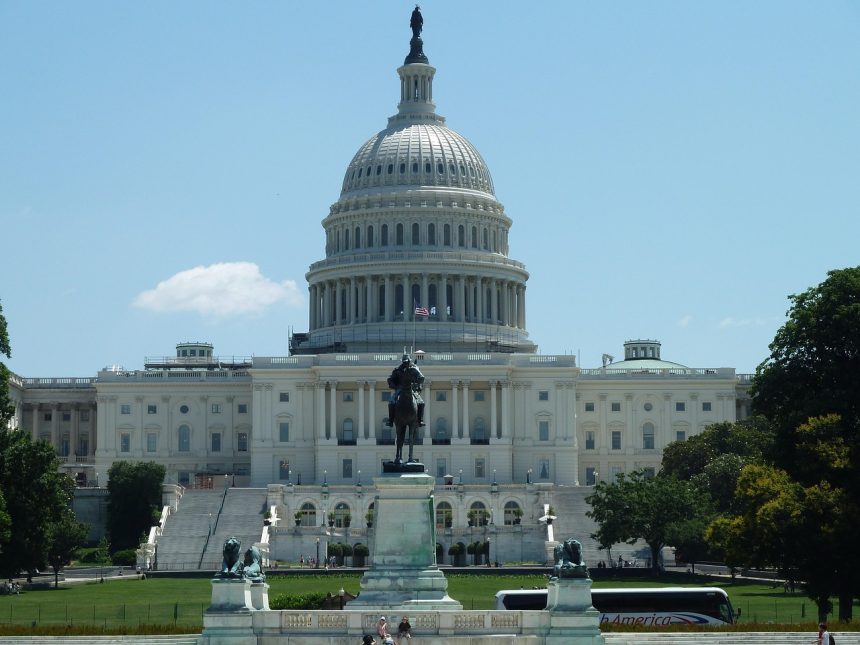
Tense Floor Battle Yields Slim Margin (Image Credits: Pixabay)
Washington – Lawmakers approved a sweeping spending package Tuesday that promises to resolve the latest partial government shutdown after just days of disruption.
Tense Floor Battle Yields Slim Margin
The House approved the measure by a razor-thin 217-214 vote, a outcome that demanded intense arm-twisting from Republican leaders.[1][2]
Speaker Mike Johnson held a key procedural vote open for almost an hour to secure the necessary backing. A few GOP holdouts pushed unrelated priorities, but leadership prevailed through one-on-one negotiations. Johnson later described the effort as routine consensus-building amid high stakes.[1]
“We have to work through individual members’ concerns. That’s the game here. It’s a consensus building operation. We do it every day,” Johnson remarked.
Trump’s Social Media Push Tips the Scales
President Donald Trump intervened directly the day before, posting on his social media platform to rally Republicans. He insisted on unity and warned against alterations to the package.[1]
“There can be NO CHANGES at this time,” Trump wrote, adding that further delays would inflict needless harm on the nation. He urged a “YES” vote to avoid prolonged closure. Johnson credited the approach to Trump’s strategic direction, calling it his “play call” to prioritize reopening government operations.[2]
House Majority Leader Steve Scalise echoed the sentiment, noting that votes often coalesce right up to deadlines on major legislation.
Funding Breakdown: Broad Coverage with One Holdout
The legislation consolidates 11 of the 12 required annual spending bills, totaling about $1.2 trillion. It secures operations for most federal agencies, including the Defense Department, through September 30.[1]
Prior approvals already covered six bills, safeguarding nutrition programs and national parks. Tuesday’s action filled the gap, accounting for roughly three-quarters of discretionary federal spending.
- Defense Department: Fully funded.
- Nutrition assistance: Continues uninterrupted.
- National parks and historic sites: Operational through fall.
- Homeland Security: Temporary extension to February 13 only.
DHS Debate Looms Large Over Immigration Enforcement
Attention now turns to the unresolved Homeland Security bill. Democrats seek tighter controls on the agency’s enforcement activities, particularly U.S. Immigration and Customs Enforcement, following a fatal shooting of two American citizens in Minneapolis by federal agents.[1]
The Senate had decoupled this portion to allow more talks. Trump plans to sign the current package swiftly, ending the shutdown that started Saturday. Yet the brief DHS patch underscores ongoing tensions around immigration policy.
A Shorter Standoff Than Last Time
This episode pales against the autumn’s 43-day shutdown, which paralyzed more agencies amid fights over Affordable Care Act subsidies. Democrats failed then to attach those extensions.[2]
Congressional progress since has stabilized key services, averting wider fallout this round.
Key Takeaways
- Bill funds most government through September 30, with DHS on short leash.
- 217-214 House vote highlights GOP discipline under Trump pressure.
- Immigration enforcement reforms fuel next funding clash.
Trump’s expected signature will restore normalcy, but the Homeland Security wrangle signals more fiscal drama ahead. Lawmakers must balance enforcement demands with operational needs. What impacts have you noticed from recent shutdown threats? Share in the comments.