History loves a good story about lone geniuses working in isolation. We celebrate Newton under his apple tree, Galileo with his telescope, Darwin on his voyage. But here’s the thing – science was never really a solo endeavor. Behind those famous names were networks of collaborators, assistants, and contributors whose work has been systematically erased from our collective memory. Many of them were women.
These weren’t just passive observers or dutiful note-takers. They made genuine discoveries, developed groundbreaking theories, and pushed the boundaries of human knowledge. Yet their contributions were attributed to male colleagues, dismissed as “mere assistance,” or simply forgotten altogether. The erasure was so complete that many modern scientists have never heard their names. Let’s dive in.
Émilie du Châtelet: The Mathematician Who Made Newton Readable
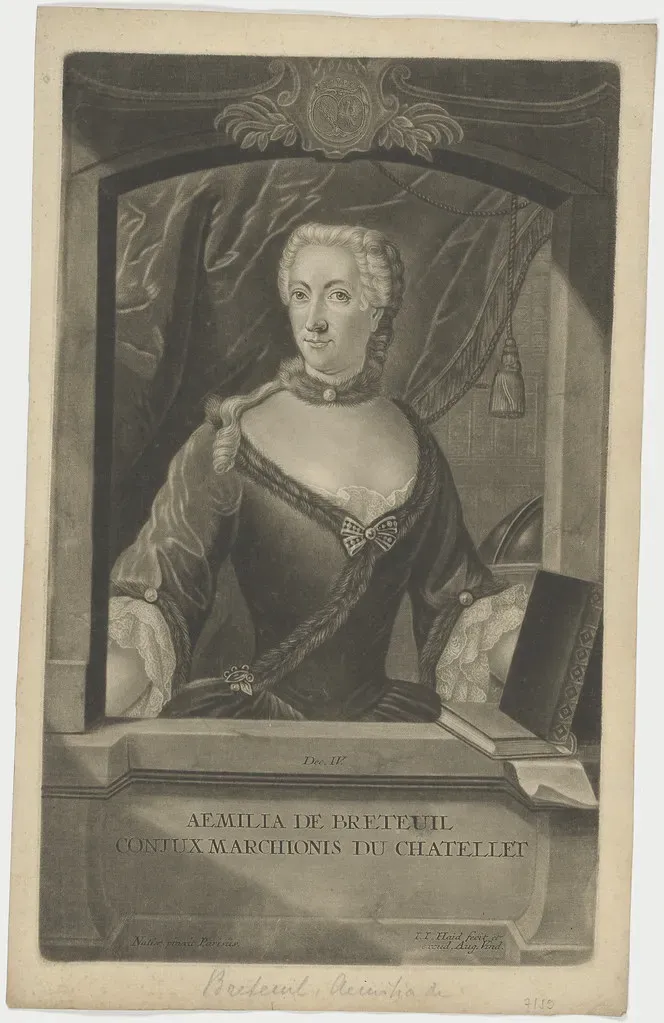
Émilie du Châtelet wasn’t just translating Isaac Newton’s work from Latin to French – she was explaining it, correcting it, and expanding on it. Her 1749 translation of the Principia Mathematica remains the standard French version to this day. She added her own mathematical commentary that clarified Newton’s more obscure passages and even challenged some of his conclusions.
Du Châtelet also predicted the existence of infrared radiation and developed early concepts about energy conservation. She died at 42 while pregnant with her fourth child, having worked literally until her final days to complete her masterwork. Voltaire, her lover and intellectual partner, once wrote that she was “a great man whose only fault was being a woman.” Even compliments were backhanded in the 18th century.
Her mathematical prowess was so threatening to male contemporaries that many refused to believe she’d written her own work. Some claimed Voltaire must have ghost-written her papers. The idea that a woman could understand advanced calculus was apparently more unbelievable than a elaborate decades-long conspiracy.
Caroline Herschel: The Astronomer Who Discovered Comets While Doing Her Brother’s Paperwork
Caroline Herschel discovered eight comets, identified numerous nebulae, and created catalogs that astronomers still reference. She was the first woman to receive a salary as a scientist in England and the first woman elected to the Royal Astronomical Society. But for most of her career, she was officially just her brother William’s assistant.
She’d spend nights making astronomical observations while William slept, then spend her days reducing data, making calculations, and managing his correspondence. When William discovered Uranus – the first planet identified in recorded history – Caroline did much of the mathematical work to confirm its orbit. Guess whose name got all the credit.
After William died, Caroline returned to Germany and continued her astronomical work. She compiled a catalog of 2,500 nebulae that became foundational to the field. The Royal Astronomical Society finally awarded her their Gold Medal in 1828, when she was 78 years old. Better late than never, I suppose.
Maria Sibylla Merian: The Artist Who Revolutionized Entomology

In 1699, Maria Sibylla Merian did something extraordinary – she funded her own scientific expedition to Suriname at age 52. This was unheard of for anyone, let alone a woman. She spent two years in the South American rainforest documenting insects and plants with stunning accuracy and detail.
Before Merian, most naturalists believed insects spontaneously generated from mud or rotting matter. She proved through careful observation that butterflies and moths underwent complete metamorphosis. Her illustrations showed insects in their natural habitats, interacting with specific host plants – a revolutionary approach that laid groundwork for ecology.
Her book, Metamorphosis insectorum Surinamensium, became one of the most important works in entomology. Yet many historians relegated her to the category of “scientific illustrator” rather than scientist, as if her artistic skill somehow disqualified her from serious scientific consideration. Her observations were rigorous, her methodology sound, and her conclusions groundbreaking. She was a scientist, full stop.
Mary Anning: The Fossil Hunter Who Changed Paleontology
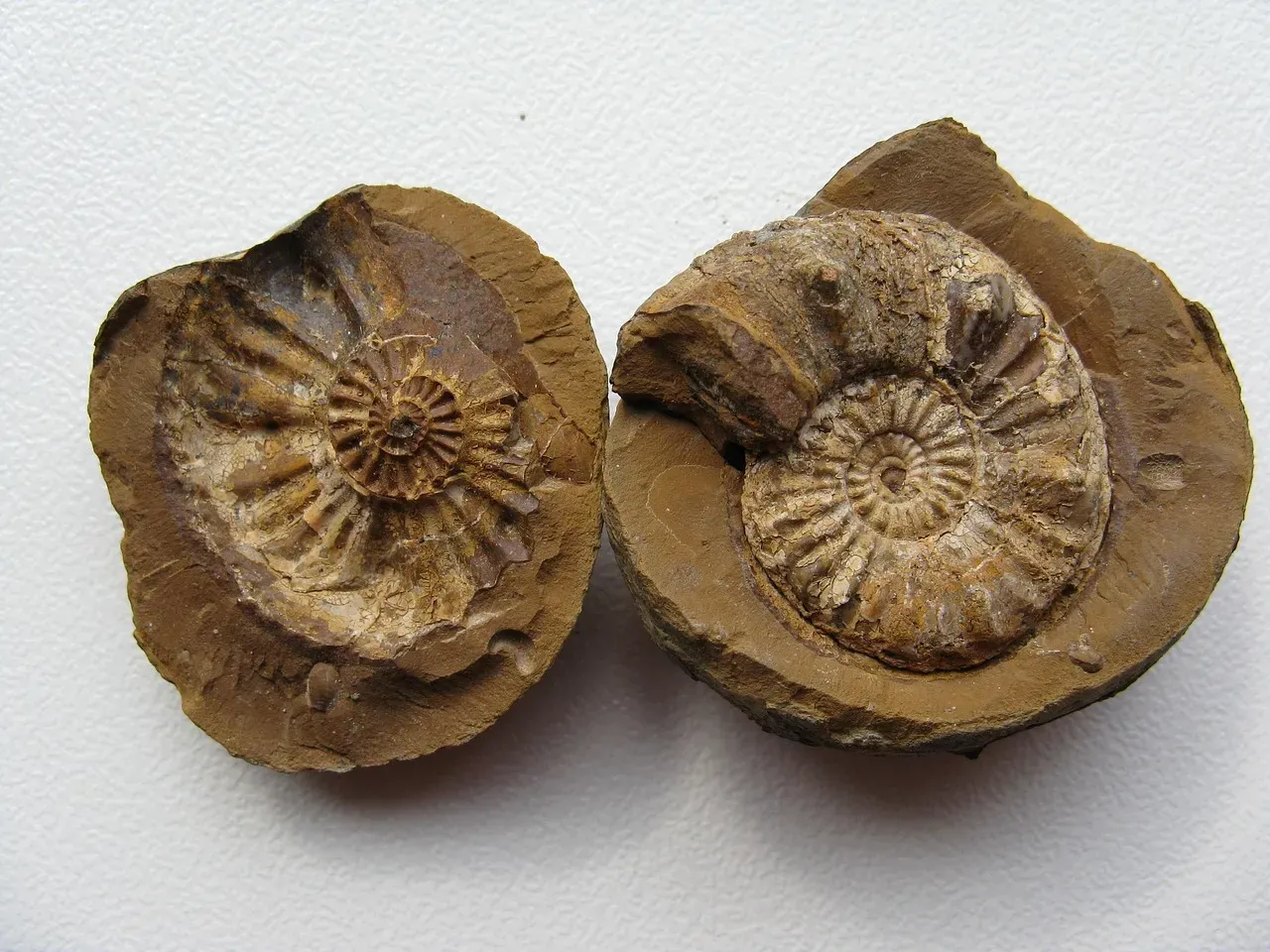
Mary Anning found her first complete ichthyosaur skeleton when she was twelve years old. Over her lifetime, she discovered the first plesiosaur, the first British pterosaur, and numerous other significant fossils along the cliffs of Lyme Regis. Her finds fundamentally challenged prevailing ideas about extinction and Earth’s history.
Scientists from across Europe would visit her shop, pick her brain about geology and anatomy, then publish papers based on her expertise without mentioning her name. She wasn’t allowed to join the Geological Society of London because of her gender. Her social class – she was working-class in a field dominated by wealthy gentlemen – didn’t help either.
The tongue-twister “she sells seashells by the seashore” is supposedly about Anning. How perfectly ridiculous that we’ve reduced one of the most important paleontologists in history to a children’s rhyme. She died of breast cancer at 47, having spent her life making discoveries that others claimed as their own. Only after death did the Geological Society finally acknowledge her contributions.
Lise Meitner: The Physicist Who Explained Nuclear Fission
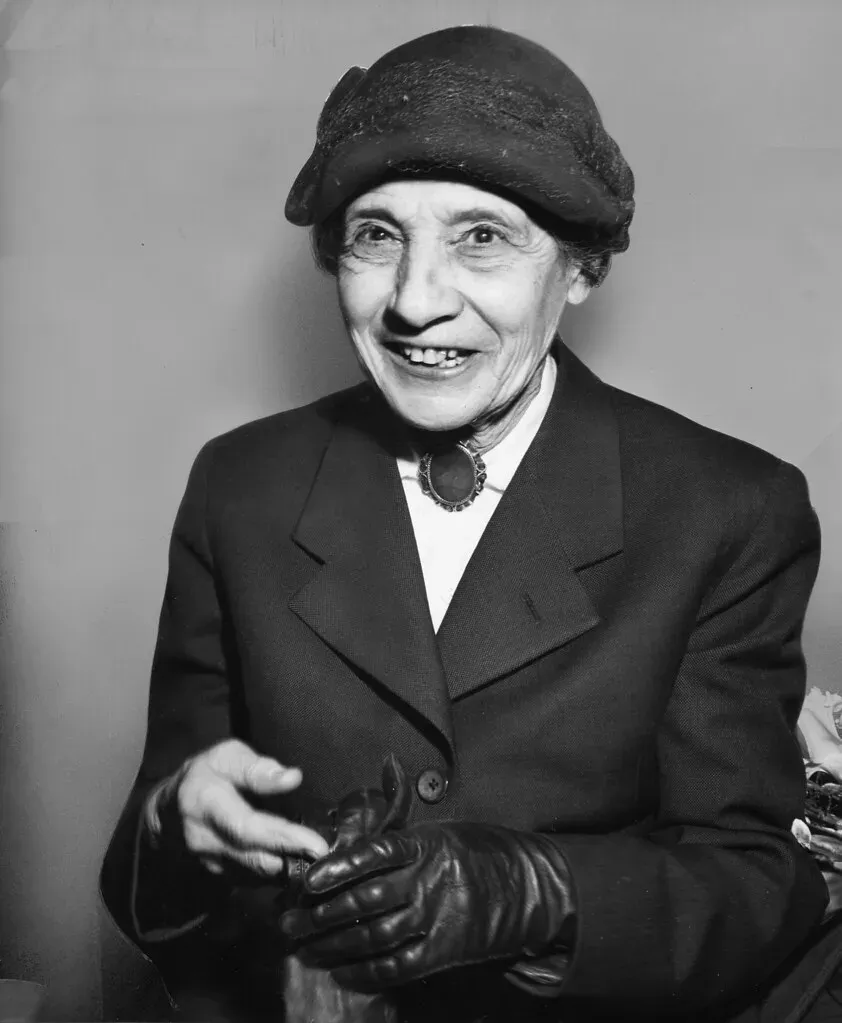
Lise Meitner worked with Otto Hahn for thirty years, conducting the research that led to the discovery of nuclear fission. When Nazi Germany forced her to flee in 1938, she continued working from exile in Sweden. She was the one who provided the theoretical explanation for why uranium atoms split when bombarded with neutrons.
In 1944, Otto Hahn won the Nobel Prize in Chemistry for discovering nuclear fission. Meitner’s name wasn’t mentioned. Not even as a footnote. Many historians consider this one of the most egregious oversights in Nobel Prize history. Even Hahn himself later admitted she deserved equal credit, though apparently not loudly enough for the Nobel Committee to hear.
She refused to work on the Manhattan Project, later saying, “I will have nothing to do with a bomb.” Her moral stance earned her the nickname “the German Marie Curie who left Germany with the bomb in her purse,” which somehow managed to both acknowledge her brilliance and blame her for weapons she refused to create.
Rosalind Franklin: The Chemist Whose X-ray Changed Biology
Everyone knows about Watson and Crick discovering the double helix structure of DNA. Fewer people know that Rosalind Franklin’s X-ray crystallography image – Photo 51 – was shown to Watson without her permission. That image provided the crucial evidence Watson and Crick needed to build their model.
Franklin’s work was meticulous and groundbreaking. Her X-ray diffraction images of DNA were the best in the world at that time. She was close to solving the structure herself when her data was essentially stolen. Watson later described her in his memoir as belligerent and difficult, because apparently being protective of your own research data is a personality flaw.
She died of ovarian cancer at 37, likely caused by radiation exposure from her work. Watson, Crick, and Maurice Wilkins won the Nobel Prize in 1962, four years after her death. The Nobel isn’t awarded posthumously, which some argue explains her exclusion. But let’s be real – even if she’d lived, would they have shared the prize with her? History suggests probably not.
Nettie Stevens: The Geneticist Who Discovered Sex Chromosomes
In 1905, Nettie Stevens definitively proved that sex is determined by chromosomes. She observed that male mealworms produced sperm cells with different chromosomes – some with X chromosomes, some with Y chromosomes – while females produced only X. This was a monumental discovery that explained a fundamental aspect of heredity.
A male colleague, Edmund Beecher Wilson, made similar observations around the same time. History books often credit Wilson alone, or mention Stevens only as a footnote. Some textbooks still teach that Wilson discovered sex chromosomes, despite clear evidence that Stevens published first and conducted more extensive research.
She died at 50 from breast cancer, having never secured a permanent academic position despite her groundbreaking work. She spent her career in temporary research positions, constantly scrambling for funding. Her colleague Wilson, meanwhile, enjoyed a long, celebrated career at Columbia University.
Margaret Cavendish: The Philosopher Who Imagined Other Worlds
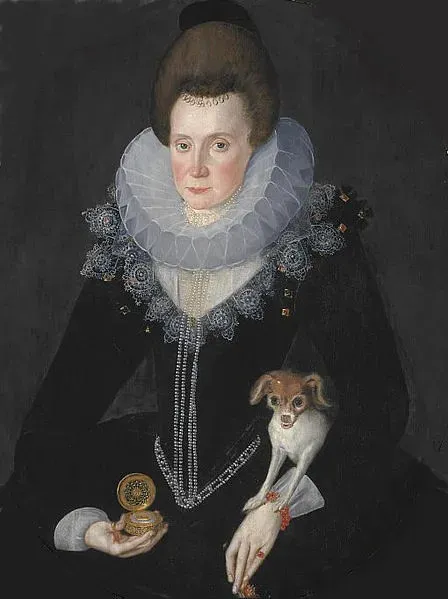
Margaret Cavendish published The Blazing World in 1666 – a work of science fiction that explored parallel universes, alternative physics, and philosophical questions about reality. She was also a serious natural philosopher who wrote extensively about atomism, matter theory, and the nature of knowledge.
She was the first woman invited to attend a meeting of the Royal Society in 1667. She attended exactly one meeting, observed some experiments, and was never invited back. Many members objected to her presence, considering it improper for a woman to participate in scientific discourse. Samuel Pepys called her “a mad, conceited, ridiculous woman.”
Her philosophical work was dismissed as fanciful because she dared to write about science in poetic, imaginative language rather than dry technical prose. Yet her ideas about observation, experimentation, and the limits of human knowledge were sophisticated and ahead of their time. She deserves recognition as both a pioneering science fiction author and a serious natural philosopher.
Conclusion: The Pattern Is Clear
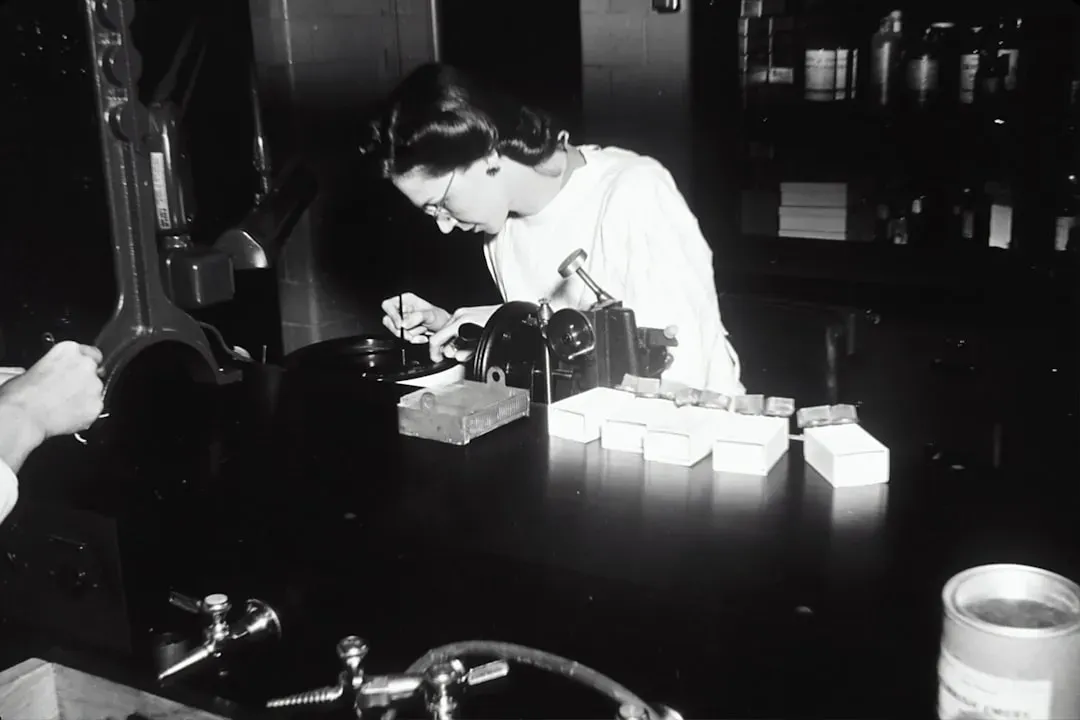
These women didn’t work in isolation from each other, but they were isolated by history. Their erasure followed predictable patterns – their work was credited to male colleagues, dismissed as mere assistance, or simply forgotten. Many couldn’t publish under their own names, attend universities, or join professional societies. Those who managed to work anyway often did so at great personal cost.
The excuse that “women didn’t participate in science” is demonstrably false. Women participated extensively. They were systematically excluded from recognition, not from contribution. When we tell the history of science as though it was built by men alone, we’re not just being historically inaccurate – we’re perpetuating the very erasure that damaged science in the first place.
These eleven women represent a tiny fraction of the forgotten contributors to . For every name I’ve mentioned, there are dozens more lost to history. Their stories matter not just for historical accuracy but because they change how we think about who gets to be a scientist. What do you think about these forgotten pioneers? Tell us in the comments.