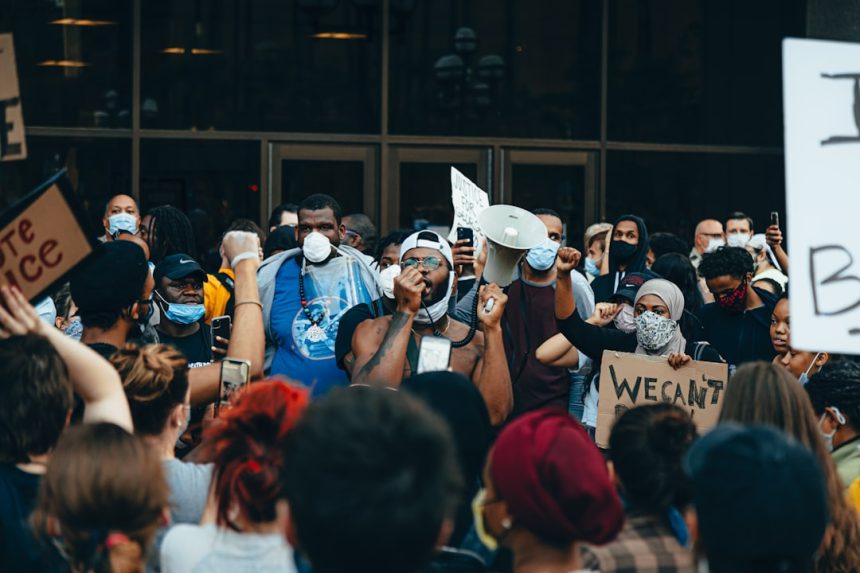

Tensions Eased by Strategic Pivot (Image Credits: Unsplash)
Minnesota – President Donald Trump’s border czar, Tom Homan, declared the immediate withdrawal of 700 federal immigration officers from the state on Wednesday, citing newfound cooperation from local authorities.[1][2]
Tensions Eased by Strategic Pivot
The announcement arrived after weeks of unrest in the Twin Cities, where federal agents faced fierce resistance during a massive enforcement push. Homan stepped in late last month to oversee operations following two fatal shootings that ignited national outrage.[1]
Masked and heavily armed officers from Immigration and Customs Enforcement and Customs and Border Protection had clashed with protesters blocking roads and tailing vehicles. The surge, dubbed Operation Metro Surge by the Department of Homeland Security, marked the agency’s largest effort to date.[3]
Homan praised the shift during a news conference. “Given this increase in unprecedented collaboration, and as a result of the need for less public safety officers to do this work and a safer environment, I am announcing, effective immediately, we’ll draw down 700 people effective today – 700 law enforcement personnel,” he stated.[1]
From Deadly Clashes to Local Handovers
The operation ramped up in early January with roughly 2,000 officers targeting individuals for deportation, focusing initially on those with violent criminal records. Resistance grew as tactics expanded, drawing crowds that disrupted arrests.[2]
Tragedy struck twice in Minneapolis. On January 7, ICE agent killed U.S. citizen Renee Good during an encounter. Weeks later, on January 24, a CBP officer fatally shot protester Alex Pretti while he lay pinned to the ground, despite him not drawing his legally carried weapon.[2]
Governor Tim Walz and Minneapolis Mayor Jacob Frey welcomed the reduction but demanded a full withdrawal. “We need a faster and larger drawdown of forces, state-led investigations into the killings of Alex Pretti and Renee Good, and an end to this campaign of retribution,” Walz posted online.[1]
- Federal agents deployed body cameras in response to backlash.
- Protesters set up roadblocks and followed enforcement vehicles.
- Two school districts and a teachers union sued to bar operations near schools.
- County jails in Minneapolis and St. Paul faced scrutiny over prior non-cooperation.
Cooperation Drives the Change
Homan conditioned any pullback on local jails notifying ICE about deportable inmates, arguing it reduced risks compared to street pursuits. Minnesota prisons and most sheriffs already complied, but urban facilities lagged until recently.[1]
The administration long criticized sanctuary policies that shielded criminal immigrants. Recent handovers signaled progress, allowing fewer officers for security details mainly in Minneapolis.[3]
About 2,000 agents will stay, matching the initial surge levels. Homan viewed the effort as effective: “I think it’s very effective as far as public safety goes. Was it a perfect operation? No.”[1]
Mass Deportations Press On
Homan dismissed the drawdown as retreat. “We are not surrendering the president’s mission on a mass deportation operation,” he insisted. Protests, he added, only burdened communities: “You’re not going to stop ICE. You’re not going to stop Border Patrol.”[1]
No end date emerged for the operation, which continues nationwide. A full exit hinges on halted interference. Courts have rejected bids to pause it, though challenges persist over tactics and sensitive locations.[2]
- 700 officers withdraw immediately due to local jail cooperation.
- 2,000 federal personnel remain for ongoing enforcement.
- Operation credited with removing violent offenders from streets.
This partial de-escalation underscores how federal-local partnerships can temper flashpoints in Trump’s deportation agenda, yet the core drive endures. What do you think about the balance between enforcement and community stability? Tell us in the comments.